A Rare Kind of Place

Mariah Cohen

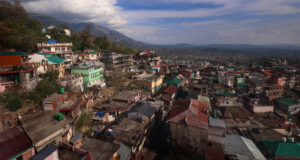
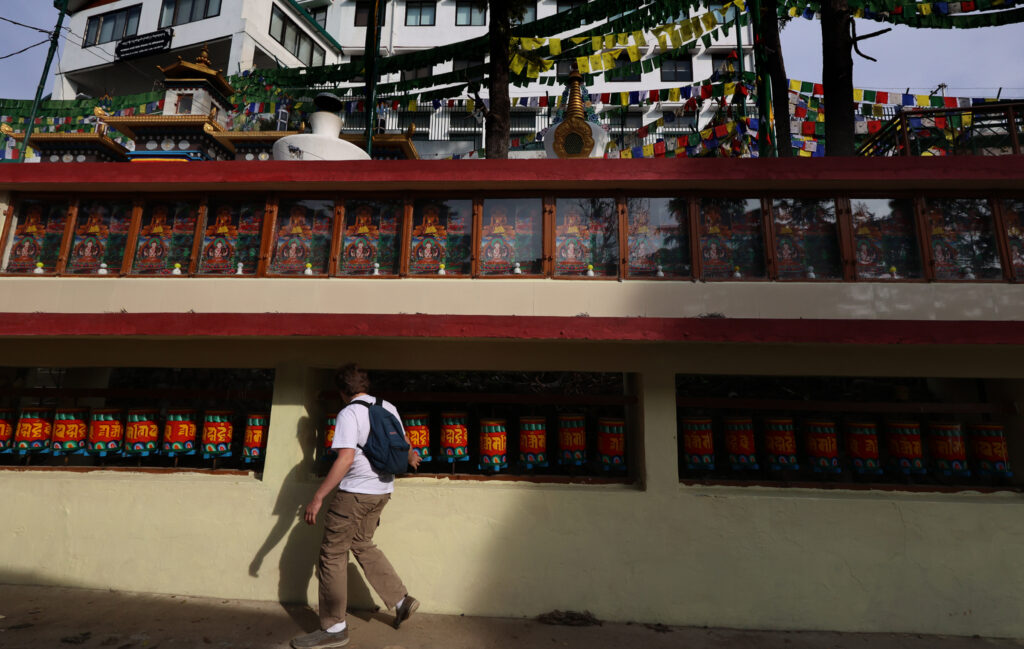
Dharamshala was definitely a highlight of the trip for me. The crisp mountain air was a nice change from the heat in Delhi, and I absolutely loved the scenery. The Himalayan foothills were beautiful on their own, but once the fog cleared and you could see the tops of the mountains with snow at the top, it was breathtaking. Aside from the scenery, Dharamshala was a very nice place to stay. I loved seeing the Tibetan culture sprinkled throughout the town. There were prayer wheels everywhere and we never got tired of spinning them.  There were prayer flags hanging from trees and across the streets, which added some cheery color to our trip, and there were intricate paintings and carvings on the walls wherever you looked. I will definitely miss the undeniable beauty of Dharamshala.
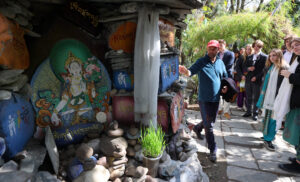
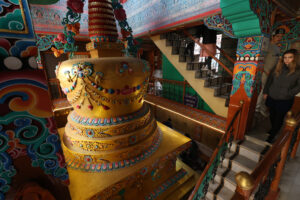
One of my favorite parts of our visit, aside from the shopping, was the Norbulingka Institute. Norbulingka is committed to the preservation and continuation of Tibetan culture and arts. Our tour guide, Ravi, walked us all around and showed us different people working on traditional Tibetan crafts such as painting and woodworking. Of course, Norbulingka was just as well decorated as the heart of Dharamshala, where our hotel was located. There were prayer flags strung high above fish ponds made from stone, and luscious green plants that flanked stone steps leading to a Buddhist temple. The buildings were held up by amazing red columns with paintings that connected with the roof. We all took some amazing photographs, as one may have guessed. The temple was surreal. There was a 30+ foot tall Buddha statue at the center and Thangkas and tapestries depicting different stories of the Buddha. 

Before leaving for Delhi, our last activity in Dharamshala was the Kora walk. On this walk, we were silent and allowed ourselves to reflect on what we’ve experienced so far on this trip, all while admiring the neverending beauty our surroundings had to offer. The Kora walk had some of the prettiest decorations I have ever seen. There were thousands of prayer flags and painted stones throughout the path, and the Tibetan dogs didn’t shy away from here, which made it all the better. I really enjoyed the Kora walk because it gave me some time to just enjoy nature and process all that has happened in the past two weeks. I truly hope I can come back to Dharamshala some day.

Sam Kaplan

Today we left the Himalayan foothills to return to Delhi and ended our 3-ish day visit in the Tibetan-influenced city of Dharamshala. It was wonderful to stay and play at Sri Ram Ashram, and it was interesting to see the diversity and sites of Delhi, but when we arrived in Dharamshala I thought to myself, ‘This is a place I could easily live in.’ 

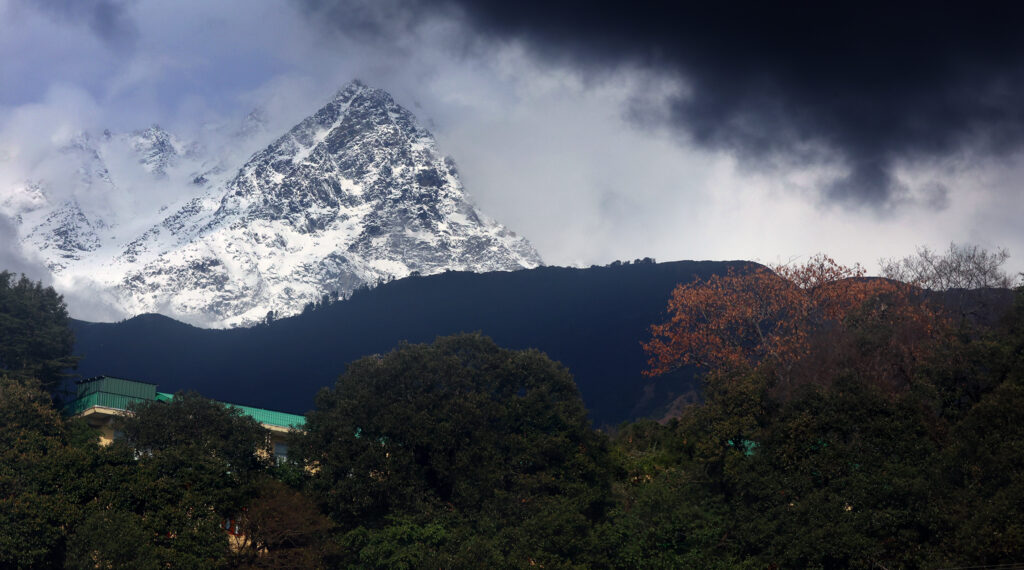
We stayed near the home of His Holiness the Dalai Lama in a town called McLeod Ganj, halfway up the mountain. Our hotel, the Serkong House, had balconies that simultaneously looked over the valley and looked up at the snow covered Himalayas. The foothills and mountains were jagged with long ridgelines and deep valleys in between them. But where the mountains were white and gray with snow and rocks, the foothills were green with splotches of color, populated by a dense layer of trees and broken by the occasional village or house. The air was cool and for the first time since arriving in India, clear. I was reminded of the high peaks in Yosemite National Park that gave way to rolling hills and a couple valleys. But unlike Yosemite, this was not just a park but the home of many Indian, Tibetan, and Himalayan tribal people.
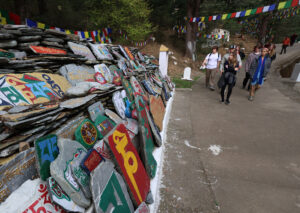
McLeod Ganj is a rare kind of place and I still find myself thinking about its curious cultural position. It seems that at least a third of the people living there are monks who study at the temple adjacent to the Dalai Lama’s house. Many more Tibetan lay people also live there, drawn to the seat of the government in exile. Some are descendants of tribes who live in the mountains, and some are Indians from the surrounding state of Himachal Pradesh. On one hand McLeod Ganj is like the capital of Tibet. While China has taken over the Tibetan state, Dharamshala has acted as a beacon to many Tibetan’s searching to practice their religion freely and escape Chinese oppression. Dharamshala has become the home and archive of Tibetan things, people, culture, and religion. On the other hand Dharamshala is not part of Tibet, it is part of India. In a way all of the Tibetan refugees are visitors or guests in India. As Rinchen Khando, founder of the Tibetan Nun’s Project, talked to us about, Tibetans still yearn to reclaim their homeland. What does it mean to have a government and religious leader who people flock to, operating under the refuge of another government? What does it mean to have a culture carried on only by people and not by a specific place? What does it mean to watch as another government tries to strip your cultural home of its culture?
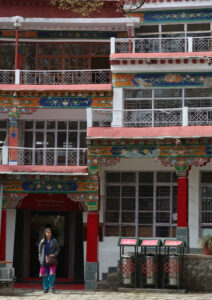
The situation in Tibet is horrible in many ways, but out of that situation a place like McLeod Ganj is born. Today we walked the Kora Circuit, a sacred trail that runs around the home of His Holiness The Dalai Lama. At one point the road branched off to a home for the elders and I saw many of them walking the loop, moving slowly but with resolve. I saw one sitting with two younger adults and talking, maybe even teaching them. I was struck by these elders; there seemed something resilient  and encouraging about the walk they were taking. They were and are the custodians of Tibetan culture, it is possible that some of them had to escape Tibet themselves when China took over, and they are still walking their sacred trails.

I’m still not sure what all of this means, the resilient elders, the tragedy of Tibet, the cultural melting pot of McLeod Ganj, the Tibetan home away from home in Dharamshala, and the provided refuge, given by the Indian government. But I continue to think about it, and I continue to explore the situation in my mind with curiosity, sadness, and a touch of hope. I know there is something in all of that information, something to be learned, something to be changed about the world. In the meantime I present the pieces of observation to you.
A Visit with His Holiness

Samith Lakka

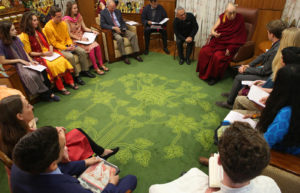
Today we had the once in a life time opportunity to interview His Holiness the Dalai Lama. Luckily, the days leading up to this have been packed with enjoyable shopping, eating, and traveling, which left no time, until the evening before, to begin stressing about this huge milestone in our lives. The first part of the day, before the interview, was filled with last minute preparations. However, no amount of preparing could steady my nerves.

When arriving at the His Holiness’ compound, we saw where the monks live, train, and study scripture. Something that really grabbed my attention was the way the monks practiced their way of debating. I had no idea what they were saying but seeing their movements and constant clapping, filled me with curiosity.

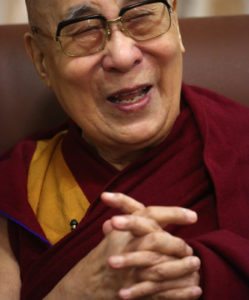
We set up the camera gear in a waiting room, just two rooms down from one of the greatest spiritual leaders of all time. After the setup was finished, everyone was guided onto a porch right outside of the interview room. While waiting, I caught a glimpse of a very familiar face in a window. I saw a Tibetan monk smiling and laughing as he conversed with his guests. My smile was much faster than my brain in realizing who I was watching through the window. All the stress that was weighing on my body lifted, and I stood and reflected on the accomplishments of the man our class was about to interview.

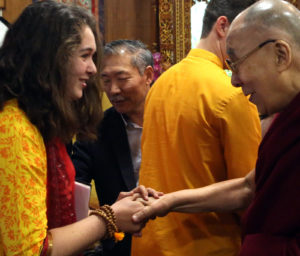
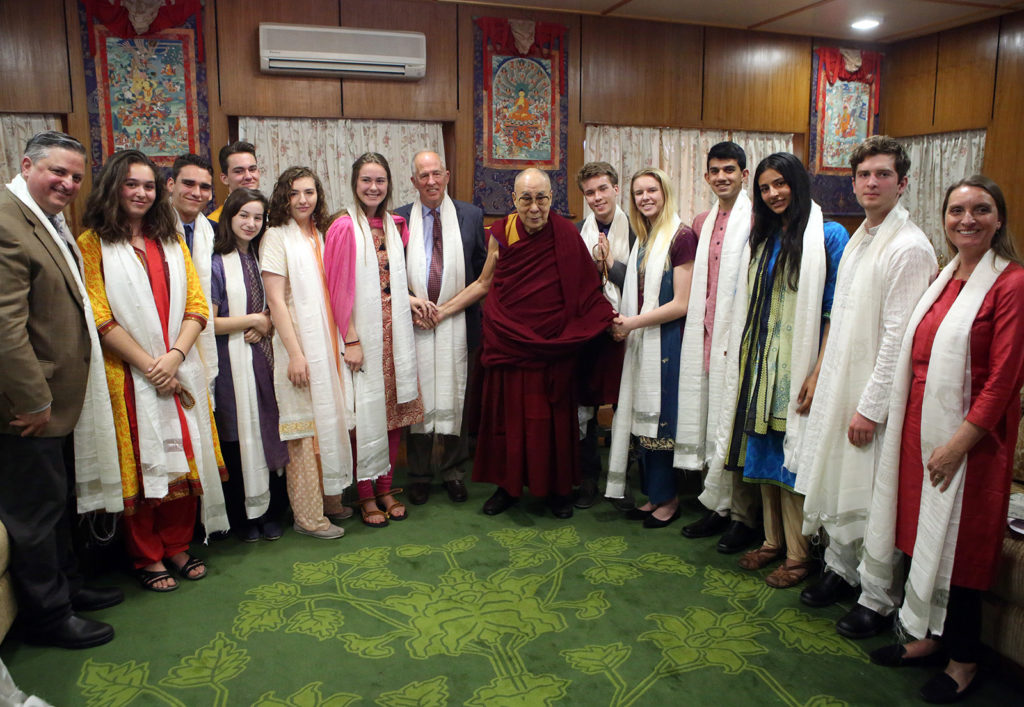
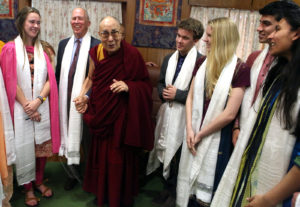
As his previous guests left the room, we were led by the staff to the door where we were greeted by the smiling face of His Holiness. The fact that someone so crucial to leading our world down a proper spiritual path was using his free time to meet with us was quite heartwarming, and very emotional for me. As he shook my hand, I finally realized that I was not completely dreaming. In response to our questions, His Holiness was quite humorous and very mischievous; he kept sticking out his tongue when answering questions. One main point he kept bringing up was how flawed the education system is throughout the world, and how we need to add curriculum focused on learning how to control the mind and free it from the emotion of anger and other negative responses. This struck me because I realized how many problems in the world could be solved if anger was controlled. At the end of the interview, everyone was sad to see him go. One question that remained unanswered for our whole class was, what divine intervention gave us the luck to meet such a joyous man?


Anika Compoginis

Seeing the Dalai Lama was unlike anything I have ever experienced, and most likely anything I will ever experience in the future. Even with everything that we had heard beforehand, and with all the preparation and research we did, there was no way for any of us to be ready to meet him. He had an audience before he met with us, so we had to wait in the hall next to the interview room, where we could see and hear him faintly, which made everyone’s nerves reach an all-time high.

When he finished his previous audience, we all filed in and he greeted us one by one. He is by far one of the most, if not the most, respected people the world, so the entire experience was very surreal. When it was my turn to greet him, he took my hand with both of his, and laughed, which immediately grounded me in the moment and helped me to feel more at ease. Of course, I was still extremely nervous to ask my question. I could ask it because I knew that it wouldn’t matter if I messed up, or stumbled over the question, he wouldn’t think any less of me because he is so understanding and kind.

Something that His Holiness said that surprised me was that he thinks that people should question, investigate, and experiment with Buddhist teachings. It didn’t surprise me because I thought that he wouldn’t be open to that sort of idea; I was surprised because I didn’t expect a spiritual leader to encourage his students to question what he teaches. With little exposure to Buddhism, and religion in general, I am used to some spiritual and religious leaders branding those who don’t follow their teachings as heretics. Overall, this experience was very refreshing and enlightening, and a gift to be able to share with my classmates, close friends, and mentors.


Luca Peruzzi

For our first interview of the day, we didn’t have to go far. The Dalai Lama’s compound was only a short walk from the top of the hill, that our hotel sits on. I only started to realize the gravity, and the reality, of our situation after we made it all the way through the inner gates, the public courtyard, and security. Even then, it was hard to imagine what would happen next. For a while we sat in the hallway, outside the meeting room, and caught glimpses of His Holiness through the glass. By this point, you could sense that everyone was very excited. This feeling was encouraged by the kind smiles of some of the other monks. When His Holiness was ready to meet with us, we rolled our three cameras into the room, and he stepped up to greet each of us with a handshake and a smile.

After our initial greeting, we sat down with little idea of what to expect. We knew that we had been told that we would get to ask around five questions, and we had our book to give him, but we also knew that this was probably one of the most popular and busiest men in the world. Although I was initially nervous, his demeanor and charm immediately put me at ease. He spoke clearly, and was easy to listen to. This helped make it easier to take in the knowledge he shared with us. Although I didn’t have the privilege of asking my question, many of the questions that were asked were ones with subjects that I felt a personal connection to. I remember a specific theme, and a few moments where His Holiness mentioned the state of the school systems of the world. He repeatedly mentioned the negative effects of the modern education system. He spoke about the lack of emotional teachings in schools, and how this had detrimental effects on mental health. Another thing that I felt was of current, and personal significance, was the emphasis he placed on acting against global warming.

For me, his discussion about these ideas was meaningful in a few ways. Seeing his perspectives, and the positive way in which he phrased and spoke about these issues, gave me hope. He always seemed to be laughing, and even more often he would stick out his tongue before he was about to smile. Seeing someone of that caliber, of such importance and intelligence, speak about these sometimes seemingly impossible to solve issues, was inspiring. The positivity that he maintained, and the laughter he brought to the room, is probably what I will remember most.

Tibetan Luminaries

Tara Ching

Today was my first day feeling fully recovered after a brief spell of dehydration. I am so happy that I was back for today because it was probably one of the best days of my life. I cannot imagine a life where I do not return to McLeod Ganj. I love waking up to look out at the incredibly beautiful Himalayan Mountains dotted with colorful rooftops. It’s also nice to be surrounded by the Tibetan culture which more familiar to me. It’s comforting to be surrounded by ringing bells, chanting, and flowing vibrant red and yellow robes.

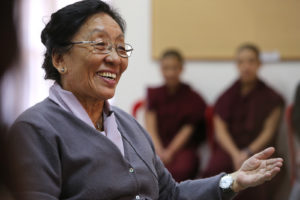
We started off our day with our first interview of the trip, Rinchen Khando. Rinchen Khando is the leader and founder of the Tibetan Nuns Project. As soon as she began talking she became my role model. She spoke beautifully about the value of educating women just like men. She said that in the beginning there was talk of offering the nuns an easier scholarly path, littered with concessions like a lower passing grade or an easier textbook, but that we should take no concessions, because it is important for the welfare of society that women and men are educated equally. She said that when women and men are taught the same it will be easier to stop seeing the distinction between the two, and simply view everyone as human. I thought this was powerful, especially coming from a culture where traditionally nuns could not receive a Ngagrampa degree, only monks could.

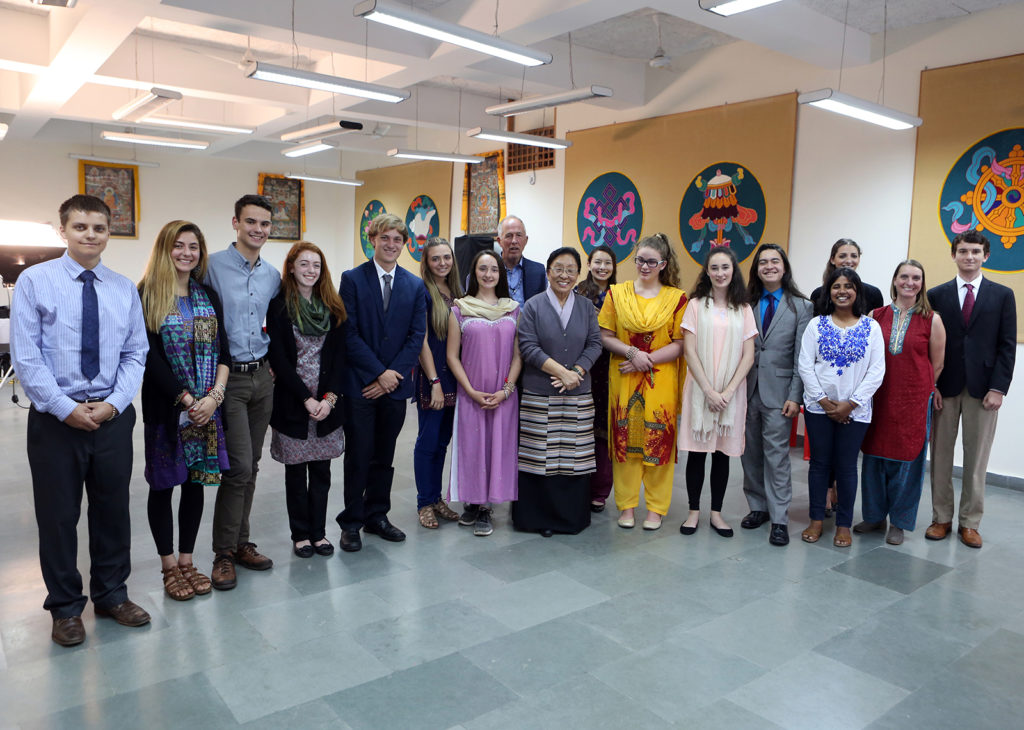
What struck me personally was when she answered the question that I asked, she answered and looked at me with raw attention and care, as though I was one of her family members. I asked her about the importance of art in her work, which is relevant to me because I intend to pursue art and animation in the future. She said that art is so influential, and that with animation, I could really distribute my message and make an impact. She talked about its relationship to journalism, and how there are artists and journalists who can be told to create information for the sake of money, bribery, or other reasons. But she said that if I do not do that, if I stick to my own wisdom and my own truth, then what I create will be powerful. She made me realize that by going into art, I am not just going into an uncertain future, I am going into a life where I create art that is a force to be reckoned with. At the end of the interview, after we took a group picture, she turned to all of us and said that when she looks at us, it is as though she is looking at a group of Tibetan children. In that moment I honestly wanted to walk out with her, ask her to mentor me, and follow her for a few years. Meeting her was truly inspirational and I am eternally grateful for the experience.

Mount Madonna School students with Rinchen Khando


Caroline Smith

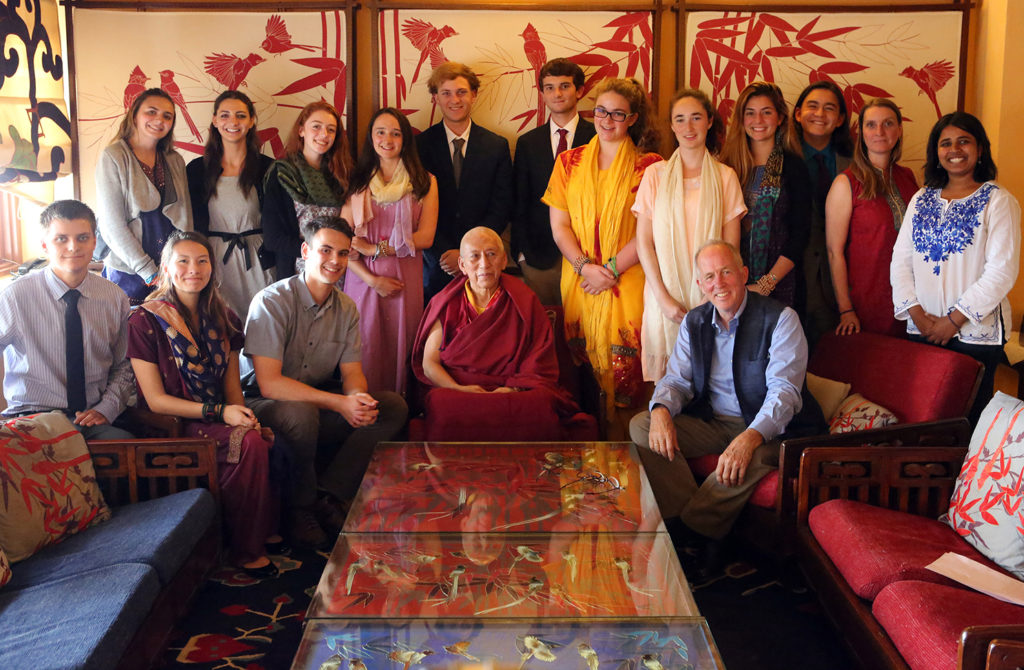
After waking up to a big storm and no power in the hotel, we struggled to get ready for the two interviews we had lined up today. With no internet and no printer, our interview questions for Samdhong Rinpoche were polished and printed while we ate lunch at a nearby restaurant. We rushed through our meal and in no time, he was walking around the room shaking everyone’s hand.

Samdhong Rinpoche thought long about our questions before giving us his detailed, eloquent answers, pausing every once in a while, to ponder or gather his thoughts. Although almost everything he said had extreme depth and struck me in some way, I was especially interested when he spoke to us about the concept of non-violence. He told us that non-violence as a strategy is not true non-violence. This is very similar to John Lewis’ belief that you can’t turn non-violence on and off, it is a way of life. I began to think more deeply about this and was reminded of the Dalai Lama’s book, Ethics for the New Millennium. In his book, the Dalai Lama speaks of suffering, and specifically how sharing in another’s suffering can in turn, alleviate your own. However, sharing in another’s suffering for the sole purpose of alleviating your own is not truly sharing in another’s suffering, therefore, your suffering is not alleviated. This is similar to what Samdhong Rinpoche was telling us because by using non-violence as a strategy, you are using it for the sole purpose of getting something you want, rather than for the purpose of living by the non-violent belief.

I had never thought about the difference between using non-violence as a strategy and living by non-violence but now the difference seems extremely clear. I thoroughly enjoyed our interview with Samdhong Rinpoche because it caused me to think deeply about Buddhist beliefs such as non-violence which I had only thought about on a surface level before.

Mount Madonna School students with Samdhong Rinpoche