Tibetan Children’s Home

Anya Gonzalez

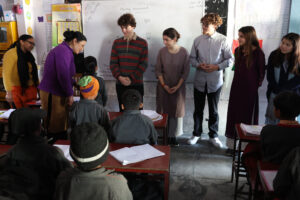
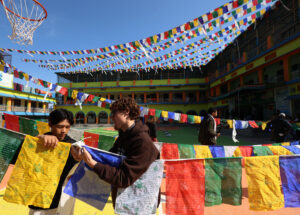
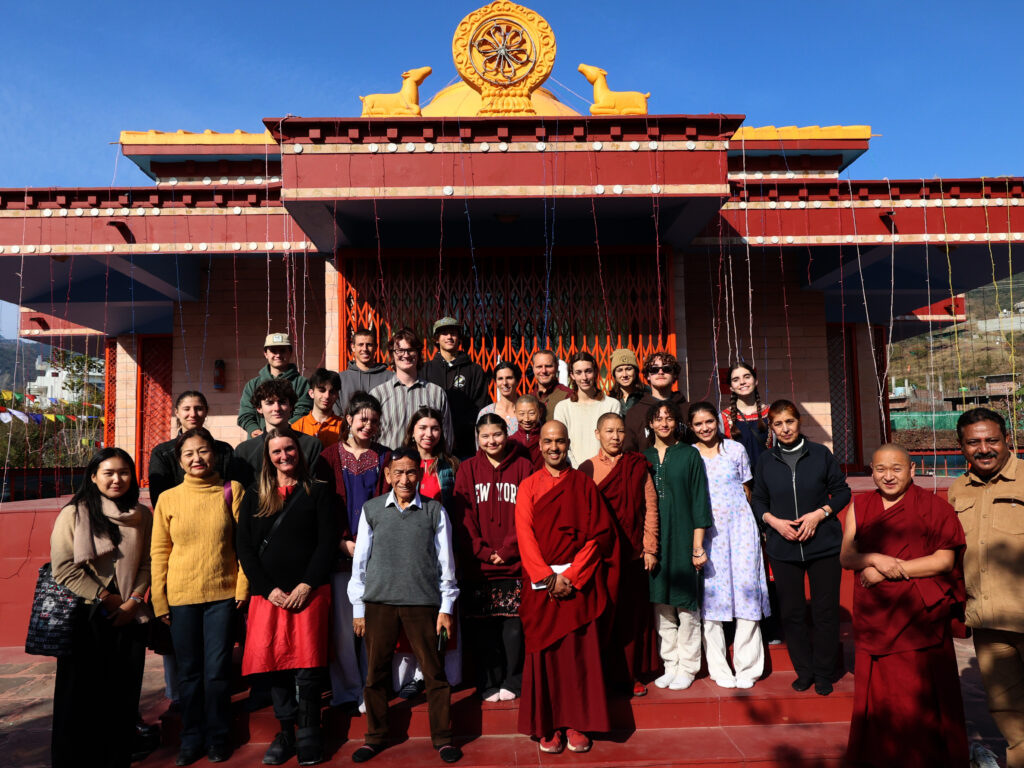
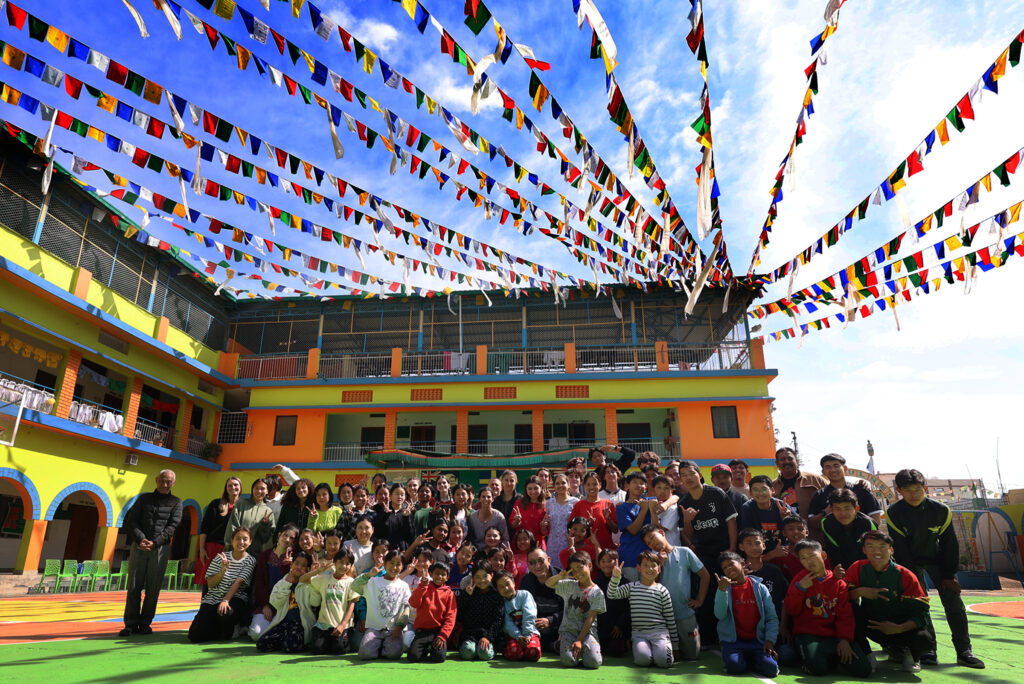
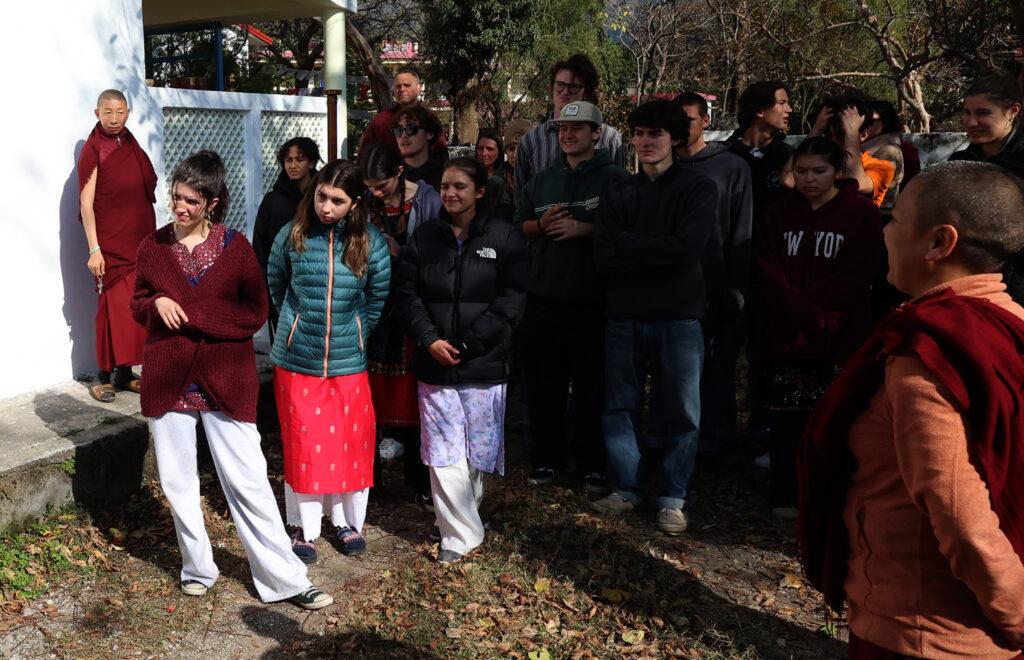
Today we visited a Tibetan children’s home located in Clement Town in Dehradun. Behind gates shrouded in prayer flags we were greeted with smiling faces and a full fledged band made up of flutes and drums. The children stood in a row and kindly placed a khatas ( a white scarf that signals welcoming or honor) around our necks. They directed us to write our first and last names on the khatas, tying them to strings of prayer flags before hoisting them up into the sea of rainbow cloth decorating the sky above. We were told by the director of the school that hanging the khatas was good luck. 

After hanging our khatas, we began mingling with the students who then gave us a tour of the surrounding area including a Tibetan temple. I was guided by an eighth grader who was very talkative. We immediately clicked as we soon came to find out that we both loved reading a lot of the same books. In fact, I have my sister to thank for being able to connect so well with a lot of the girls at the school. K-pop, K-dramas, anime, and manga is very big at the Tibetan children’s school and whether by choice (or by force) I have been exposed to a plethora of Korean and Japanese pop culture. 
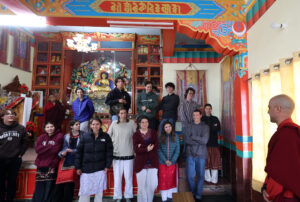
Once back at their school, we were able to tour their school and visit the futsal court. We took turns trying to shoot goals against one of the school children in which I am proud to say that I was the only one who scored. At the end of our visit we had a dance exchange, MMS students performing the invocation from the Ramayana and the Tibetan children performing two of their own dances. It was inspiring to see how much of the Tibetan culture has been preserved in the children. Most of them know at least five languages and they are all immersed in cultural practices such as dance and prayer. 

Our next stop of the day was at the Drikung Nunnery. We were led around the nunnery visiting the prayer room and retreat rooms. As we drank tea and nibbled on cookies we were offered a large history of Buddhism in Tibet and India such as the Nalanda university and the Buddhist emperor Ashoka. I was particularly enthralled with the whole experience having attended a Buddhist summer camp at Vajrapani institute near my house when I was young. I could feel myself clinging to every word that the monks, nuns, and main coordinator had to say about Buddhism. During our free discussion time, I asked one of the monks about the deity Tara, who, during my time at Vajripani institute, was my favorite. He was happy to give me an expansive summary of her symbolism and explain in which circumstances one calls on her. Later, at the partnering Monastery, he personally showed me the small temple dedicated to Tara. 

As we watched the skillfully painted temple fade into the distance, I reflected on the teachings I learned. The lesson that resonated with me the most is that Buddhism is not a religion but a way of life. As such, Christianity or any belief system can co-exist with Buddhism. And, as we drove up the scary road to Mussoorie, I called on Tara, to help me face the obstacle ahead. 

Ona Musoll-Buendia

The Tibetan Children’s Home seemed like one of the happiest places on earth. Getting off the bus, I saw the many flowers that bloomed around the area. Dogs and puppies ran around playing in the streets as people walked on the sidewalks. When I walked in through the gate into the colorful courtyards of The Tibetan Children’s Home, children from all different age groups were playing drums and flutes. In the sky, thousands of colorful prayer flags were hung from the buildings, creating a beautiful swooping shape. On the side of the courtyard, a line of younger children with white scarves waited patiently. I watched as my classmates in front of me were given a scarf, bending over to receive it on their necks. The scarves, we were told, were used for good luck. By writing your name on the scarf and tying it up with the prayer flags, good luck will follow you. 
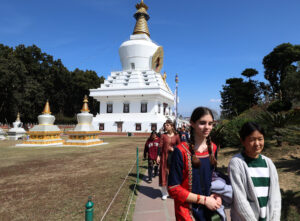
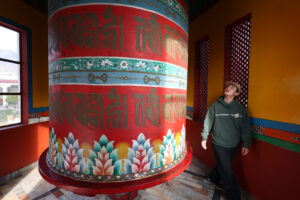
After our lovely welcoming, we got to walk around the area and we visited two mosques and monasteries. In both, we saw huge golden statues that seemed to reach to the sky. Many flowers were growing alongside the pathways of the monastery. The whole time, a girl from The Tibetan Children’s Home, who was in the 8th grade was walking with me, hand in hand talking about things like our favorite music and what we like to do in our free time. On the right side of the path followed was a wall with hundreds of golden cylinder-shaped cylinder wheels that spin around in a circle. The girl explained to me that these were prayer wheels and that you can only spin them clockwise, otherwise it is unlucky. She then took me to a huge prayer wheel that was red, green, and white. This one, we spun together, holding onto a silver metal bar and walking around the big cylinder clockwise.

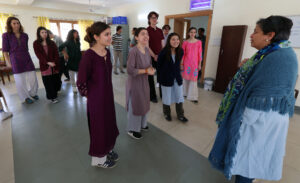
We then walked back to The Tibetan Children’s Home where the same girl showed me around. I walked into her room she was sharing with many other girls from 5th grade to 8th grade and I was shocked at how clean and tidy it was. All of their blankets were neatly folded at the end of their beds and their books were neatly put into the shelf. In the room, we had a little dance party. Lots of girls gathered to watch as people showed off their dances. Me and a couple of my classmates danced to the song “My Desi Girl” which we learned at the Sri Ram Ashram not too long ago, and they loved it. As everyone got into the middle of the floor to perform their dance, everyone was supporting them. From clapping to the beat to audibly cheering them on, everyone was involved in every dance. Here, I felt very connected to my girlhood, dancing around and living in the present moment. I will never forget this exciting experience that I was so lucky to have had.

Irulan Cockrum

I hold a profound admiration for Buddhist philosophies, often immersing myself in books and teachings about Buddhism. Therefore, upon our trip to India, the awaitment of visiting Buddhist monasteries and engaging with monks filled me with excitement.
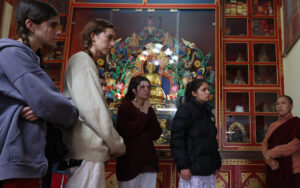
After our first visit to The Mindrolling monastery, I felt so much inspiration because I was learning about philosophies I admire and was  visually seeing statues and art that represent concepts that I take much wonder in. Following the monastery, we went to the Drikung nunnery, an experience I approached with curiosity because I genuinely did not know what to expect. Welcomed by a Monk named Sonam Tsetan, he graciously guided us through the nunnery, introducing us to the prayer rooms and sharing the history of Buddhism.

During our tour, an older man would interrupt Sonam Tsetan with impassioned explanations of Buddhist concepts, captivating everyone with the way he spoke and how he carried the strength behind his words. His vivid descriptions, accompanied by animated gestures, resonated deeply with me. 
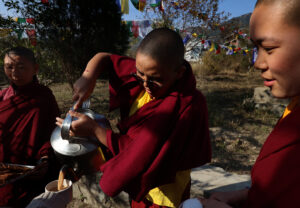
We walked into a small room with a 3D mandala inside, repressing the mind. After Sonam Tsetan explained to us what it meant, I asked him a clarifying question in which the older man interrupted and answered. While answering, he urged me to close my eyes and look within, leading to a realization about the nature of the mind. This interaction with him was an incredible experience. While my eyes were closed, he asked me what I saw, which I had no way of answering what I saw with eyes closed. His way of teaching is completely immersive.

Afterward, we drank chai outside while everyone was talking to the different monks. I was nervous to speak to the older man because his intelligence intimidated me. When I finally did, I asked him about one of Buddha’s teachings that I read months ago yet found myself confused by. His passionate explanations of Buddha’s teaching led to explanations of various teachings on concepts like karma, forgiveness, desire, suffering, and the mind left an indelible impression on me. As our discussion concluded, he symbolically bestowed upon me an imaginary key, along with his blessings.  Although I’m not sure what the imaginary key he gave me meant, or what it was for, it is a gesture that I will forever cherish as a token of compassion and wisdom.
Dehradun: Aasraa Trust & Waste Warriors

Anya Gonzalez

“Who will do it? I will do it.” That is the chant of one of the NGOs we visited today named the Waste Warriors. Although these organizations apply the “war cry” to the work they do creating waste management systems in rural communities, it applies to the other NGO we visited called the Aasraa trust. 

This morning we woke bright and early and headed on a bumpy one hour bus ride to Dehradun. Outside my window, vibrant colors flitted in the forms of flags and mural installations. Temple spires rise above the town and below lie the slums. It’s a truly heart dropping moment to see young children play amongst trash during the school hour. Aasraa Trust, an NGO founded by Shaila Brijnath was founded to create opportunities for the young and impoverished children of Dehradun. Her trust focuses on the “whole child” method which gives children a strong foundation for succeeding in life. In order to better understand Aasraa’s education process, we visited all three steps of their program. 

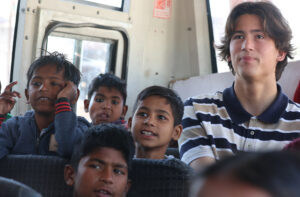
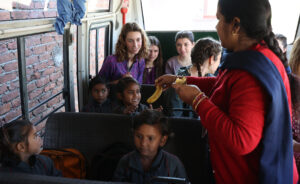
We began in a large empty lot surrounded by houses. A coordinator at the NGO, informed us about their approach to the students who, due to many circumstances, are often unable to reach school locations. To tackle this problem, they’ve created mobile classrooms by using school buses. I was able to observe the equivalent of PreK and help the kids learn their numbers in English through an interactive video and song. As I watched the children learn, I glanced out the window and saw a few children outside the classroom who were playing on a nearby fairground ride instead of joining class. The juxtaposition of the two scenes playing out before me was eye opening. I realized that despite the efforts of organizations such as Aasraa there will always be those who fall through the cracks. 

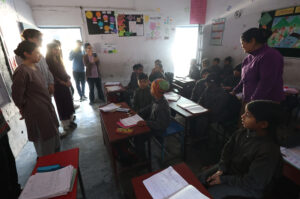
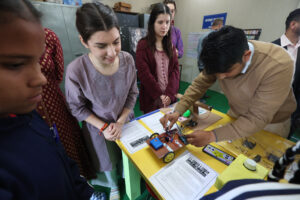
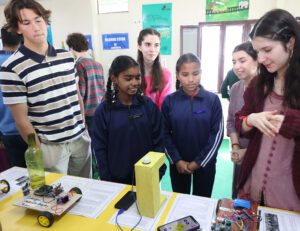
The next step of the journey was at one of the government schools that Aasraa helps run. What once was a school with only a few teachers and without proper necessities such as working lights was now a flourishing place of learning. We were given a tour of the classrooms and eventually ended up in the tinker lab. We gathered around and watched as the students showed us their inventions. I was awe struck by their innovative thinking and particularly inspired by how each student had chosen a project that focused on real-world issues. I could tell through the investment and excitement of the tinker lab teacher that Aasraa  ensures that its educators are passionate about their students. 

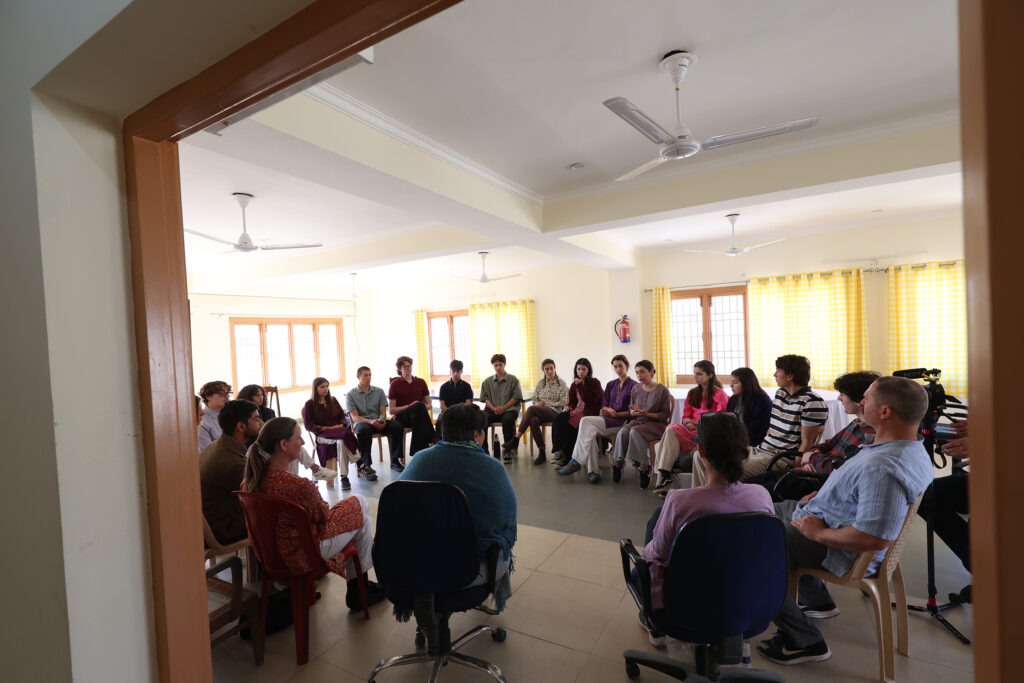
Our final step was at the career training center. There, we met Shaila for tea and were able to converse with her. Shaila was well spoken and in all honesty a riot. Her humor and ability to connect with each individual student was so inviting I didn’t want our conversation to end. I enjoyed how with each question, she turned it back on the student. Her conversation method exemplified the attitude she brings to Aasraa trust in that she cares immensely about every individual. 


Sophia Manzur

During my time at the Mansa Devi temple, street children would pull at my clothes, grab my shoulder, point to a deformity they had on their body, then hold out their hand signaling for me to give them money. As a child, I was taught to show empathy and compassion to individuals who were struggling, even if I did not know them. As much as I wanted to give them something, I was specifically instructed not to do so by my teachers. This situation became extremely difficult for me because not only was I dismayed by my morals, but I was also neglecting impoverished 7-year-olds.

It was explained by a local Dehradun teacher this morning that even if you gave one child money, they would give half of the amount they earned to their parents, while the other half they would keep and spend on items that wouldn’t benefit them, typically drugs. Most of these children are around the ages of 5-10 years old. Therefore, by giving them money, you are essentially feeding into their addiction, continuing the cycle of poverty in India.

Although it seems as if there is no solution to ending the juxtaposition in this situation, there is extreme progress being made. Aasraa Trust is an NGO created by Shaila Brijnath that is dedicated to leveling the playing field in the education system, allowing street children to have the opportunity to have a future within the world. Today, Shaila and the Aasraa Team educate over 8000 children spread over 60+ projects and in partnership with the Education Department of Uttarakhand in 13 Government Schools across Uttarakhand.

We were able to visit one of the schools in Dehradun. The schools were on a mobile bus that seated a little over 20 children. My classmates and I had the opportunity to sit in on their lesson. All the kids seemed to be around 5-6 years old. They were learning how to count in English and in Hindi. I sat next to a girl named Vishnu. She sat up straight, while her hands rested in her lap, participating in the lesson, with a focused demeanor on her face. Not only was Vishnu dedicated to her education, but so were her peers. They all seemed so happy to be there and eager to learn more.

Next, we visited an elementary through high school that was half government-funded and partnered with Aasraa. Because this school is partnered with Aasraa, they are able to offer resources that will help the kids once they graduate to become successful within the industry they are specializing in. We were able to visit one of the classrooms where students engineered different innovative technological devices. One of the students created a multipurpose farming cane, designed for those who struggle with walking. I was impressed not only with the design but also with the intention to serve the disabled community, who are often overlooked in society.

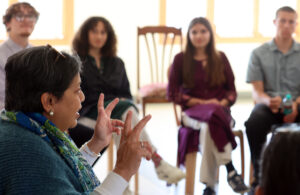
Lastly, we visited Aasraa’s workforce integration program. This program allows a bridge between education and skills to learn for different types of jobs. My class was honored to speak with Shaila Brijnath. The three words I would use to describe her are expressive, empathetic, and attentive. Shaila talked about how she went to college for education, then once she graduated she traveled across the world for banking. She then realized that her true passions lay in providing education for others, so she started Aasraa Trust. Shaila said that she learned that you should follow your passions, even if everyone else is going down a different path than you are.

I felt full of life after this trip today because I was able to see the wonderful learning environments Aasraa Trust has cultivated in order to end the cycle of poverty in India. In the future, I hope to work with children in impoverished communities by giving them a space to share their stories through art. Aasraa Trust showed me the possibilities of my passions and the beauty that they could bring to the world.


Logan Shaw

Today was a long day during which we did a lot. We visited a city in the foothills of the Himalayas and learned many things about education in rural Indian communities. The city we visited was called Dehradun, and it was a very pretty town. The air quality was significantly better than it has been, which was nice and the mountains resembled Dr. Seuss drawings.

We started out the day at an organization that provides schooling for street children. This school holds their classes in school buses that come to the children directly and stay parked in their village. Witnessing the children smiling and singing songs was heartwarming. The organization responsible for this noble work was called Aasraa, and they were doing God’s work. They have a comprehensive program that educates children and equips them with practical skills such as driving and communication to break the cycle of poverty and lead fulfilling lives. The school we toured was highly advanced, with a robotics lab where they created drone detectors, RC cars, and transmitted Wi-Fi signals through LED lights.

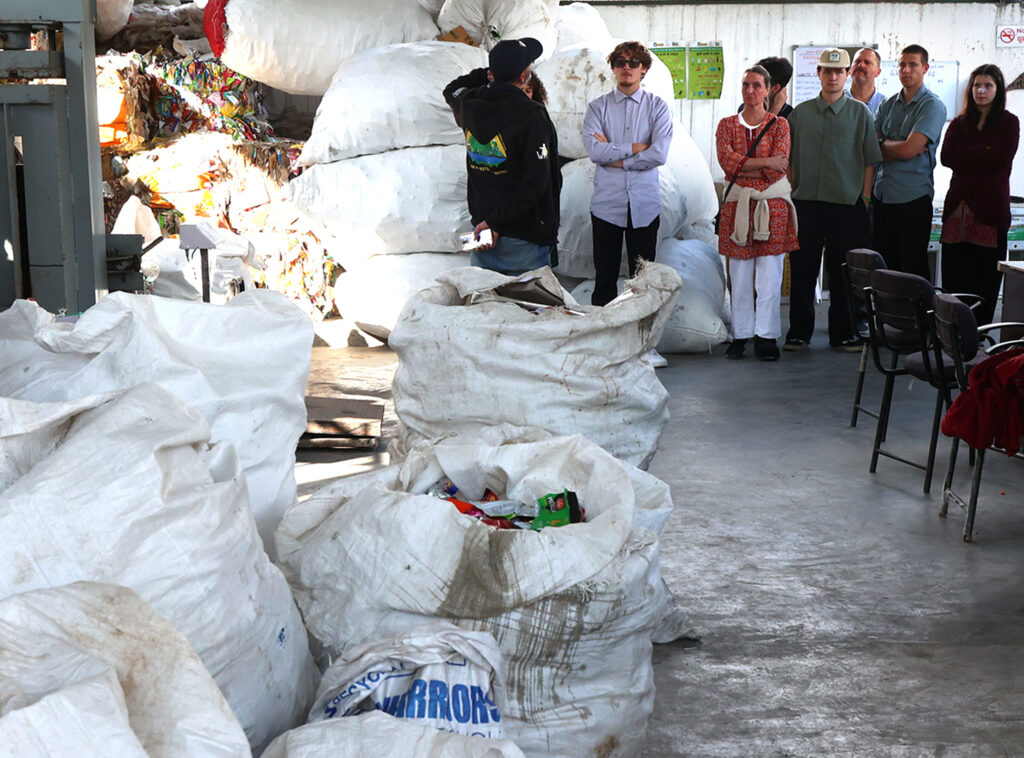
Another organization we visited today was Waste Warriors, stationed in a more remote part of India. Their mission was to establish a system for collecting and sorting trash. The employees at this organization were optimistic about India’s future. We have seen a lot of litter along our travels, it was reassuring to see people actively working to address these environmental problems. They sorted the trash into different categories to recycle and had a lot of knowledge about the causes of the trash problem. They also talked about why no one was doing anything about it, because one, there is a spiritual component about it, and two, historically it was the lowest castes job to clean up the trash. That’s why another part of their mission was to make it more of a cool thing to clean up the streets. I think it’s a very noble thing to be doing. There also isn’t any money in the trash business, so they need to rely completely on donations from big companies to stay operating. 


Cy Harris

Yesterday, we visited the Sri Ram Vidya Mandir school, the school associated with the Sri Ram Ashram. To get to speak with and interact with kids from kindergarten to our age was such a pure experience. You don’t think you can possibly relate to a person seemingly so different from you, yet when you get the opportunity to compare, it’s hard to find anything that isn’t the same in some way. They are kids just like us, humans just like us, with thoughts and dreams and hobbies just like us. I felt my eyes opened by the experience. 

Today, we visited a series of other school establishments. The first was a bus. That may seem odd at first, but it’s actually one of the most impactful inventions I think I’ve heard of. School buses, instead of taking kids to school, take the school to the kids. These buses are fully equipped classrooms to provide for children that are not given the resources to attend a regular school. It serves the children who collect money on the street for a living, and provides them with the opportunity for an education with no cost and no need to get there. In addition, they also feed the kids when they go to school on the bus, which for many is a highly effective motivator. We got to get on the bus for a class. The children were all so happy to be there, it made me realize how much I take school for granted. 

Shaila Brijnath

We next visited the junior school, and played games with the kids after touring around their facilities and receiving a wonderful presentation from their Tinkering class (similar to an STEM class in the US). 

Finally, we got to do an informal interview with Shaila Brijnath. She was awe inspiring. Simply the story of her life was inspiring, not even considering what she has done with her life. She began her career in banking, realized she was not satisfied, and spontaneously moved back to India where she was born after spending the majority of her life in London. She began the Aasraa Trust, a nonprofit organization that provides classes from computer basics to factory safety to sewing, to provide people young and old with skills they need to make money or keep a house. In addition, she has helped start over 60 more programs to support children in all ways, through education, healthcare, and counseling. It was truly an amazing experience to witness all that people can accomplish when they are passionate about giving back to their community.