A Lesson in Service to Others

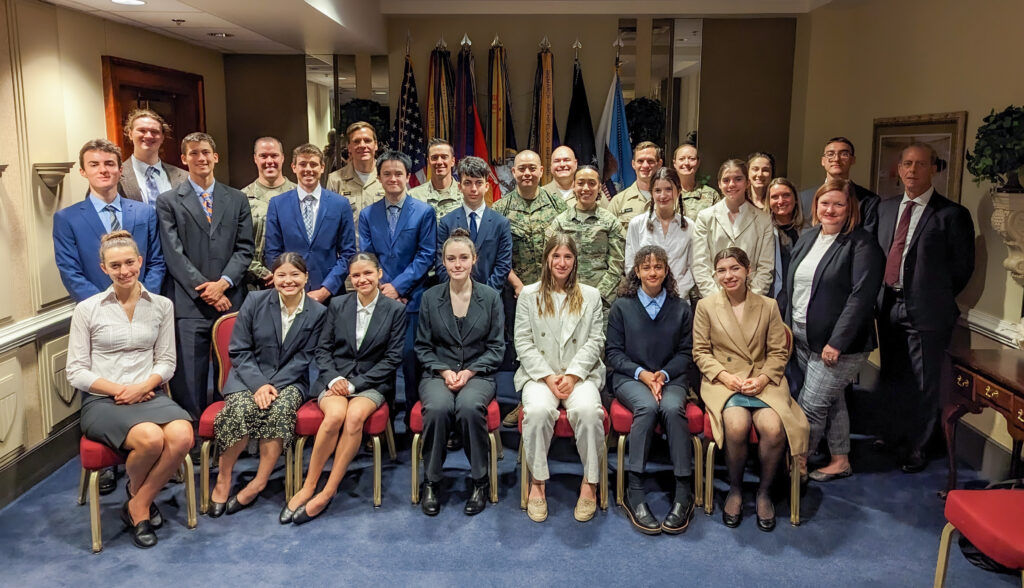
Visit to the Pentagon
Irulan Cockrum

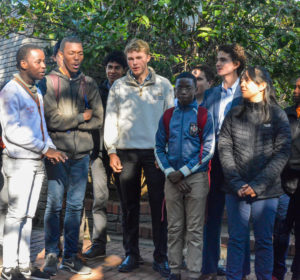
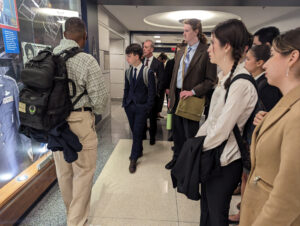
Today, Officer Anthony Jackson gave us a tour of the Pentagon. His current position is Police Officer with the Pentagon Force Protection Agency, Pentagon Police Directorate, Third Platoon. Before that, he has served as a sergeant in the US army. Throughout the tour, I felt great admiration and appreciation for his many fine character traits, such as humility, curiosity, compassion, and strong willpower. Officer Jackson went to great lengths to give us the best experience he could give us. Throughout the tour, I heard many comments about his dedication and service to his country and the American people, and I stayed by his side the entire time we walked. 

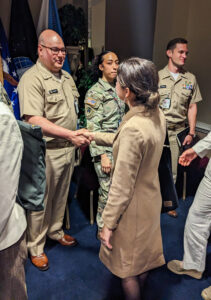
After bringing us into the building, he led us to a room where he introduced us to a panel of people from the Army, Air Force, and Marines that he had assembled for us. Because we were unaware that we were going to meet a panel of military personnel, we had no questions prepared for them. I think I speak for all of us when I say that we were all moved not only by their individual stories but also by their motivation and commitment to service. Although we had not prepared questions for them, we were eager to ask a number of questions, and it was obvious that we were all grateful for the opportunity to speak to them. 
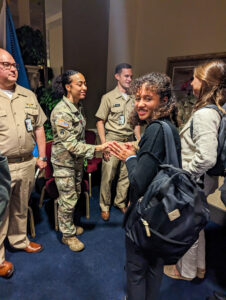
I was especially moved to see women serving proudly in the military, and I was excited to talk to such strong women. In recent years, more women have come to hold positions of power that only men used to hold. Meeting these women helped me to imagine myself doing all the things I grew up watching only men do, and I felt very inspired. 
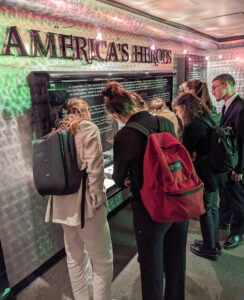
After the discussion, Officer Jackson showed us the headquarters for the Marine Corps and the new Space Force. Both areas included interesting displays on the walls depicting different aspects of each branch of service. There was information about important people and events, and there was even a display dedicated to science fiction movies related to space and the Space Force. 

The last part of the tour was the most personal part of the tour for him and the most emotional for us. Officer Anthony Jackson was training to be an army sergeant during the attacks on September 11, 2001. Although he was not in any of the cities where the attacks occurred, he was dispatched to do security clearance at the Pentagon to make sure no one could enter the perimeter while people were working at the site. We stood in the very spot where the Pentagon was hit, which is now an open corridor between two walls. One of the walls was rebuilt after the attack, and so it is a different color from the other wall, which was preserved and included scorch marks from the fire. You could see the emotion on his face as he talked about the attack, and he was incredibly vulnerable and respectful as he spoke about it. I had never shared such intense, raw, and vulnerable feelings with someone before. I deeply appreciate him, and I won’t forget what he shared with us.

Bella Padilla

Today we had a full and exciting day. We woke up early, got ourselves ready, and then rode the Metro to the Pentagon. It was unique and humbling to experience life as a DC local. This was only the second time I had taken the Metro in DC. When we arrived at the Pentagon, I was amazed at the number of government officials and the size of the Pentagon. 

The experience at the Pentagon was surreal. There were people in official uniforms everywhere, and there was intense security. After a brief orientation, our tour guide, Officer Anthony Jackson, led us to a room of panelists to interview. Along the way, he showed us various shops and services and dispensed interesting pieces of information. For example, we learned that there are seventeen miles of hallway in the Pentagon. We also viewed paintings of previous chiefs of staff. I was in awe of the history on display and amazed that our country and its government have stood the test of time. 
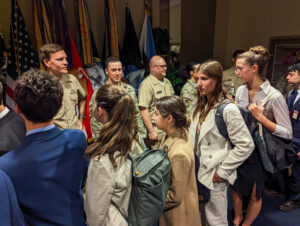
The panelists were all knowledgeable and informative. Each was from a different branch of the military. I found Officer O’Connor especially interesting as he spoke about his experience working with nuclear and other hazardous materials. After the interview, he told me about how he previously worked with nuclear power in Hong Kong and that in just a few weeks he’s going to Texas to conduct a simulation of a nuclear attack. This topic has always fascinated me, and it was a once in a lifetime opportunity to talk to someone who works on it as a profession.

All the panelists gave great advice, and they all agreed that it’s okay not to know what you want to do in life at my age, as I still have plenty of time to find my calling. As a high school junior, I found this advice refreshing. I’m very grateful for the experience the Values in World Thought curriculum has given me. 

Ethan Lee

Today, our class toured the Pentagon with Officer Anthony Jackson. We viewed the Space Force wing and the Marines Corps wing, and we interviewed a panel of members from different branches of the military. The panel was the most interesting and engaging part of the day for me, as the members of the panel were all very well spoken and seemed like they really wanted to talk to us. My favorite panelist was Officer Josh Clemmons, who pilots “Little Bird” helicopters. He is an incredibly relatable person, appearing more “human” than I had previously imagined someone in the military to be. One thing he said that stuck with me was that the hardest lesson that he’s learned so far was the impact that a decision can make. He gave an example of sending a group of specialists on a mission and having them all return, and another time sending a different group on a mission and having only some of them return.

Before today, I had always thought of the government and the military as huge impersonal entities that functioned independently of the greater good, rather than a group of people who are just trying hard to make the best decisions that they can in service to others. Several of the panelists admitted that they really haven’t always known what they want to do with their lives and advised that someone my age doesn’t need to know yet what to do in life. I’ve been focused on becoming a firefighter for some time now, and I haven’t really been considering other options as much as I should have. They made me realize that although it’s nice for me to have a passion and a general idea of what I want to do, I should take every opportunity that I can to learn and experience something new, knowing that possibilities and opportunities aren’t always predictable.

The Gift of Education

Langa Township
Given Reyhani

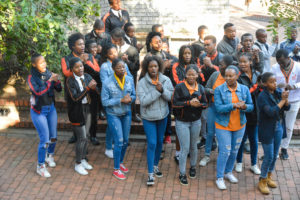
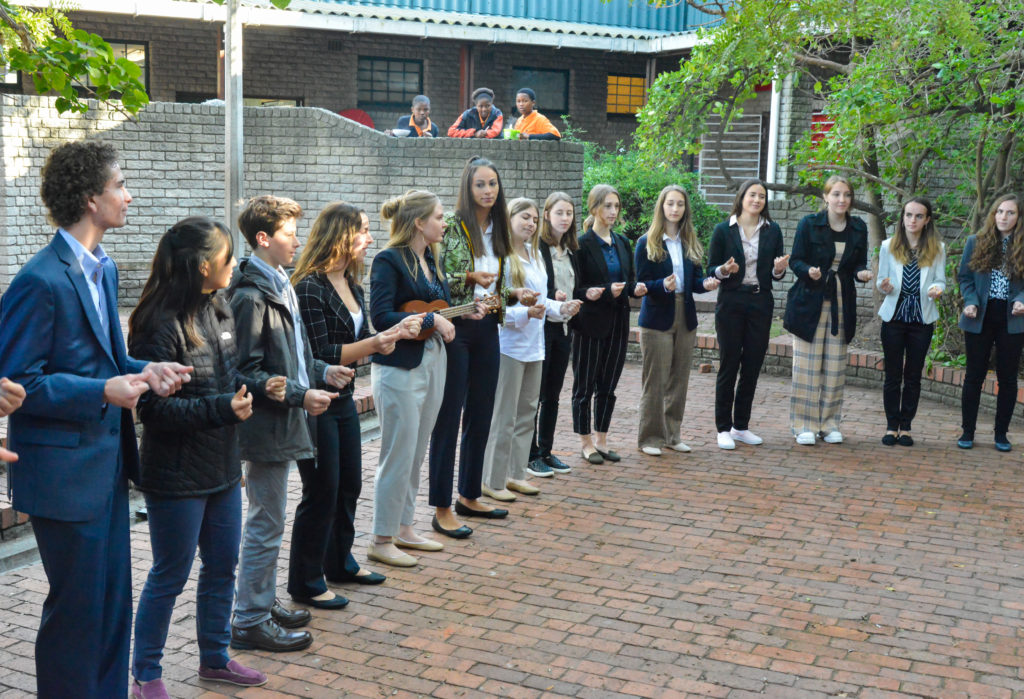
Today we ventured to LEAP school, a Science and Maths high school in the township of Langa. Right when we arrived, we were greeted by a group of students and we spent time getting to know each other. After a while talking, we sat down and they started to perform for us. They started with a traditional South African gumboot dance, and then went into singing. As I watched them sing and dance, I noticed how talented they were and how seriously they take music. I also noticed how seriously they take their academics and how they really push themselves to do well.

After they sang, which they were very good at, it was our turn. Although they had beaten us in this field, we still did great. Eventually, they came up and joined us and we sang together. I feel like the singing really brought us together as they sang our songs and we sang some of their songs. We got to connect with them on a different level through singing, which is one of the biggest ways of connection throughout the world.

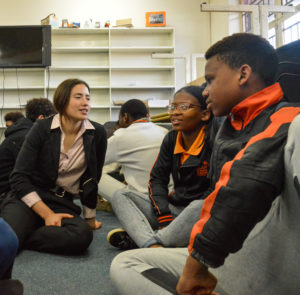
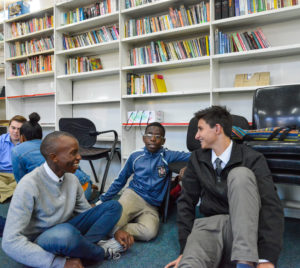
After performing together, we sat down in groups of three and we were asked to discuss the question, “If there was something that we could change about school what would it be?” In my group, we discussed the mandatory uniform that the LEAP students must wear. We talked about how wearing a uniform restricts you from expressing yourself, and that if you want to wear something you should be able to wear it because how you dress shows a little of who you are. This struck me because back home we don’t have a dress code and I never really thought about how we dress being a way to express ourselves.

Paola Jacobs

I felt a flood of emotions during my time at LEAP school today. Walking in, I was immediately greeted by Cetitu, a student who set my mood of the day with her joy and happiness. Her inviting energy made me feel accepted and the openness allowed for the both of us to get to know about each other’s lives easily. Throughout the day, I was surrounded by more and more kids my age, and noticed how well my classmates and I connected with everyone. We all live such different lives but I feel like that fact didn’t have a negative effect on the friendships and connections that I formed today. The differences just made the experience that much stronger.

After the school tour, we performed songs for the students and visitors at LEAP and they sang some songs for us. Their performances were amazing and they made me realize that community and culture are important. They opened their hearts to us, and the way they sang gave me chills. We sang them our songs and they were supportive of us; they clapped and smiled for us. I felt nothing but love for them. I felt a powerful community as we were all singing together. I felt so much appreciation and I enjoyed getting to know the kids through such a creative space. It made my visit to the LEAP school impactful.

After our time at the school, we all walked through the Langa township, talking and getting to know each other even more. It was interesting for me to walk through a town completely different from what I see in California. It really opened me up. It was like a big family. I saw a community where people helped people for the benefit of their own community. I saw children running around smiling, enjoying themselves. We were welcomed into their community and it seemed like they enjoyed our presence. We eventually stopped at a barbeque restaurant and shared lunch with our new friends. Sharing food and stories with them was so much fun, it felt like all I did was laugh today. It didn’t matter that we were from different countries. I find it amazing that people from two parts of the world can hang out without having a barrier or culture shock. I loved that there were so many unexpected similarities between all of us.


Maverick Bettencourt

“I value my school and my education a lot.” My new friend, Aluta, said this today during our time together at LEAP school. I would like for you to think about that for a second, and reflect on the average student in the United States and how they think of school. When we visited the Leap School of Science and Maths, I was in awe of how the students felt about school. I go through school not giving it my full attention, not valuing the very expensive, special, and amazing school that I attend. I go to Mount Madonna High School because my parents and I decided it was the right place to learn and grow.

The kids at Leap School had to take a test just to get into their school. They value each class. Each student takes very advanced and difficult classes. Classes like these would be taught in college in the United States. A good education is very hard to commit to in South Africa because of the lack of financial means. The average family only makes $6 a day, so higher education is not a viable option for many households. Leap School pays for clothes and food, in addition to education. These three items are hard to come by for many South Africans and this limits the success of students. I know that I have taken them for granted.

When we arrived at Leap School we were paired with a student to give us a tour of the school. I was the last through the door and there was one student standing alone. No one was paired with him. I went straight up to the student and introduced myself. His name is Aluta and he is the nicest person I have ever met. He was kind of shy.  I kept most of the conversation going but shy in South Africa is a bit different than the United States. In South Africa, most people seem outgoing in one way or another but compared to the rest of the students, he was a bit shyer. I spent the whole day with Aluta. I asked him about his school and his family life.

Aluta has no mom or dad. He lives with his grandparents. His mom passed away when he was very young age and his dad is out of the picture. Aluta values the opportunity of the school more than anything in the world. We were given a talking point during the day to share with each other, “What would you change about school?”  He said, “Nothing. School is so perfect and the chance just be at school is good enough for me.” He wants to be a doctor when he finishes school and move the United States of America. I have faith that he can but the problem is that his family does not have enough money to send their kids to college. Aluta showed me how much I take for granted, and that I should be more appreciative of the fact that my parents sent me to my amazing school that offers so many opportunities. I see that I should try my hardest.

Singing at LEAP School

The Power of Infectious Laughter

Jordan Willis

Early mornings in South Africa offer a stillness unlike home. This morning there was no wind, and only a few observable animals. Murky clouds drifted apart to expose a pale sun. The morning’s stillness brought with it a feeling of ambition and excitement. Today was one of those “big ticket days” on the itinerary. Deep breaths felt necessary.

The feeling of nervous excitement was carried into our crammed vans and sped right to the Desmond and Leah Tutu Foundation Center, in the heart of Cape Town. At this point, our excitement had peaked. The time had come to enter the building.

We set up the room quickly and sat straight up in our chairs, waiting. The more I sat there the more nervous I became. My palms were sweaty, I trembled. I had no idea what to expect when meeting someone so internationally influential. Nobody dared to crack even a single joke. And then, the door opened.

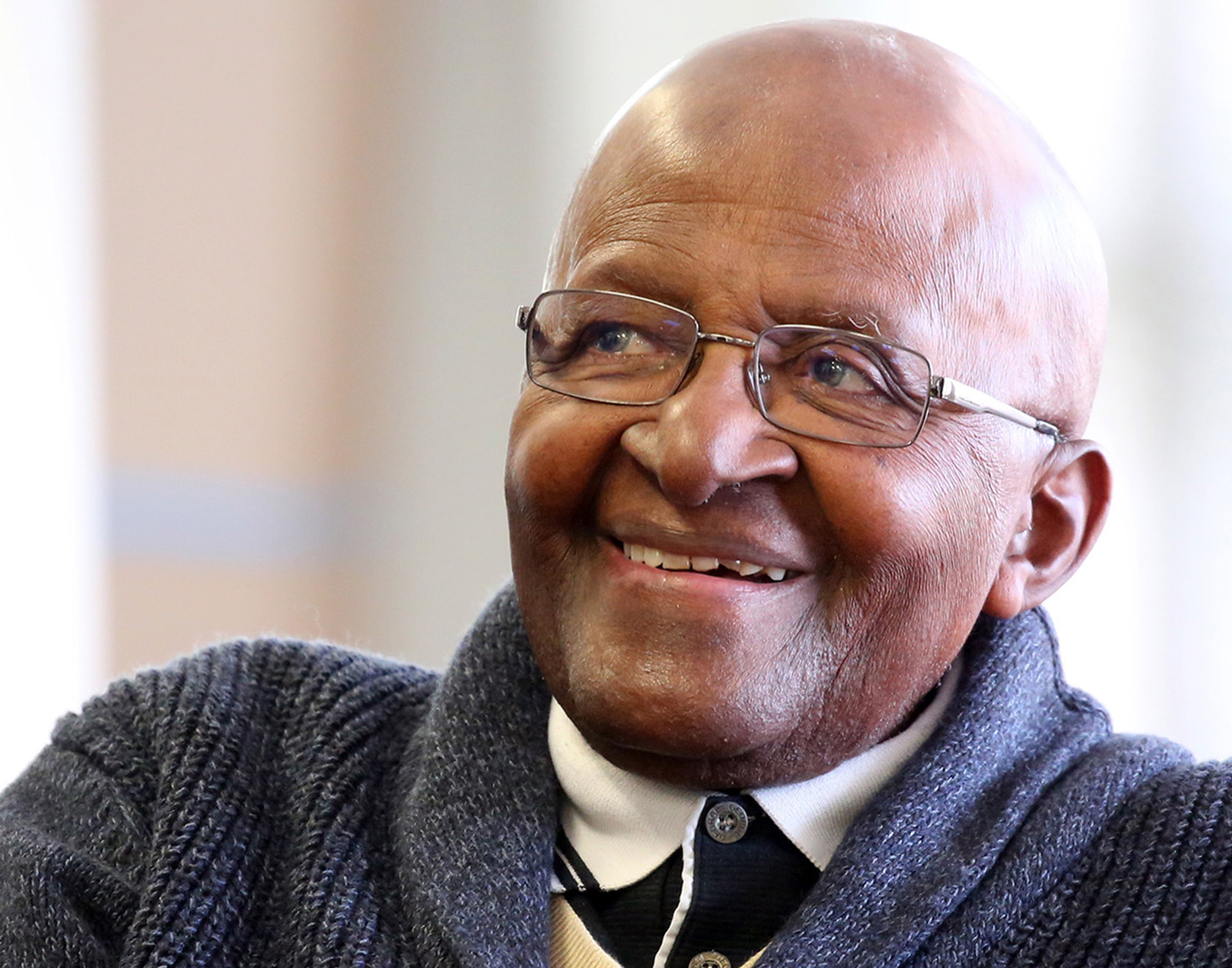
Ward turned to us, “He’s here!!!” he mouthed. My heart was pounding. In walked this seemingly small old man who commanded breathtaking respect. Everyone on staff stopped what they were doing and some even bowed to him. His smile was contagious, and he smiled a lot!

We all stood and shook his hand. He passed around the circle until he came to Wagner, who stood stock-still. “Who helped you into that thing?” He jokingly asked, referring to Wagner’s suit. “Men’s Warehouse,” Wagner instantly replied, nervously. Everyone cracked up. Suddenly, my feelings of nervousness dissipated. The mood in the room became one of natural happiness.

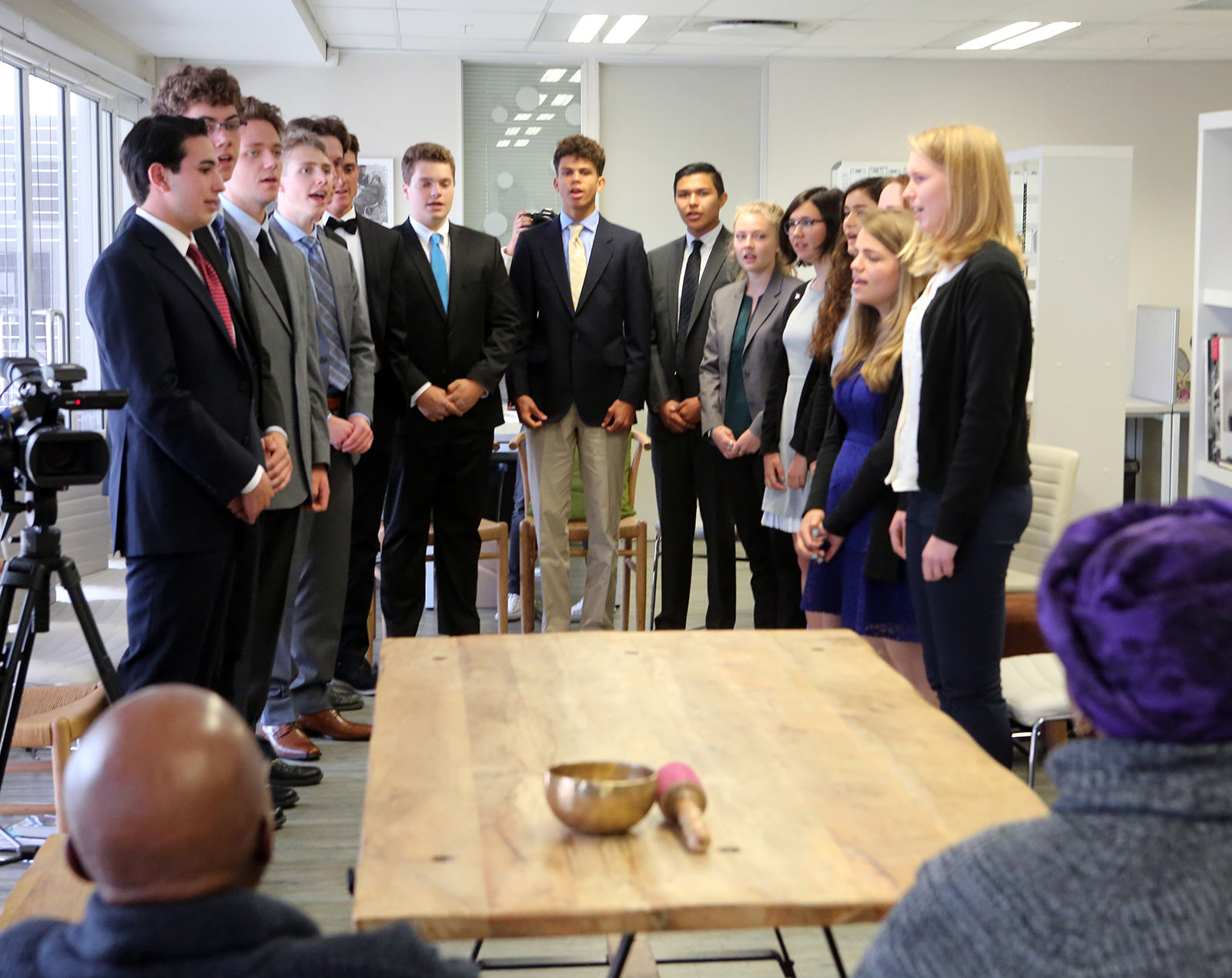
Next, it was time for our songs. There must be something special about singing when nervous because when we broke into the first note of our song, it sounded beautiful. The office workers began to gather, and by the end of our pieces, some of them were in tears.

We continued our meeting with Archbishop Tutu by discussing how learning about his work with the Truth and Reconciliation Commission had inspired a class discussion in which we had resolved some of our own differences. It was great to revisit our experience, and he seemed flattered by this.

Meeting Archbishop Tutu was a great experience. It was obvious why he garners so much respect. He conducts himself in a dignified and humorous way, which made us feel comfortable in his presence. It was a truly heartwarming experience.


Elias Moreno

I started out the day confidently, wearing a suit and feeling sharp. This all changed when Ward dropped the bomb that rather than read the statement that I had prepared for our meeting with Archbishop Desmond Tutu the night before, I would instead be, “Speaking from the heart.” Well, not only was my heart speaking, it was screaming. I could feel my heart pounding in my chest louder and louder, as we got closer to meeting with Archbishop Desmond Tutu. I nervously practiced what I would say to him with Ward, and kept drawing a blank. Every time I tried to speak I would repeat the first line I wrote. All the things that I wanted to say such as how I found his ability to embody joy and humor, even in extremely trying circumstances, inspirational couldn’t cross the threshold of my lips. Eventually Ward helped me get to the essence of what I was truly trying to tell Archbishop Tutu. I found that speaking from the heart sounded much better than reading from a script. I put on a fake smile of confidence, and we all entered the building where our interview would take place.

The serene peacefulness of the quiet and clean building clashed with my own feelings of inner turmoil. Soon, Archbishop Desmond Tutu arrived and I instantly felt less nervous and could feel the whole room get brighter. He immediately began cracking jokes as he went around and shook our hands. We sang two songs for him and then I begin my opening remarks. Looking at his sympathetic eyes and authentic ear to ear smile instantly made me feel more confident, and gave me the ability to truly speak from the heart. I told him how inspirational his message of finding joy in even the most difficult circumstances has been to me. I expressed to him that I would try, in all aspects of my life, to see the joy and hope in every situation and that I would encourage others to do the same.


Sienna Clifton

Happiness is the one word I would use to describe our experience meeting Archbishop Desmond Tutu and his wife, Leah, today. As soon as we heard his infectious laughter from down the hallway, I knew what an amazing opportunity this was. Once he and his wife sat down, our class started to sing, and our smiles never left our faces. It’s hard to completely put into words how I felt. I had an overwhelming sense of joy and pure bliss being there, in front of such an inspirational person, with my class. One profound, yet very simple, statement that he made was that he was considered a great captain because he had a great team. This sentiment made me truly realize the importance of acknowledging others’ gifts, as well as being able to be proud of one’s own. I was struck by Archbishop Desmund Tutu’s humility about the part he played in the Truth and Reconciliation Commission, which helped South Africa heal and move on from the horrific tragedies that had taken place during the apartheid era. As he told us about what happened, he continued to speak about others and their importance. He kept reiterating that they were the real heroes. Hearing someone speak with pride and true happiness about the achievements of others said so much about Archbishop Tutu’s character, and made me feel happy in that moment.

Archbishop Tutu was genuine when he spoke. I will never forget the way I felt being in the room and listening to him speak his truth freely and openly to a bunch of strangers from half way around the world. As cliché as it may sound, Archbishop Tutu’s smile and unforgettable laugh has left a lifelong imprint on my heart.

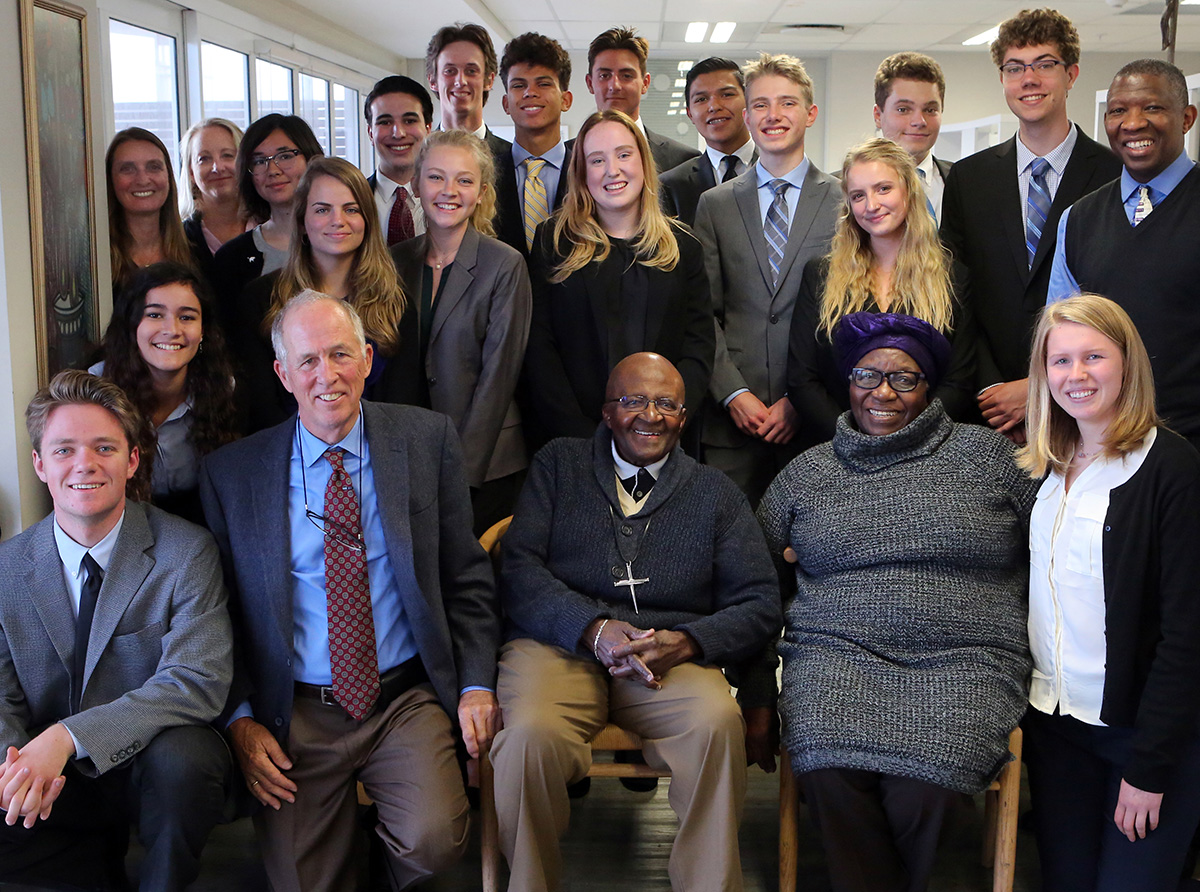
Mount Madonna School students with Archbishop Desmond Tutu

Ubunye Project Coming Soon!

The current Mount Madonna School juniors will depart to South Africa for their “Ubunye Project” on June 16th, 2017. Please check back roughly a week before our departure for the first blog posts from students and teachers!

View the trip schedule here!

The students have designed and are selling Ubunye Project t-shirts which are a fundraiser for the trip as well as donations for the organizations that we will visit in South Africa. If you purchase a shirt, know that the proceeds are going directly to funding the trip and the wonderful organizations that we donate to in South Africa!
Visit: https://www.mountmadonnaschool.org/juniors-ubunye-south-africa-learning-journey-t-shirts-onsale

Tibetan Luminaries

Tara Ching

Today was my first day feeling fully recovered after a brief spell of dehydration. I am so happy that I was back for today because it was probably one of the best days of my life. I cannot imagine a life where I do not return to McLeod Ganj. I love waking up to look out at the incredibly beautiful Himalayan Mountains dotted with colorful rooftops. It’s also nice to be surrounded by the Tibetan culture which more familiar to me. It’s comforting to be surrounded by ringing bells, chanting, and flowing vibrant red and yellow robes.

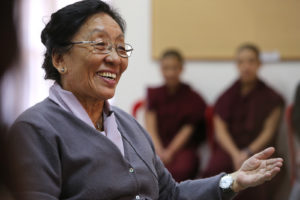
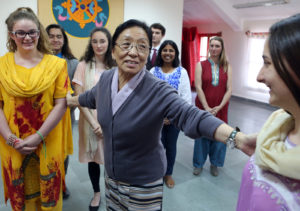
We started off our day with our first interview of the trip, Rinchen Khando. Rinchen Khando is the leader and founder of the Tibetan Nuns Project. As soon as she began talking she became my role model. She spoke beautifully about the value of educating women just like men. She said that in the beginning there was talk of offering the nuns an easier scholarly path, littered with concessions like a lower passing grade or an easier textbook, but that we should take no concessions, because it is important for the welfare of society that women and men are educated equally. She said that when women and men are taught the same it will be easier to stop seeing the distinction between the two, and simply view everyone as human. I thought this was powerful, especially coming from a culture where traditionally nuns could not receive a Ngagrampa degree, only monks could.

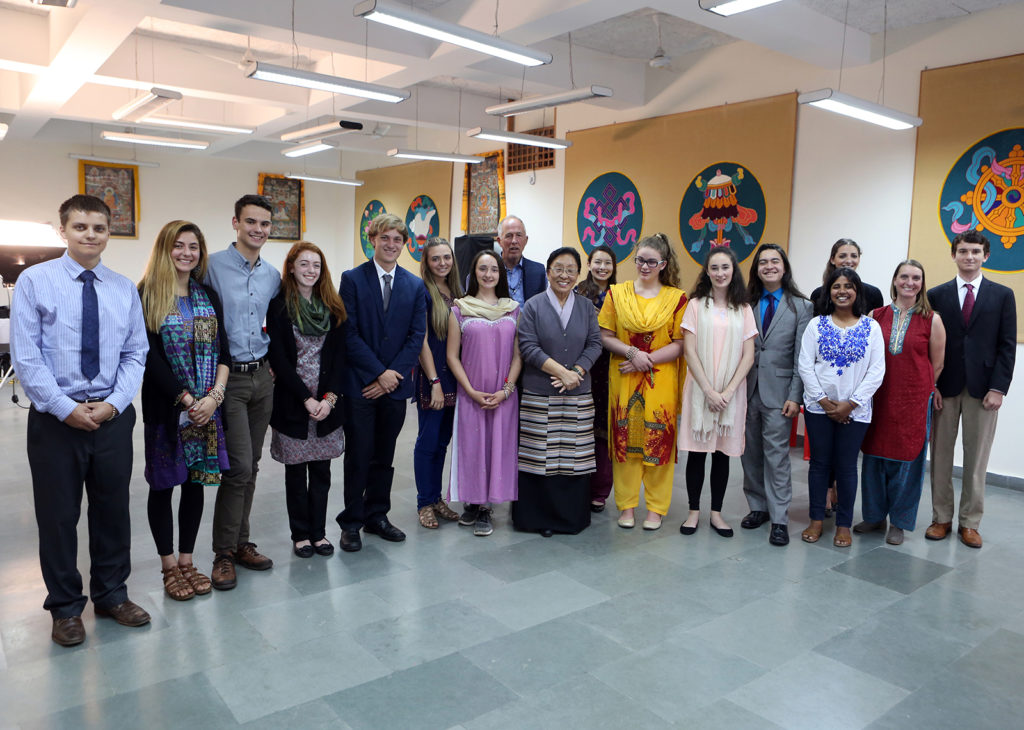
What struck me personally was when she answered the question that I asked, she answered and looked at me with raw attention and care, as though I was one of her family members. I asked her about the importance of art in her work, which is relevant to me because I intend to pursue art and animation in the future. She said that art is so influential, and that with animation, I could really distribute my message and make an impact. She talked about its relationship to journalism, and how there are artists and journalists who can be told to create information for the sake of money, bribery, or other reasons. But she said that if I do not do that, if I stick to my own wisdom and my own truth, then what I create will be powerful. She made me realize that by going into art, I am not just going into an uncertain future, I am going into a life where I create art that is a force to be reckoned with. At the end of the interview, after we took a group picture, she turned to all of us and said that when she looks at us, it is as though she is looking at a group of Tibetan children. In that moment I honestly wanted to walk out with her, ask her to mentor me, and follow her for a few years. Meeting her was truly inspirational and I am eternally grateful for the experience.

Mount Madonna School students with Rinchen Khando


Caroline Smith

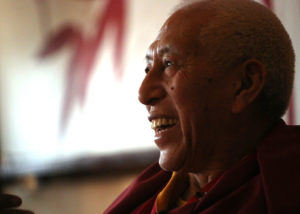
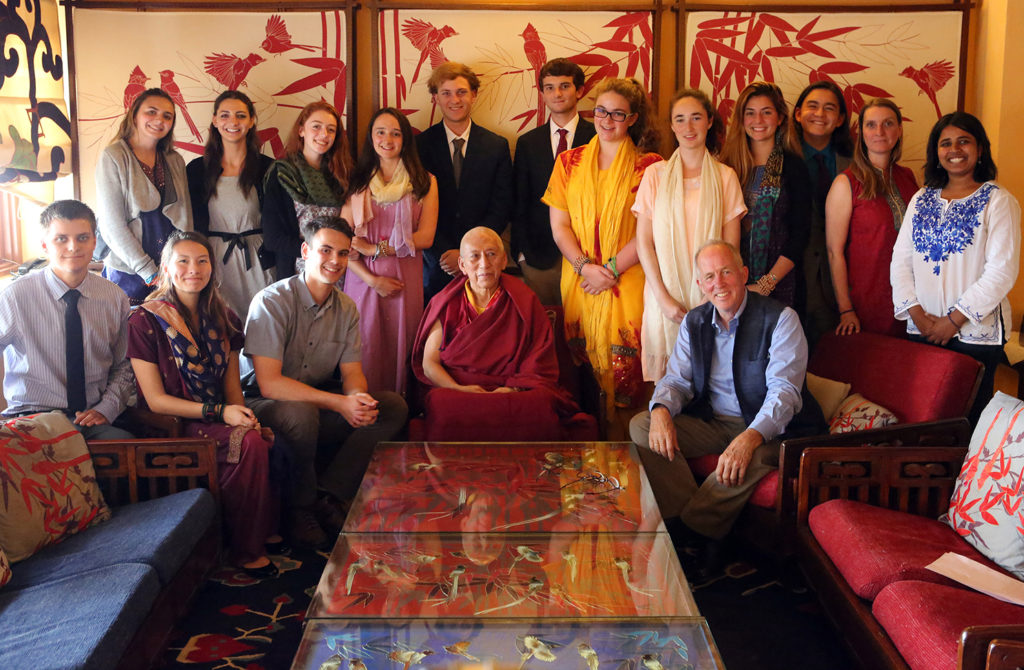
After waking up to a big storm and no power in the hotel, we struggled to get ready for the two interviews we had lined up today. With no internet and no printer, our interview questions for Samdhong Rinpoche were polished and printed while we ate lunch at a nearby restaurant. We rushed through our meal and in no time, he was walking around the room shaking everyone’s hand.

Samdhong Rinpoche thought long about our questions before giving us his detailed, eloquent answers, pausing every once in a while, to ponder or gather his thoughts. Although almost everything he said had extreme depth and struck me in some way, I was especially interested when he spoke to us about the concept of non-violence. He told us that non-violence as a strategy is not true non-violence. This is very similar to John Lewis’ belief that you can’t turn non-violence on and off, it is a way of life. I began to think more deeply about this and was reminded of the Dalai Lama’s book, Ethics for the New Millennium. In his book, the Dalai Lama speaks of suffering, and specifically how sharing in another’s suffering can in turn, alleviate your own. However, sharing in another’s suffering for the sole purpose of alleviating your own is not truly sharing in another’s suffering, therefore, your suffering is not alleviated. This is similar to what Samdhong Rinpoche was telling us because by using non-violence as a strategy, you are using it for the sole purpose of getting something you want, rather than for the purpose of living by the non-violent belief.

I had never thought about the difference between using non-violence as a strategy and living by non-violence but now the difference seems extremely clear. I thoroughly enjoyed our interview with Samdhong Rinpoche because it caused me to think deeply about Buddhist beliefs such as non-violence which I had only thought about on a surface level before.

Mount Madonna School students with Samdhong Rinpoche

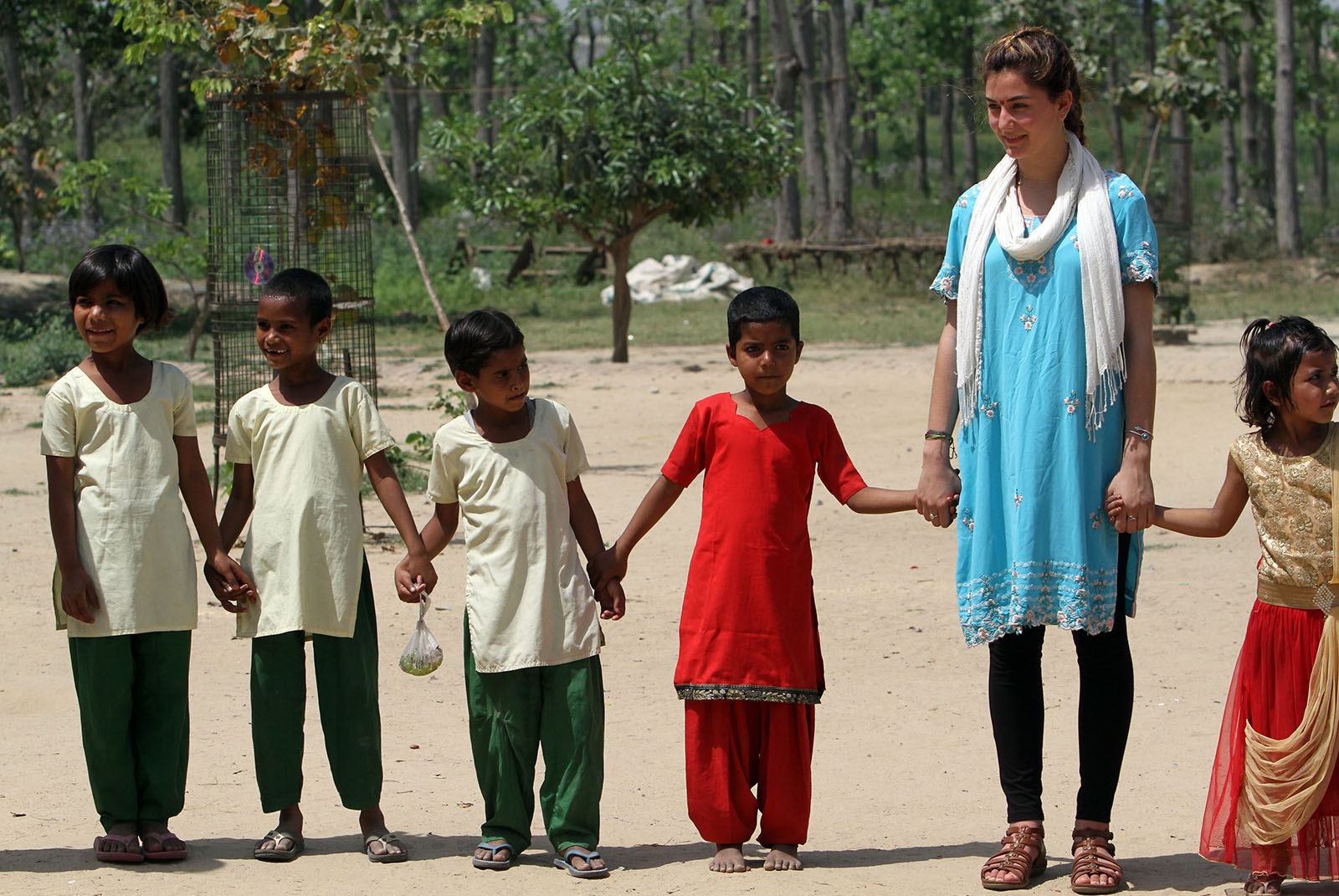
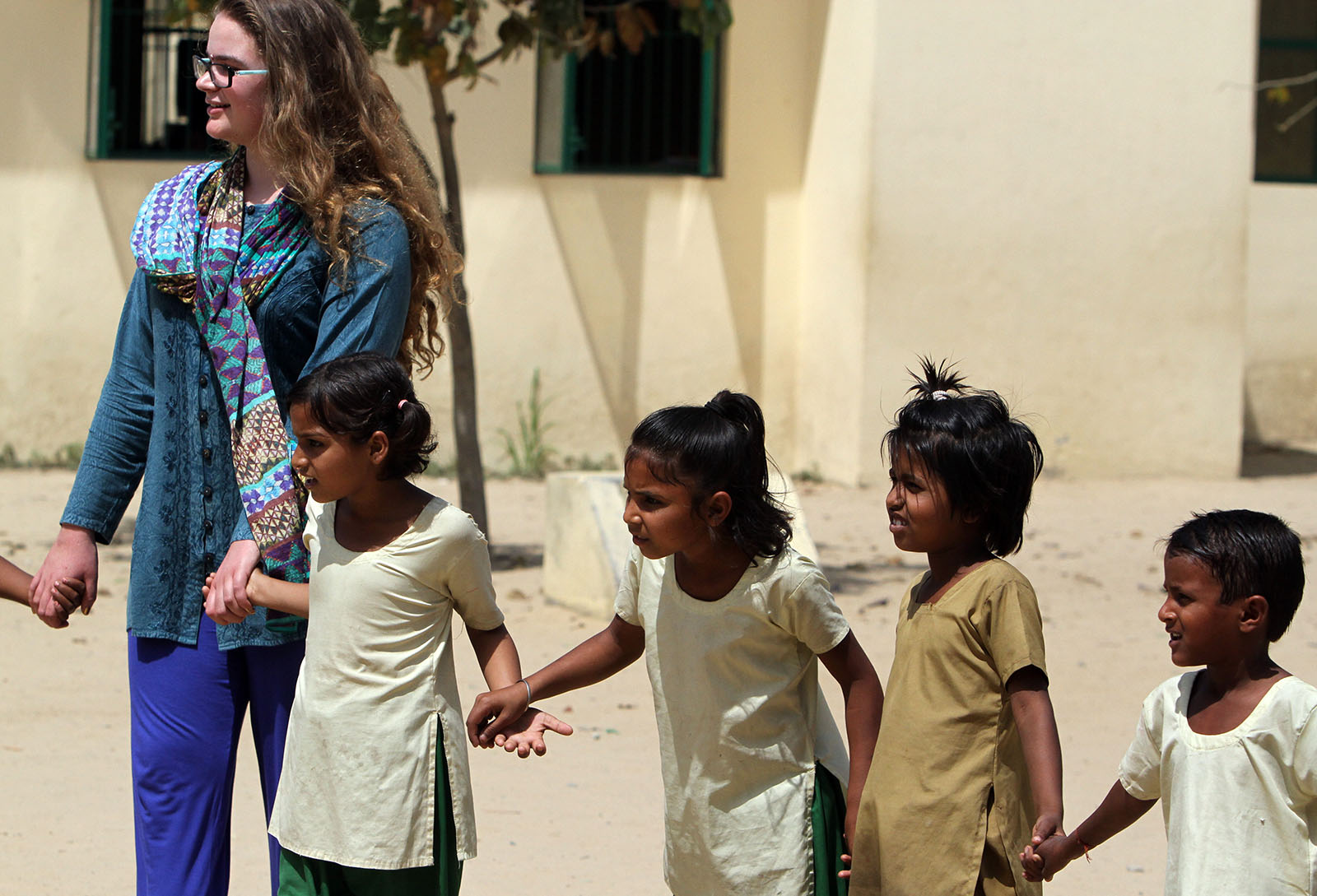
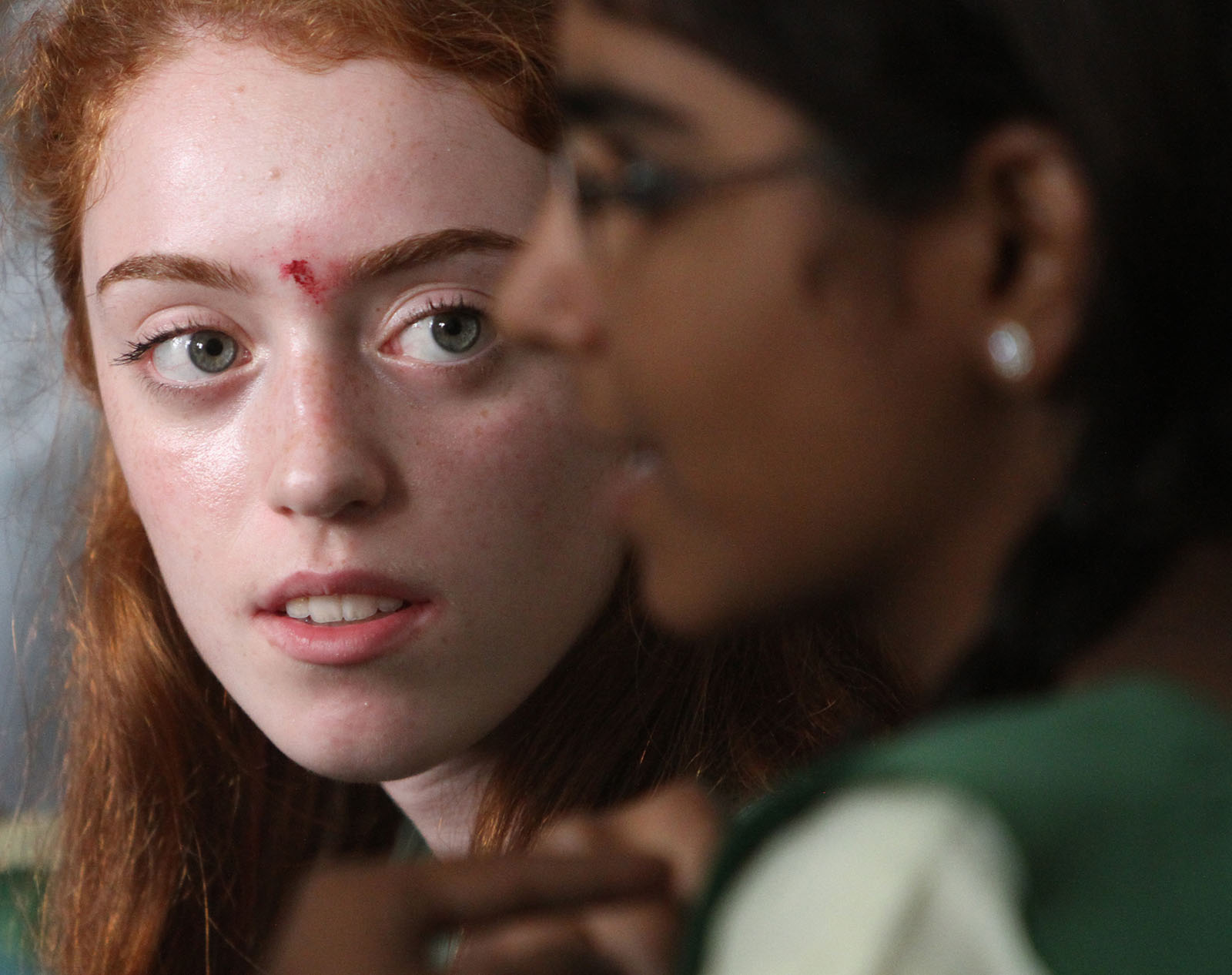
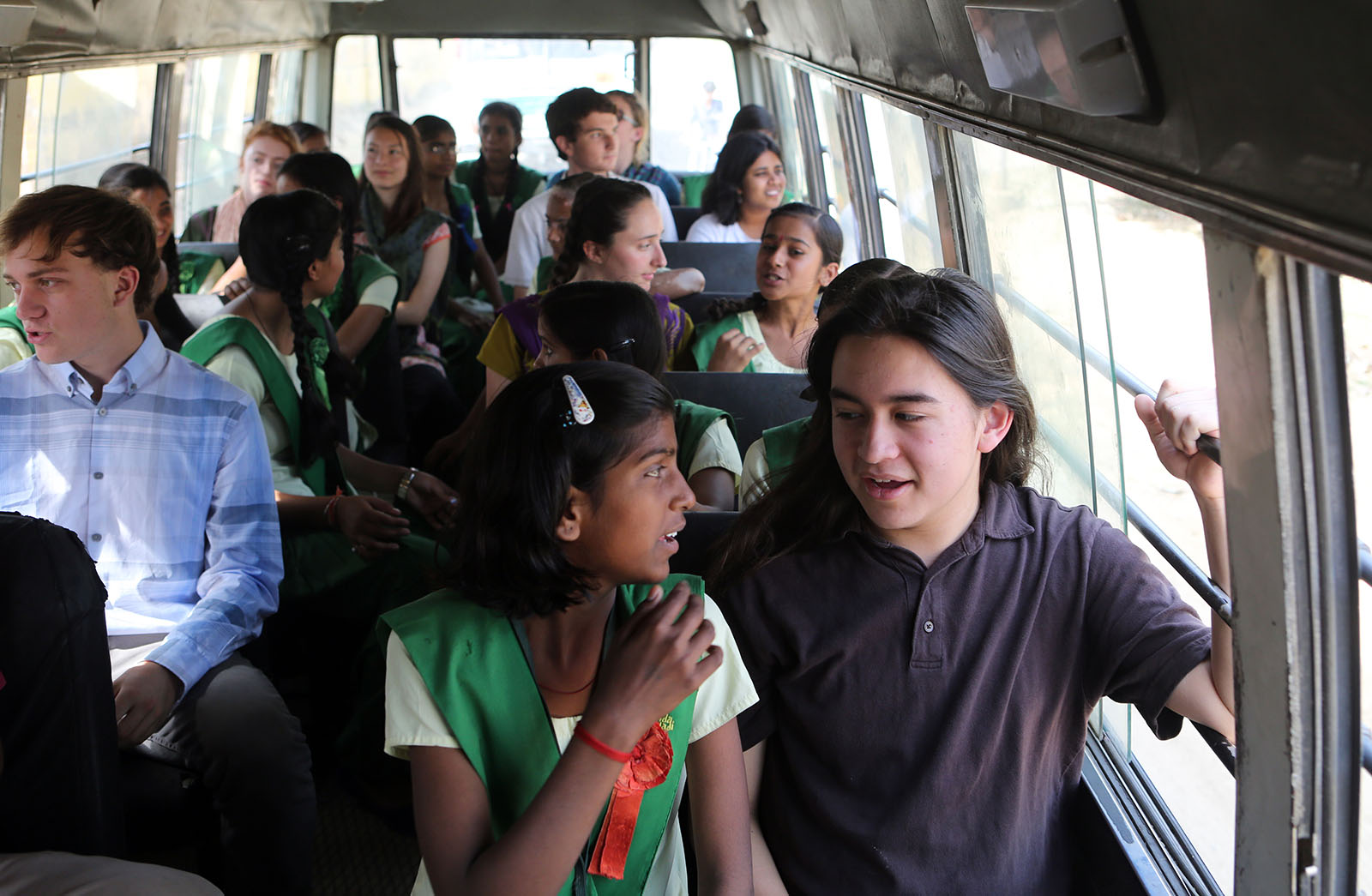
Gallery: Pardada Pardadi