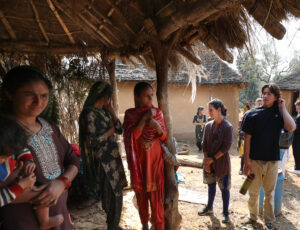
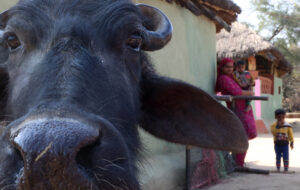
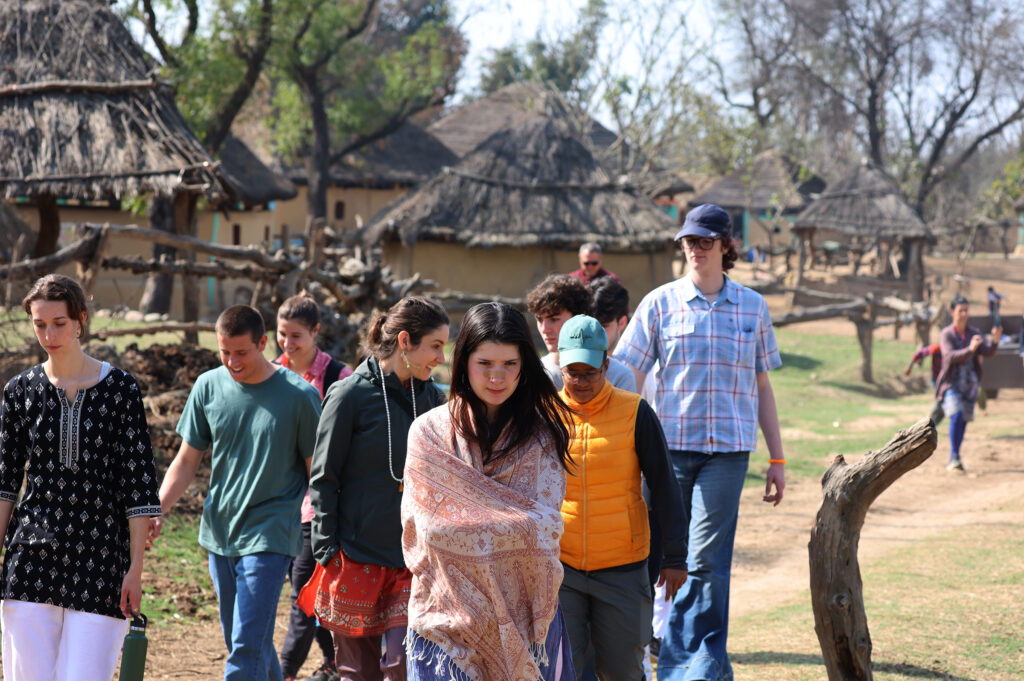
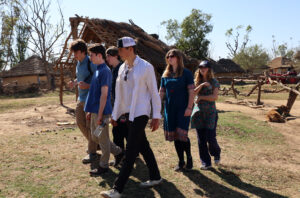
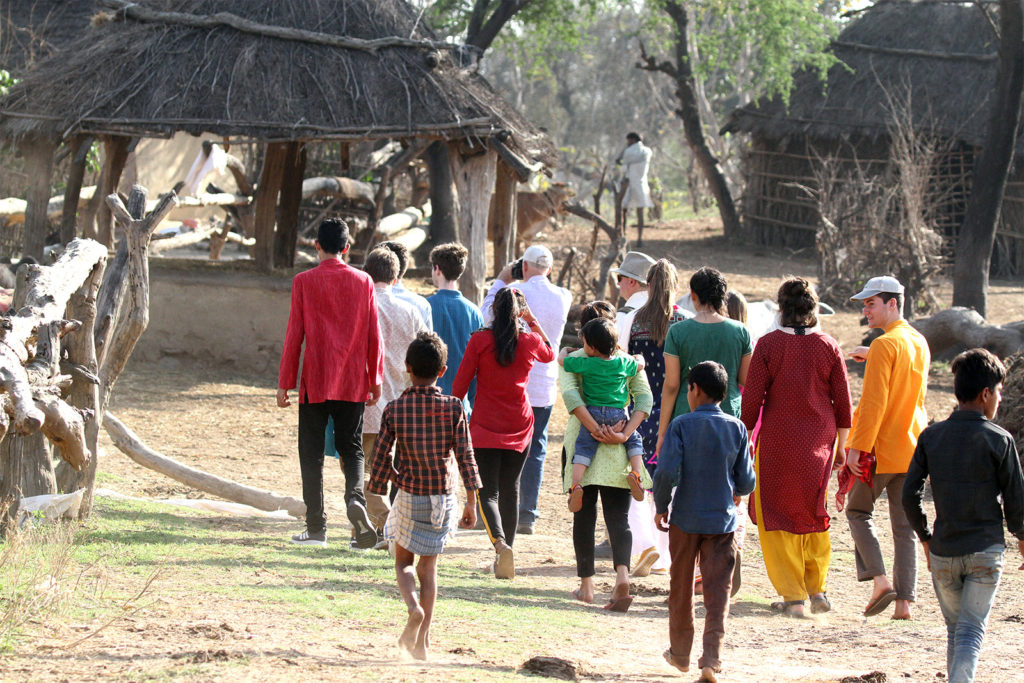
A few days ago we visited a Gujjar village. We started out the day by hopping in a trailer on the back of a tractor. It was a lot of fun and we bounced along the dirt road for about twenty minutes through the jungle. It was a really pretty drive and we could look through the trees up at the mountains. When we got to the village it was a beautiful sight. There were a bunch of huts made out of clay and they were painted colors of blue and yellow and had roofs that were made out of straw. There were also water buffalo roaming everywhere in the village. The Gujjar people’s livelihood is managing water buffalo. They sell their milk to the towns and villages around them because of its unique properties. People make candies and other items out of the water buffalo’s milk. The buffalo were really cute; they had the same demeanor as dogs. They were super scruffy and had funny looking horns.
We walked around the village for a while and looked at all the houses they had. The houses are built to keep a cool temperature inside even when hot (which it normally is). We had a guide telling us about their culture which was pretty interesting. Some aspects are very traditional such as not allowing the girls to leave the village or use cell phones. They also were cutting down a lot of the trees to feed their cattle. They would climb up into the trees and cut the leaves off so that their cows and water buffalo could eat. While this creates friction within the Indian government (who are trying to remove them from this national forest) it has been their way of living for generations and they currently have ancestral rights to the land. We also got to see how they built the houses because they were building one for a couple that was going to get married. The women were building it and were making it out of logs with mud for the walls. Since the women were using machetes, it made me wonder what I could do with a machete so I made a bet with one of our chaperones, Robert, that I could cut through a log in under half an hour, but we weren’t able to find a machete to test it with. It was very interesting to see a whole different way of living that I never had seen before.
This morning after breakfast we all got into a trailer towed by a tractor. The trailer had a thick blanket with padding underneath, which was very necessary for the bumps we were about to encounter. All eight of us students, the chaperones, and many of the Ashram graduates piled in under the blazing sun, and after a short delay, we set off. After a few hundred meters of the highway, we pulled off onto a dirt road tucked just between some vendors’ stalls and immediately started getting bounced around by the road. After a good ten-minute roller coaster ride, we arrived at the Gujjar Village.
The Gujjar people, or Gurjar as they are commonly known, are nomadic tribal people, who are known for their herding of cows and water buffalo. They historically and currently are known to inhabit the lands of what are now Afghanistan, Pakistan, and India, some sources claim they have lineages tracing back as far as 1 CE. Most are currently practicing Muslims. While they have a tradition of being nomadic, they are also known for mostly isolated clans and factions that each have some variance in rules and customs. A number of the tribes are today settled down to one place, some having done so for hundreds of years. This has prompted the government of India to give them the rare distinction of being legally able to live on and harvest land within what are officially state and nationally-owned forests through the 2006 Forest Rights Act. Regardless, local forest officials lay claim to park-owned land, causing a conflict over land rights that is ongoing to this day.
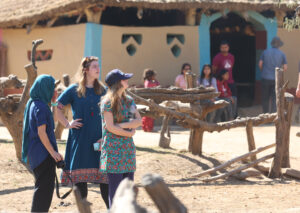
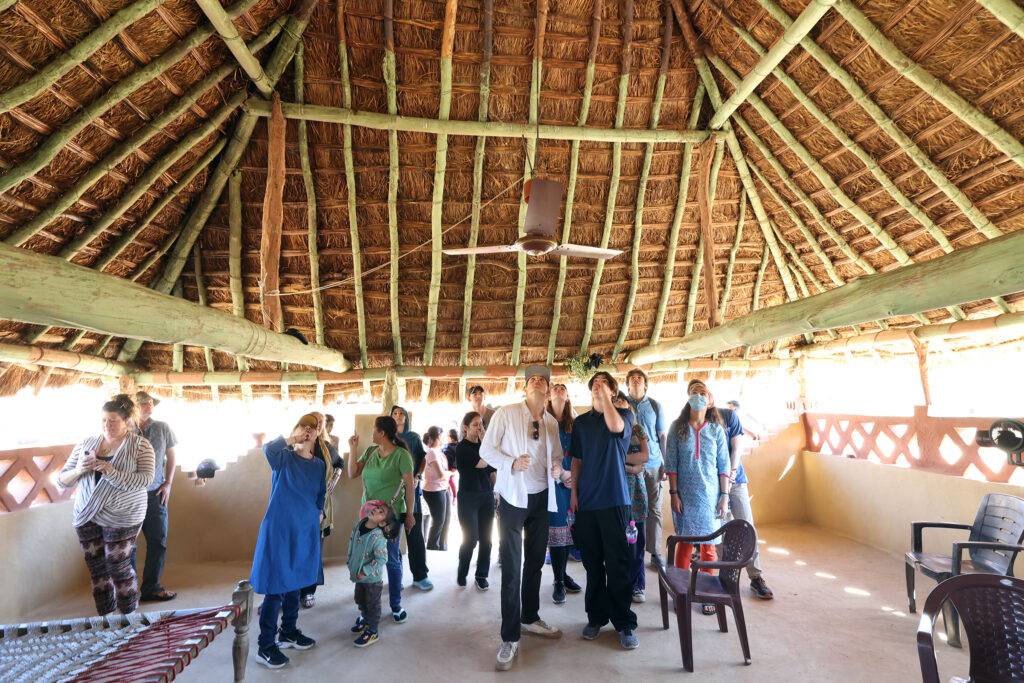
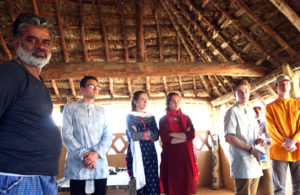
The village was larger than I was expecting, with ~35 buildings, which were all quite well put together and maintained. They were made of mud, cow dung, and straw, with a light peachy pink color, and had high straw roofs. Most of the buildings had some sort of special design, alternating up and down triangles were common but no two buildings were the same. They also had intricate painted patterns on many of the houses’ insides, to complement the shelves and windows, all carved out of the walls upon construction. A few houses had solar panels with a small internal battery capable of charging multiple phones and running a few lights. There were two communal kitchen buildings, and a storeroom, along with many different types of buildings for livestock. There were a few chicken houses, constructed entirely of sticks with boxes inside for egg-laying. There were also many cows in various places, some with their own houses, and others roped to fences.
It struck me as a really good example of how the insertion of some modern things happens in a centuries-old village. There is no waste management, so any packaging that things are bought in goes down the local ravine, or sometimes just on the ground. All of the solar panel systems seem awkwardly jerry-rigged in, long after any thought was put into the building, the one battery I did see was in a random box with wires going every which direction inside. There is also the tarped roof, where in the past they likely would have fixed the straw, the less permanent solution is chosen today. It is also important to note that they have an interesting circumstance, where the water buffalo that they almost exclusively watch over, produce a different, highly desired kind of milk. This means that they have all of the bartering power they need, they are by no means poor, and while they live a life similar to what they have for generations, their progression towards normalization of modern things like plastic-packaged foods and electricity is mostly limited by their desire to keep tradition. So, between that, and conflicts with local government, I really have no idea what in the village is going to change in the coming years.
Har Ki Pauri
Sky Weir
Leading up to Har Ki Pauri, I had heard stories about this almost magical event and had formed quite the expectation in my head. I imagined clear skies, peaceful music, and a soft spot to watch the evening unfold. I expected the ceremony to go smoothly and for small boats of flowers to be launched off by each individual, making a beautiful sight of small lights covering the river. Before I share my once in a lifetime experience, I want to share a little backstory.
The aarti ceremony at Har Ki Pauri in Haridwar is a spiritual experience that attracts devotees and travelers from all over the world. It is a famous, almost wharf-like place located on the banks of the Ganges River in Haridwar. Haridwar is a holy city for the Hindus. The legend states that it was created when a drop of nectar fell during the world’s creation. The aarti ceremony takes place every evening at sunset, and is a mesmerizing sight and experience to be part of. The preparations for the aarti ceremony begin several hours before the actual event. Priests and volunteers decorate the ghat with flowers, diyas, and other offerings. The main attraction of the ceremony is the grand display of lights, sound, and devotion.
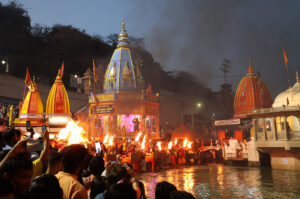
As the sun sets, the priests and volunteers gather on the banks of the Ganges and the ceremony begins. The priests offer prayers to the river and the devotees join in the chanting of hymns and prayers. The highlight of the aarti ceremony is the synchronized waving of the diyas (an oil lamp made from clay or mud with a cotton wick dipped in oil or ghee) by the priests. The priests hold the diyas in their hands and move them in a circular motion, creating a beautiful pattern of light.
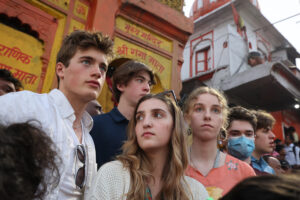
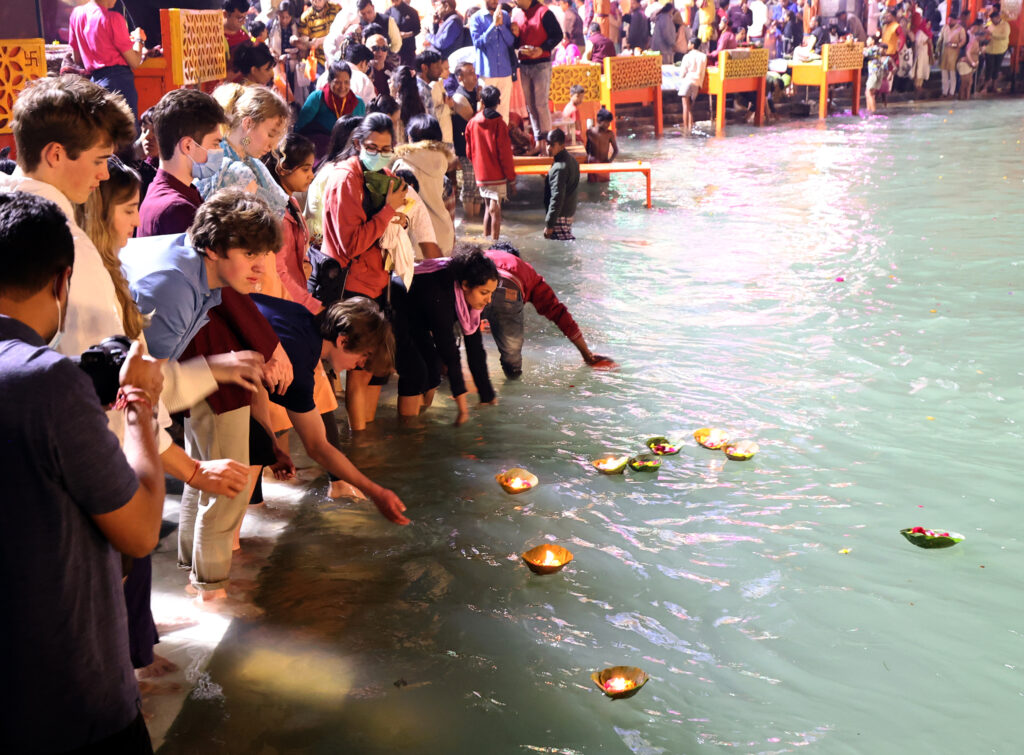
After a couple of hours of shopping on the crowded streets of Haridwar, we arrived early for aarti so that we could secure seats close to the location of the ceremony. Emerging from the narrow complex streets, lined with small stores and people selling their goods, we saw the shores of the Ganges. It was not that busy, so after taking our shoes off, we made our way down and washed our hands as is customary. Some of us were given small boats of flowers that we set afloat after reciting a Hindu chant that gave our families many blessings. We sat down on the stairs lining the shore as the waves lapped against the bottom of the steps and newcomers started taking their spots on the side of the river. Suddenly people were coming from all directions as the ceremony started. Soon, we were surrounded by people standing in the river, blocking our view. I stood up to get a better view, and as the sun began to set, they started to light candles, torches, and the diyas. The priests stood, facing the river, and began to wave their diyas. The diyas were moved in a circular motion, creating a mesmerizing pattern of light that danced on the river’s surface. I was surprised at how much soot was being released due to all the oil being burned, blurring with the sunset to create a hazy feel which added to the experience as a whole. As the priests waved the diyas, the sound of bells and conches filled the air, creating a unique melody. The devotees joined in the chanting, adding to the musical atmosphere. The entire scene was so surreal, I felt as though I had stepped into another world. As the ceremony ended, the priests offered their final prayers, and many people began to swim in the holy river.
Looking back on how I thought it would go versus the reality of the experience, I was not expecting it to touch me at the level it did. As we left, I shared with my classmates how that experience was a truly once in a lifetime opportunity, and I felt honored to be part of something so foreign to me. Expectations are meant to be exceeded, and this experience blew mine out of the water. That fact that the experience was so different from what I imagined, mixed with the many small experiences we had throughout the day, made me contemplate many things on our drive back to the place we currently call home.
Sri
Ram Ashram feels like a second home. We drove into this magical place
feeling excited, but with a sense of nervousness. We were unsure of
how the next several days would treat us; little did we know what we
were in for.
As
the bus finally parked, the kids flocked to the door. We were
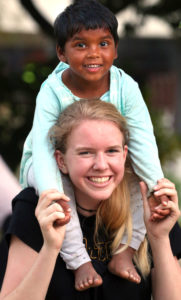
welcomed with warm smiles and genuine happiness. The kids immediately
took our hands and led us through the ashram playground, demanding
our full attention and arm strength. These kids did not care about
our backgrounds, beliefs, or skin color, only that we were there to
have fun. And boy have we had fun!
I
have met so many amazing kids here. It’s seriously one big happy
family. All the older kids look out for the younger ones; they take
on this responsibility with grace. It is something that has truly
inspired me. It has been a privilege to come here and interact with
everyone, I am learning new things about myself every day, and
meeting more and more incredible people each hour. The kids are
bright, and above all else positive.
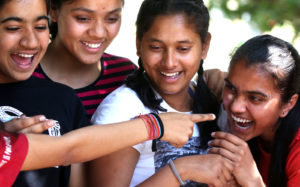
Laughter
fills the courtyard each day, something guaranteed to make you smile.
I find myself really admiring their outlook on life, especially considering the circumstances of many of them before they came to Sri Ram. It is truly a breath of fresh air. I am happy that I am here, and feel grateful every day. I will not forget the memories I have made in this beautiful home, and the relationships that I have built with these special people.
Visit to Gujjar Village
Anika Compoginis
The
Gujjars are a tribal people that live in the jungles of India, and
have for a very, very, very long time. They are almost completely
self-sufficient, their main commodity being milk, which they trade
and sell to the locals of their area, and to people in Haridwar. Sri
Ram Ashram has a very friendly relationship with the Gujjars, and
have traded milk and wheat back and forth for a long time. Yesterday,
we got to go and visit a Gujjar village that is very close to the
ashram.
We
all piled in the back of a trailer being pulled by a tractor, crossed
a canal, and drove forth into the dusty, scraggly jungle that the
Gujjars call home. We encountered a little bit of trouble on the way
there in the form of two men on a motorcycle who insisted that we
didn’t have permission to drive into the jungle, tried to get us to
leave, and one of them attempted to pull rank by telling us that he
worked for the national parks system in India. Of course, he didn’t
know that we were from the ashram, and he had no identification on
him to prove who he was, so when he called the village head down to
kick us out, we were greeted, and we were allowed by.
As
we mounted the final rise leading into the village, a large crowd of
kids stared at us shamelessly as we pulled up. Rashmi, the woman in
charge of the ashram, had explained to us that each family has three
structures: one for the women and children, one for men and guests,
and one as the kitchen. Each structure is composed of walls made from
cow dung and mud, and the roof is made of wood beams and grass. While
that may sound very simple, the architecture is aesthetically
pleasing, and all the huts were well constructed and kept spotless.
Each
family welcomed us into their homes with shy smiles. Some of the kids
feared us and ran off to hide, but several followed us around the
whole village, and showed us their cows and livestock. In one hut, we
saw a 10-day old baby goat in a cupboard, laying on the family’s
produce.
Overall, I was blown away by the simplicity of the Gujjar’s lifestyle, and how content they were with it. The lack of stuff was noticeable, and I think that this is a big contributor to their happy and simple way of life.