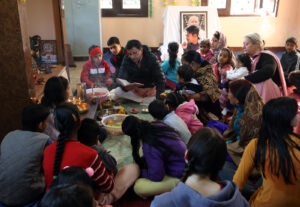
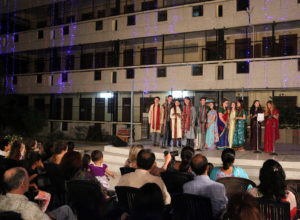
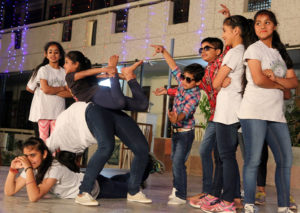
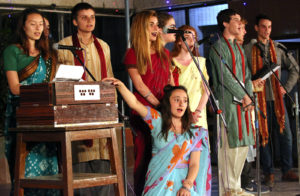
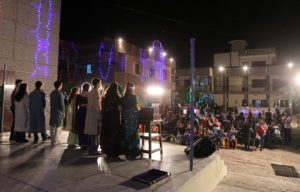
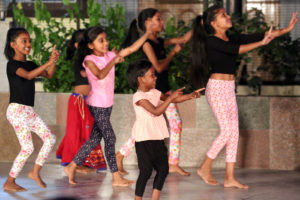
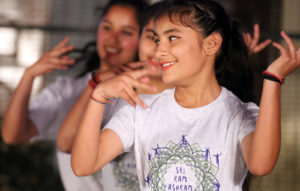
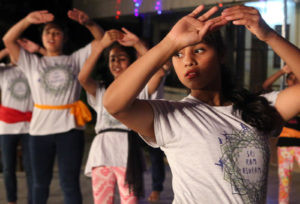
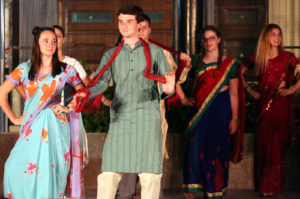
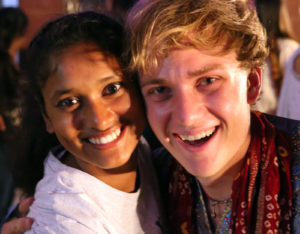
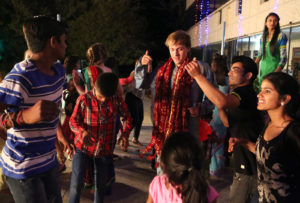
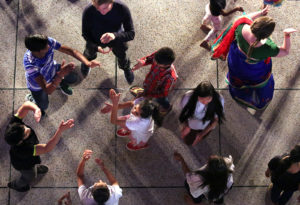
During our time at Sri Ram Ashram, we were introduced to a prayer tradition called Arati. Arati is performed and celebrated by the Ashram kids every night before dinner, but it extends beyond just the Sri Ram Ashram; it’s a part of Hindu culture. Arati entails a ritual of devotional singing and prayer towards Hindu deities. It is a time of passionate praise and worship, vastly different from what I have witnessed in Western culture. Observing the kids treat Arati with such respect and focus was inspiring. Children ranging from around ages three to eighteen come together selflessly to devote themselves to a higher purpose. Despite my expectations based on experiences in the West, I was mistaken in anticipating misbehavior and distractions among the children.
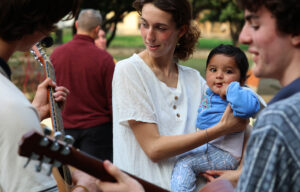
Arati is performed before a shrine holding various Hindu statues and pictures, along with a flame lit in praise of the deities. However, it’s the rhythm and melody of the Arati songs that moved me the most. I was taken aback when the drumming for Arati began. Initially, I had seen very young children holding drums, and I hadn’t expected much rhythmic competence. I anticipated a simple four-beat rhythm, similar to clapping along with a song. However, the young musicians demonstrated a unique rhythm with specific emphasis, transitioning from a four-beat to a seven-beat time signature seamlessly. This amazed me, as Western music rarely incorporates such exotic time signatures. Even very experienced musicians I have met would struggle with this concept. To the children, however, it was second nature. The drummers interacted with each other, playing separate parts at times, thus creating a more diverse rhythmic structure. Then, in unison, they would completely change the rhythm as required by the Arati song. As I attended Arati more frequently, I noticed that most of the kids could participate in the drumming with a sufficient level of understanding. Initially surprising, I later realized that since they had Arati every day, this proficiency was understandable. It was beautiful to see how the children absorbed this rhythmic feel at such a young age, much like learning a language through immersion.
Another aspect that amazed me was their patience, particularly during a call-and-response section of the song led by one of the older kids. The phrase was sung, and then it was up to everybody else to repeat it rhythmically. Initially, my classmates and I rushed the beat, a common issue among American musicians, especially younger ones. However, the children from the ashram repeated back slowly and meticulously, without any sense of urgency, perfectly in time with one another and relaxed in their execution. While I’m uncertain why they possess this rhythmic acuity, I’m inclined to attribute it to their presence in the moment, something that the United States is known to lack.
These experiences have altered my perspective on music and how I intend to conduct myself as a musician in the future. Patience and presence are key.
Beatrice Miller
Once a year, a group of bright-eyed seniors spend a brief week at Sri Ram Ashram. It’s a week of close-knit meals, friendly playtime competition, and comforting Aarti evenings. The memories made at the ashram impact these twelfth graders lives forever, marking their time in India with joyful energy, and then they leave.
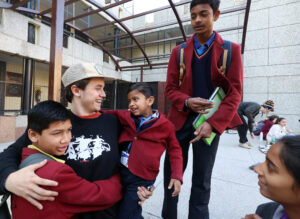
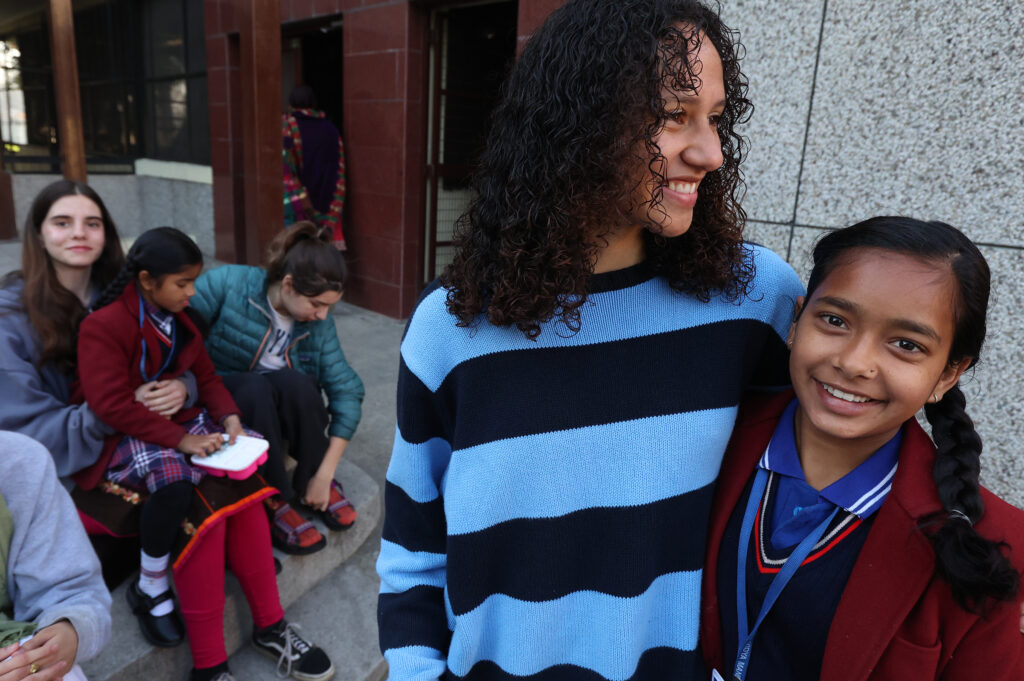
Now, as it is my turn to experience this journey to Sri Ram, I try to remember the reality of the people who live at this orphanage. They grow up in the magical world that I only have the privilege to visit. They have not one, but three mothers. Each woman who is dedicated to loving these children and ensuring they know they are cared for. They have a village of friends, siblings even, with whom they grow up. The ashram is more than just a week out of my India trip; it’s the chance to meet a whole family. A chance for me to make connections so that I may bond with girls my age, a few days to learn about their interests, habits, and games, and to become their Didi (which means older sister in Hindi) and hold their hand all day long. I don’t have any sisters, yet now I have so many little ones. Little sisters, even brothers, who have come from all walks of life. They have written me letters and woven beautiful little bracelets for me to wear, tokens of their love and appreciation for how much my time means to them. I wish I could stay longer at my home away from home.
Today we had the chance to interview Carla Dirlikov Canales, an opera singer who enjoys helping others through art. She has created projects and initiatives that help impoverished communities express themselves through art. She has sung at Carnegie Hall, and she is very intelligent and insightful. Two points stood out to me from our interview with her.
The first is that she said that whenever she does something, she gives it her all, nothing less than 100%. To do so, she finds it necessary to compartmentalize. When she is doing her music, she focuses on that alone and doesn’t allow herself to become distracted. She even tells her friends that she is focusing on music and doesn’t want to be distracted. I think this is good advice, since I am a minimalist. Ever since a project in fifth grade, I have put the bare minimum into school. I have been told by everyone that I need to put more effort into my schoolwork, but I still haven’t done that. After hearing Carla tell us about how she works and the things that she has accomplished as a result, I feel inspired to start putting in the extra work to succeed.
The second thing that Carla said that struck me is that in order to succeed you must be stubborn and not give up. Again, people tell me that in order to do well in life I have to go all-out and not give up. When she made this point the first time, I wasn’t moved by what she said, but when she repeated the idea that being stubborn can lead to great results, I realized that if I am persistent enough I really can accomplish anything. She talked about how in order for her to go to college she needed a full ride scholarship. She was offered a scholarship because she is Hispanic, but she didn’t want it. Instead of giving up, she called the person in charge of the scholarship and asked why she didn’t get an academic scholarship, and the person told her that she scored a 27 on the ACT but needed a 28 for a full-ride scholarship. She then re-took the ACT, got a better score, and got the full ride scholarship. I found this story inspiring because she was only a teenager at the time. I’m hoping to keep these two ideas in my mind as I move forward in life.
Logan Shaw
Today, we interviewed Carla Dirlikov Canales, who is an opera singer who focuses on the arts to spread awareness about cultural and social issues. I was really impressed by how much she has accomplished. She has starred in international productions, started projects such as the Canales Project, and she speaks five languages fluently. She also works with the government on the “Turnaround Arts” program, which aims to “turn around” failing schools by getting students involved in the arts. She believes that education in the arts is important to society because it helps to develop a person’s imagination, and imagination is necessary for social change.
Carla emphasizes that if you persevere anything is possible. She shared an anecdote to illustrate her point. She said that the only way she could get into college was to get a full ride scholarship, and at first she didn’t get one. She then called the college and remained on hold with the admission department for hours. She finally got through to someone and asked what she could have done to get a full-ride scholarship. They told her that if she scored one more point on the ACT she could have received a full ride. She retook the exam and earned the scholarship, allowing her to attend college.
Carla urged us to connect with her, as having adult mentorship has been a key to her success, and she wants to help others succeed as well. She genuinely wants us to reach out to her, and she gave us her email address and phone number. It was very cool how much she wants to support us throughout our journeys into the future.
Sophia Manzur
Today we interviewed Carla Dirlikov Canales, the founder of the Canales Project, an organization that celebrates culture and community through art. Carla is also a professional opera singer who performs internationally and has performed at the National Gallery of Art, the Public Theater, and the Kennedy Center. I was especially excited to interview Carla because, like her, I am an artist and Mestiza. Not only do I relate to Carla on a personal level, but I see her as an iconic figure because, like her, I hope to use art to bring communities together.
I asked Carla the following question: “You created The Canales Project for people to share their personal experiences with culture and identity through music and conversation. At times, dealing with the tensions that can arise when one is raised in different distinct cultural environments can make one feel as though they are living ‘between two worlds.’ Being Mestiza, I struggle with feeling connected to my Mexican roots because I have grown up surrounded by a completely different culture. What can those who feel lost regarding their cultural identity learn from your project?” Carla responded that she has always felt like she was lost in her cultural identity. Her mother is Mexican, and her father is Bulgarian. Carla spoke about having to learn two completely different cultures in addition to American culture. She wants to help those who also struggle to find their own cultural identity. She says that she uses her art as a platform for others to achieve their personal goals.
During the summer of 2022, I attended California State Summer School for the Arts, a theater arts program. On my first day there, my acting studio teacher asked us if we are in love with theater and why. At first I responded that of course I am in love with the arts because I have an indescribably great feeling when I perform. Upon reflection, however, I realized that I didn’t really understand why I have this great feeling when I perform. What Carla said about why she loves the arts helped me identify why I have this feeling. Carla said that all humans have emotions, and art is a way for us to express them. No matter what differences we have, we are able to connect with one another through the arts. I don’t think there is anything more beautiful than being able to express yourself with others as part of a loving community.
Although I live “between two worlds” and have had difficulty finding my own identity, when I’m dancing, singing, writing poetry, or acting, those two worlds coexist in harmony. When I immerse myself in my art, I am authentic and true to myself in a way that better allows others to see me not as belonging to one world or the other but simply as me. I am grateful to Carla for helping me understand myself and my motivations better.
I
don’t think I will ever enjoy singing as much as I did today. So
far, our time at Tembisa has been full of talent, music, and
warm-hearted kids who are thrilled to engage with us. As soon as my
feet hit the dusty pavement, on our first day, I was swept away into
a crowd of embraces and greetings. The kids at the Moses Molelekwa
Performing Arts Center were buzzing with curiosity and the
willingness to make connections with us.
Out
of the sea of friends I made, one stands out. I met this kid named
Thabang, and let me tell you he could make absolutely anyone and
everyone laugh. A tall and rather lanky kid, he was hard to miss in a
crowd. Honestly, my classmates and I were in conversation with him
every chance we got. I will miss him and his overuse of, “guys!”
very much.
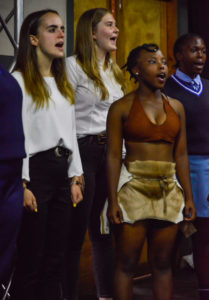
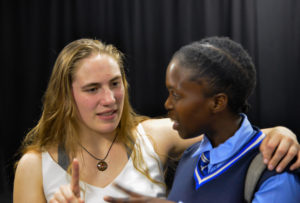
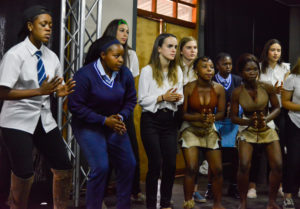
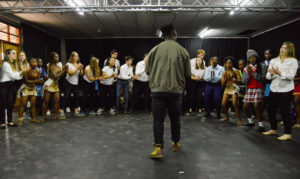
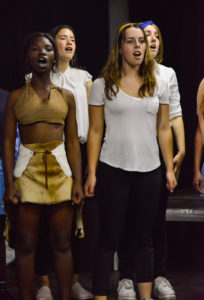
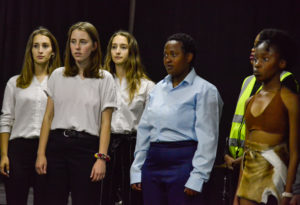
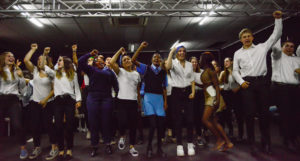
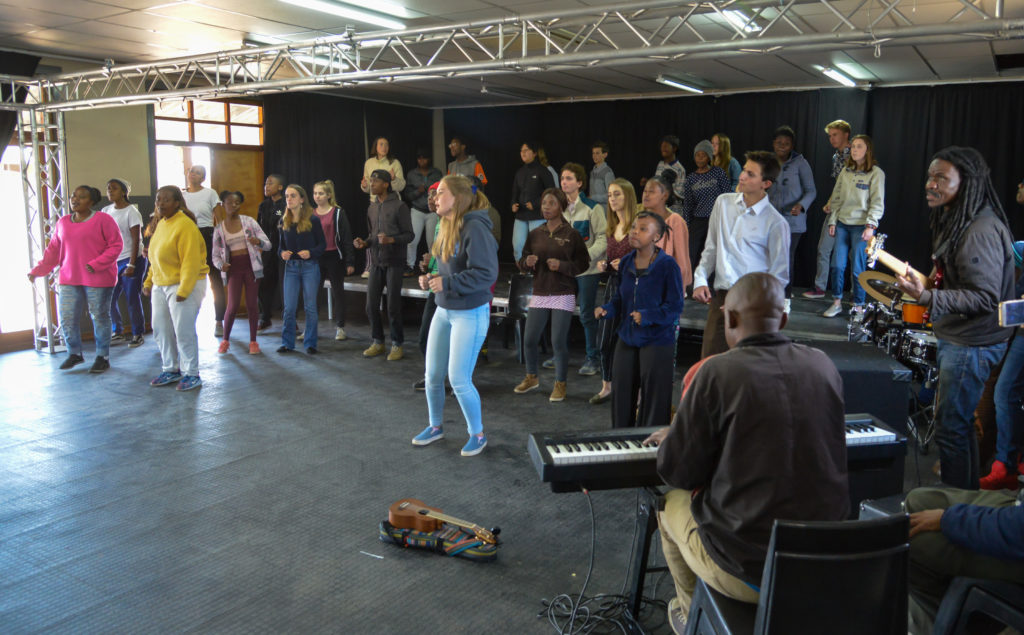
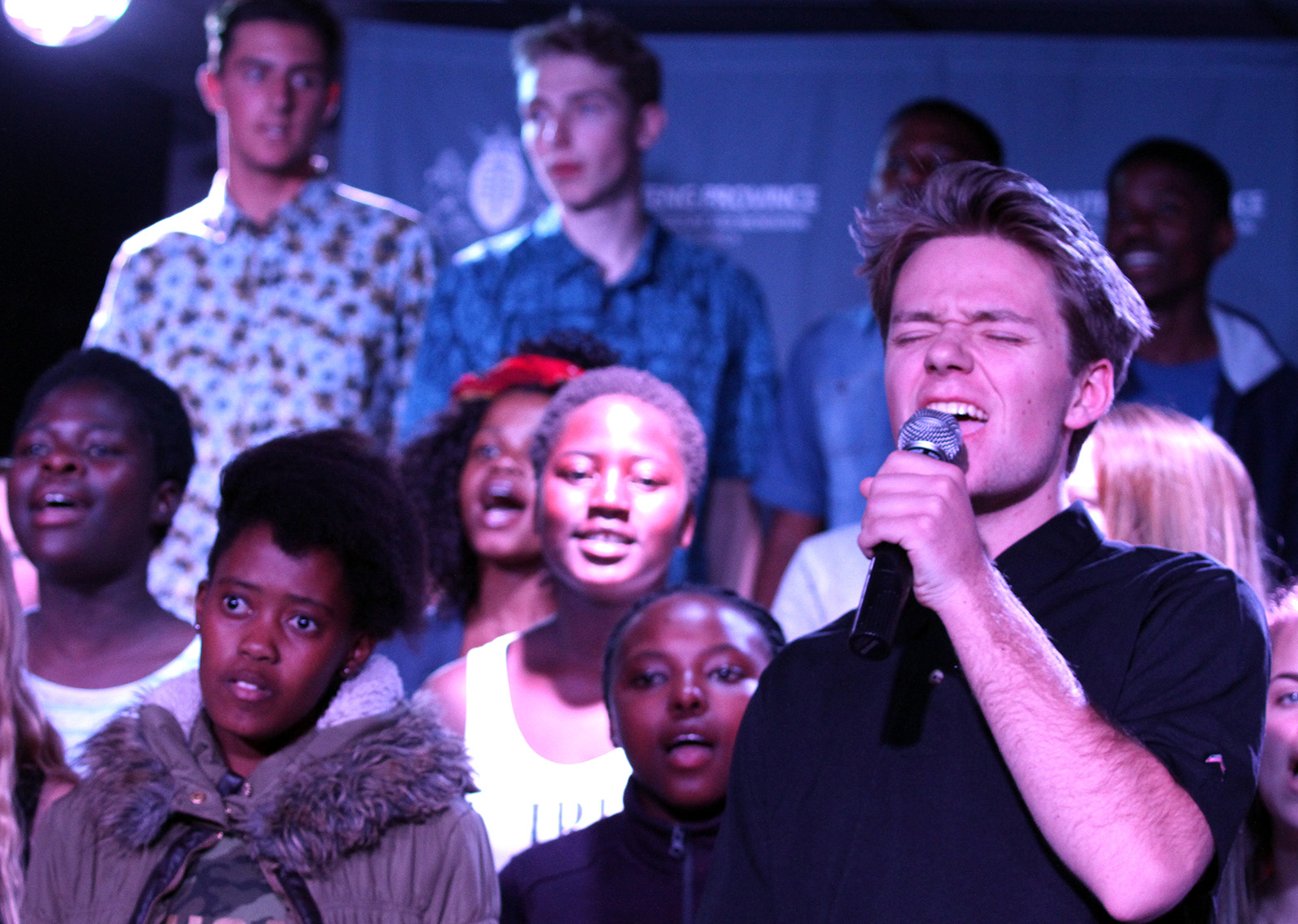
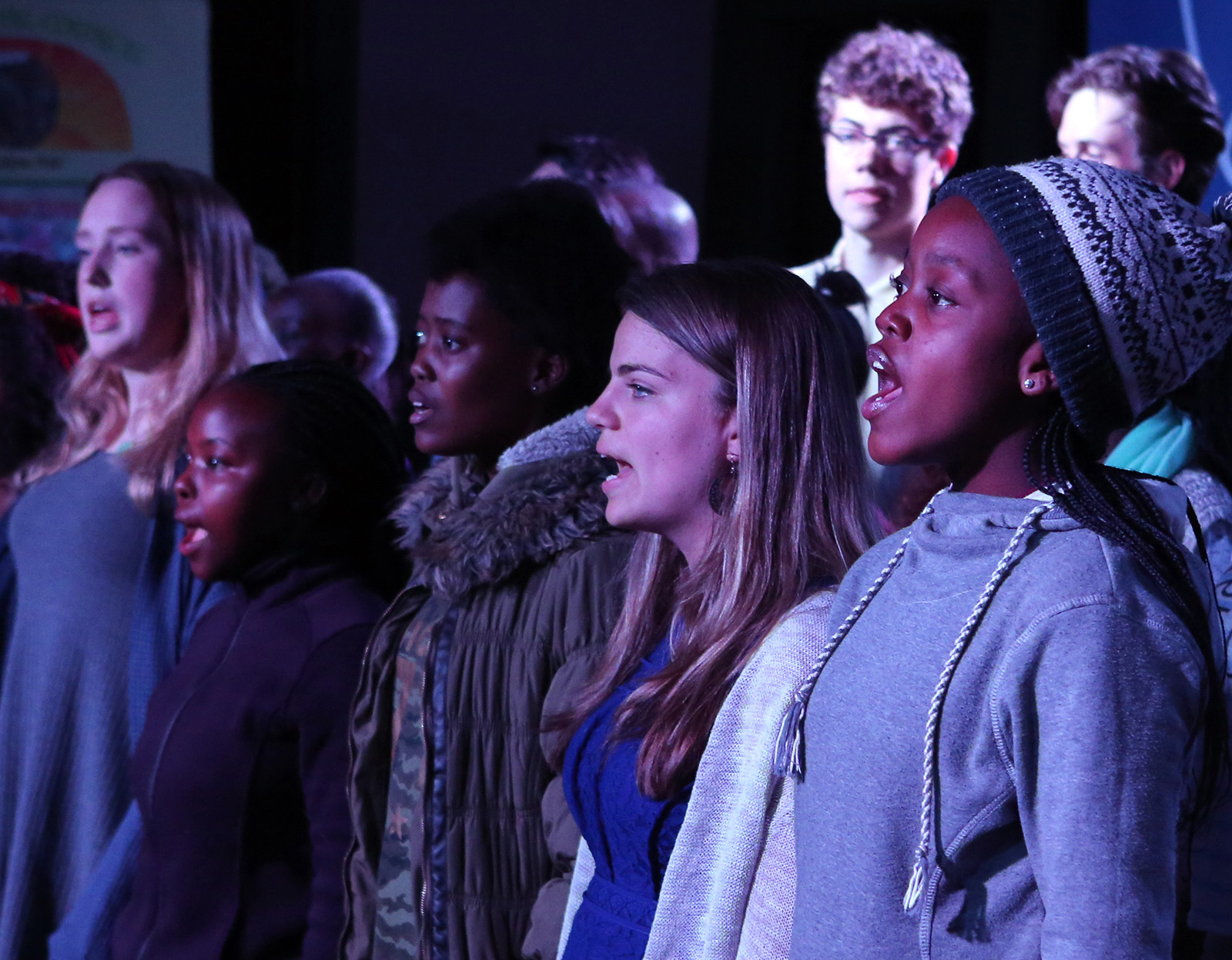
It was during our last performance that I felt the most connected with our newfound companions. As our voices blended together as one, into a harmonious smoothie of sound and rhythm, I scanned the half circle that we had formed and felt a bolt of inspiration and empowerment. There was a silent energy that continued to build, all the way up to the very last song of our performance. Thulani, the choir director, informed us that it was a song that he himself composed. It was a tribute to the thousands of youth that marched through the streets of Soweto in June of 1976, as a means of protesting an apartheid law which enforced the use of the Afrikaans language in schools across South Africa. Towards the end of the song, we began to chant fiercely and march out into the crowd, pulling them into our performance. The power of our voices, and the energy that was vibrating all around us, was enough to make the room quake. In that moment, I think I understood why music is so important to me. It conveys emotions that words simply cannot generate. It brings people together. It helps build connections and paints beautiful memories that can be awakened with the simplest melody.
I talked to Thulani after the show, and he told me how he always closes his eyes when he listens to people perform. He explained to me that it showed him each layer to the full mural that was the song. I responded by saying that I understood him, and that his explanation was something that I had understood my whole life but never been able to explain. Along with the souvenirs I’ve bought and memories that I’ve collected, I hope to bring Thulani’s spirit and passion home with me.
Tessa Ortiz
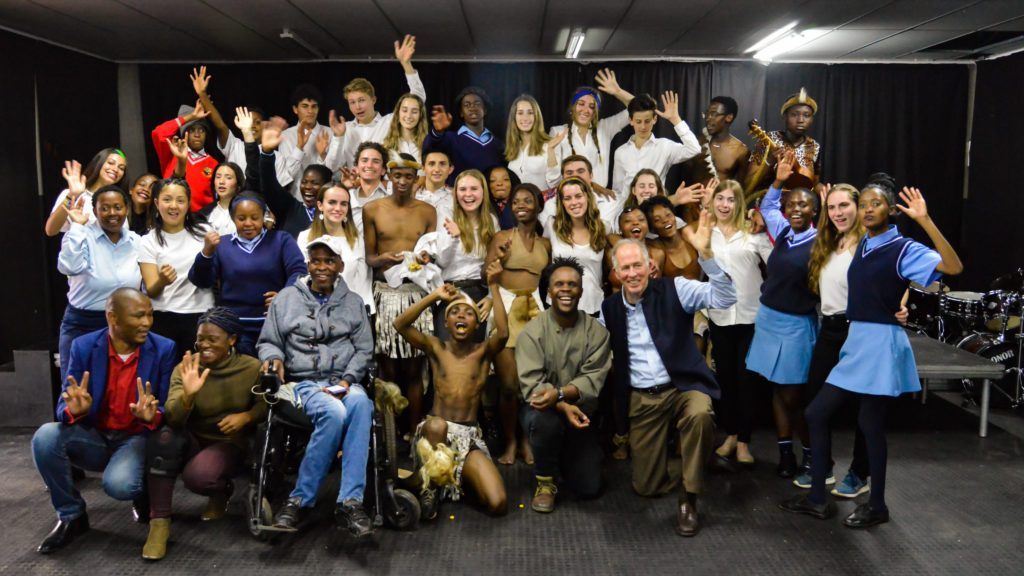
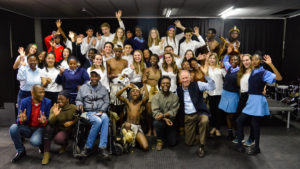
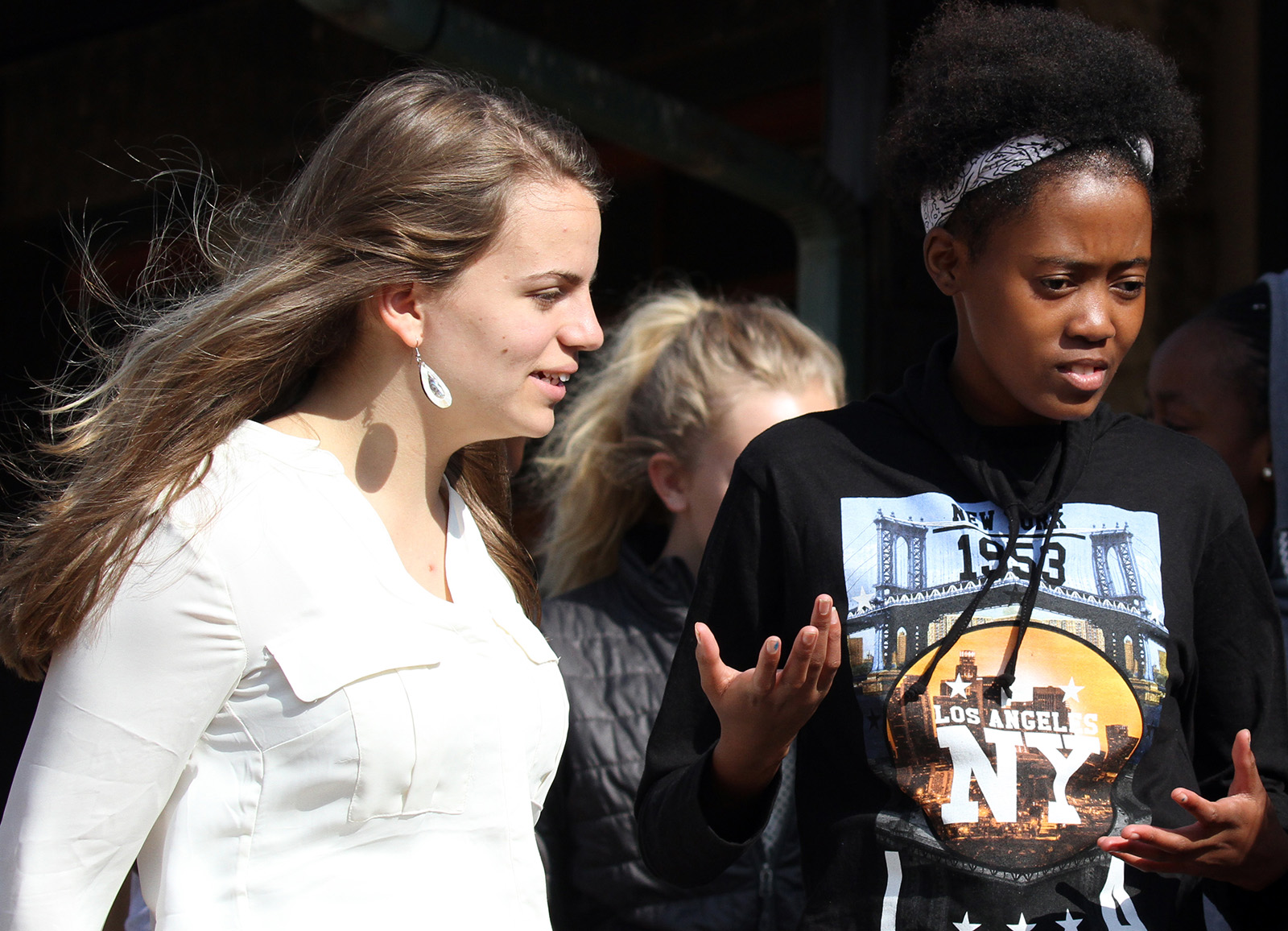
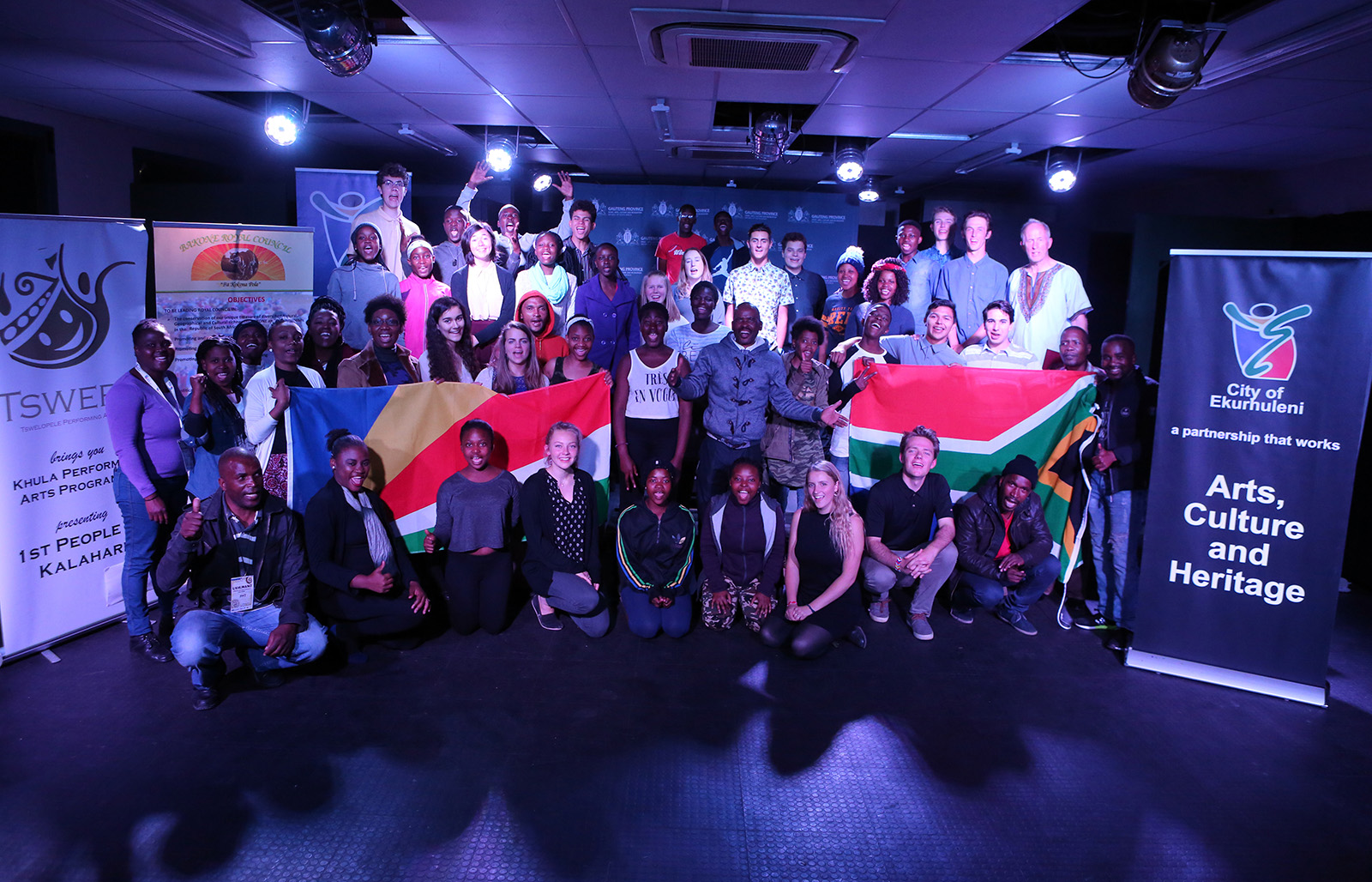
We spent our last day in Tembisa performing with our new friends. We also watched them perform scenes, songs, and dances. I had a chance to meet up with my new friends Zanele, Ellen, Zinhle, Junior, Princess, and many others. I really enjoyed it when they tried to teach me how to speak Zulu; it was incredible. It was amazing how inviting everyone was to a group of students they didn’t know. I met so many people that came up to me with open arms and open hearts. We took pictures together to save the memories.
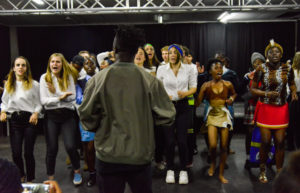
For the final performance, we walked in one by one. As we started singing, the crowd seemed moved by our expressions and power as a group. We owe Thulani a big thanks for being an amazing teacher. He rearranged several of our songs and taught us new songs in only three days. Our final performance moved our hearts and our bodies by the intensity and meaning of the songs. Most of our songs were chants or calls used in the fight against apartheid. When we got to our finale song, it felt like the whole room just came alive. People began dancing and smiling. We were full of joy, smiling and tearing up, knowing it was our final song together.
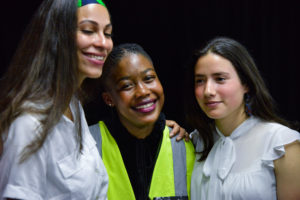
Our goodbyes were hard. I think it is amazing that in only three days we built such strong friendships that will last a lifetime. I hope to see them all again someday. I still can’t believe how inviting the kids we met were. In the United States, we are used to being reserved, or observing each other, until we feel safe around new people. Here they want to learn about your culture and teach you about their culture. It’s something you don’t see all the time and we take it for granted. They seem proud of their history. Sometimes I feel ashamed of our past.
One of my new friends that I made at Tembisa said, “I will miss you.” This warmed my heart. I am proud that we had made so many connections across the world and learned that in many ways they are just like us.
Jahnakai Willis
During my time at Tembisa, I learned that I can love a person within ten minutes of meeting them. This turned out to be the case for all the Tembisa students that we sang with. The third day we spent at Tembisa was the day of the performance; the day that would end with excruciating and bittersweet goodbyes. I think I’ve been saying the phrase, “This is the most fun I’ve ever had in my life,” quite a lot on this trip, but our performance was more than fun, was more than exciting, to a point that I can’t even explain.
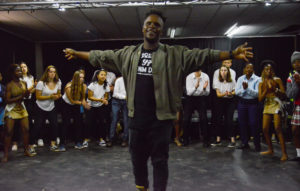
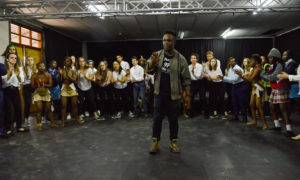
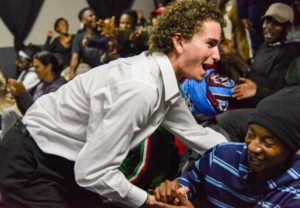
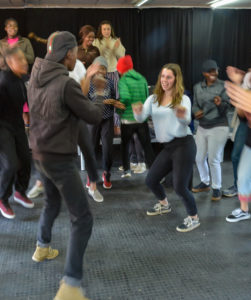
The day started out with our huge bus pulling up to the now familiar group of dusty buildings and benches, greeted by our new friends in the courtyard. One boy, Sabelo said good morning by blowing everyone away with his insane beatboxing. As we slowly filed in around him, some people were just staring at him in awe, some were bouncing their heads to the beat, and some were strangely dancing. They did not even care what everyone else thought because we all felt so close and felt so much love that there was no judgment. While I have a special place in my heart for the Tembisa kids, I formed a friendship with one girl in particular. Her name meant happiness. Whenever I saw her, or made eye contact across the singing circle with her, she would break into a HUGE smile, making me smile, and we would both start dancing and laughing. I admit this caused Thulani to yell, “No dancing!” once or twice but I must say, Happiness created happiness.
After
one of the best shows I’ve ever performed in, all the singers
gathered around a man who was giving a speech and during that entire
time, me and Happiness just hugged each other. Even though it was
just a hug, I knew I had made a friend for life. She was the person
who made me realize that I can love a person less than ten minutes
after meeting them.
While I should probably be talking about how the performance went, instead I’m going to talk about the magic maker that created the show, Thulani. Thulani is literally one of the most amazing artists I’ve ever met. For some reason, Thulani is the kind of person who has a ridiculous amount of technique for putting things together and making everything that he creates sound stunning. I remember the first day that we walked into his studio and we were greeted by him and all the kids. Thulani asked us to sing for him so he could hear what we had prepared. I thought we did a pretty good job up until Thulani made us listen to the kids sing the song he had prepared, and my mouth fell open. To be honest, I was flushed with a little bit of embarrassment because I could tell he had worked his magic on those students but it also made me 1000 times more excited to learn as much as I could from him. Thulani isn’t the kind of person who gets respect by yelling at kids until they’re scared of him; he gets it from showing them what they can do if they work with him. He makes everything sound so good that even if you absolutely hate singing, you want to get up, clap your hands, sway your hips, and sing at the top of your lungs. With Thulani’s gift, the day of the performance I wasn’t scared or embarrassed whatsoever because I knew that our work with this short, excited, incredible man had prepared us to present our best.
Today
was our first day at Tembisa, and the experience was nothing short of
amazing.
I
had heard about Tembisa before, of course. I had watched the videos
and heard stories from the past groups, but bringing those stories
and videos to life was surreal.
Immediately after we got off the bus, we heard a loud and cheerful, “Hello!” from a man who I very soon realized was our choir director, Thulani. I used to sing with the Cabrillo Youth Choir, and I have had almost 11+ years of music with various teachers, but I have never had a teacher with as much passion, skill, and spunk as Thulani. You could tell that he really loved his job with a burning passion from the energy that he brought to the whole day.
As Thulani greeted us, we could see standing behind him a group of kids, between the ages of 15-20. They stood in a line and embraced each and every one of us, instead of giving us the typical American handshake. As soon as they greeted us, all the nervousness that I was feeling about the day washed away and I was left feeling excited and readier than ever to sing.
We
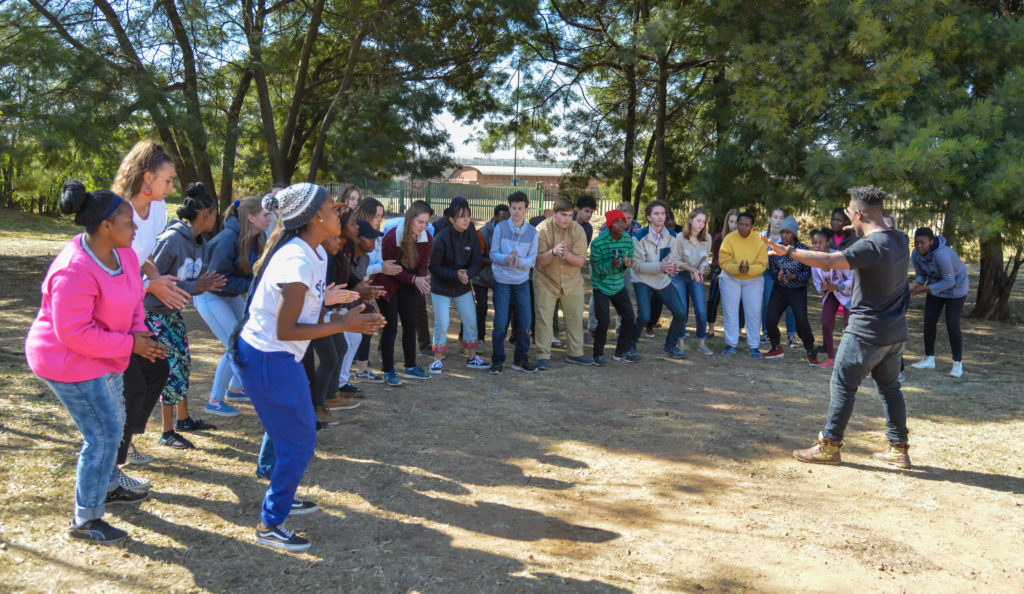
got in a large circle and started warming up, doing classic exercises
such as rolling our necks and shaking out our feet. When Thulani told
us to pretend that we were a piece of bubble gum being chewed, I knew
that he was special, and that our time together was going to be fun.
We started out by showing them our first song, Asimbonanga. Although it wasn’t our best time singing it, I thought that we did OK. Then it was their turn to sing their version and I was absolutely blown off my feet. Their rendition of the song was beautiful and I had never heard such talented voices. Every single one of them held such a special gift of rhythm and song, and I had never heard more beautiful harmonies.
The whole day went on in that routine, us singing and them one-upping us with their versions. When we were able to sing together, some of the most beautiful music that I have ever heard was produced. They taught us 3 new songs, and we will be performing them in front of an audience on Wednesday.
There was a moment when all 34 of us were gathered in a garage, packed with two cars and a piano. Since the space was quite small, the sound reverberated well, and we made our voices sound as one. In that moment of harmony, any differences between us were washed away, and we were united. I can’t wait for our next two days at Tembisa.
Haley Kerr
Walking into Tembisa today, I was flooded with connections. Right as we stepped off the bus, the performer and choir director Thulani greeted us openly and joyfully. All my nervousness that had been building up as we anticipated this day, washed away as I recognized a familiar face in the crowd of kids. Her name is Ze and my older sister, Aimee, who went to South Africa with Mount Madonna School 2 years ago, had told me about her. Aimee told me all about how sweet Ze was and that I should find her and say hello. When I walked into Tembisa, it occurred to me that Aimee must have told Ze about me too because she immediately ran up to me and hugged me saying, “You’re Haley! Aimee’s sister!” Then two other girls came up to me, asking if I had come there before because I looked familiar. I explained to them that no, I had not come there before, however my sister Aimee and I have very similar faces. This exchange not only made me feel close to my sister for the first time in nine days, since I left for South Africa, it also gave me a close feeling of connection with Ze and the other girls.
Throughout
the day, I met many more amazing and talented kids. I was impressed
with how welcoming they were. These surface connections were deepened
when everyone started singing. The kids from Tembisa were overflowing
with talent and they seemed excited to share it with us. Thulani, the
choir director, also had many incredible talents, including singing,
directing, and even writing his own songs.
The songs that my classmates and I had been preparing for a few months were completely overturned, in a good way. Our teacher Ward had been telling us for weeks that once we came to Tembisa, our songs would reach a new level, and he was right. Singing these songs in a completely new way, in a room full of new faces, felt thrilling. Looking around the room, you could see the passionate talent in each kid. They were very understanding and helped us learn the correct pronunciation of the lyrics. They also taught us the new way to sing each song. They also taught us three brand new songs, which we all learned quickly, thanks to Thulani’s skills. Learning these new songs, and new versions of old songs, is what solidified and deepened our connections with these kids.
The talent and power that came out of the mouths of the Tembisa choir, as they sang, was empowering for my classmates and me. Once my classmates and I sang the songs with them, the harmony our voices created together created a complete connection between each one of us. This connection is something that I hope I do not lose touch of, as I continue my journey.
Noah Tervalon
Music
is the language of connection. We took our first trip to Tembisa this
afternoon and I could not have been more blown away by the music.
We
got off our bus and were immediately swarmed by the kids coming to
give us hugs, while asking our names and wanting to get to know us.
After some brief introductions, we moved into a room that was eerily
like the assembly room at Mount Madonna School. We were led by their
choir director, Thulani, in a brief warm up and then got right into
presenting our songs.
After
we presented our songs, Thulani told us that we would be doing a
performance on Wednesday as part of a celebration that is going on
this week at Tembisa. In this performance, we will perform songs that
we prepared and some of the songs that his kids had prepared. He
went on to tell us that there was a story behind the songs we will be
singing.
Once his kids started there was no stopping them. They began singing and one by one the Mount Madonna kids began to pick up on how the songs went, and joined in. It was a beautiful experience, simply joining in with whatever the kids were singing, and being welcomed, even taught by them. As we went through the layout of the show, Thulani would pop between different groups and work with them on their part, ensuring that everyone was understanding and learning their parts.
Thulani’s acceptance, along with the generosity from all the kids there, felt beautiful. Being able to join our voices and songs with theirs, to create even more fabulous music, was fun to be a part of. I look forward to being able to work with them in the coming days to create something that combines our two different cultures. A performance that brings us all together through singing one language; the language of love and connection.
The month of June is Youth Month in South Africa. June 16th is a national holiday, commemorating the student uprising in Soweto in 1976. Many students died protesting apartheid education.
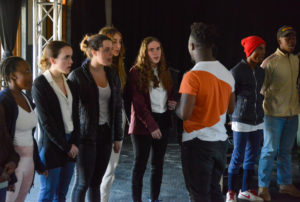
Tembisa was one of the most beautifully hectic experiences of my life. We had to create a 15-20-minute show with singing and dancing, in the short span of three days. All while meeting new people, learning new songs, and trying to fit into a culture that we still weren’t quite used to, even after two weeks of being in South Africa. Throughout the experience, I was never sure that we were going to pull it together. A lot happened in those three days, but I’m going to try to put it all into words as well as I can.
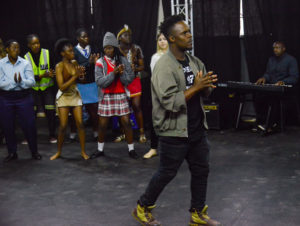
On the first day, Monday, we arrived at the community center to practice our songs. The room we practiced in was a lot smaller than I expected, and a lot fewer people than I expected were singing with us. We went through our usual routine of introducing ourselves, not being able to pronounce anybody’s name, and failing to do their complex and interesting handshakes. It was a little bit awkward at first, but everyone was extremely friendly and comfortable, so we softened up a bit eventually. That was also part of the routine. We met Thulani, the music director, and I was relieved to see that he had a clear vision for the music, since none of us had any idea what we were going to do for the performance.
Thulani had us sing what we knew for him, and he seemed impressed, but our confidence was weakened a bit when he had his choir sing. They couldn’t have had more than 20 people, but they sounded just as big, if not bigger than the other much larger choirs we had heard during the trip. Part of it might have been the small room we were in, but it was clear that there was some serious talent there to help us.
We practiced for almost three hours. It was super fun at first, and it all sounded amazing since their choir was so powerful and we could basically just follow along. Nothing was too difficult, and none of the questions Thulani asked me about the music were too hard to answer. However, towards the end, we hit a huge roadblock. The way we sang the final song, Shosholoza, and the way the Tembisa choir sang it was completely different. Thulani clearly had an idea of how to join our versions together, but he was having a lot of trouble communicating it to us. It was the first time on this trip that I felt like there was a language barrier. We didn’t really figure it out, and even though the rest of the music sounded great, we left Tembisa feeling discouraged and hopeless. I then heard that Thulani was leaving Johannesburg to go do some performance elsewhere, and we weren’t going to have a music director. I had no idea how we would put it all together without him there, and I dreaded coming back for the next day’s rehearsal.
When we returned on Tuesday, our worries only grew when we found out that we had to perform that day, as well as the day after. I had no idea that we were supposed to perform any other day than Wednesday. We didn’t feel prepared at all, even after we practiced a bit beforehand. It turned out that we only had to sing the two easiest songs out of the four we were preparing, but the fact that it was all so new still made it a pretty daunting task.
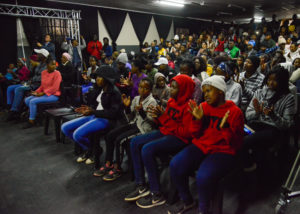
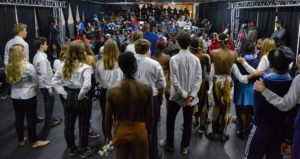
We walked on stage. Somehow, they managed to fit a stage and at least 100 people in the room we had been practicing in, and the lights drowned out the crowd enough to let us pretend they weren’t there. I wasn’t as nervous as I thought I would be. Maybe the fact that we didn’t really know what we were doing lowered our expectations a little, but I just wasn’t thinking it would go badly at all, and it didn’t. The show went smoothly and we all felt great right after, but there was more for us to watch when we were done.
At that point, we had been in a very different country for a long time, but the culture shock didn’t truly hit me until the show that followed ours. The Tembisan kids stayed on stage, and performed an elaborate and intricate string of musical numbers, dance pieces, and scenes that completely blew me away. I’ve been to a few loud concerts in my day, but the sound from those didn’t even compare to the power of the Tembisa choir. Two of the kids were hitting a couple of drums so hard that I could practically feel myself being blown back by each slap. And it was perfect. Not a single mistake was made. I had to keep remembering to pick my jaw up from off the floor.
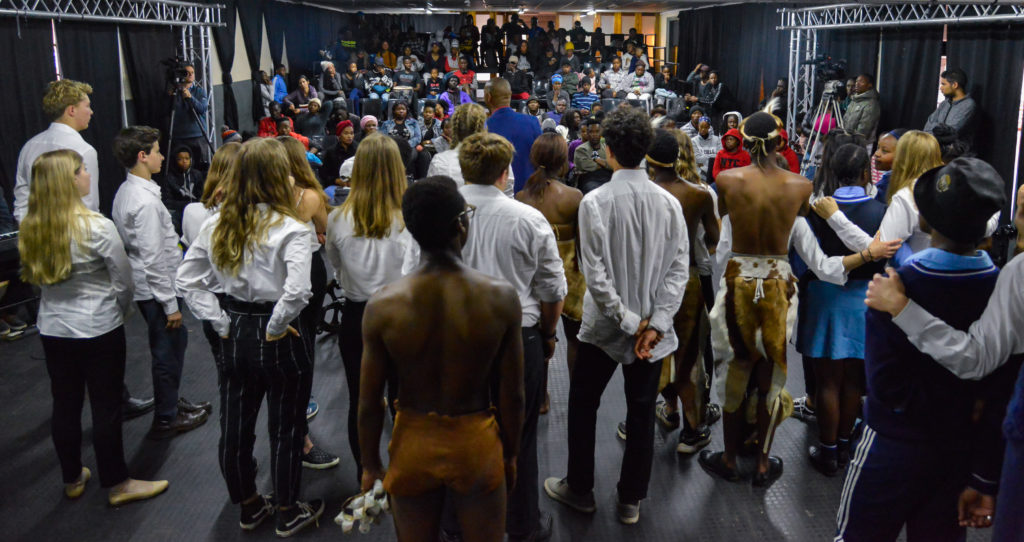
Two parts of the show stand out in my memory as being particularly different from anything I’ve ever seen. One was a traditional indigenous dance routine done by three guys and three girls wearing clothing made of hides. The drummers were playing faster than I thought was possible, and the dancers exerted so much energy. Everyone was in tune rhythmically. I don’t know how they were all able to find the same tempo so quickly without looking like they had to think about it. Everyone was in the moment and having so much fun, it was impossible not to smile and do some dorky dance moves in my seat. The other part that stood out to me was on the other end of the emotional spectrum. Two of the kids, a boy and a girl, did an extremely dramatic scene about the death of the baby of the girl’s character. The acting was amazing, and had all of us completely entranced, but the rest of the crowd kept laughing. This was not the type of scene that any of us would’ve ever laughed at, but apparently, everyone else saw it as some type of dark comedy. Surrounded by laughter on an island of confusion, I felt more out of place than ever before. It was clear that I was watching something different from the rest of the crowd, and that feeling is still very hard to describe.
After the show was over, we ate dinner with the Tembisan kids. I talked to one of the drummers, and he taught me a few grooves that he played. Even after I stumbled through them, he insisted that he was impressed with me. I talked with a few more people, and saw more of the same thing. Everyone I met was so talented, but so humble. I realized that most of the people we’ve met don’t like to show off or brag about their talent, because to them, it’s not talent. Music is part of who they are.
The last day was the longest, but the most fun by far. The ice between everyone felt officially broken, and we spent most of the day talking and joking with each other. We ran through the show, making fixes where we could, but Shosholoza still didn’t feel ready. We collaborated as much as we could, but by the end there was a general unspoken consensus that we were just going to wing it.
The performance of the final show might be the most fun I’ve ever had doing a performance of any kind. The crowd was so full of life, clapping and cheering at every opportunity. I couldn’t help but chuckle a little at how exciting it all was. When we sang a South African-ified version of “Stand By Me”, I sang a duet with one of the Tembisan girls named Ellen. The crowd cheered so loudly during it that I could barely hear myself. By the time it was over, I didn’t want to get off the stage, but I had to. We exchanged phone numbers with our new friends, and we got on the bus and left. Even though we had spent the whole day together, it all felt so abrupt. The show ended, and we may never see those crazy talented kids ever again.
This trip has been packed with eye-opening experiences, but our three days at Tembisa might just be my favorite. Looking back, it didn’t feel like only three days. So many things happened with us and those kids, and I feel like I’ve known them for months. They welcomed us into their musical world, and I’ll never forget what that world truly is. Music is the heartbeat of South Africa, and I hope I never stop hearing it.
Aimee Kerr
Arriving at Tembisa, I was nervous for what was to come. We were going to meet a lot of new people our age and perform with them with only three days to rehearse. We were immediately thrown into rehearsal with the choir director, Thulani. When everyone started arriving, we were told to mix in so that we could meet new people. I stood in between two girls, named Ellen and Maya, who I quickly became friends with. We practiced all the songs, sometimes singing our version and sometimes singing their version. By the end of the first day we had a rough idea of what we would be doing.
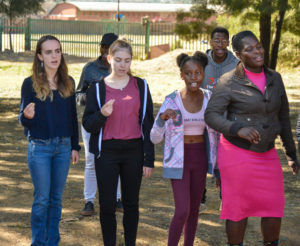
On the last day of rehearsal, which was also show day, everyone was nervous that the show wouldn’t go well because it still needed a lot of work. We practiced for a few hours and then got to go walk around the surrounding township with our new friends. It was the most fun I had during this whole experience. It was nice to just hang out. It made me wish we had more free time to get to know the Tembisa students better.
When we got back, we did one fuller run through, still making stops to fix things here and there. I was very nervous when the show started but somehow, we did the whole thing with barely any mistakes. It went very well considering the amount of time we had. When it was time to leave, I was sad. I had become close with so many of our new friends and I didn’t want to leave knowing it would probably be the last time, at least for a long time, that I would see them. We gave our final goodbyes and hugs, and waved from the bus until we couldn’t see them anymore. I am going to miss hanging out with all of them. They were so friendly and welcoming that it was easy to become close with them quickly. I could only imagine what would have happened if we had more time together. I look forward to keeping in touch and hopefully seeing some of them again one day.
Lucas Caudill
As our bus made its way through the streets of Tembisa for the second time in as many days, I was completely unsure what to expect. I seem to recall at some point hearing the term “dress rehearsal,” but I was completely unsure what exactly this entailed. All I knew is that, at some point, we would be singing. It was late afternoon, just before dusk, when we arrived at the intercultural exchange. As we entered the relatively small room where the performance was going to take place, I noticed that one end of the room had been transformed into a stage. Levels had been made from stairs and crates painted black, and stage lights hung from missing ceiling tiles. On the stage, our South African counterparts were mid-rehearsal. Their choir was singing softly and, though I could not understand the words, I could feel the power behind them. This singing accompanied a narration, which alternated between various actors and actresses. They were telling the story of Nelson Mandela’s release from Robben island, and the end of apartheid. I was instantly amazed at how passionately the performers on stage embodied their parts, and it wasn’t just the speakers, everybody participated fully. When the speaker described Mandela stepping before the South African crowd, all others whispered and gasped, staring and pointing past the audience, as if Mandela himself was standing in the room. When the speaker described the reaction of the press to Mandela’s release, everyone on stage dropped to their knees and held imaginary microphones to their mouths, chanting a question for Mandela in unison. This served to immerse the audience in the action, and, although it was just a rehearsal, I found myself totally drawn into their performance. Once they were finished, we were invited on stage with them, and we began to rehearse the songs we were performing together: Nkosi Sikelel’ iAfrika and We Shall Overcome. No sooner had we finished than I noticed the room start to fill. We made our way into the audience, and all lights but those illuminating the stage were turned off. Thus, the performance had begun. The show ran nearly an hour past its predicted ending time, but I found that I enjoyed the performances so much that I cared little. There were several pieces that were separate from the songs our group was involved in, including the performance we had walked in on, skits, songs, speeches and dances. There were two such performances that stood out to me as particularly well done, though all were fantastic. The first was a kind of skit portraying an argument between a male character and a female character. They were fighting about the fate of the female character’s baby, and a story began to unfold about a desperate mother without the means to take care of a child she didn’t ask for. I was absolutely blown away by the passion displayed by both performers. I specifically remember looking up at the actress and realizing that she was crying. This was something I had previously thought impossible in live theatre, and yet there she was, tears visibly streaming down her face. I was stunned. It no longer felt as though I was watching a performance, it was as though they had become the characters. The second performance was a Setswana Traditional Dance, which was unique in that it involved costumes. Admittedly, I was initially surprised when the dance began. One moment we were listening to a speech by one of the officials, then suddenly a woman walked on stage carrying what looked like a whip and wearing a skirt mad of animal skins. She began to chant, and she was quickly joined by two other women and four men who were similarly dressed. The group began to sing and dance simultaneously, stomping their feet in time with the drummers who were standing just upstage from the dancers. I was amazed by the precision of their movements. They danced perfectly in rhythm, synchronizing their movements with one another and gliding across the stage with grace that seemed to defy the physical limitations of the human body. It was thrilling to watch. I left Tembisa in awe of the production I had witnessed. I was amazed by the talent and dedication of all the students. In reflection, I feel grateful that I had the opportunity to watch and participate in the show, as well as the opportunity to meet people with such dedication to the thing that makes them happy.