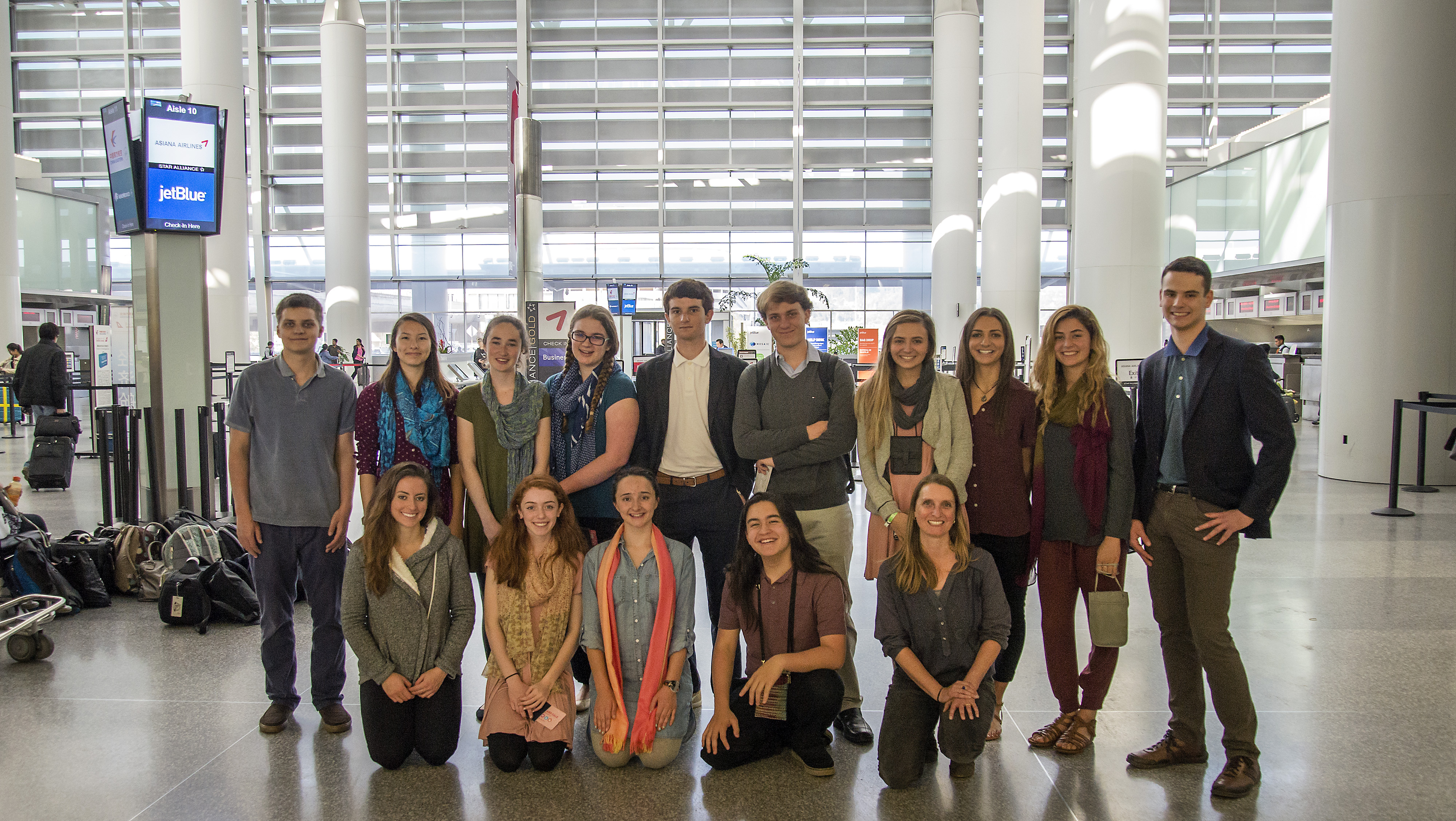
Each year, during the preparatory stage of the learning journey to India, I ask the seniors to reflect on what they hope to gain from the experience, individually and collectively. Together, we consider a series of guiding questions so that they can tease out their thinking and be purposeful in their intention setting. As part of this process, the senior class selects a word that will serve as a compass on their journey; something that can anchor them to their purpose.
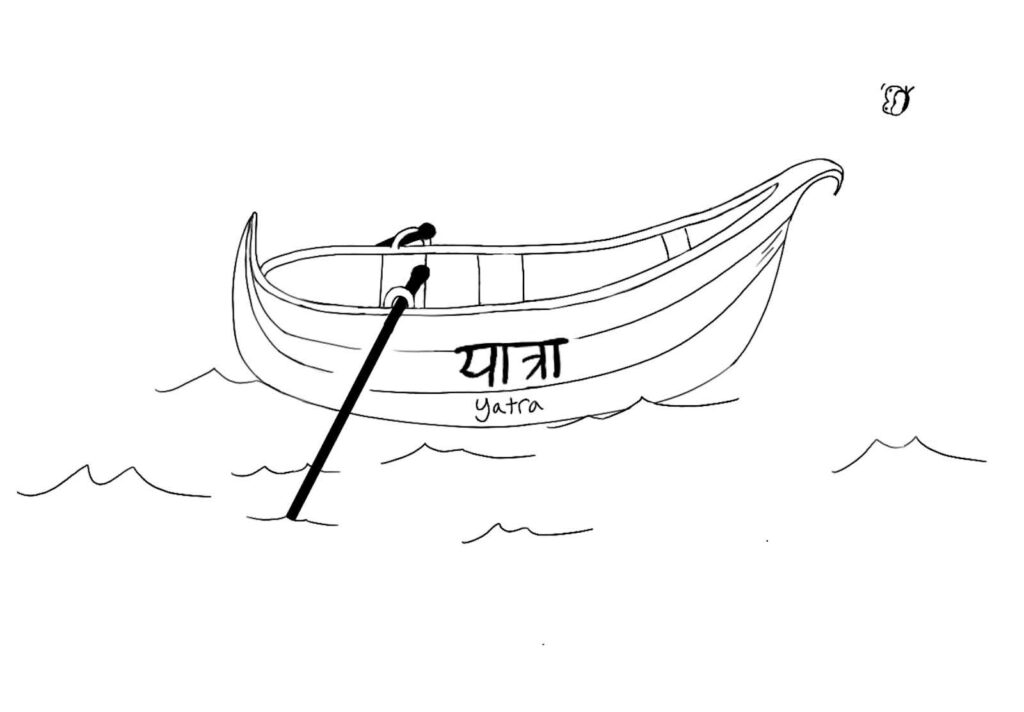
Language is fascinating. Entire concepts and complex ideas can be captured in one single word, and at times the complexity contained within that word is almost impossible to fully translate. The word the seniors selected this year is one such word: Yatra.
Roughly translated, Yatra is a journey that helps free us from mental and physical conditioning. It is a journey of rediscovery of self. This single word, in its complexity, perfectly encapsulates what the senior class hopes to gain from their learning journey.
We invite you to follow along as we embark on this journey of rediscovery of self.
The 2026 journey to India will take place February 13 – March 1.
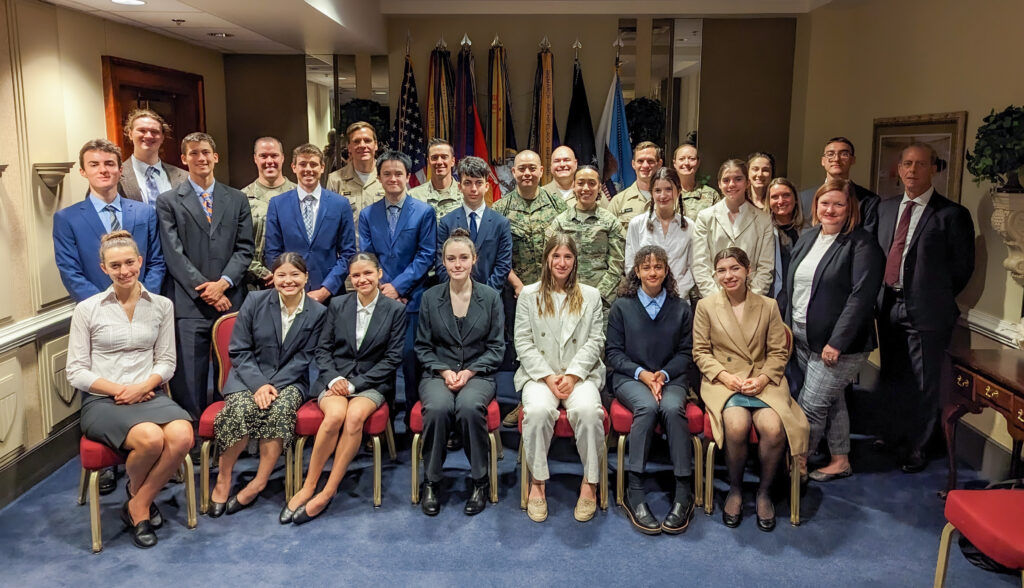
Today, Officer Anthony Jackson gave us a tour of the Pentagon. His current position is Police Officer with the Pentagon Force Protection Agency, Pentagon Police Directorate, Third Platoon. Before that, he has served as a sergeant in the US army. Throughout the tour, I felt great admiration and appreciation for his many fine character traits, such as humility, curiosity, compassion, and strong willpower. Officer Jackson went to great lengths to give us the best experience he could give us. Throughout the tour, I heard many comments about his dedication and service to his country and the American people, and I stayed by his side the entire time we walked.
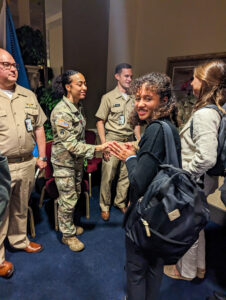
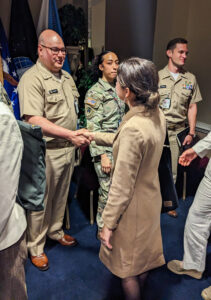
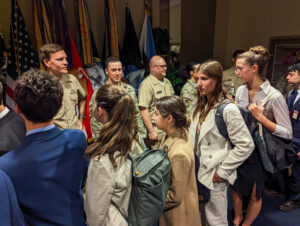
After bringing us into the building, he led us to a room where he introduced us to a panel of people from the Army, Air Force, and Marines that he had assembled for us. Because we were unaware that we were going to meet a panel of military personnel, we had no questions prepared for them. I think I speak for all of us when I say that we were all moved not only by their individual stories but also by their motivation and commitment to service. Although we had not prepared questions for them, we were eager to ask a number of questions, and it was obvious that we were all grateful for the opportunity to speak to them.
I was especially moved to see women serving proudly in the military, and I was excited to talk to such strong women. In recent years, more women have come to hold positions of power that only men used to hold. Meeting these women helped me to imagine myself doing all the things I grew up watching only men do, and I felt very inspired.
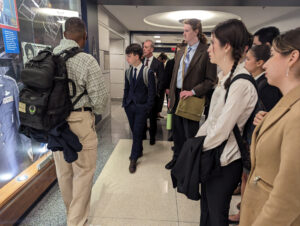
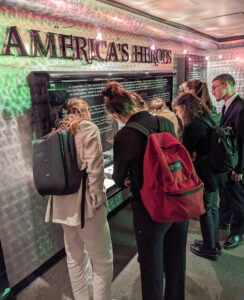
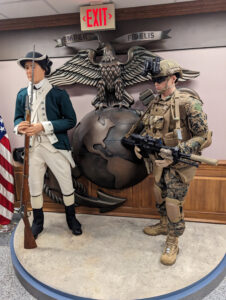
After the discussion, Officer Jackson showed us the headquarters for the Marine Corps and the new Space Force. Both areas included interesting displays on the walls depicting different aspects of each branch of service. There was information about important people and events, and there was even a display dedicated to science fiction movies related to space and the Space Force.
The last part of the tour was the most personal part of the tour for him and the most emotional for us. Officer Anthony Jackson was training to be an army sergeant during the attacks on September 11, 2001. Although he was not in any of the cities where the attacks occurred, he was dispatched to do security clearance at the Pentagon to make sure no one could enter the perimeter while people were working at the site. We stood in the very spot where the Pentagon was hit, which is now an open corridor between two walls. One of the walls was rebuilt after the attack, and so it is a different color from the other wall, which was preserved and included scorch marks from the fire. You could see the emotion on his face as he talked about the attack, and he was incredibly vulnerable and respectful as he spoke about it. I had never shared such intense, raw, and vulnerable feelings with someone before. I deeply appreciate him, and I won’t forget what he shared with us.
Bella Padilla
Today we had a full and exciting day. We woke up early, got ourselves ready, and then rode the Metro to the Pentagon. It was unique and humbling to experience life as a DC local. This was only the second time I had taken the Metro in DC. When we arrived at the Pentagon, I was amazed at the number of government officials and the size of the Pentagon.
The experience at the Pentagon was surreal. There were people in official uniforms everywhere, and there was intense security. After a brief orientation, our tour guide, Officer Anthony Jackson, led us to a room of panelists to interview. Along the way, he showed us various shops and services and dispensed interesting pieces of information. For example, we learned that there are seventeen miles of hallway in the Pentagon. We also viewed paintings of previous chiefs of staff. I was in awe of the history on display and amazed that our country and its government have stood the test of time.
The panelists were all knowledgeable and informative. Each was from a different branch of the military. I found Officer O’Connor especially interesting as he spoke about his experience working with nuclear and other hazardous materials. After the interview, he told me about how he previously worked with nuclear power in Hong Kong and that in just a few weeks he’s going to Texas to conduct a simulation of a nuclear attack. This topic has always fascinated me, and it was a once in a lifetime opportunity to talk to someone who works on it as a profession.
All the panelists gave great advice, and they all agreed that it’s okay not to know what you want to do in life at my age, as I still have plenty of time to find my calling. As a high school junior, I found this advice refreshing. I’m very grateful for the experience the Values in World Thought curriculum has given me.
Ethan Lee
Today, our class toured the Pentagon with Officer Anthony Jackson. We viewed the Space Force wing and the Marines Corps wing, and we interviewed a panel of members from different branches of the military. The panel was the most interesting and engaging part of the day for me, as the members of the panel were all very well spoken and seemed like they really wanted to talk to us. My favorite panelist was Officer Josh Clemmons, who pilots “Little Bird” helicopters. He is an incredibly relatable person, appearing more “human” than I had previously imagined someone in the military to be. One thing he said that stuck with me was that the hardest lesson that he’s learned so far was the impact that a decision can make. He gave an example of sending a group of specialists on a mission and having them all return, and another time sending a different group on a mission and having only some of them return.
Before today, I had always thought of the government and the military as huge impersonal entities that functioned independently of the greater good, rather than a group of people who are just trying hard to make the best decisions that they can in service to others. Several of the panelists admitted that they really haven’t always known what they want to do with their lives and advised that someone my age doesn’t need to know yet what to do in life. I’ve been focused on becoming a firefighter for some time now, and I haven’t really been considering other options as much as I should have. They made me realize that although it’s nice for me to have a passion and a general idea of what I want to do, I should take every opportunity that I can to learn and experience something new, knowing that possibilities and opportunities aren’t always predictable.
Early mornings in South Africa offer a stillness unlike home. This morning there was no wind, and only a few observable animals. Murky clouds drifted apart to expose a pale sun. The morning’s stillness brought with it a feeling of ambition and excitement. Today was one of those “big ticket days” on the itinerary. Deep breaths felt necessary.
The feeling of nervous excitement was carried into our crammed vans and sped right to the Desmond and Leah Tutu Foundation Center, in the heart of Cape Town. At this point, our excitement had peaked. The time had come to enter the building.
We set up the room quickly and sat straight up in our chairs, waiting. The more I sat there the more nervous I became. My palms were sweaty, I trembled. I had no idea what to expect when meeting someone so internationally influential. Nobody dared to crack even a single joke. And then, the door opened.
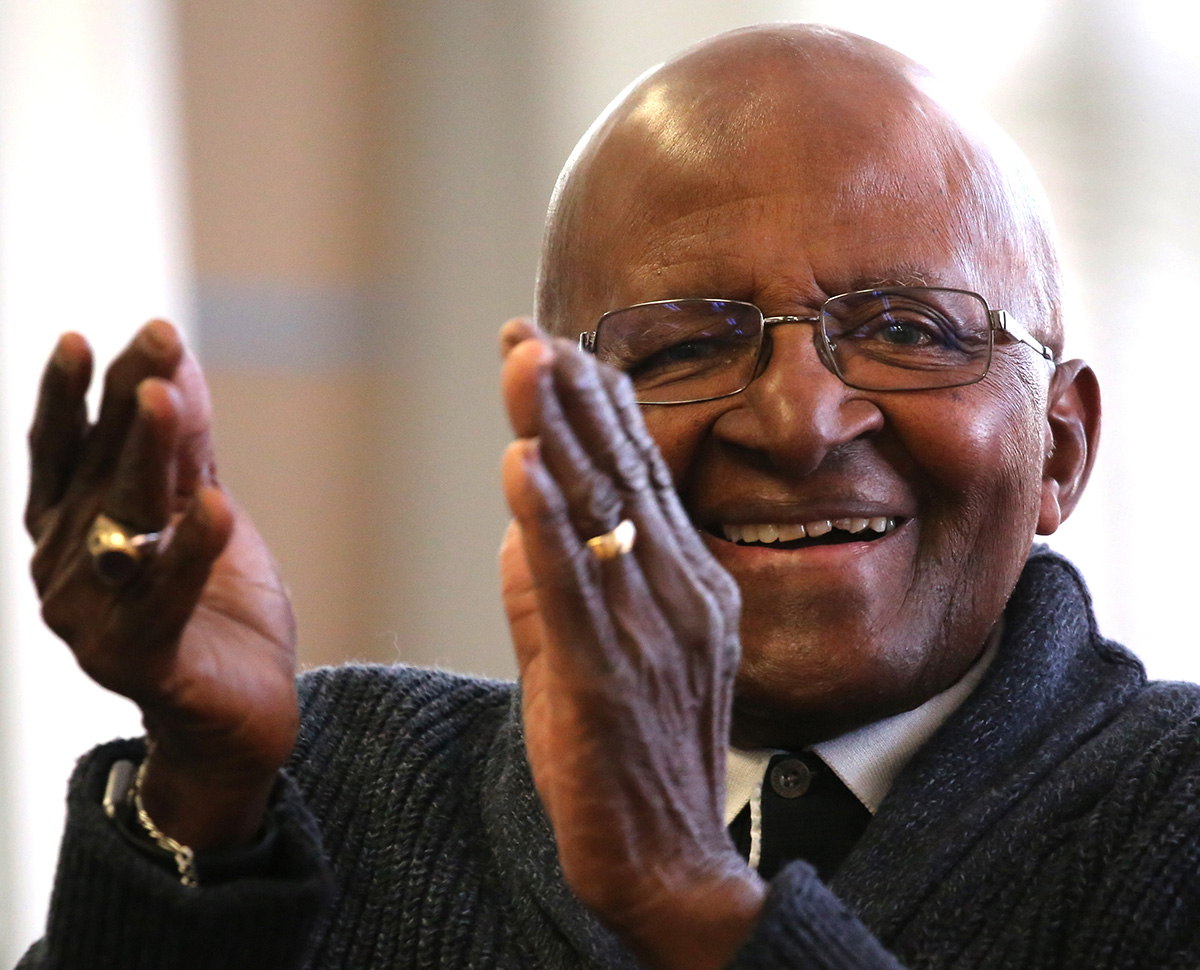
Ward turned to us, “He’s here!!!” he mouthed. My heart was pounding. In walked this seemingly small old man who commanded breathtaking respect. Everyone on staff stopped what they were doing and some even bowed to him. His smile was contagious, and he smiled a lot!
We all stood and shook his hand. He passed around the circle until he came to Wagner, who stood stock-still. “Who helped you into that thing?” He jokingly asked, referring to Wagner’s suit. “Men’s Warehouse,” Wagner instantly replied, nervously. Everyone cracked up. Suddenly, my feelings of nervousness dissipated. The mood in the room became one of natural happiness.
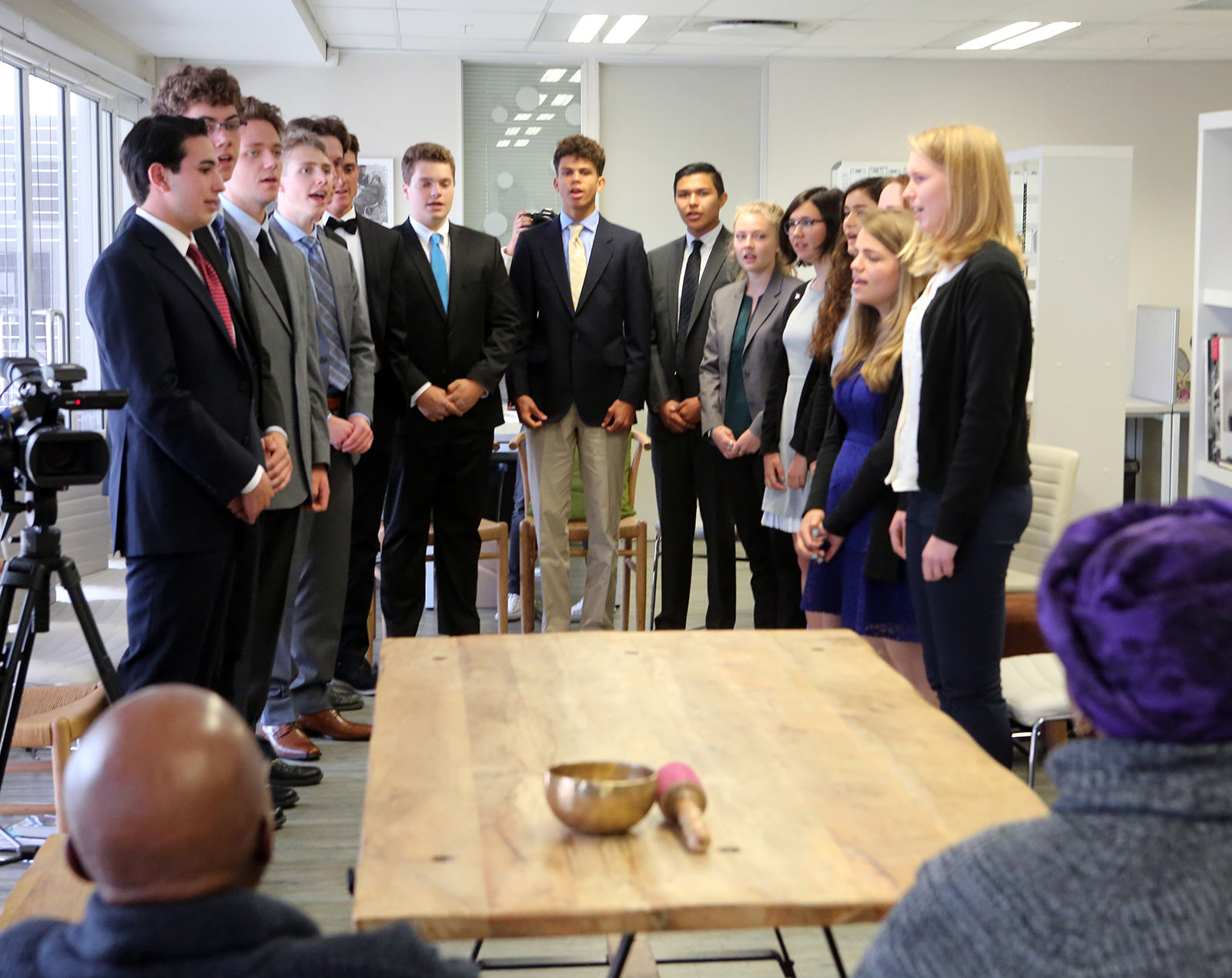
Next, it was time for our songs. There must be something special about singing when nervous because when we broke into the first note of our song, it sounded beautiful. The office workers began to gather, and by the end of our pieces, some of them were in tears.
We continued our meeting with Archbishop Tutu by discussing how learning about his work with the Truth and Reconciliation Commission had inspired a class discussion in which we had resolved some of our own differences. It was great to revisit our experience, and he seemed flattered by this.
Meeting Archbishop Tutu was a great experience. It was obvious why he garners so much respect. He conducts himself in a dignified and humorous way, which made us feel comfortable in his presence. It was a truly heartwarming experience.
Elias Moreno
I started out the day confidently, wearing a suit and feeling sharp. This all changed when Ward dropped the bomb that rather than read the statement that I had prepared for our meeting with Archbishop Desmond Tutu the night before, I would instead be, “Speaking from the heart.” Well, not only was my heart speaking, it was screaming. I could feel my heart pounding in my chest louder and louder, as we got closer to meeting with Archbishop Desmond Tutu. I nervously practiced what I would say to him with Ward, and kept drawing a blank. Every time I tried to speak I would repeat the first line I wrote. All the things that I wanted to say such as how I found his ability to embody joy and humor, even in extremely trying circumstances, inspirational couldn’t cross the threshold of my lips. Eventually Ward helped me get to the essence of what I was truly trying to tell Archbishop Tutu. I found that speaking from the heart sounded much better than reading from a script. I put on a fake smile of confidence, and we all entered the building where our interview would take place.
The serene peacefulness of the quiet and clean building clashed with my own feelings of inner turmoil. Soon, Archbishop Desmond Tutu arrived and I instantly felt less nervous and could feel the whole room get brighter. He immediately began cracking jokes as he went around and shook our hands. We sang two songs for him and then I begin my opening remarks. Looking at his sympathetic eyes and authentic ear to ear smile instantly made me feel more confident, and gave me the ability to truly speak from the heart. I told him how inspirational his message of finding joy in even the most difficult circumstances has been to me. I expressed to him that I would try, in all aspects of my life, to see the joy and hope in every situation and that I would encourage others to do the same.
Sienna Clifton
Happiness is the one word I would use to describe our experience meeting Archbishop Desmond Tutu and his wife, Leah, today. As soon as we heard his infectious laughter from down the hallway, I knew what an amazing opportunity this was. Once he and his wife sat down, our class started to sing, and our smiles never left our faces. It’s hard to completely put into words how I felt. I had an overwhelming sense of joy and pure bliss being there, in front of such an inspirational person, with my class. One profound, yet very simple, statement that he made was that he was considered a great captain because he had a great team. This sentiment made me truly realize the importance of acknowledging others’ gifts, as well as being able to be proud of one’s own. I was struck by Archbishop Desmund Tutu’s humility about the part he played in the Truth and Reconciliation Commission, which helped South Africa heal and move on from the horrific tragedies that had taken place during the apartheid era. As he told us about what happened, he continued to speak about others and their importance. He kept reiterating that they were the real heroes. Hearing someone speak with pride and true happiness about the achievements of others said so much about Archbishop Tutu’s character, and made me feel happy in that moment.
Archbishop Tutu was genuine when he spoke. I will never forget the way I felt being in the room and listening to him speak his truth freely and openly to a bunch of strangers from half way around the world. As cliché as it may sound, Archbishop Tutu’s smile and unforgettable laugh has left a lifelong imprint on my heart.
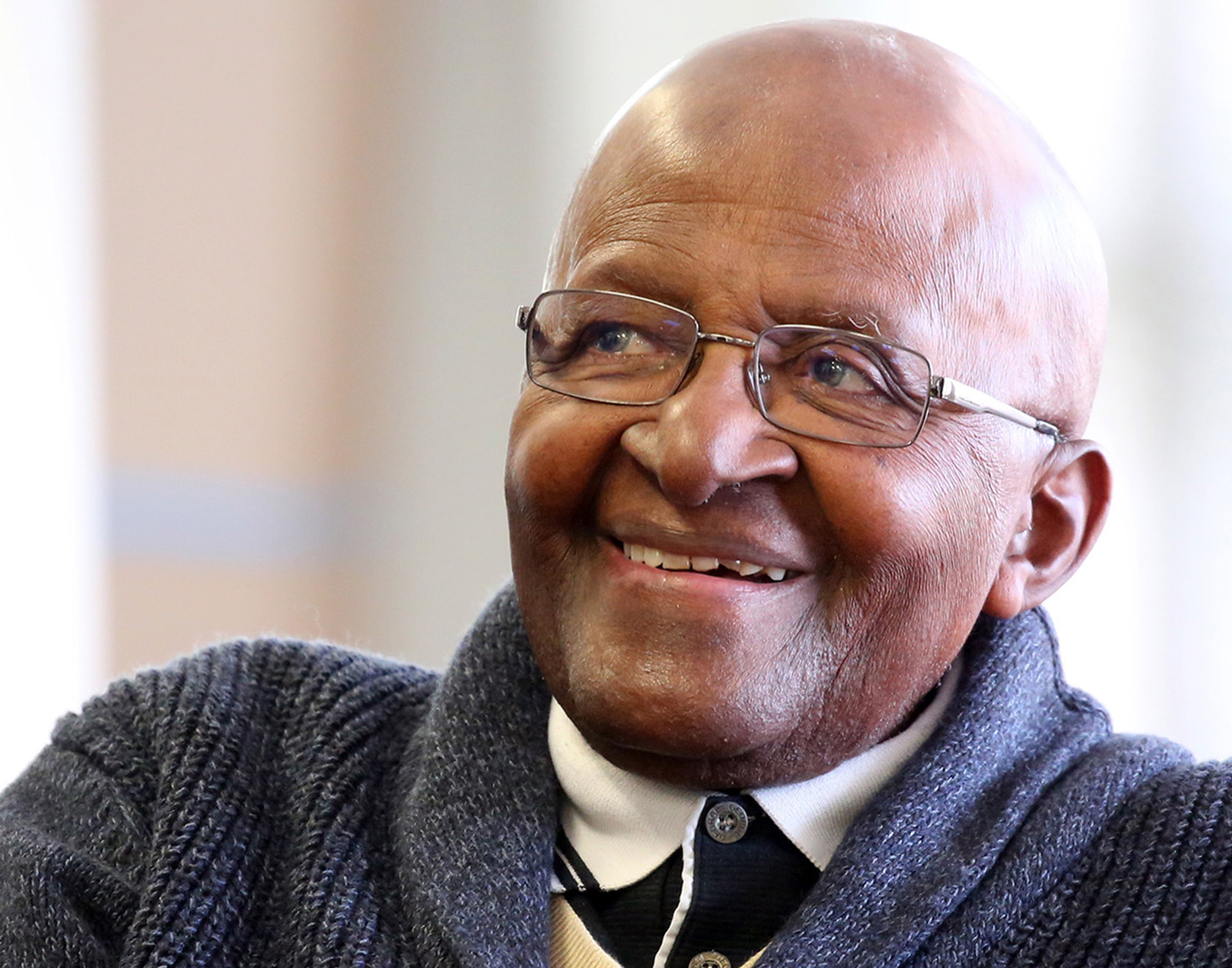
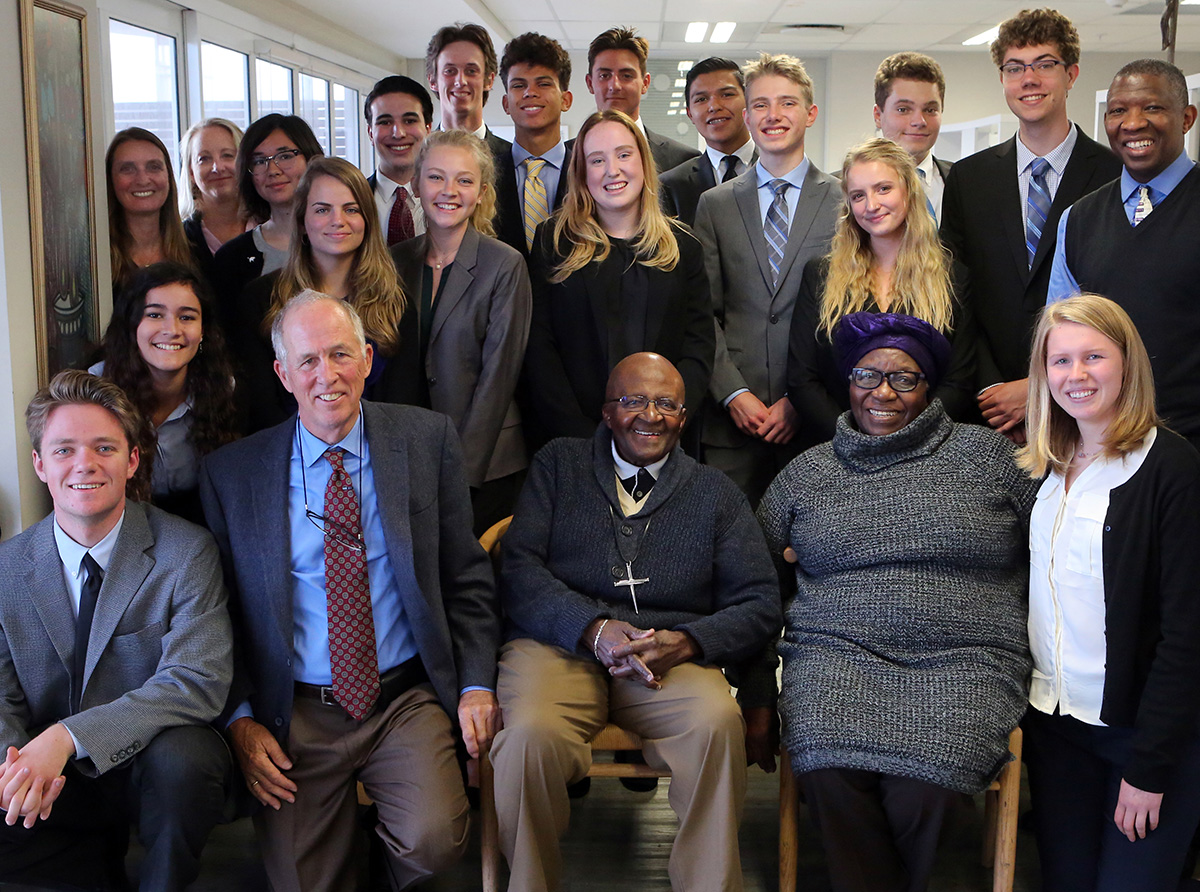
Mount Madonna School students with Archbishop Desmond Tutu
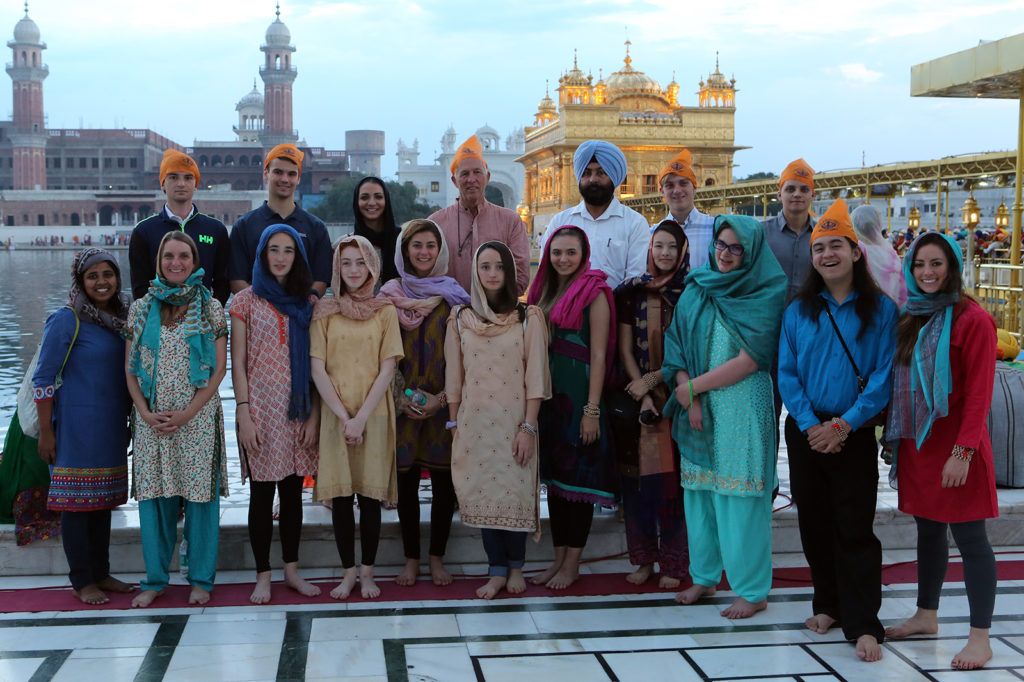
As I approached the Golden Temple I could feel the reverence of those who strolled past me. Everyone moved with a purpose that showed how excited they were to be in this holy place. I walked over the steps that led to the grand courtyard. In the center of the courtyard sits a gigantic pool that contains a temple covered in gold. Hundreds of people stood on the bridge that reached across the rippling water. They waited patiently for their turn to walk inside and pray in the shimmering and ornate building. Slowly, as we circumnavigated the massive pool, the now rising sun cast its orange glow above the wall of the compound. We took a moment to sit and listen to the soothing prayers that were being sung. Their beautiful melody gave life to the temple.
I sat, feeling the presence of the thousands of people who filled the courtyard. I gazed across the water, taking in the stillness of the place despite the movement of people. I stood to pose with our group for a few more photos then felt myself float out of the peacefulness that I felt moments before. We crossed the threshold of the compound back out into the open world. I felt the busyness hit me like a wall. It’s incredible that in just a matter of moments you can be transported between two completely different worlds. I’ve learned that in India three steps can be the difference between grace and chaos.
Amelia Busenhart
Jallianwala Bagh
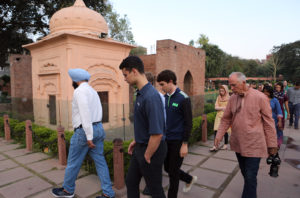
I reached my arms and saw that there was only a few inches keeping my fingers from sliding against the orange cement walls. These walls were the only way to enter and exit the courtyard of Jallianwalla Bagh, the historical site where a peaceful protest inspired by Gandhi ended in a massacre of hundreds of people. As I entered the garden, I tried to swallow away the pain that harvested in my chest. I pictured crowds of nonviolent protesters, cooped up like livestock, running from British bullets, and my ribs tightened around my heart beat. The bullet holes still remain in the weathered brick walls that stand in the garden. I could hear the 1,650 rounds being shot into the crowd, the hot cartridges dropping to the ground as the sounds of bodies followed; my ears burned. I began weaving myself through a crowd to the well that people hurled their bodies down in order to not have their lives be taken by the violent bullets, that brutally interrupted a non-violent protest. I watched flower petals settled to the bottom of the well as silence placed itself onto the lips of the observers. Yet, I could still hear the beating of those hearts around me. Hearts that felt the same pain I did; hearts that wanted to reconstruct the past.