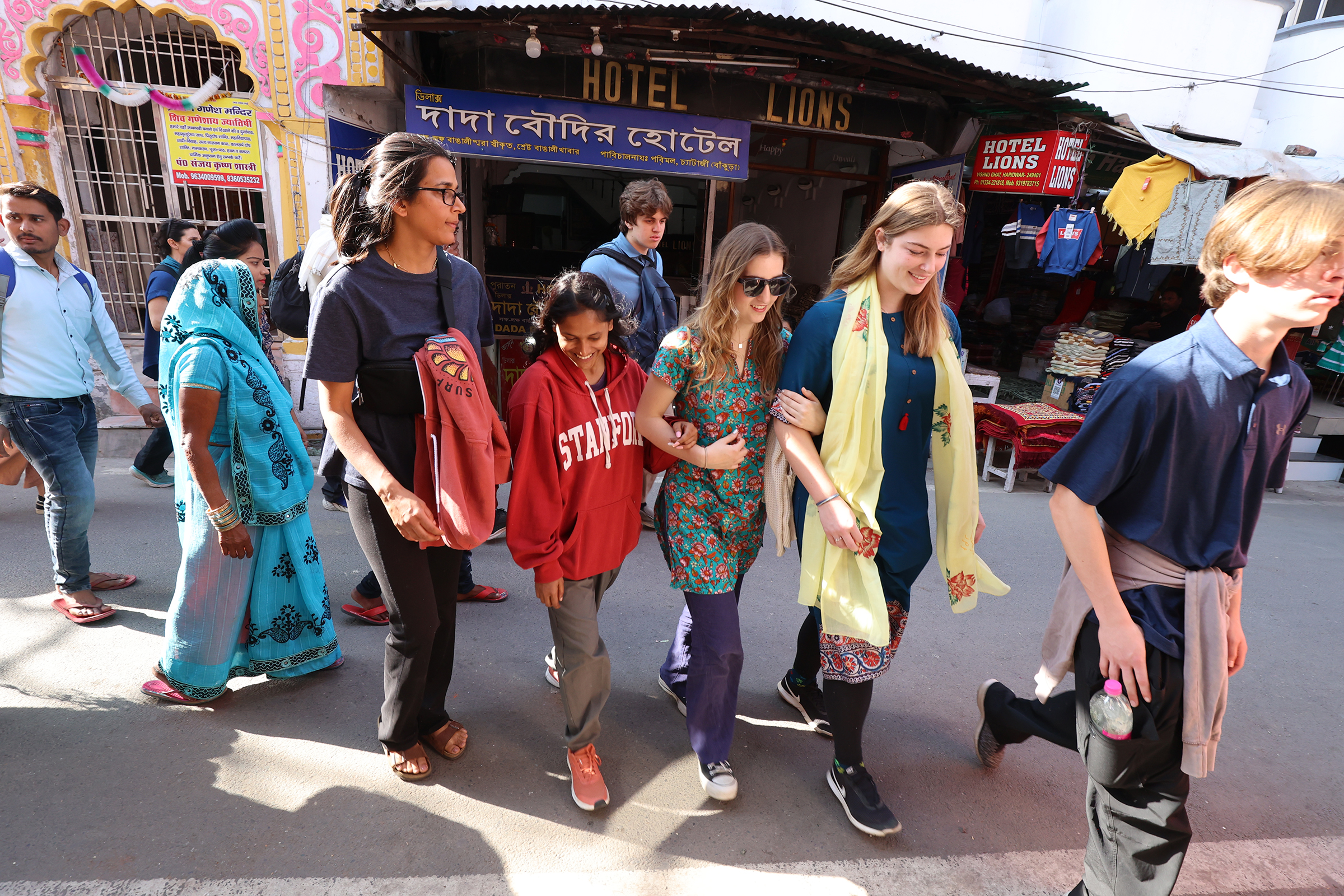
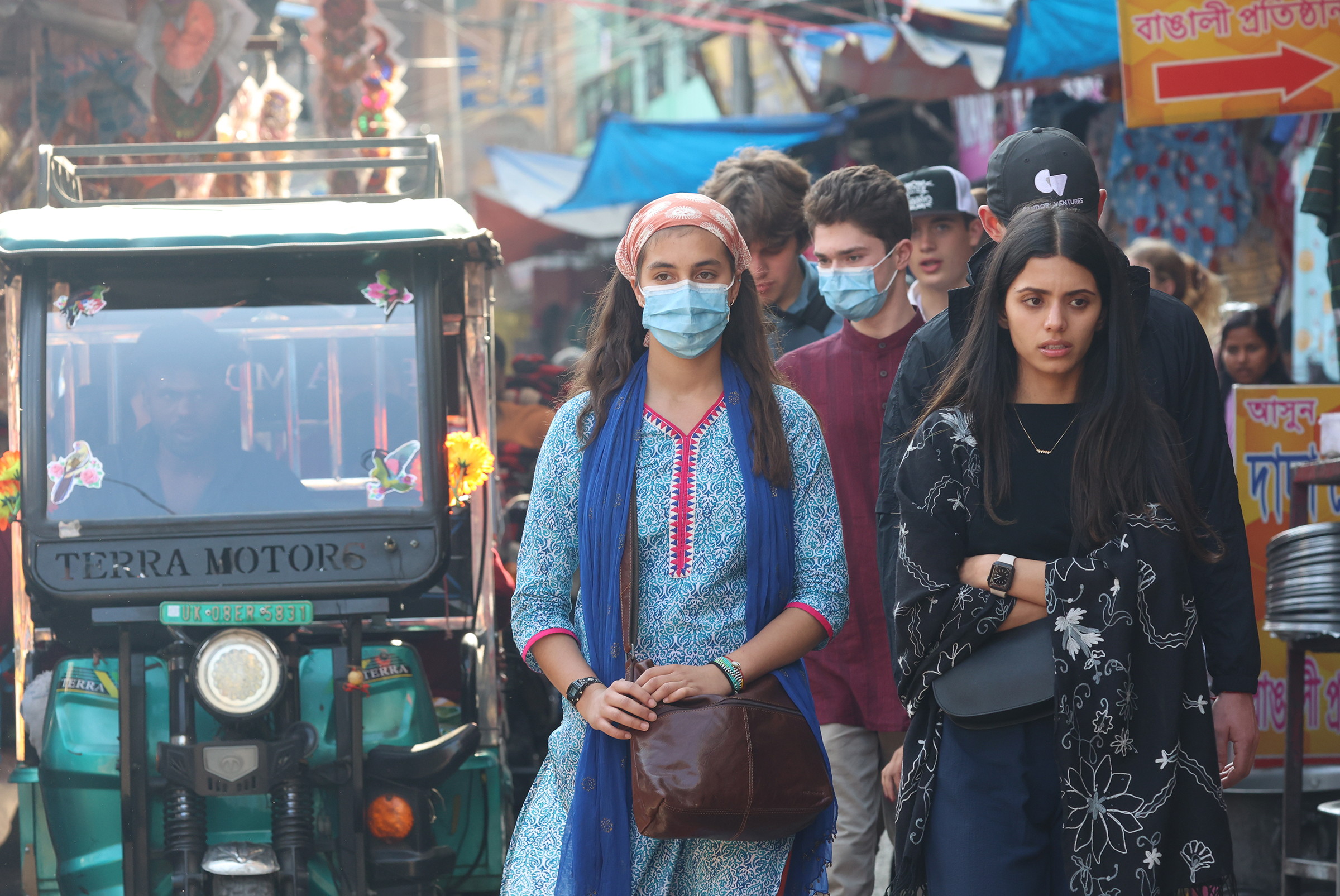
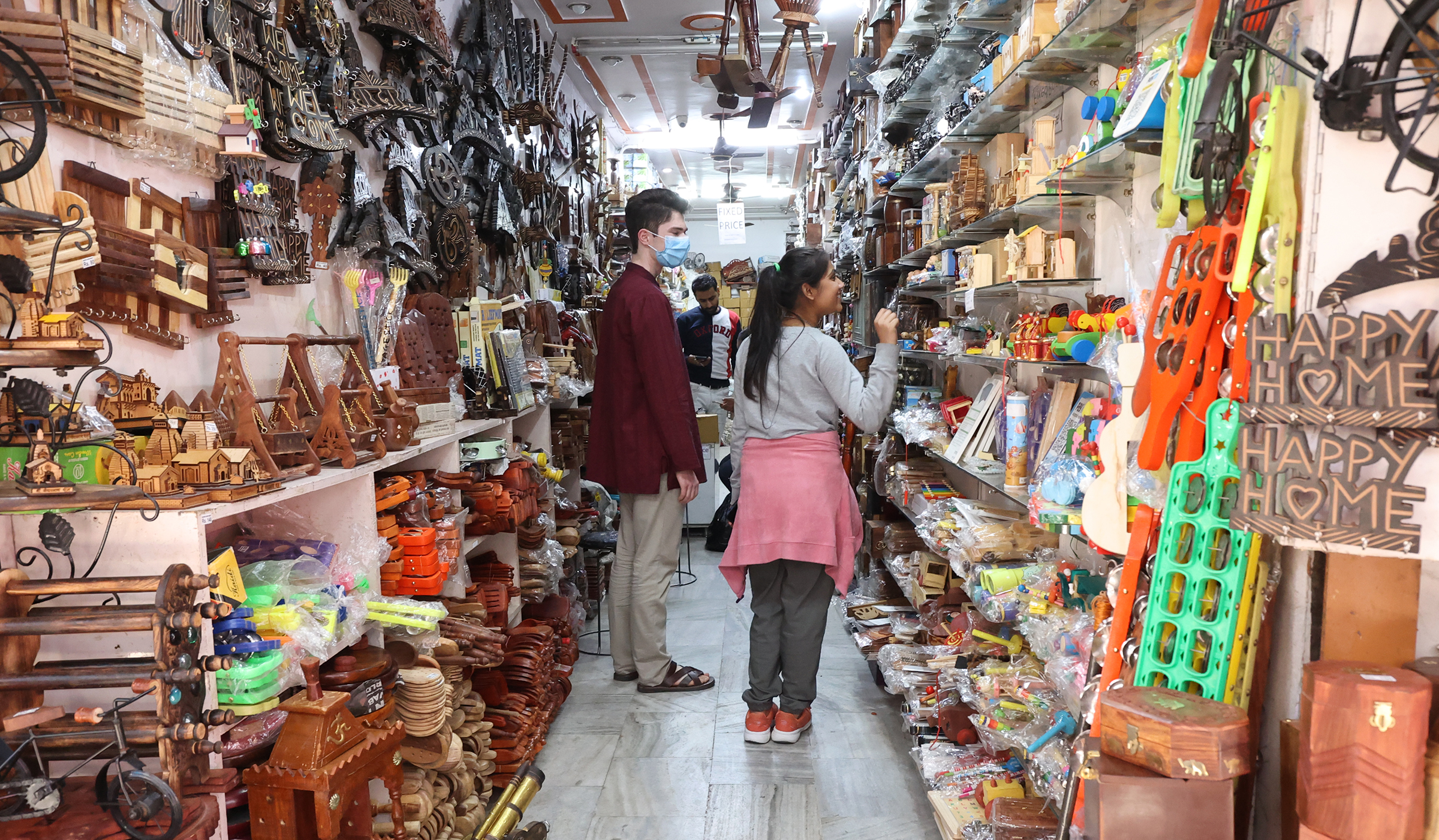
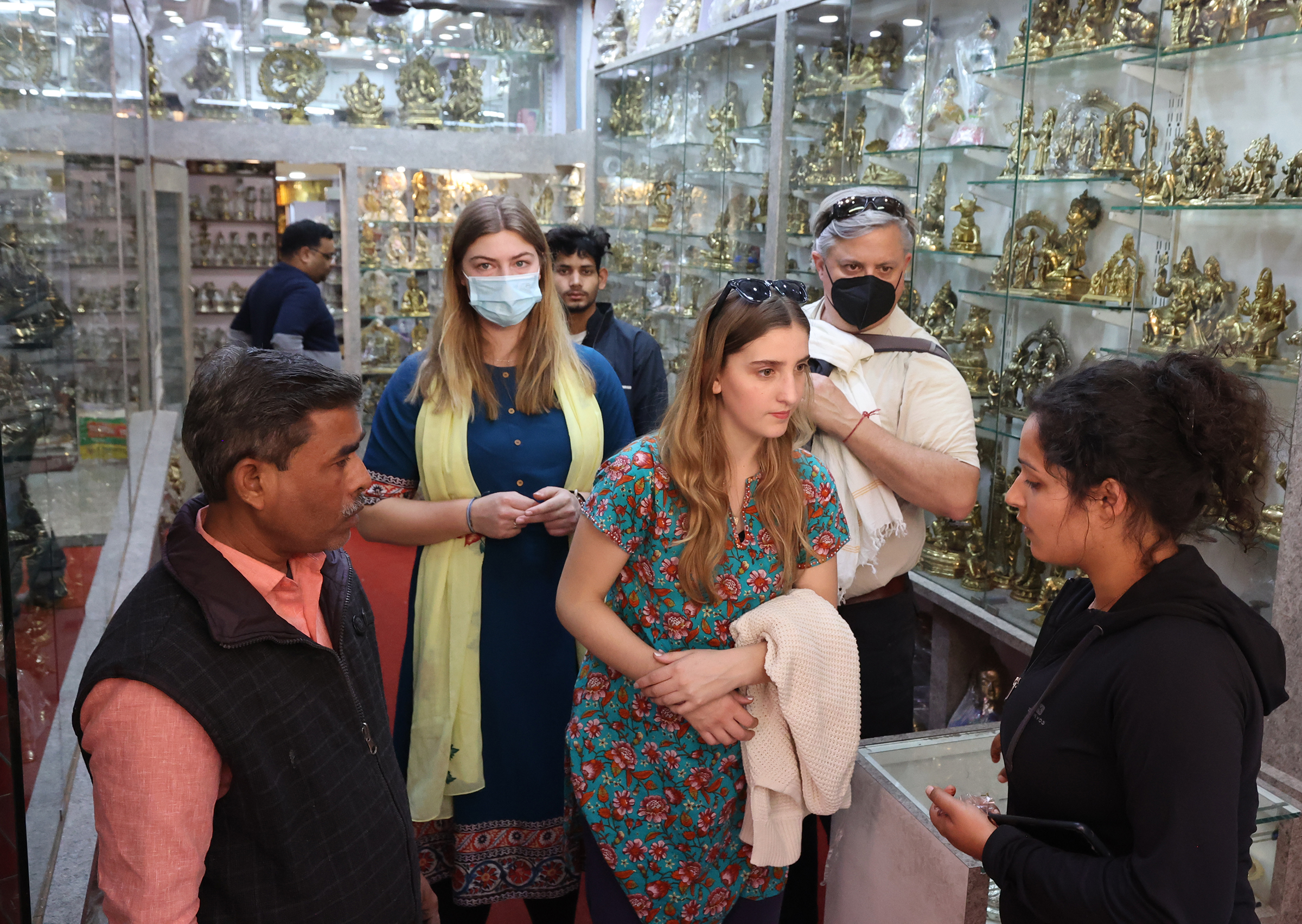
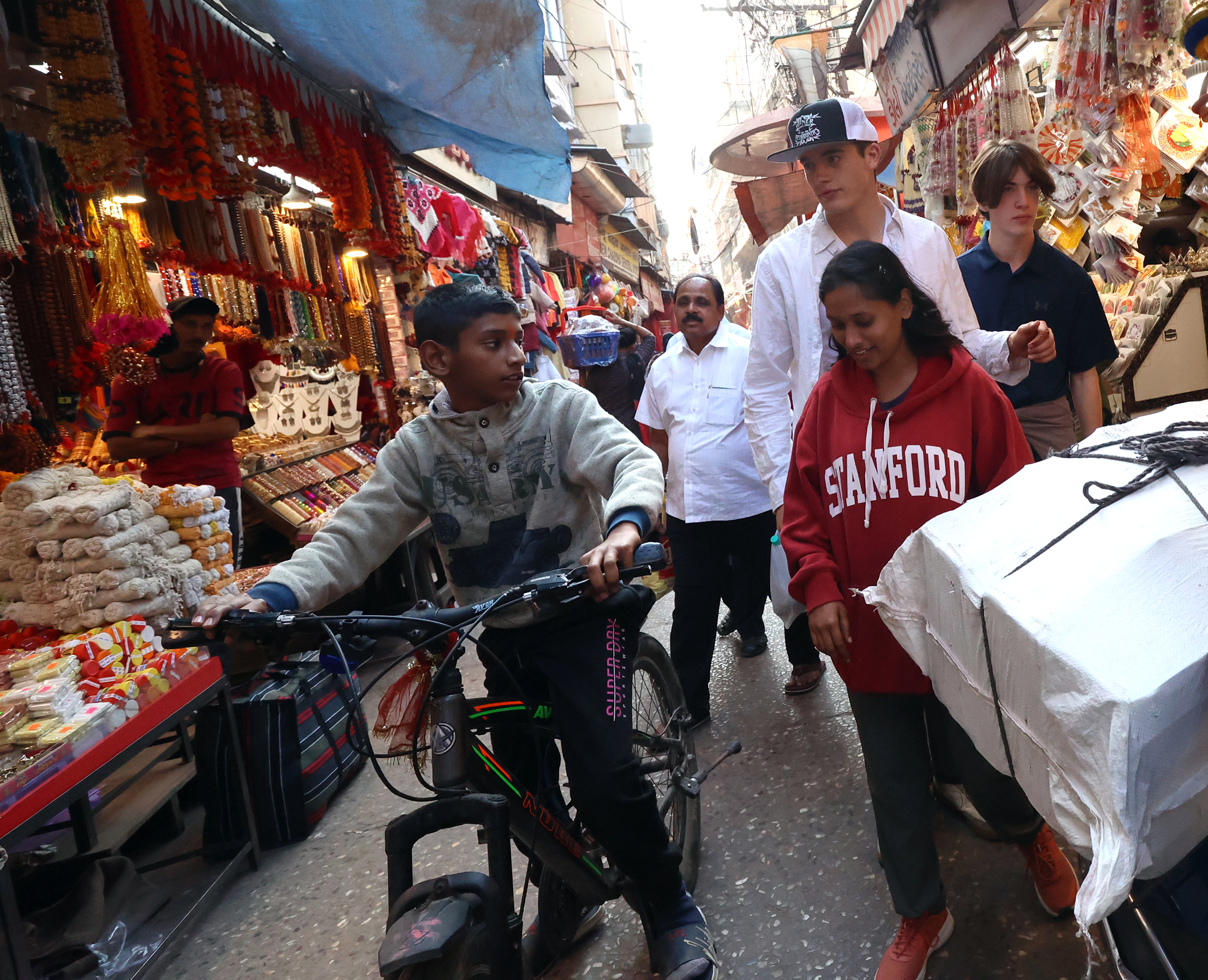
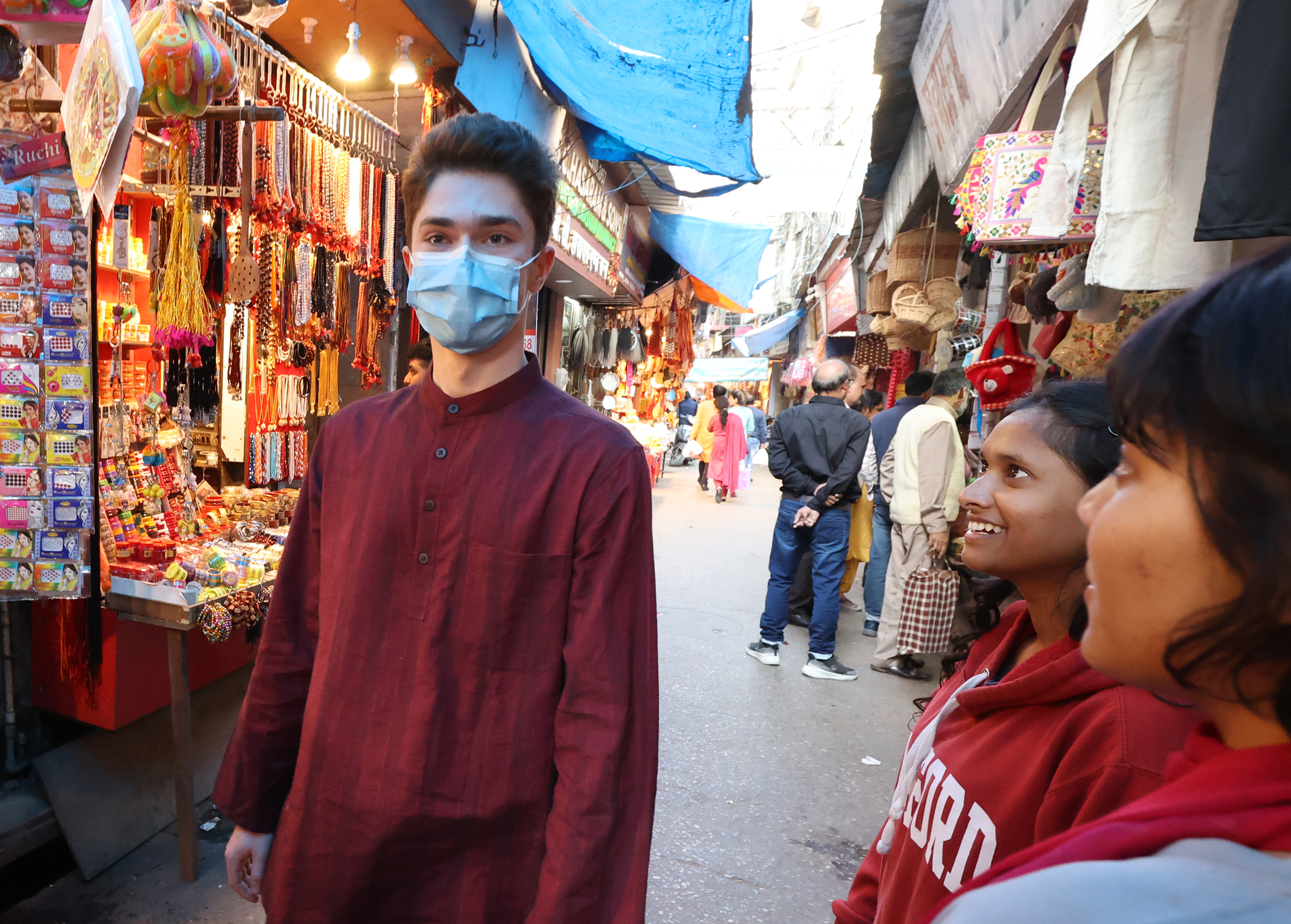
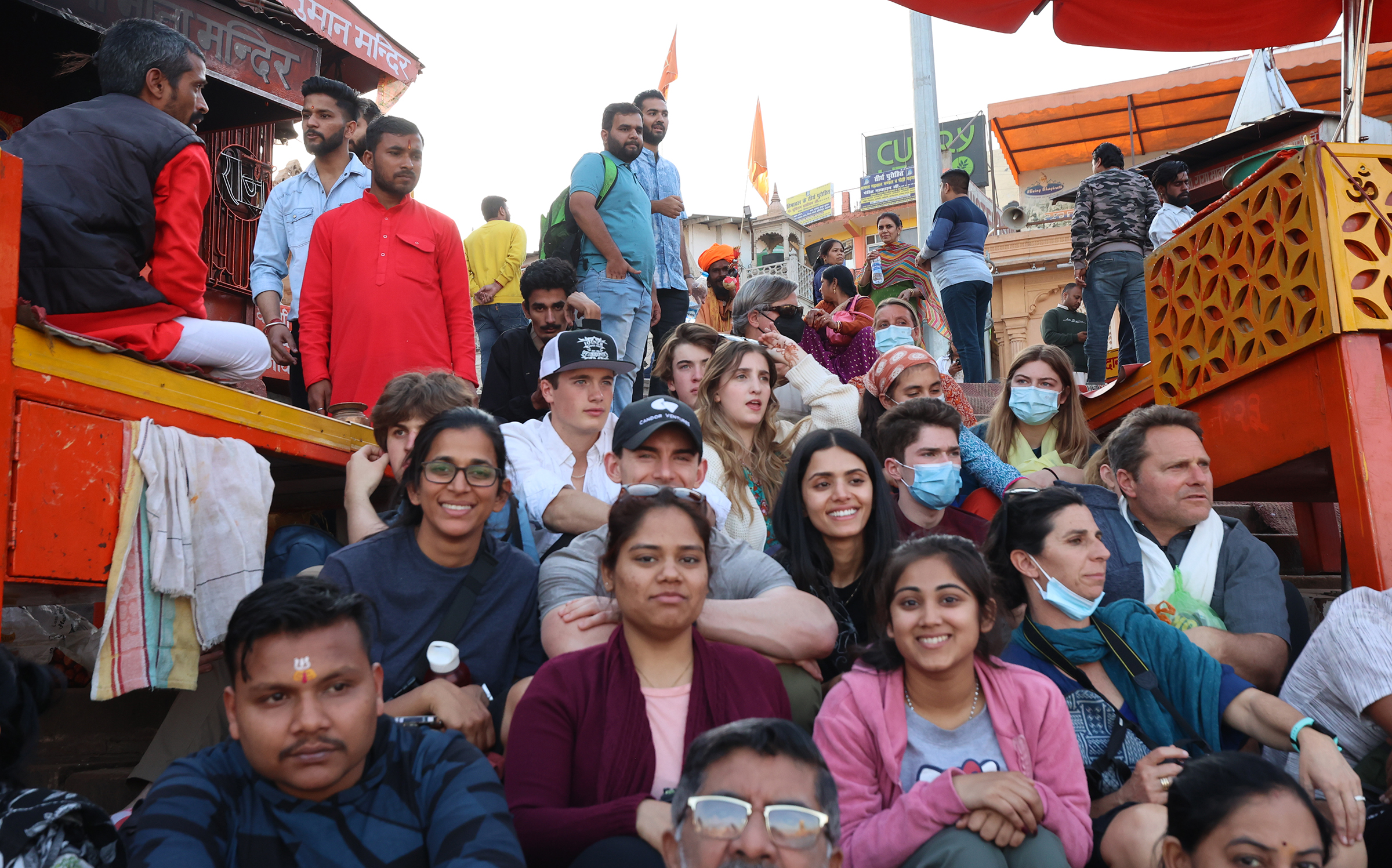
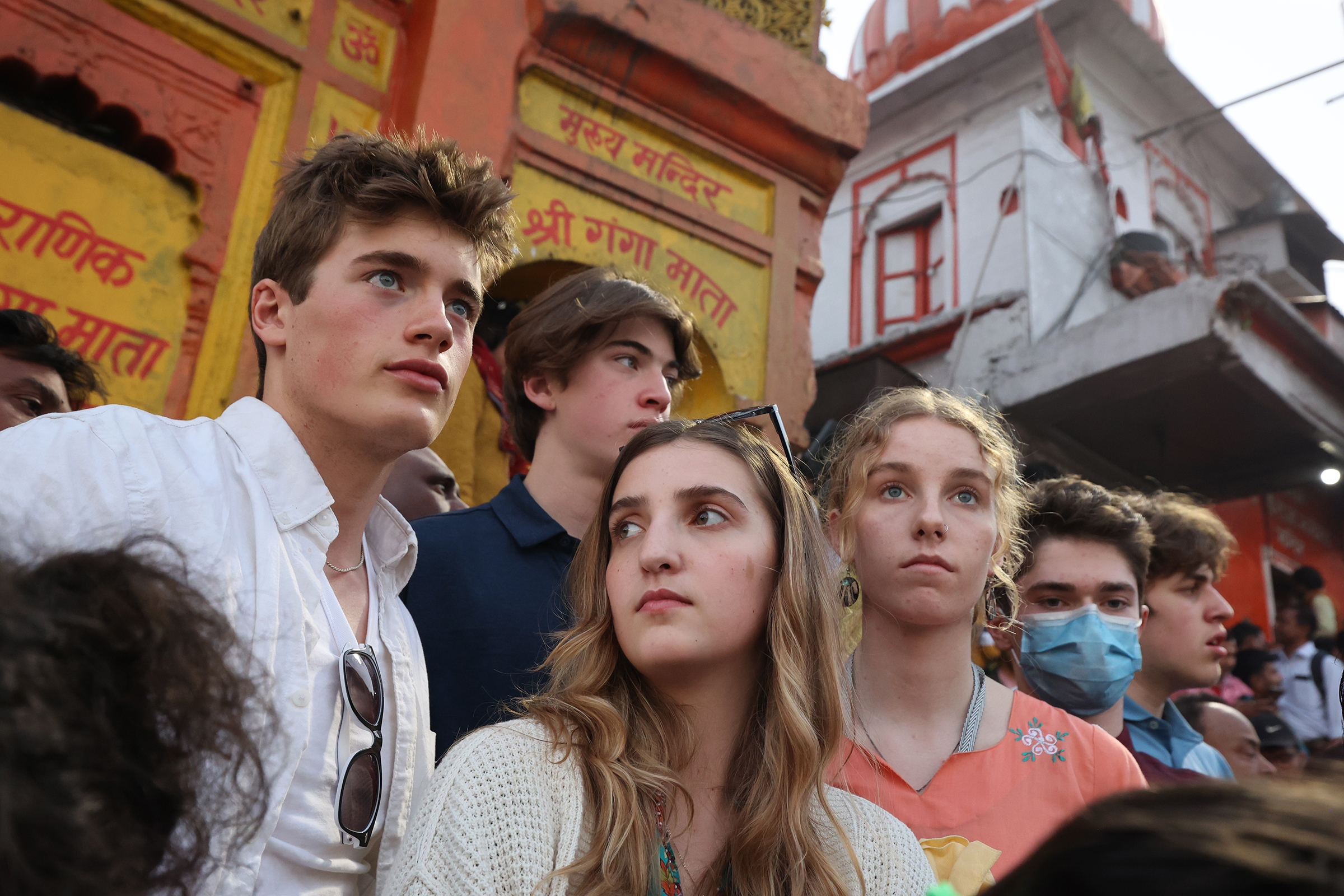
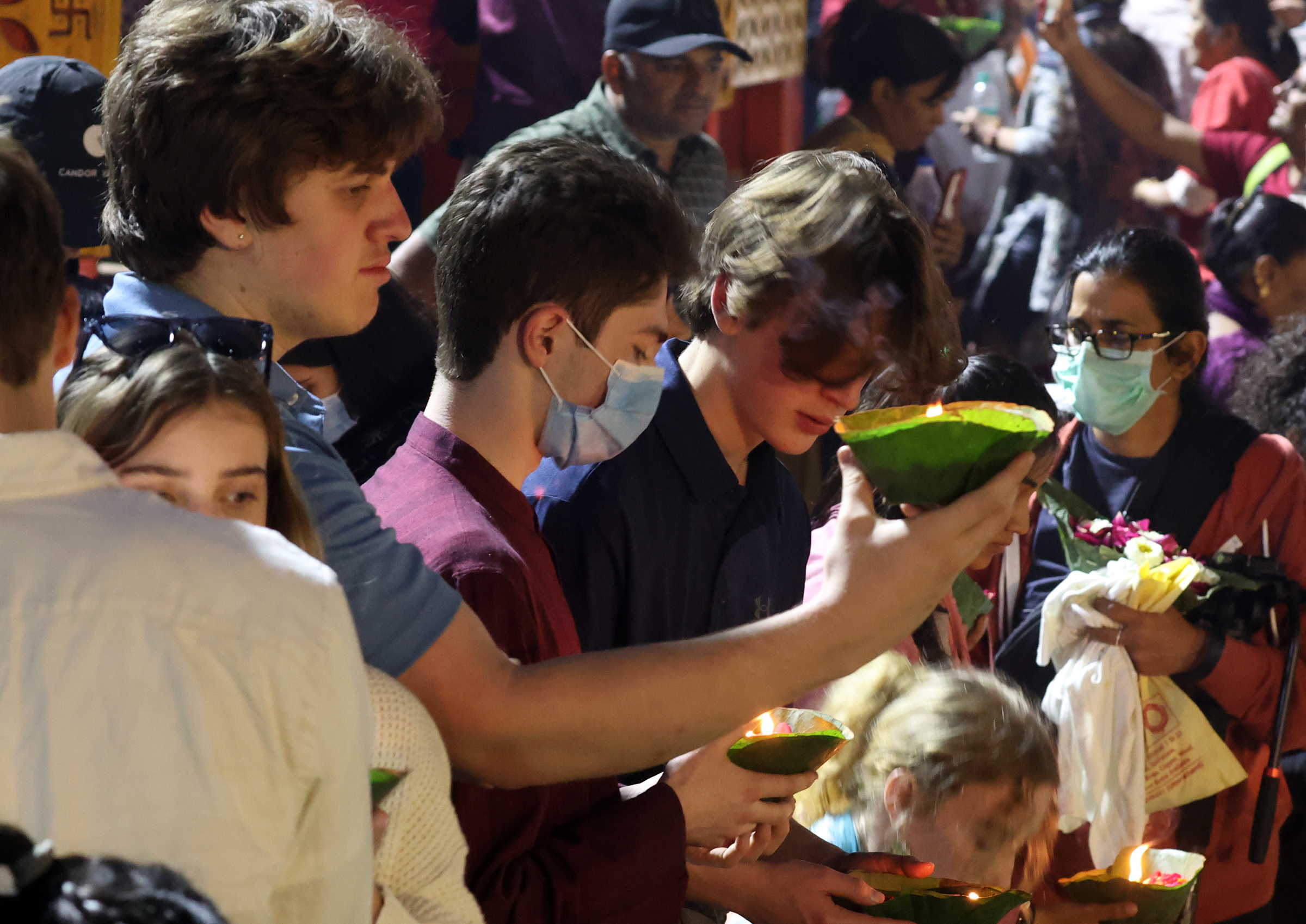
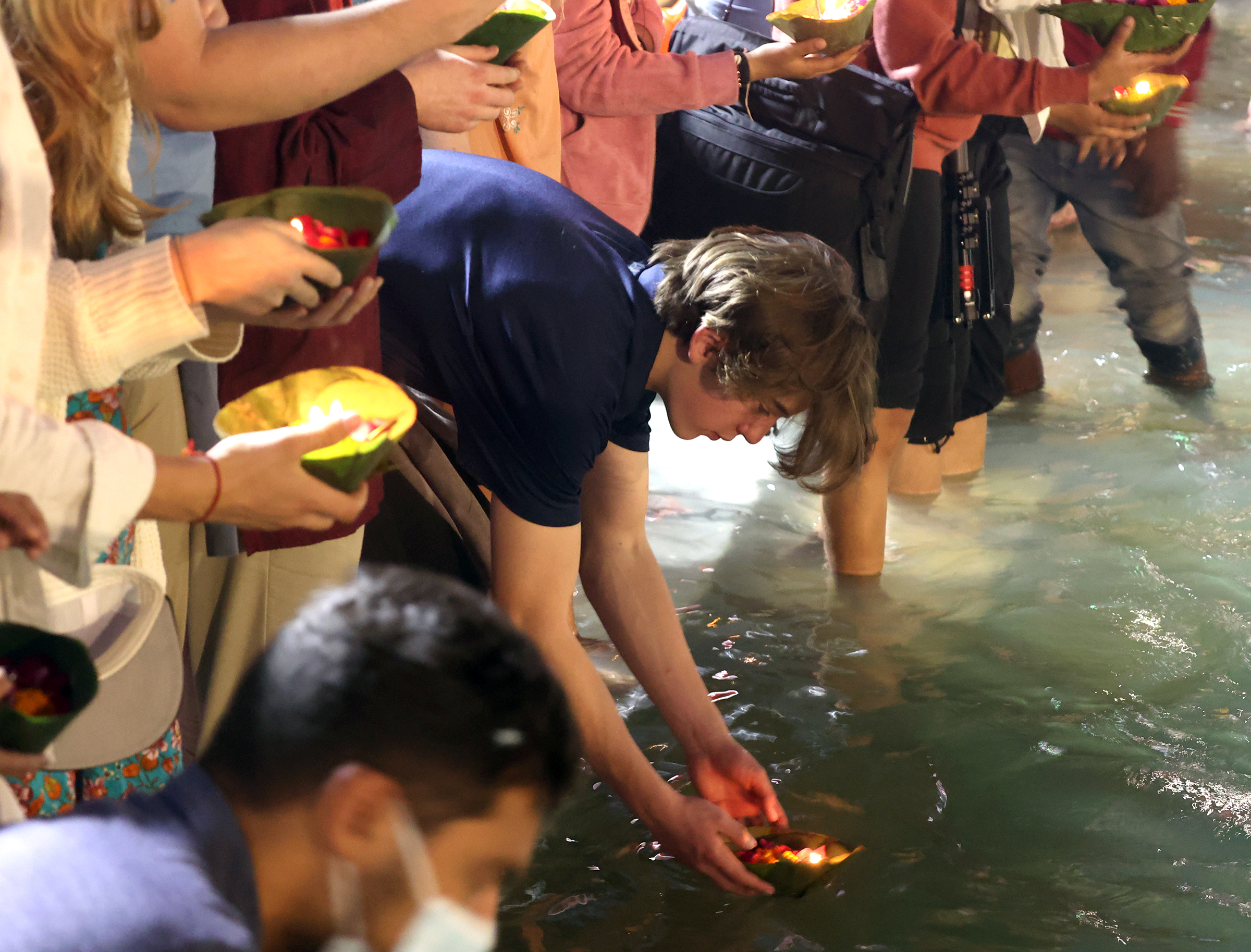
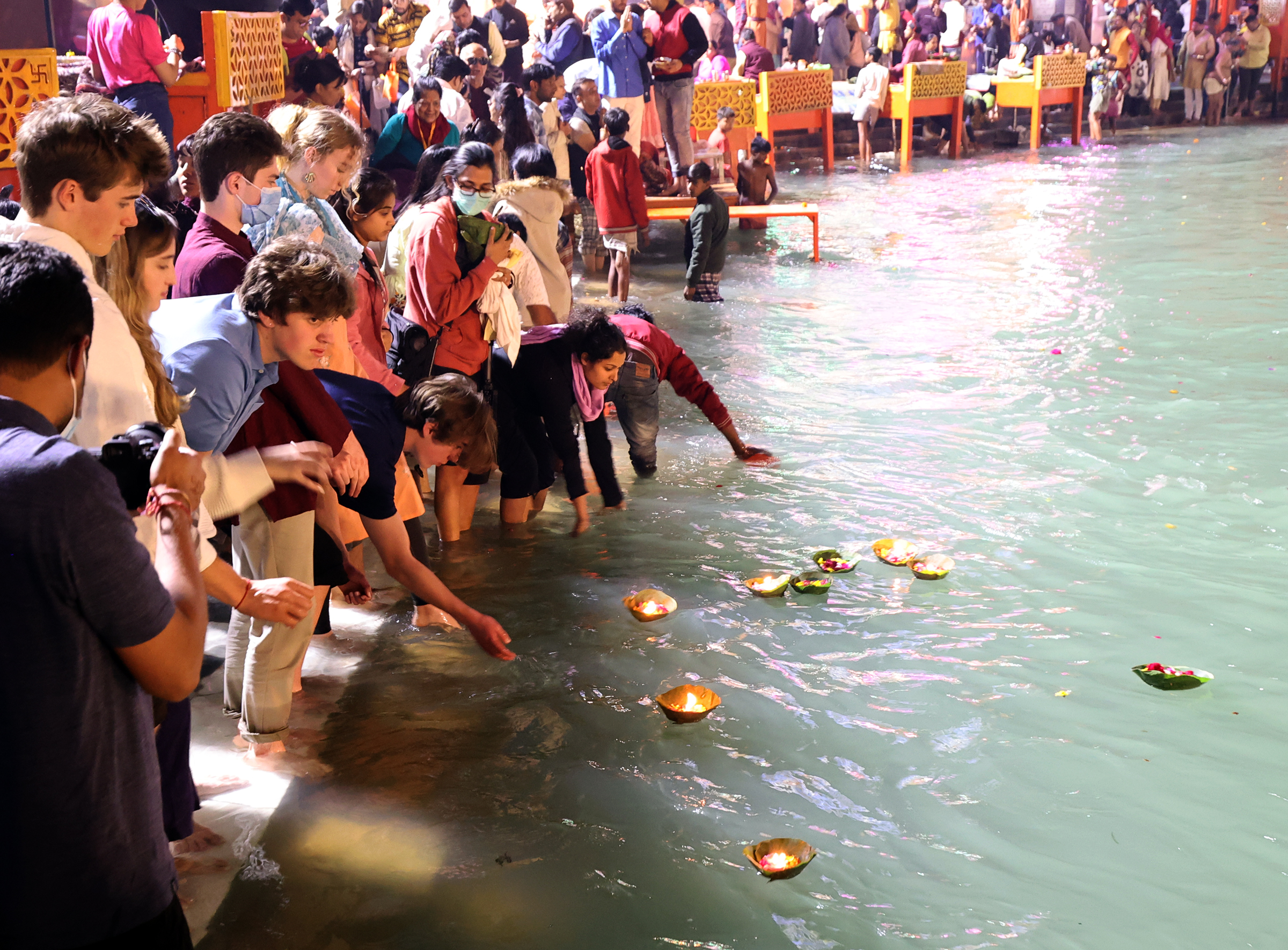
The schedule for the 2024 Learning Journey to India by Mount Madonna School seniors.
Click here to view the blog as we update it daily!
SCHEDULE:
Friday February 16:
Departure from California
Saturday February 17:
Arrival in India
Sunday February 18:
Delhi Tour: Bangla Sahib Gurudwara, Bazaar, Market
Monday February 19:
Travel to Sri Ram Ashram, Haridwar
Tuesday February 20:
Sri Ram Ashram
Ganga walk
Visit Gujjar village
Wednesday February 21:
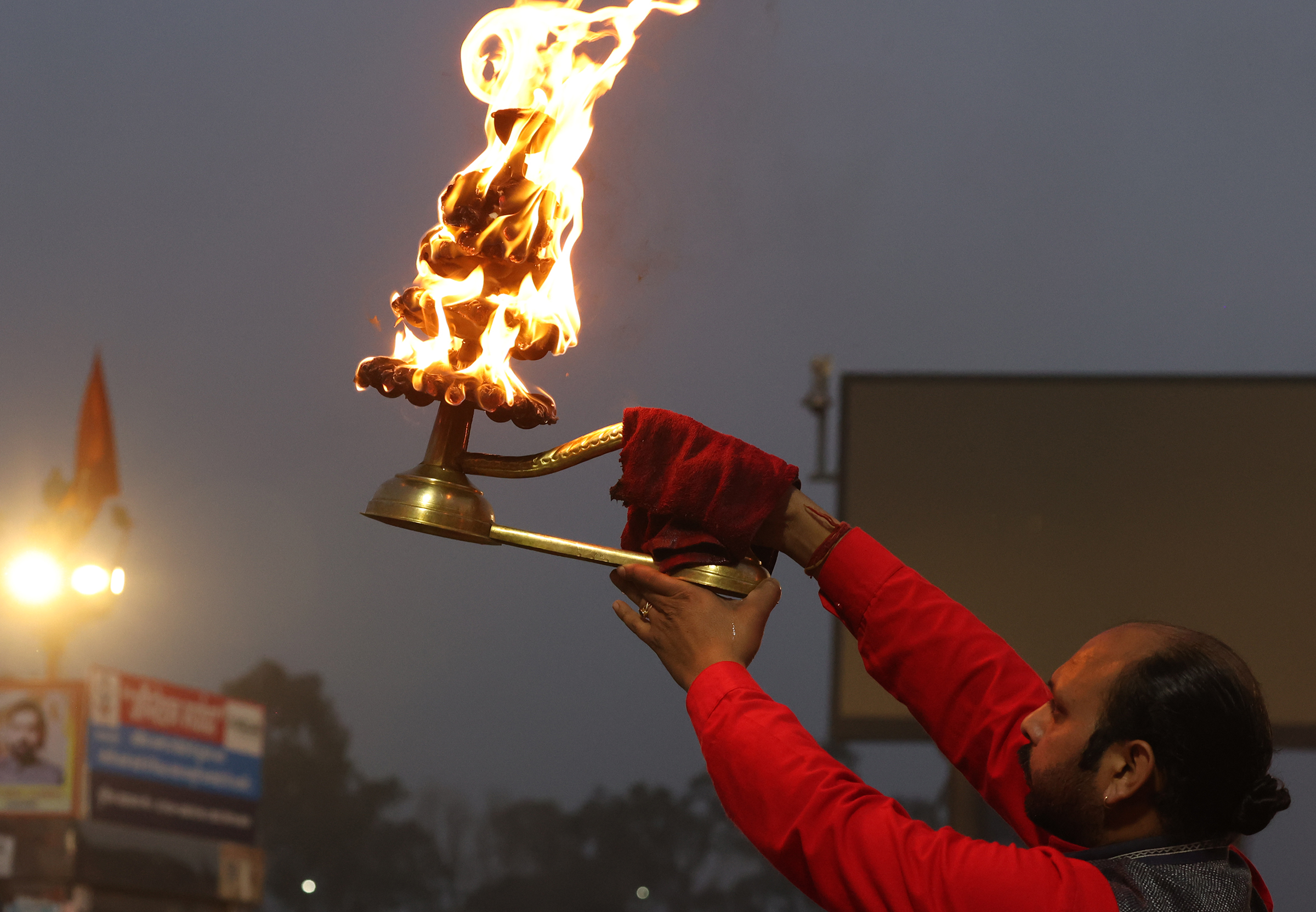
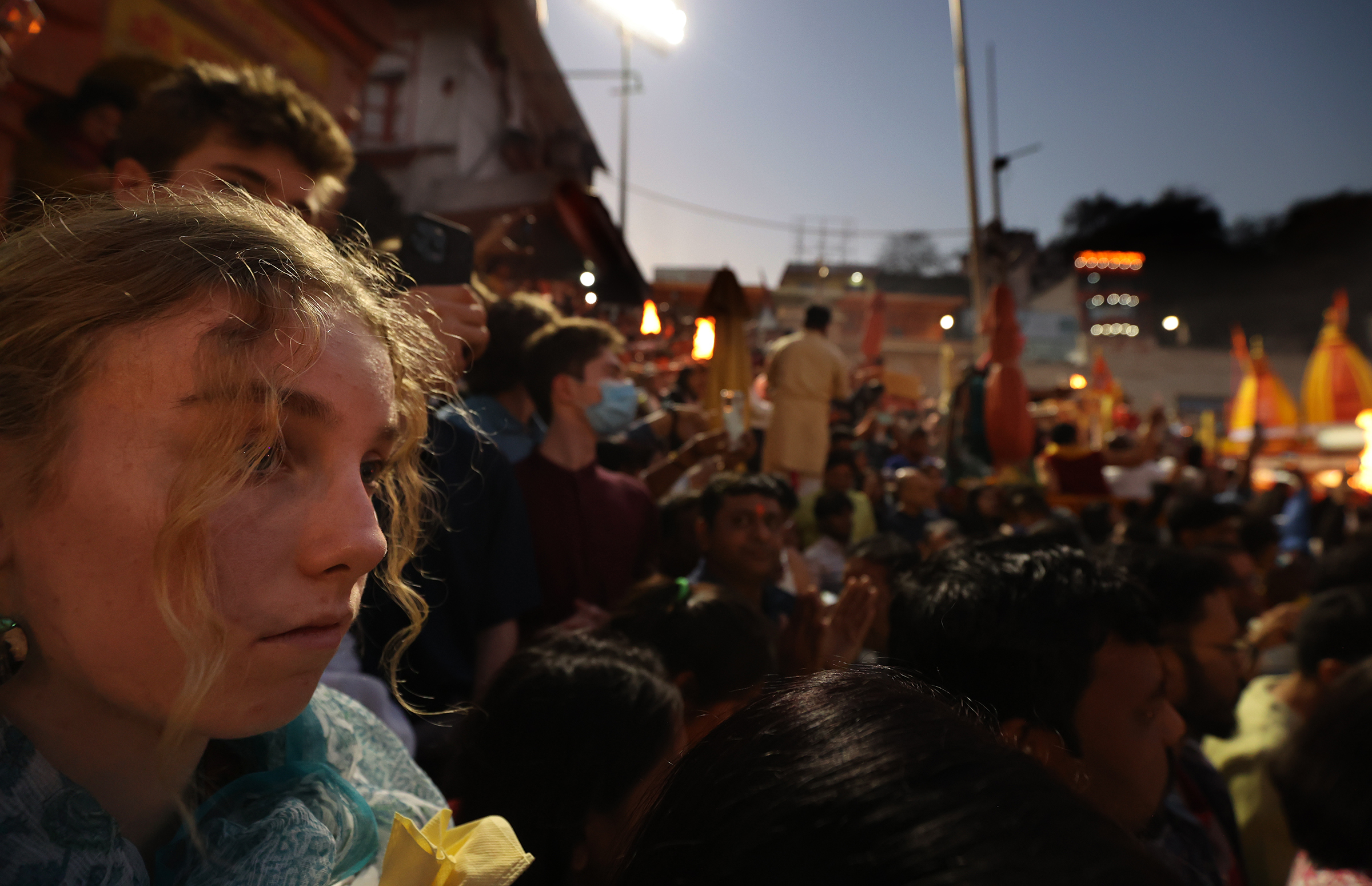
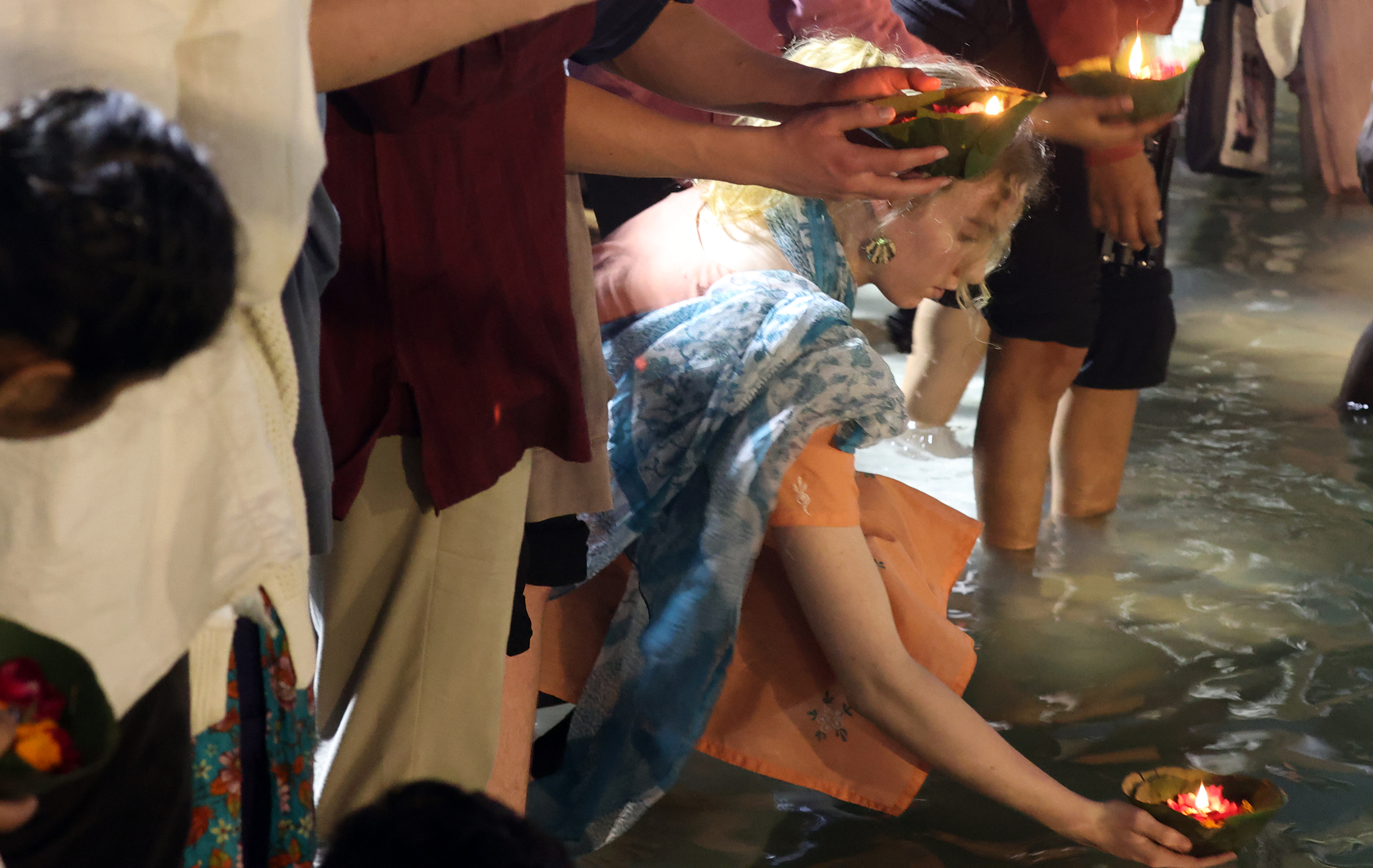
Day Trip to Rishikesh: Beatles Ashram, Meeting with Sadvhi Bagawati, Aarti at Parmarth ashram, satsang, and dinner.
Thursday February 22:
Day Trip to Dehradun: Aasraa Trust
Visit Araghar Government Primary School
Lunch time interview with Ms. Shaila Brijnath, Founder and Chair of Aasraa
Visit Waste Warriors and meet their senior staff
Friday February 23:
Sri Ram Ashram
Visit Sri Ram Vidya Mandir school
Saturday February 24:
Sri Ram Ashram Goodbye party!
Sunday February 25:
Travel to Dharamsala
Monday February 26:
Meet and interview Dr. Metre and visit CORD (Chinmaya Organization for Rural Development)
Visit Dalai Lama Temple, visit McLeod Ganj
Tuesday February 27:
Upper Dharamsala Village
Meet and interview Rinchen Khando and visit Dolma Ling Nunnery
Wednesday February 28:
Travel from Dharamsala to Agra
Thursday February 29:
Taj Mahal, Agra Fort
Meet with Shantum from Buddhapath
Travel to Delhi
Friday March 1:
Delhi Tour: Gandhi Smriti and Old Delhi
Meet with social activist Laila Tyabji
Saturday March 2:
Travel to California
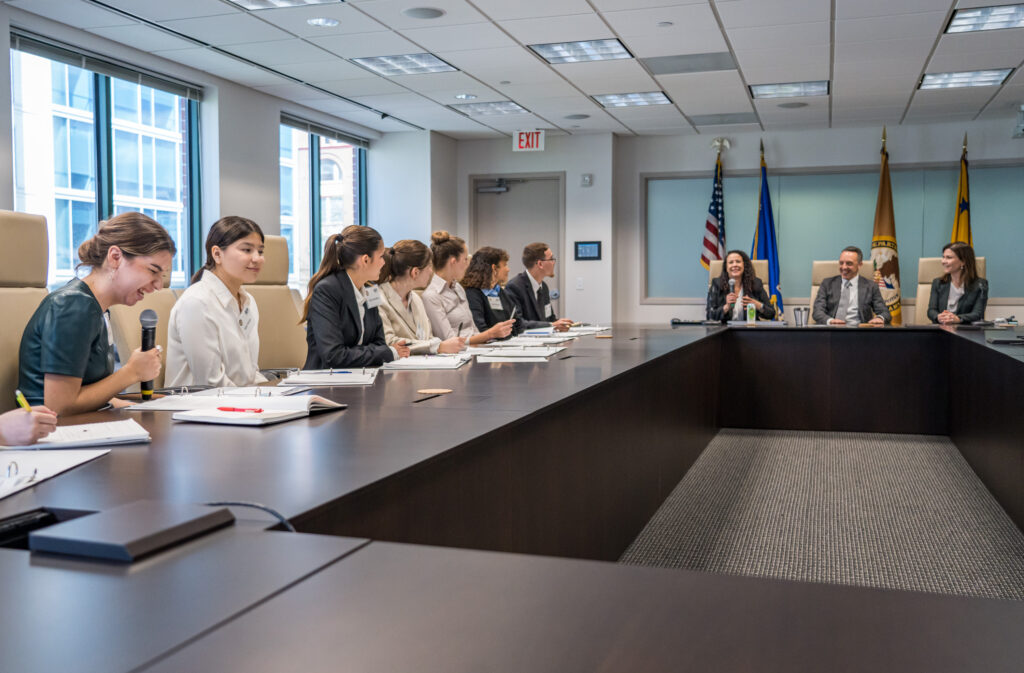
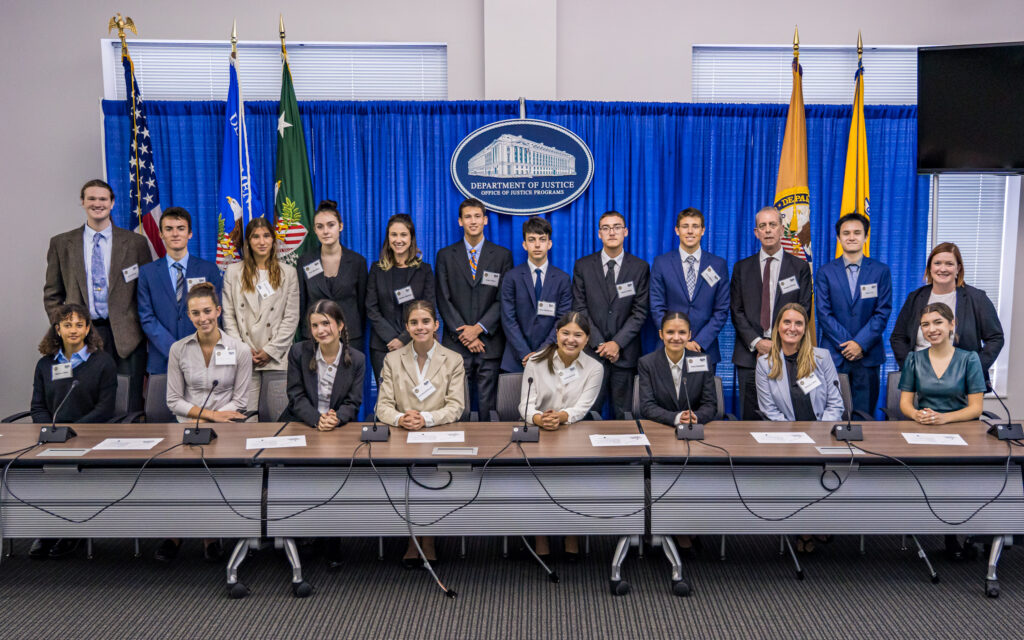
Panel Discussion at Office of Justice Programs (Department of Justice)

Talking to the Department of Justice panelists today gave me a new perspective on government and public service. Before meeting with them, I was unaware of the struggles that government workers experience with balancing their own opinions with the interests of those in the public whose lives they affect. DOJ attorney Linda Seabrook said something that struck me when asked about an article she had written: “It’s hard not to take a pessimistic viewpoint … we need to … drown out this hate, deprive it of oxygen, knock it down from its platform.” Her response helped me understand better that as a society we put a great deal of pressure on our politicians and decision makers, and it’s difficult for them to get everything “right.” Furthermore, the decisions they make weigh heavily on them too. I came to realize that these are “real” people making difficult decisions that they know affect other “real” people.

I came to this same realization during our other interviews today. Earlier in the day, we had the opportunity to speak with a group of military personnel during our Pentagon tour. Josh Clemmens, a US Army pilot, stated that you have to stay true to your decisions even when they involve life and death. Learning that people who are responsible for the lives of others understand all too well the human consequences of their decisions helped to humanize those in positions of power. I came to realize that public servants understand the human consequences of their decisions and that it is a mistake to take the popular view that they are not “human” like the rest of us. In another interview, former Secretary of the Interior Bernhardt mentioned that when making decisions it’s important to stay true to the law despite one’s own ideology. Contradictions can arise, because you face the decision to sacrifice either your own beliefs or your oath to uphold the law. Public officials make difficult decisions that affect people every day. It is therefore important to humanize government workers and politicians. We have to “drown out [the] hate” that many in the public have towards public servants and come to see them as people whose jobs have them serving us.


Today we interviewed four officials from the Department of Justice: Chris Fisher, Mariel Lifshitz, Linda Seabrook, and Eddie Bocanegra. I was particularly excited to interview Eddie Bocanegra because of his unique background and his work helping those affected by violence. Beginning in his teenage years, Eddie was imprisoned for fourteen years for a gang-related homicide. He grew up in a poor neighborhood where the DOJ had a reputation for breaking apart families and making life difficult for his community. Despite his rough start in life, Eddie now works as senior adviser for community violence intervention in the Office of Justice Programs at the DOJ. Eddie explained that his focus is on “leveraging” resources to help law enforcement and underserved communities work together to solve problems in those communities.
Although the other DOJ panelists do not share Eddie’s background, they all share his passionate commitment to bridging the gap between underserved communities and the criminal justice system, focusing on racial justice, behavioral health, community violence intervention, and police reform. Before the interview, I felt a disconnect between government officials and myself as a citizen. I think I had lost a lot of faith in our government with respect to humanitarian issues such racial justice and violence intervention. However, after the interview, my faith in government officials and my hope for the future was to a great extent restored.
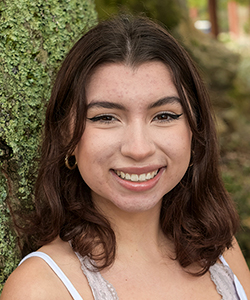

Today we interviewed people from the Office of Juvenile Justice and Delinquency Prevention at the Department of Justice. The panelist I was most excited to interview is Linda Seabrook, who works in the Office of Justice Programs as Senior Counsel of Racial Justice and Equity, focusing on increasing outreach to underserved communities through government programs and initiatives. She began her legal career as an assistant solicitor or prosecutor, because she wanted to work for justice for women and girls of color.
I asked a question about an article she wrote in 2017, “A Love Letter to Charlottesville.” In the article, she examines the Unite the Right rally and her own personal connection to Charlottesville. Her words deeply affected me: “We have to learn from the actions of the people of Charlottesville and drown out this hate – deprive it of oxygen, knock it down from its platform.” Many in our country want people to forget the disturbing parts of our history, and the result is that we end up repeating myths instead of learning about and from the past.

I wanted to know if Seabrook sees any change in our country since the events of 2017 or if we have learned anything from them. Seabrook responded that she doesn’t want to be pessimistic, but she hasn’t seen improvement, and she thinks that things have even worsened. She recalled that in the past she and colleagues who held different political opinions still got along. However, now there is pressure on officials not to interact with those who hold different views. However, although things are bad right now, there is still reason for hope. We can deprive hate of “oxygen” by making the effort to create and maintain connections with others. Understanding the perspectives of those with different opinions humanizes both them and ourselves, and it is only through humanizing people that we can make all of our lives better.
Visit to the Pentagon

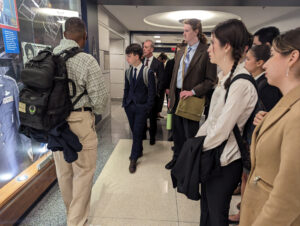
Today, Officer Anthony Jackson gave us a tour of the Pentagon. His current position is Police Officer with the Pentagon Force Protection Agency, Pentagon Police Directorate, Third Platoon. Before that, he has served as a sergeant in the US army. Throughout the tour, I felt great admiration and appreciation for his many fine character traits, such as humility, curiosity, compassion, and strong willpower. Officer Jackson went to great lengths to give us the best experience he could give us. Throughout the tour, I heard many comments about his dedication and service to his country and the American people, and I stayed by his side the entire time we walked.
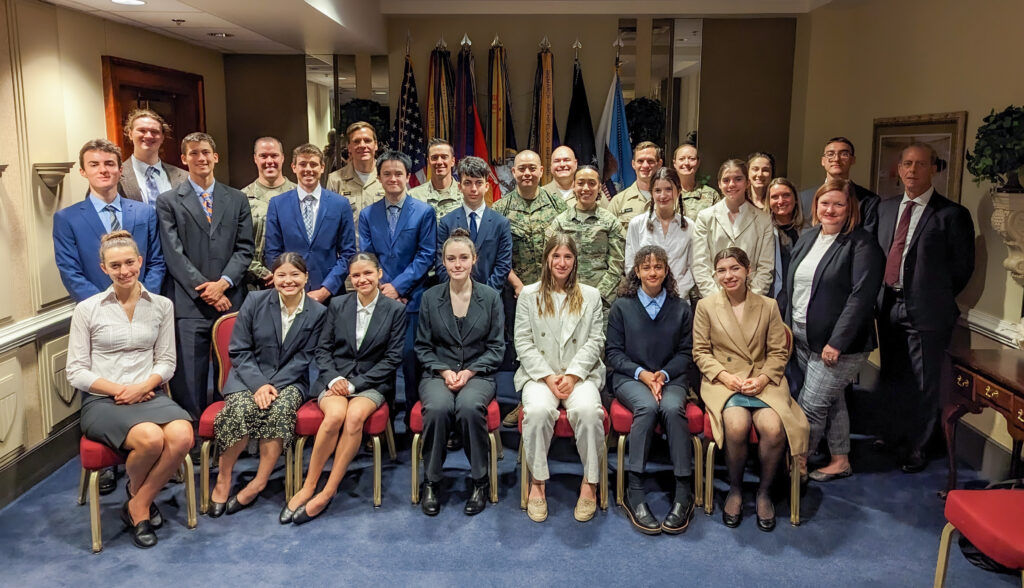
After bringing us into the building, he led us to a room where he introduced us to a panel of people from the Army, Air Force, and Marines that he had assembled for us. Because we were unaware that we were going to meet a panel of military personnel, we had no questions prepared for them. I think I speak for all of us when I say that we were all moved not only by their individual stories but also by their motivation and commitment to service. Although we had not prepared questions for them, we were eager to ask a number of questions, and it was obvious that we were all grateful for the opportunity to speak to them.
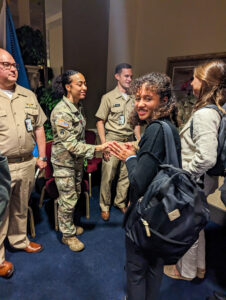
I was especially moved to see women serving proudly in the military, and I was excited to talk to such strong women. In recent years, more women have come to hold positions of power that only men used to hold. Meeting these women helped me to imagine myself doing all the things I grew up watching only men do, and I felt very inspired.
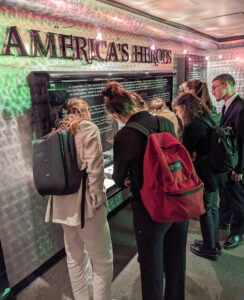
After the discussion, Officer Jackson showed us the headquarters for the Marine Corps and the new Space Force. Both areas included interesting displays on the walls depicting different aspects of each branch of service. There was information about important people and events, and there was even a display dedicated to science fiction movies related to space and the Space Force.
The last part of the tour was the most personal part of the tour for him and the most emotional for us. Officer Anthony Jackson was training to be an army sergeant during the attacks on September 11, 2001. Although he was not in any of the cities where the attacks occurred, he was dispatched to do security clearance at the Pentagon to make sure no one could enter the perimeter while people were working at the site. We stood in the very spot where the Pentagon was hit, which is now an open corridor between two walls. One of the walls was rebuilt after the attack, and so it is a different color from the other wall, which was preserved and included scorch marks from the fire. You could see the emotion on his face as he talked about the attack, and he was incredibly vulnerable and respectful as he spoke about it. I had never shared such intense, raw, and vulnerable feelings with someone before. I deeply appreciate him, and I won’t forget what he shared with us.

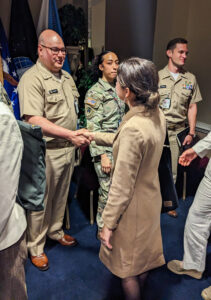
Today we had a full and exciting day. We woke up early, got ourselves ready, and then rode the Metro to the Pentagon. It was unique and humbling to experience life as a DC local. This was only the second time I had taken the Metro in DC. When we arrived at the Pentagon, I was amazed at the number of government officials and the size of the Pentagon.
The experience at the Pentagon was surreal. There were people in official uniforms everywhere, and there was intense security. After a brief orientation, our tour guide, Officer Anthony Jackson, led us to a room of panelists to interview. Along the way, he showed us various shops and services and dispensed interesting pieces of information. For example, we learned that there are seventeen miles of hallway in the Pentagon. We also viewed paintings of previous chiefs of staff. I was in awe of the history on display and amazed that our country and its government have stood the test of time.

The panelists were all knowledgeable and informative. Each was from a different branch of the military. I found Officer O’Connor especially interesting as he spoke about his experience working with nuclear and other hazardous materials. After the interview, he told me about how he previously worked with nuclear power in Hong Kong and that in just a few weeks he’s going to Texas to conduct a simulation of a nuclear attack. This topic has always fascinated me, and it was a once in a lifetime opportunity to talk to someone who works on it as a profession.
All the panelists gave great advice, and they all agreed that it’s okay not to know what you want to do in life at my age, as I still have plenty of time to find my calling. As a high school junior, I found this advice refreshing. I’m very grateful for the experience the Values in World Thought curriculum has given me.

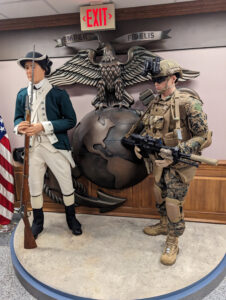
Today, our class toured the Pentagon with Officer Anthony Jackson. We viewed the Space Force wing and the Marines Corps wing, and we interviewed a panel of members from different branches of the military. The panel was the most interesting and engaging part of the day for me, as the members of the panel were all very well spoken and seemed like they really wanted to talk to us. My favorite panelist was Officer Josh Clemmons, who pilots “Little Bird” helicopters. He is an incredibly relatable person, appearing more “human” than I had previously imagined someone in the military to be. One thing he said that stuck with me was that the hardest lesson that he’s learned so far was the impact that a decision can make. He gave an example of sending a group of specialists on a mission and having them all return, and another time sending a different group on a mission and having only some of them return.
Before today, I had always thought of the government and the military as huge impersonal entities that functioned independently of the greater good, rather than a group of people who are just trying hard to make the best decisions that they can in service to others. Several of the panelists admitted that they really haven’t always known what they want to do with their lives and advised that someone my age doesn’t need to know yet what to do in life. I’ve been focused on becoming a firefighter for some time now, and I haven’t really been considering other options as much as I should have. They made me realize that although it’s nice for me to have a passion and a general idea of what I want to do, I should take every opportunity that I can to learn and experience something new, knowing that possibilities and opportunities aren’t always predictable.


On our first full day in DC, we visited the National Museum of African American History and Culture. During our walk around the museum, a quotation on a glass case caught my eye, as did the pounds of sugar filling the case. Sitting on top of the sugar was a large and heavy-looking iron bowl. The first part of the quotation was poetic: “Sugar—sweeter, more powerful, and more deadly than gold. Unlike gold, sugar could be grown; it provided the possibility of unlimited wealth.” I was taken aback. I had never thought about the idea that if you have a certain amount of money you just have a fixed amount of money, but if you have sugar or another similar resource, you have a continuing source of money. Slave owners wanted human labor to maintain their sugarcane crops and their continual source of profit. The more sugar you could grow, the more slaves you needed to grow and harvest that sugar, and the more profit you could make. It was a continual cycle: more money, more sugar, more people needed to maintain that sugar, more money, more sugar, more people, etc.
The second part of the quotation on the glass case was a statement of fact: “Life expectancy for an enslaved worker on early sugar plantations was seven years. Mortality rates were thirty percent. The amount of the world’s sugar produced by enslaved Americans in 1787 was ninety percent.” It’s hard to imagine these percentages in real, human terms: out of every ten enslaved Americans, three were murdered. This relatively small exhibit made me think deeply about things that I had not thought about before, and I greatly appreciated the experience. What you learn can stick with you and even change you. This experience has changed me, and I think it will always stick with me.

Today we visited the National Museum of African American History and Culture. All the exhibits were extremely interesting, and it is almost impossible to see everything the museum has to offer in one day. For example, I didn’t get to see the music exhibits, which I think I would have found most interesting. Cooper told me that he saw Chuck Berry’s red Cadillac and some of his musical instruments. Jimi Hendrix’s personal items, such as his jacket and one of his amps, were also on display. I’ll need to go back to the museum one day to see the rest of it, especially the musical exhibits.
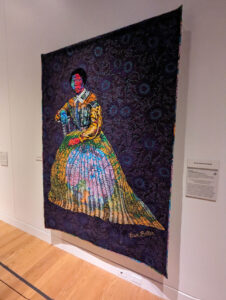
My favorite exhibit was in the visual arts area of the museum. I especially liked a quilt hanging on a wall like a tapestry. It had the image of Harriet Tubman in a flowing dress, sitting on a wooden chair. What was most interesting was the appearance of her clothes. The bottom of her dress appeared to be woven from a colorful, flowery landscape: there were many vibrant purple flowers, surrounded by many colors. Each section of the dress contained different types of flowers and other colorful items. There were playful birds on the sleeves, and at the bottom of the dress was a lion staring at the viewer. When I first looked at the quilt, I didn’t catch all the detail, but as I looked closer I noticed what seemed like miniature worlds embedded in the fabric. I liked how the artist used red and blue to represent light and shadow on her face and hands, which I thought was a creative way to give the piece depth and dimension. It was quilted together, and the colors were vibrant. To appreciate a work of art fully, one needs to experience it in person and not simply view it in a book or on the internet. The experience just isn’t the same. I was able to discern subtle textures and differences in color. I think that the piece had a deeper meaning that I couldn’t fully comprehend in one viewing. If I ever return to DC, I definitely want to view it again.

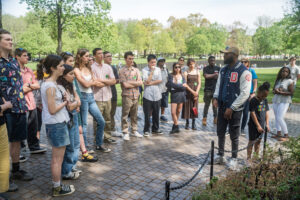
Today we took the African American History tour and visited many memorials and monuments related to African American history. I particularly liked the African American Civil War Memorial. The memorial includes a statue with a different depiction of African American history on each side of it. On one side is a depiction of three soldiers engaged in battle, and on the other side is a depiction of a family. Dre’, our tour guide, explained to us that the side with the soldiers represents the reality of the war, while the side with the family represents the humanity for which they were fighting. After reflecting on the memorial and discussing it with my peers, I came to realize what the memorial means to me. I see it as representing different kinds of fighting or struggling. The military arms that the soldiers carry represent overt physical fighting or struggle, while the family represents a more abstract and emotional kind of struggle, the struggle for human rights as an African American.
The memorial features a quotation from Frederick Douglass that expresses this idea of struggle: “Who would be free themselves must strike the blow. Better even die than to live slaves.” Tens of thousands of African Americans fought in the war for the chance to escape slavery. They fought for their own freedom and the freedom of others, and in doing so they risked and in many cases sacrificed their lives. I had already learned about slavery in US History class, but this quotation deepened my understanding of the reality of slavery. As a Hispanic woman living in the twenty-first century, I cannot know the reality of slavery firsthand, but today I came to understand better what the experience of slavery meant to those who endured it.
The National Museum Of African American History and Culture preserves and celebrates the rich heritage of African Americans. I was particularly interested to learn about the history of African Americans in the music industry. There were seemingly endless walls celebrating African American artists from genres such as psychedelic funk, R&B, soul, blues, and gospel. Not only did I learn more about artists with whom I was already familiar, but I was introduced to dozens of African American musical artists I had never heard of who had an impact on the music industry and American culture.
I especially liked learning about the impact that these artists had both on the genres in which they performed and on how we think about American society. An exhibit entitled “Revolutions of Sound” depicted how artists such as Prince tackled social issues such as racial segregation, unequal pay, and the discrimination to which black artists have been subjected. The museum did an amazing job of presenting difficult and traumatic aspects of history while displaying the beauty and power of the musical achievements of African American artists. I nearly came to tears while viewing a display of an African American artist singing about inequality, surrounded by black and white people holding each other and crying. I felt the emotion and connection the music brought to the people listening. I am most grateful for the opportunity to visit this magnificent museum, and I hope that next year’s students will experience the same thoughts and emotions I experienced today.

Today was our first day in DC, and we enjoyed sunny weather. The humidity came as a bit of a shock, but it was a good change anyway. The neighborhood we’re staying in this week is gorgeous and looks like something from a fairy tale, with colorful houses, beautiful flowers, and all sorts of green living things everywhere. The Metro is very convenient and a fun way to travel about the city and view it.
The most important part of the day for me was our trip to the National Museum of African American History and Culture. The more I read and saw, the more horrified I became at the history of slavery. Dehumanizing people in any way is disturbing, but learning about the ways in which slave owners did not comprehend the inhumanity of their actions was particularly disturbing. This part of American history should be discussed more, to acknowledge the inhumanity and cruelty of slavery and to honor the lives of those who were enslaved. The exhibit in the museum that most affected me was a drawing of slaves being transported in ships across the Atlantic. The drawing showed human beings herded together like animals and stacked on one another like lumber. Words only begin to express the horror depicted in the drawing. Standing before such a graphic representation of such an abominable part of US history deepened the understanding of it that I gained from US History class and deepened my empathy for those Americans whose lives were a part of this terrible part of US history.
During our African American History tour today, our tour guide, Dre’, asked us, “What did the Emancipation Proclamation do?” When I thought about what my response would be, I acknowledged that the first answer that came to my mind was the one people typically believe: “Got rid of slavery?” Dre’s eyes narrowed when someone yelled out that answer, indicating that it wasn’t the answer he wanted to hear. Someone gave a more specific answer: “It declared that all persons held as slaves within the rebellious states “henceforward shall be free.” Dre nodded his head a little, but he was still unsatisfied. I thought more about his question, and I began to realize that the answer was something that many in my country don’t know. Dre’ explained that the Emancipation Proclamation was limited in many ways. First, it only applied to states that had seceded from the Union, which meant that slavery remained accepted in the loyal border states. Secondly, the Proclamation exempted Confederate states that were under Union control. Therefore, slavery wasn’t abolished nationwide. So what exactly did the Emancipation Proclamation do? Absolutely nothing.

We then visited the National Museum of African American History and Culture. Anya and I explored the museum together, and we began our visit on the bottom floor, in the “History Gallery.” As we waited in line, a staff member said to us, “If you guys get scared, don’t complain to me, because I am about to clock out and don’t want to deal with that right now.” I laughed, but it was daunting to learn that the gallery I was about to enter upset people that much. The gallery recounted events from the start of the Transatlantic Slave Trade to the late-1870’s and the failure of Reconstruction. The portion of the exhibit that affected me most was a long, dark room that showed what life was like for those who were transported across the Atlantic. I learned that when the Spaniards transported slaves, they wouldn’t stick their heads in the cargo holds of the ship because the smell was unbearable. I also learned that by the time a ship arrived at its destination, the majority of those being transported had died. I turned to face a pair of shackles. A couple standing next to me held their arms next to the shackles to see which ones would fit their wrists. At first I was disgusted. I then thought that perhaps they didn’t fully understand the reality of this historical event. Then I came to another idea: perhaps they were trying to experience some of that reality for themselves. When we learn about history it often doesn’t seem real, due to a lack of lived experience.
I’ve always thought that learning about slavery is horrifying, but my experience today in the museum was gut wrenching, knowing that people are capable of exploiting others without consequence or remorse.
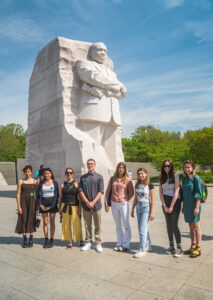
On the morning of our first full day in DC, we were fortunate to visit the Dr. Martin Luther King Jr. Memorial as part of the African-American history tour. I was particularly excited about visiting this memorial because during our Values class this semester I wrote about it as part of an assignment to research memorials and monuments in DC. The experience of viewing the memorial in person was surreal, as I came to the realization that I was actually standing in Washington, DC, gazing at the granite image of Dr. Martin Luther King, Jr. Around me, people were taking photos and surveying the memorial solemnly. I felt a sense of community with those around me who share my appreciation of the work and ideas of MLK. The memorial made this connection with others tangible, despite differences in age, gender, race, and geography.
Walking along the wall of engraved quotations from MLK, I came across one quotation that deeply affected me: “We must come to see that the end we seek is a society at peace with itself, a society that can live with its conscience.” I grasped its significance more fully when I viewed the historical section of the National Museum of African American History and Culture. I realized that the museum represents both our country’s successes and its failures at “living with its conscience.” I think that our class began a process of learning about some of our country’s disappointments and cleansing ourselves of the delusion of American perfection that we are often expected to believe.