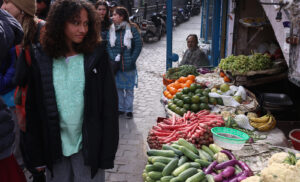
In the Himalayas

Beatrice Miller

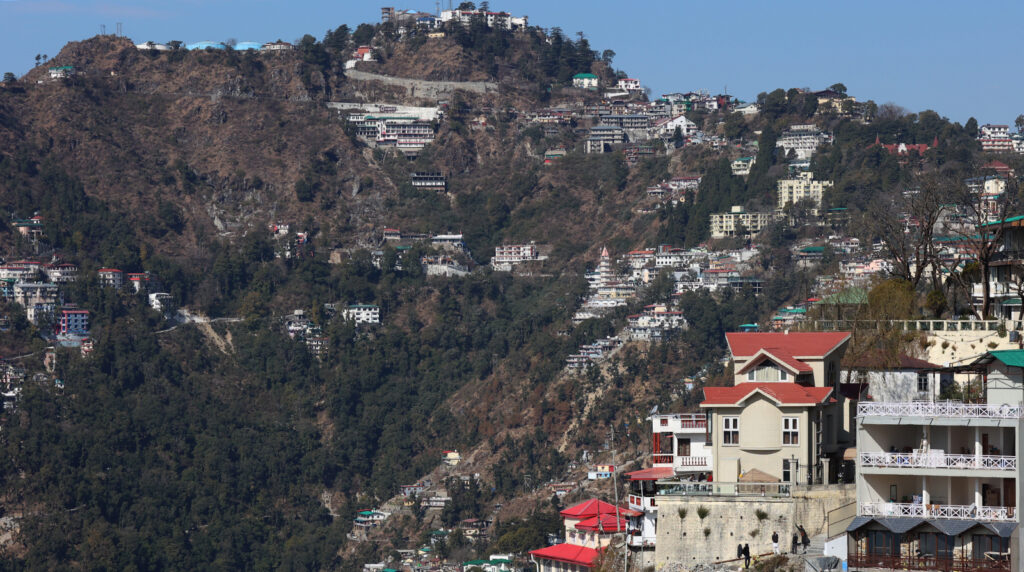
Brisk cold air surrounds my face, up 6,000 feet in the mountains of Mussoorie. On one narrow street our bus made its way through the city and out the other side. Traveling downhill on the stone road we entered Happy Valley, home to the Tibetan Homes Foundation.

Since many Tibetan families have been displaced or forced to abandon their culture, here in India they can seek refuge. Children are sent here to Happy Valley, and many other places in India, a place of freedom where they can live under the Indian flag. 

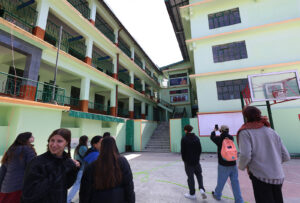
The Tibetan Homes Foundation is a home for over 1,000 students each year. I first saw the school from afar, as if it was hidden within the mountains. Its walls mint green, rising high into the skyline. The layout of the school still is dizzying, making a maze of corridors, spiraling staircases, and dormitories by the cliff side. 
First greeted by a beautiful Tibetan woman, head of sponsorship coordination for the foundation, Tersing Youdon. With a warm jacket on, she showed us the world she has come to know. She taught us how students are sent here by parents or family members who struggle to provide for their children, and as saddening as that may sound, it is the best opportunity they can provide for their children. Kids as young as six stay in themed houses, scattered around the campus. They move in each school year, at the start of March, and go to school next door at Happy Valley International School. 

What I will never forget from this trip is the fascinating campus. Tiered buildings overlook the most outstanding view. A 6,000 foot drop into a wide green valley, then more mountains in the distance surround the valley below. Squinting you can see the prayer flags hung on buildings far away, blowing in the wind.

The foundation was made to protect the essential Tibetan people and way of life. Tersing Youdon says it survives by the help of its sponsors who support the children and keep the school running. Each student goes to school for free for all twelve years. Since 2009 the attendance of children has dropped from 2,500 kids to around 1,000 students due to the Chinese Government increasing border security, preventing Tibetan families from crossing the border. Now the school is facing a growing problem and deep fear: their disappearance. It hurts to see the sadness Youdon expressed in her words. To each teacher and student this foundation is a core part of their life and a safe haven for them all. 


Logan Shaw

Today we had our first full day in Mussoorie, which is a town up in the foothills of the Himalayan mountain range. We were supposed to go to Dharamshala but the weather was bad and our flight got canceled. We regrouped, pivoted and packed up and went to the Sri Ram Ashram, which has been our home base for the trip. After our few days stay, our teacher Shannon was able to get us to Mussoorie as an alternative for Dharamshala because they’re both Tibetan towns in the foothills of the Himalayas. We started out the day by visiting a Tibetan school. Everything here is built on a steep mountain so it makes the architecture and everything look really cool. The whole school was also on the mountain side and there were a bunch of different levels. There were also a lot of dogs all around the school lying about in the warm sun.

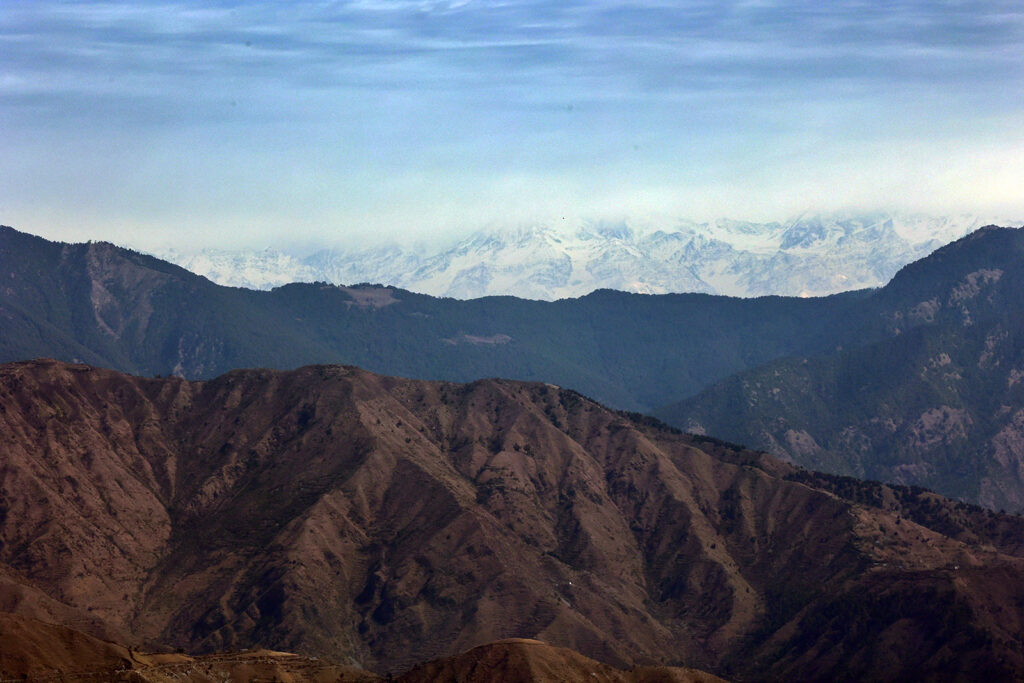
The best part was when we went up to the top of the mountain. We took a quick walk because the school was already high up, and when we got to the top you could see forever in every direction. We were in luck because the air was clear. From the top, we could see a bunch of mountains and we could see all the way to the snow capped parts of the mountain range in the far distance. It was really cool and the photographer with us, Shmuel, let us use his massive telephoto lens to look at the big mountains. I was worried that if we couldn’t visit Dharamshala, we wouldn’t be able to see the snowy mountains, but I was really happy because we were able to see them today. When you look through the camera lens you could see the mountains clearly and it was crazy just how big they were. It was also amazing how we were only at 6,000 feet and Everest is more than four times that tall. The whole scene was made even cooler because there were thousands of Tibetan prayer flags and a massive statue of Buddha. There were also a few fires on the mountains which made it feel more surreal. It almost made it look like there were a bunch of volcanoes that were about to erupt. On the bottom side of the mountain we were standing on, there was a school that we could see. The children looked like little ants crawling around and they even had a helicopter pad. I was told that it was a school for the children of diplomats and affluent business people. It was a beautiful day and I was grateful to spend a day amongst the Tibetan culture and the vast mountainside.

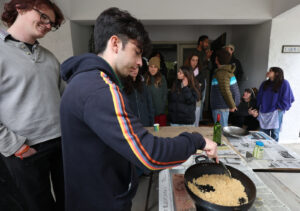
During our time in Mussoorie, the aspect I looked forward to the most was the food. At breakfast, I observed as they prepared the eggs in front of me. What surprised me was their use of egg whites for scrambled eggs instead of using the whole egg as I do at home. This intrigued me because I had never considered making eggs without the yolk. While surveying the breakfast offerings, I noticed tiny donuts displayed on the wall, which was charming. The breakfast fare was excellent and quite tasty.

For lunch, we visited a cafe called Little Llama Cafe, which featured a diverse menu. I opted for American cuisine and ordered chicken cheese fries. Additionally, I sampled a piece of barbecue tofu from my teacher, Chelsea’s Chinese bao meal. My peers also ordered momos, a Tibetan and Nepali-style dish consisting of steamed dumplings with various fillings, accompanied by a mildly spicy chili sauce. It’s safe to say that lunch was a huge highlight of the trip!
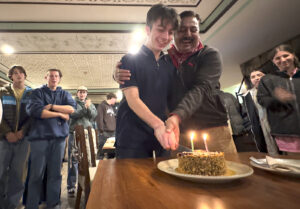
The final meal of the day was dinner, where curries were laid out on one side of the buffet and a pasta bar on the other. Since I wasn’t in the mood for Indian cuisine, I chose alfredo pasta with vegetables, which was delicious. The highlight of dinner was celebrating our tour guide Jagdish’s birthday. As we gathered around the table for a photo, he invited me to join him. Together, we blew out the candles and made the first cut of the cake. To my surprise, Jagdish then playfully smeared a bit of cake on my face after we cut it. In my opinion, dinner was the best meal of the day due to the festive birthday celebration.


Erik Howley

We woke up in our lovely hotel, overlooking the city of Dehradun, delighted to find the most marvelous breakfast we had encountered on this trip! To provide context, we had been fed very well, but came to appreciate a variety of dining options much more after having eaten lentils over rice for the past week. This breakfast ranged from hot Belgian waffles to Indian breakfast regulars, but the single item that made me jump with joy and feel like I was back home was good old American-style bacon. Just the day before, I had been fantasizing with my classmate, Logan, on the long and windy mountain road to Mussoorie, envisioning a heaping plate of buffet-style bacon. I’m very happy to say that this dream became a reality, and a smile dawned upon my face for the rest of the morning.
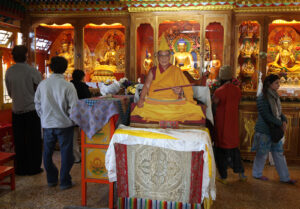
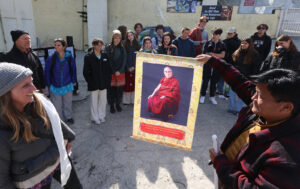
After our highly satisfying meal, we took our bus to Happy Valley, a Tibetan colony situated in the Himalayan foothills. We were greeted by our tour guides, who gifted our head teacher, Shannon, a scroll depicting the Dalai Lama. As we walked around the beautiful mountain campus, I noticed a similarity to the previous Tibetan school we had visited. The school seemed to be very enthusiastic about basketball, with the construction of five new basketball hoops and a freshly painted court in the main yard of the school.

After our tour, we were brought to the school’s Buddhist temple where the Dalai Lama stayed when first exiled from Tibet. As we took off our shoes and stepped inside, we were greeted by beautiful paintings depicting protector deities by the door. Stepping further inside, we could see a cardboard cutout of the Dalai Lama sitting in the chair where many years prior he had sat and taught.
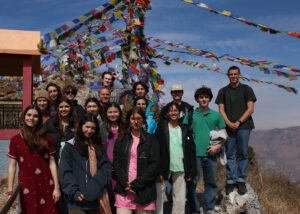
Then we began our trek of a small mountain ridge to a vista point overlooking the surrounding mountain range. On the other hand, I was not equipped, being in my large platform shoes never meant for hiking the hilly Himalayas, but even still, I trekked on. With my feet aching and my breathing becoming heavier, I looked with extreme longing at the little tin shed mountain kiosks selling cold American Coca-Cola and potato chips. Although we could not stop, luckily I was cheered up when we came upon a husky dog with her pup, who would shake your hand as you passed, like a canine crossing guard granting us safe passage to the top. As we got nearer and nearer, we finally made it to the top, a flat platform high above the surrounding peaks. On top of this platform was a golden statue of Buddha with a tall pike hanging prayer flags down to lower areas. The view was incredible, looking over the vast expanse of the newest mountain range in the world. We could see from terraced rice paddies to the highest of snow-capped peaks. Also in view was a different boarding school that had just gone out to recess, so you could see all the little kids run around over a helipad track field. We were so high up that it was like watching ants run along an anthill. Finally, on top of the world, I decided what better way to celebrate than to go a little further down the path to one of those tin soda huts to grab myself a cold drink. As I walked back up to the peak, I cracked open my fresh soda and took in the view. I thought, what a great way to spend a day.
The Interconnection of Tibetan Culture and Buddhism

Rinchen Khando
Priyanka Bharghavan

Today we went to the Dolma Ling Nunnery to interview Rinchen Khando, the founding director of the Tibetan Nuns Project. The Tibetan Nuns Project was created to promote the education of the Buddhist nuns, as well as provide them with a home and community in which to study. Rinchen Khando’s work has been the driving force in creating the nunnery and I was excited to be able to interview her.

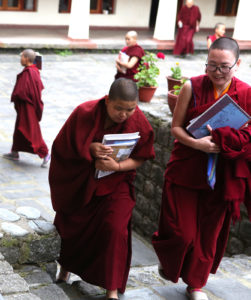
Upon entering the nunnery, we truly stepped into a different world. I was taken aback by the immense beauty of the gardens and the buildings, decorated with prayer flags, set against the magnificence of the snow-capped Himalayas. While touring the facility, we saw a whole new way of living. There are 240 nuns who live communally in the nunnery. The nuns all have different jobs, from cooking, to cleaning, to sewing, and work very hard to be completely self-sufficient. I loved walking through the retreat garden, where the nuns live in solitude for months at a time to better understand their consciousness. After the tour, we walked through hallways covered in flower pots to our room set up for the interview.

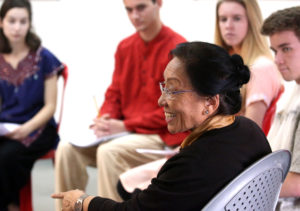
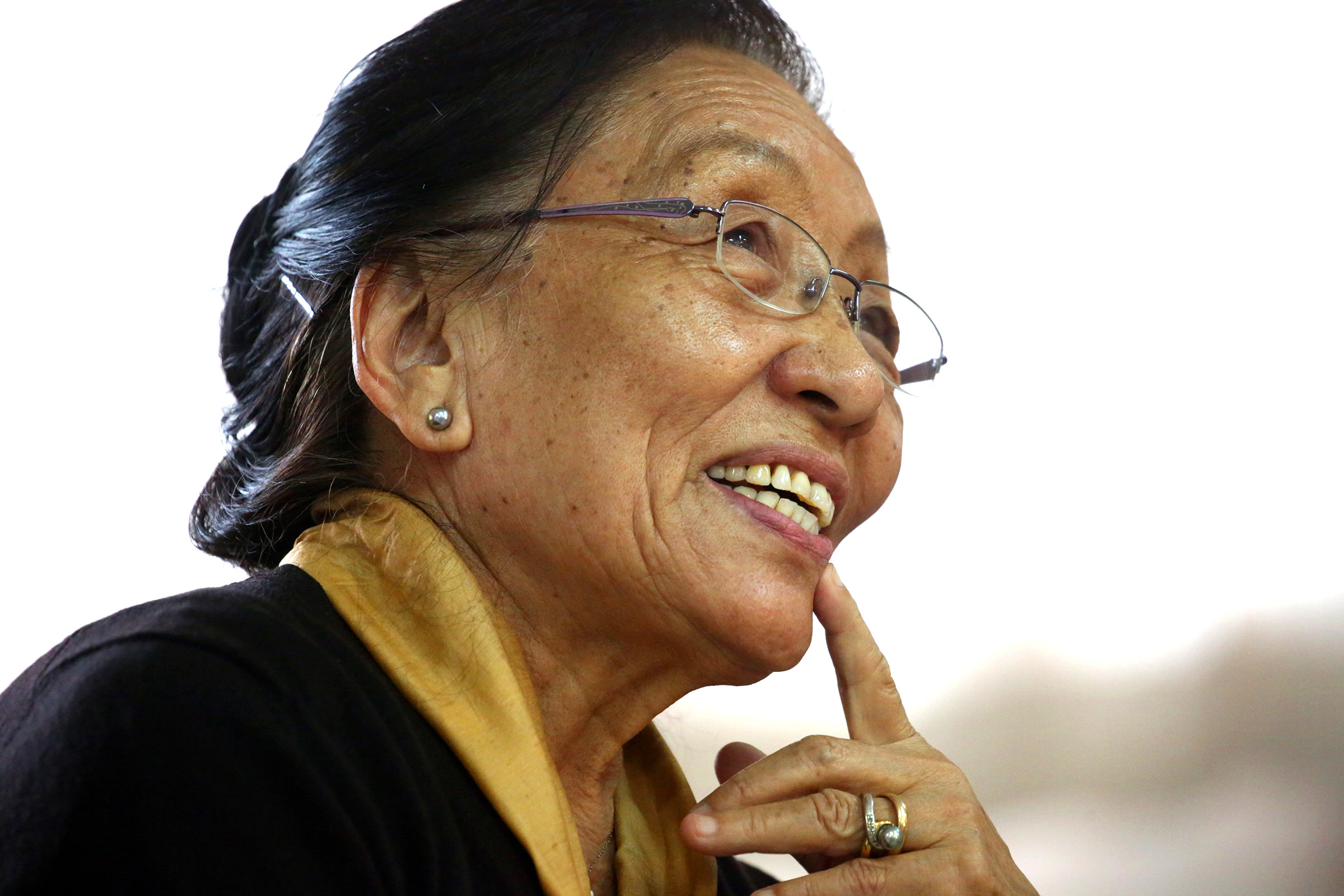
When Rinchen Khando entered the room, I was immediately calmed. She had the friendliest smile and spoke meticulously and thoughtfully. I was struck by her newest initiative, the creation of a center for laywomen to study Buddhist principles. She said that while the focus of the Tibetan Nuns Project has been to give the nuns opportunities to study Buddhism, it is imperative that all women learn the values that can positively shape future generations. I think it especially important in today’s climate that the principles Rinchen Khando seeks to promote—compassion, sincerity, and altruism—are integrated into everyday life. Through this process, we will be able to create real positive change.


Kaili Sullens

Today we interviewed Rinchen Khando. She walked into the room and I swear she brought with her such a lightness and positivity. We all knew she was special. Kindness and joy radiated off her as she answered our questions, along with intelligence she possessed. I was inspired by the work she has done, and is still doing, to help the nuns from Tibet.

The facility that we saw was inspiring and intricate; you could easily tell how much time and hard work went into it. Stone pathways weaved in between buildings, beautiful trees, and meadows. Each building contained different classrooms and work rooms. Nuns were hard at work in these rooms, sewing, cooking, and studying. Yet in this hard work they were still filled with joy and gratitude. It appeared as though they had truly found inner peace.

Our interview with Rinchen Khando has been my favorite interview to date because of the nature of her character and the advice she gave us. She shared many new concepts that really made me step back and think. For example, she said that we alone can remove our personal obstacles. That really resonated with me because I feel like I have internal struggles and I tend to look outward for help to fix them. Although I know I can always, and should always, reach out for support, I cannot rely on others to fix my problems, or in her words, remove my obstacles. This really opened my eyes and I hope to carry this with me.

Everything about India has been inspiring. Inspiring due to the beauty in the people I have met, and inspiring due to the destruction and poverty I have seen. One moment we meet wonderful people like Rinchen Khando and the next moment I see a woman begging for milk for her baby. Next, I am at a beautiful mosque, then I see starving and filthy dogs laying on the streets. Overall, this has been an amazing experience and I feel lucky to have this opportunity. However, the learning experience is also impacted by the hardships we have seen.


John Dias

Today, while walking through the magnificent courtyard of the Dolma Ling Nunnery, I was beginning to understand a bit about the stunning work that Rinchen Khando was doing. Our excitement for this interview had been building up quite a bit at this point. We had just finished preparing and practicing how we would recite our questions. We had no idea what to expect but we knew that she was one of the smartest, most inspiring, organized people we would ever meet (according to what our teacher Ward had told us).

I was starting to put the pieces together once we arrived at the nunnery. The view of the snow capped mountains was remarkable and the place had a special peaceful ambience to it. Walking through the hallway, I was immediately surprised by a group of 4 ten year old nuns who burst past Anika and me. They were laughing and smiling, and radiating a joyful aura that made both of us smile. This place was special. I knew that providing a place for the nuns to study, play, create art, and live a self sufficient life was near and dear to Rinchen Khando well before she even explained this to us. This incredible opportunity the nuns have to lead a simple, hardworking life, was strictly the product of Rinchen Khando’s great effort and powerful vision.  Before the interview even started, we knew we were in for something special. I knew I would interact with a woman who had put her feet to the floor and built something amazing.

Once we were in the room with her all of us were immediately connected to the knowledge she was sharing with us, and her sweet charismatic charm allowed for a seriously intimate and deeply conversation. She shared with us lessons related to sincerity and awareness, within the context of building a strong foundation for how we can most efficiently dedicate ourselves to providing our service to the greater community.

Rinchen Khando shared with us how Buddhist values and principles can help us better understand ourselves and the role we play within our global community. She stressed the importance of deep critical thinking and analysis of our own individual lives and choices. We talked about how reflection plays a very important role in understanding how we must grow as human beings to be the absolute best we can be. I loved these ideas because during this time in my life, I am feeling as if there are so many things that are rapidly changing. Understanding how slowing my mind and thoughts down can benefit me as I make major choices in my life, gives me the strength and confidence I need to make careful decisions about how I choose to live my life.

Her ideas opened my mind and heart to accept the idea that riches might not always come in the form of material wealth or fame. Instead, she provided an example of how selfless action and dedication can lead to a sincere happiness residing deep within the heart. Sitting in the circle she was able to share this invaluable information with us. She was able to honestly and openly pass forward awe inspiring knowledge, that transcended the barriers of culture and wealth. The fact that she was able to gift us such kind words and advice in such a beautiful institution, that she had helped to create, made the experience truly magical. Today she opened up her heart to us and helped us reflect deeply on what our individual responsibilities are, and how we can make the best use of the resources we have in order to make the world a better place.


Mara Peruzzi

Today, after our interview with Rinchen Khando, we had the privilege of taking a tour of Norbulingka. Norbulingka is an institution founded after the Tibetans were exiled to preserve their culture. When we walked through the opening gate, it was like we were transported into a different world; there was an abundance of greenery and a feast of vibrant colors, contrasting with the littered, crowded streets we are becoming accustomed to. Each aspect of the area clearly showed the careful attention dedicated to it. Even what is considered ugly was turned into something beautiful; a nasty gutter was transformed into a series of majestic dragon heads in colorful designs.

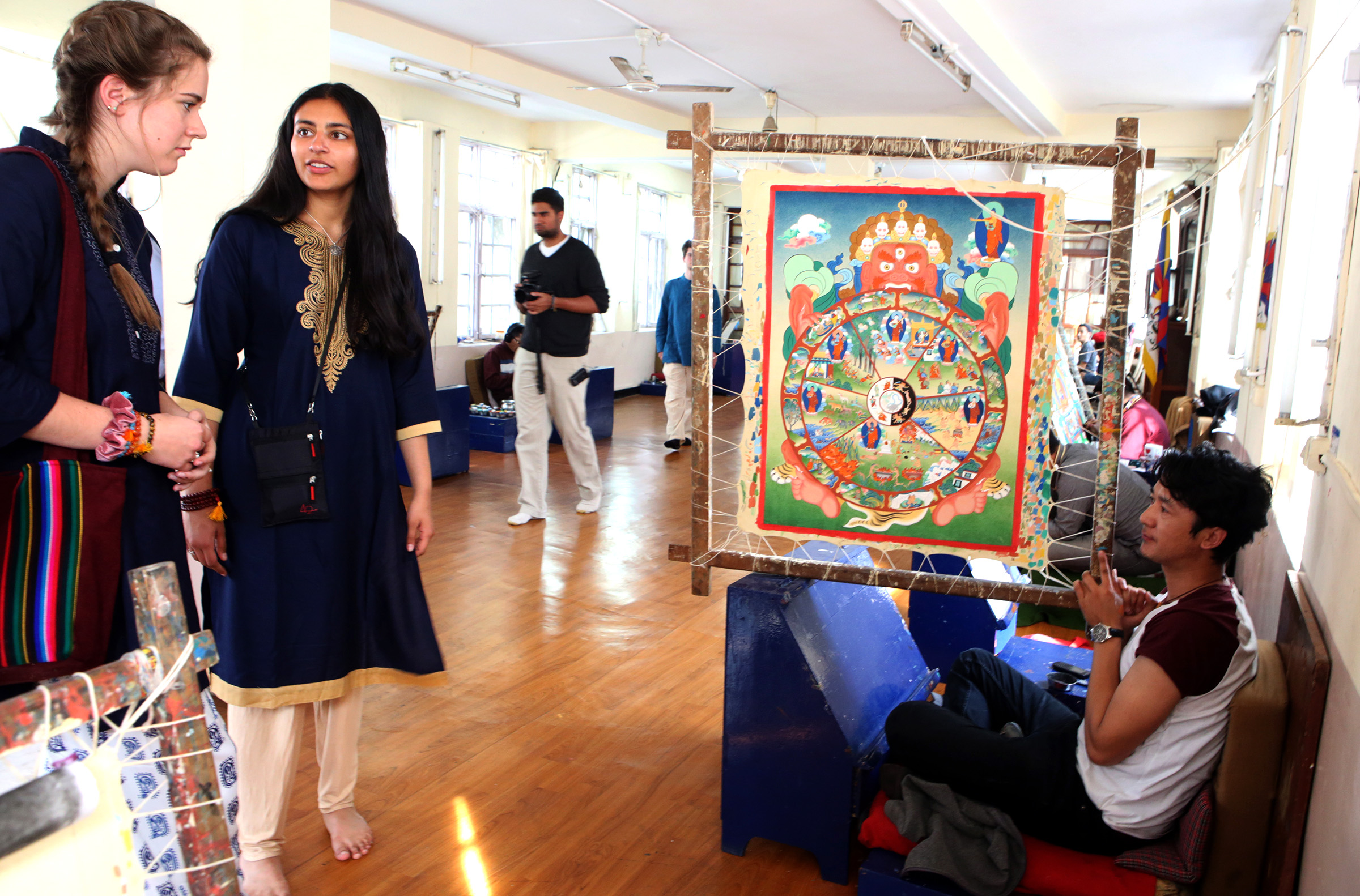
There were specific rooms dedicated to the unique art forms of Tibetan culture, including: paintings, sculptures made of various metals, and detailed fabric stitched tapestries, to name a few. My favorite part was being able to watch the artists in each room create their masterpieces in their natural areas. I was completely fascinated by a particular painting style called thangka, which depicts a Buddhist deity, scene, or mandala painted on cotton or silk. I was struck by the tiny details and use of color and negative space, and especially the use of gold to highlight certain aspects of the painting. The moment I saw the artists’ delicate paint brushes, natural paints being made with a mortar and pestle, tightly wound isles holding the fabric in place, all organized into a little personal station, I knew I wanted to try it myself. I could have spent hours examining one art piece, while appreciating all the time invested in making it the brilliant piece it is. It is amazing how much patience and talent goes into each individual stroke of the brush. I fell in love with the details and beauty these artists created, and it is amazing how the Tibetans have preserved their culture in such a beautiful way.

Tibetan Luminaries

Tara Ching

Today was my first day feeling fully recovered after a brief spell of dehydration. I am so happy that I was back for today because it was probably one of the best days of my life. I cannot imagine a life where I do not return to McLeod Ganj. I love waking up to look out at the incredibly beautiful Himalayan Mountains dotted with colorful rooftops. It’s also nice to be surrounded by the Tibetan culture which more familiar to me. It’s comforting to be surrounded by ringing bells, chanting, and flowing vibrant red and yellow robes.

We started off our day with our first interview of the trip, Rinchen Khando. Rinchen Khando is the leader and founder of the Tibetan Nuns Project. As soon as she began talking she became my role model. She spoke beautifully about the value of educating women just like men. She said that in the beginning there was talk of offering the nuns an easier scholarly path, littered with concessions like a lower passing grade or an easier textbook, but that we should take no concessions, because it is important for the welfare of society that women and men are educated equally. She said that when women and men are taught the same it will be easier to stop seeing the distinction between the two, and simply view everyone as human. I thought this was powerful, especially coming from a culture where traditionally nuns could not receive a Ngagrampa degree, only monks could.

What struck me personally was when she answered the question that I asked, she answered and looked at me with raw attention and care, as though I was one of her family members. I asked her about the importance of art in her work, which is relevant to me because I intend to pursue art and animation in the future. She said that art is so influential, and that with animation, I could really distribute my message and make an impact. She talked about its relationship to journalism, and how there are artists and journalists who can be told to create information for the sake of money, bribery, or other reasons. But she said that if I do not do that, if I stick to my own wisdom and my own truth, then what I create will be powerful. She made me realize that by going into art, I am not just going into an uncertain future, I am going into a life where I create art that is a force to be reckoned with. At the end of the interview, after we took a group picture, she turned to all of us and said that when she looks at us, it is as though she is looking at a group of Tibetan children. In that moment I honestly wanted to walk out with her, ask her to mentor me, and follow her for a few years. Meeting her was truly inspirational and I am eternally grateful for the experience.

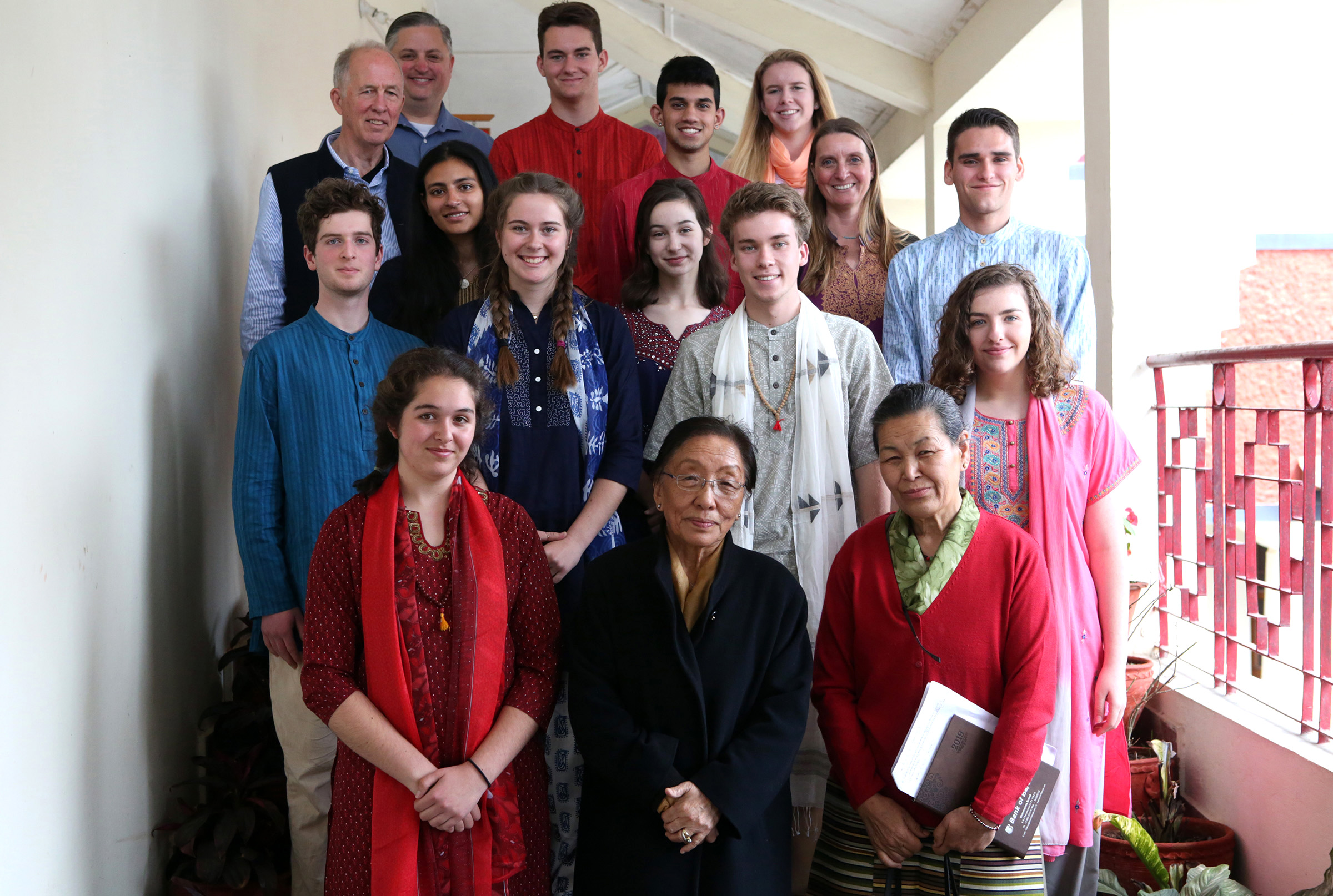
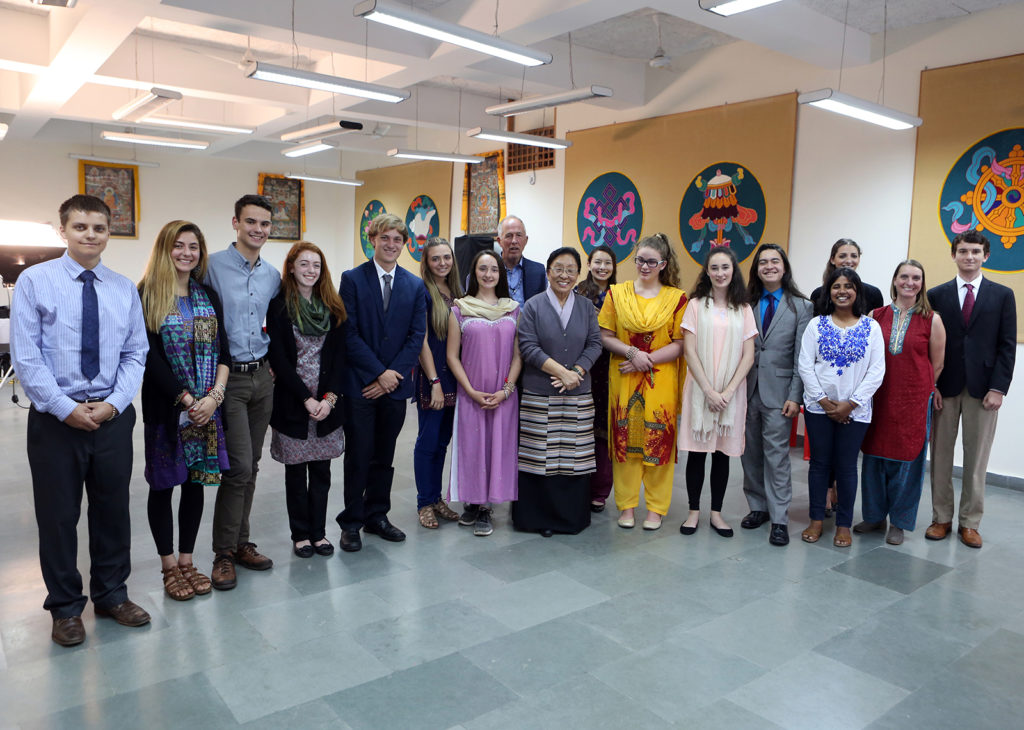
Mount Madonna School students with Rinchen Khando


Caroline Smith

After waking up to a big storm and no power in the hotel, we struggled to get ready for the two interviews we had lined up today. With no internet and no printer, our interview questions for Samdhong Rinpoche were polished and printed while we ate lunch at a nearby restaurant. We rushed through our meal and in no time, he was walking around the room shaking everyone’s hand.

Samdhong Rinpoche thought long about our questions before giving us his detailed, eloquent answers, pausing every once in a while, to ponder or gather his thoughts. Although almost everything he said had extreme depth and struck me in some way, I was especially interested when he spoke to us about the concept of non-violence. He told us that non-violence as a strategy is not true non-violence. This is very similar to John Lewis’ belief that you can’t turn non-violence on and off, it is a way of life. I began to think more deeply about this and was reminded of the Dalai Lama’s book, Ethics for the New Millennium. In his book, the Dalai Lama speaks of suffering, and specifically how sharing in another’s suffering can in turn, alleviate your own. However, sharing in another’s suffering for the sole purpose of alleviating your own is not truly sharing in another’s suffering, therefore, your suffering is not alleviated. This is similar to what Samdhong Rinpoche was telling us because by using non-violence as a strategy, you are using it for the sole purpose of getting something you want, rather than for the purpose of living by the non-violent belief.

I had never thought about the difference between using non-violence as a strategy and living by non-violence but now the difference seems extremely clear. I thoroughly enjoyed our interview with Samdhong Rinpoche because it caused me to think deeply about Buddhist beliefs such as non-violence which I had only thought about on a surface level before.

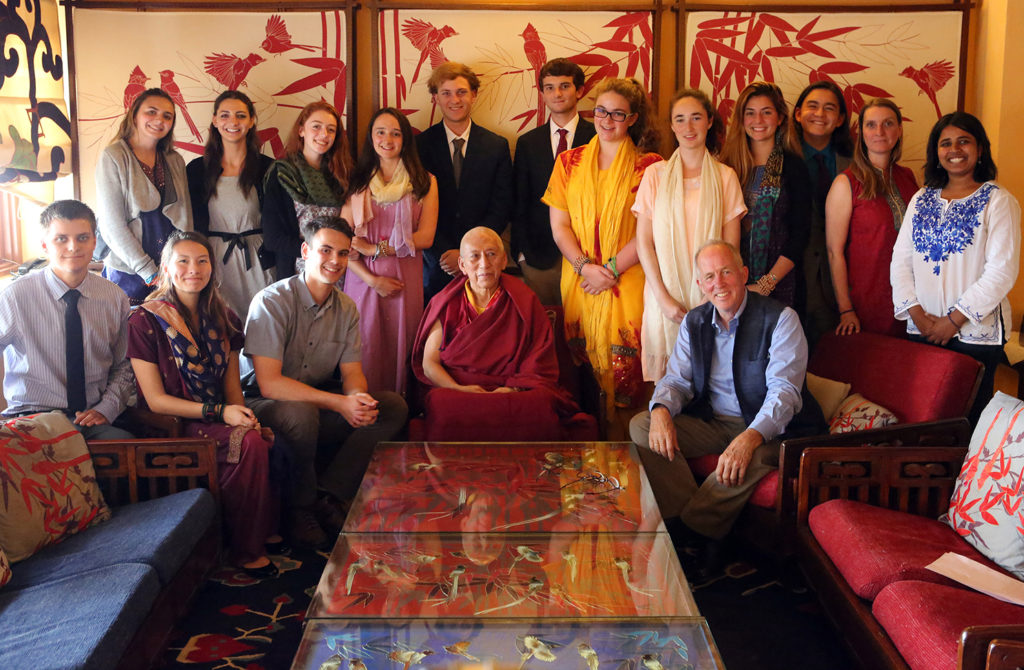
Mount Madonna School students with Samdhong Rinpoche