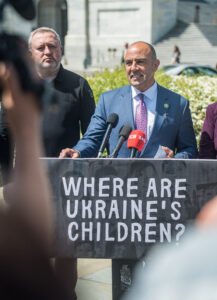
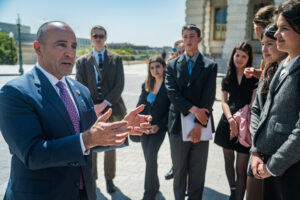
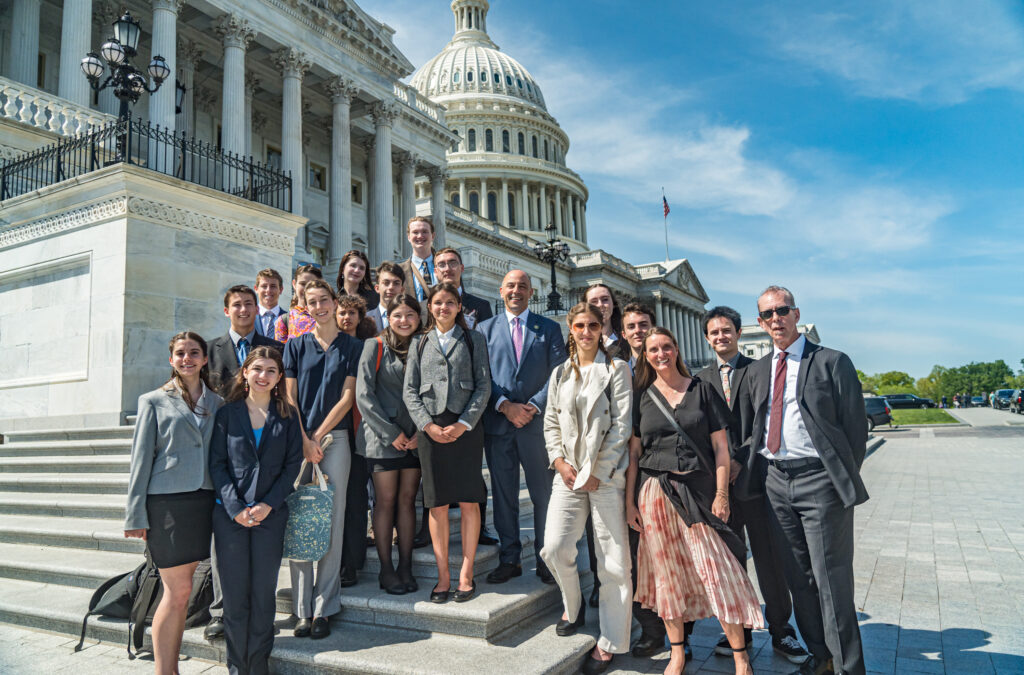
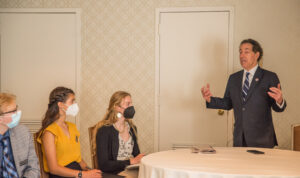
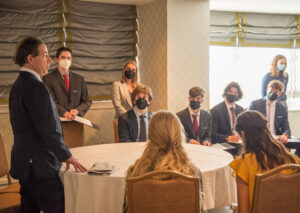
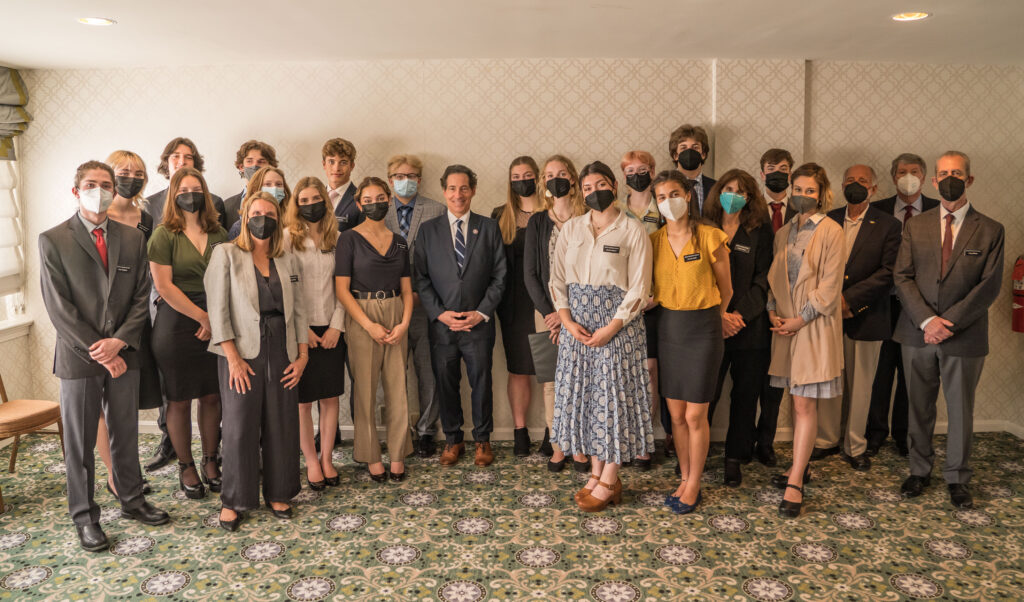
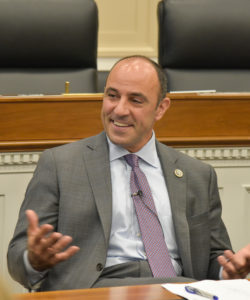
You never know what or who you’ll encounter in this town. We were scheduled to do a meet and greet with Rep. Panetta, but when we arrived at the Capitol to meet him he was speaking in a press briefing about the International Criminal Court’s charges against Vladimir Putin. However, the event turned out to be a great learning opportunity. Rep. Panetta’s scheduler, Alexa, let us through so that we could stand with the press. Rep. Panetta was joined by Rep. Don Bacon, Sen. Amy Klobuchar, and Ukrainian Ambassador to the US Oksana Markarova.
The purpose of the press briefing was to bring attention to Russia’s taking Ukrainian children back to Russia. Oksana Markarova described how by taking away Ukraine’s children, Putin is taking away part of their country, because a nation without its youth has no future. This idea particularly affected me, as it is horribly cruel to take children from their families, especially since Putin is trying to take back a country that rightfully gained its independence in 1991. Ukraine has a rich culture, and I’m hopeful that Russia does not succeed in destroying it.
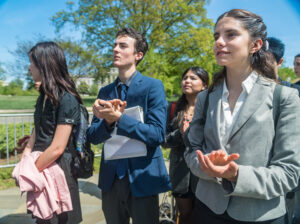
As the press briefing ended, we made our way to the steps of the Capitol, where Shannon explained that this is the first time in history that the ICC has issued an arrest warrant for the leader of such a large country and that this is a very big deal. Not only were we fortunate to witness such a historic moment, but we were fortunate to stumble upon such a great learning opportunity.
Anya Gonzalez
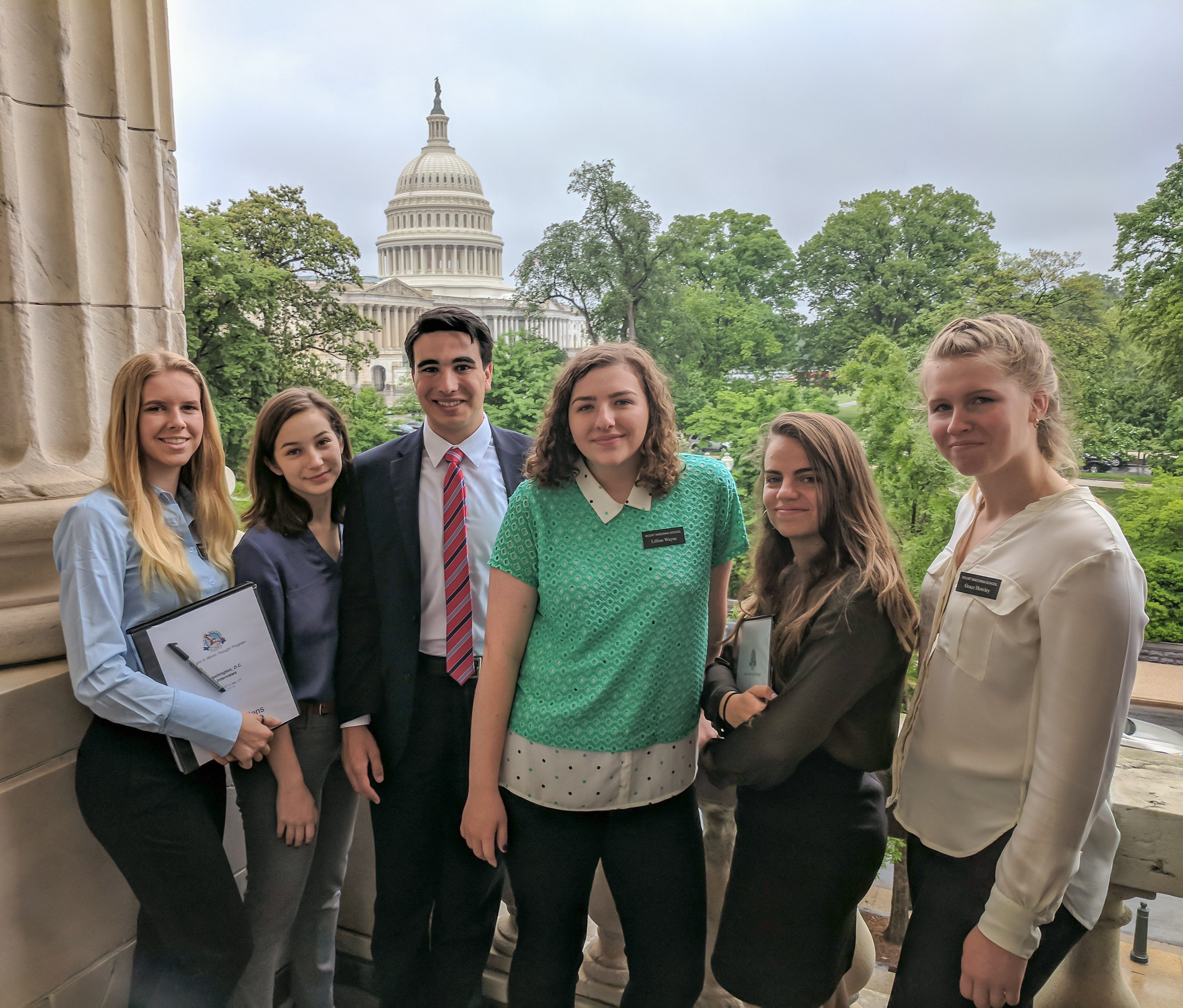
Before our meet and greet with Rep. Jimmy Panetta today, we were fortunate to attend a press brief on the Ukraine War. With the Capitol in the background, Rep. Panetta, Rep. Bacon, Sen. Klobuchar, and Oksana Markarova, the Ukrainian ambassador to the U.S, discussed the International Criminal Court’s charges against Vladimir Putin for his kidnapping of Ukrainian children, as well as Panetta and Bacon’s House resolution in support of the ICC.
As they spoke, I felt sorrow and anger. Prior to the press conference, I had been aware of the invasion of Ukraine, but I was unaware of Putin’s atrocious scheme to take children from Ukraine to bring them to Russia. Throughout the brief, I learned that only 306 out of the 16,000 Ukrainian children who have been taken from their families have been returned to their homes. Rep. Bacon accused Putin of “ripping them from their sunflowers, from their culture, and from their blue and yellow flag.” Later, after our short conversation with Rep. Panetta, I learned that by taking these children from their families and indoctrinating them into Russian culture, Russia is attempting to strip them of their Ukrainian identity, thus “breaking apart the Ukrainian country.”
Reflecting on this experience, I came to an epiphany. While it is easy to focus on issues relating directly to me and my country, international issues are just as significant. Witnessing this press briefing first hand inspired me to learn more and work to solve issues on an international scale in general. More specifically, I want to advocate for issues that are important to me. As Judge Friedman told us earlier in the day, I may not yet have a vote, but I do have a voice that I can use to advocate for myself, my country, and my world.
Cooper Padilla
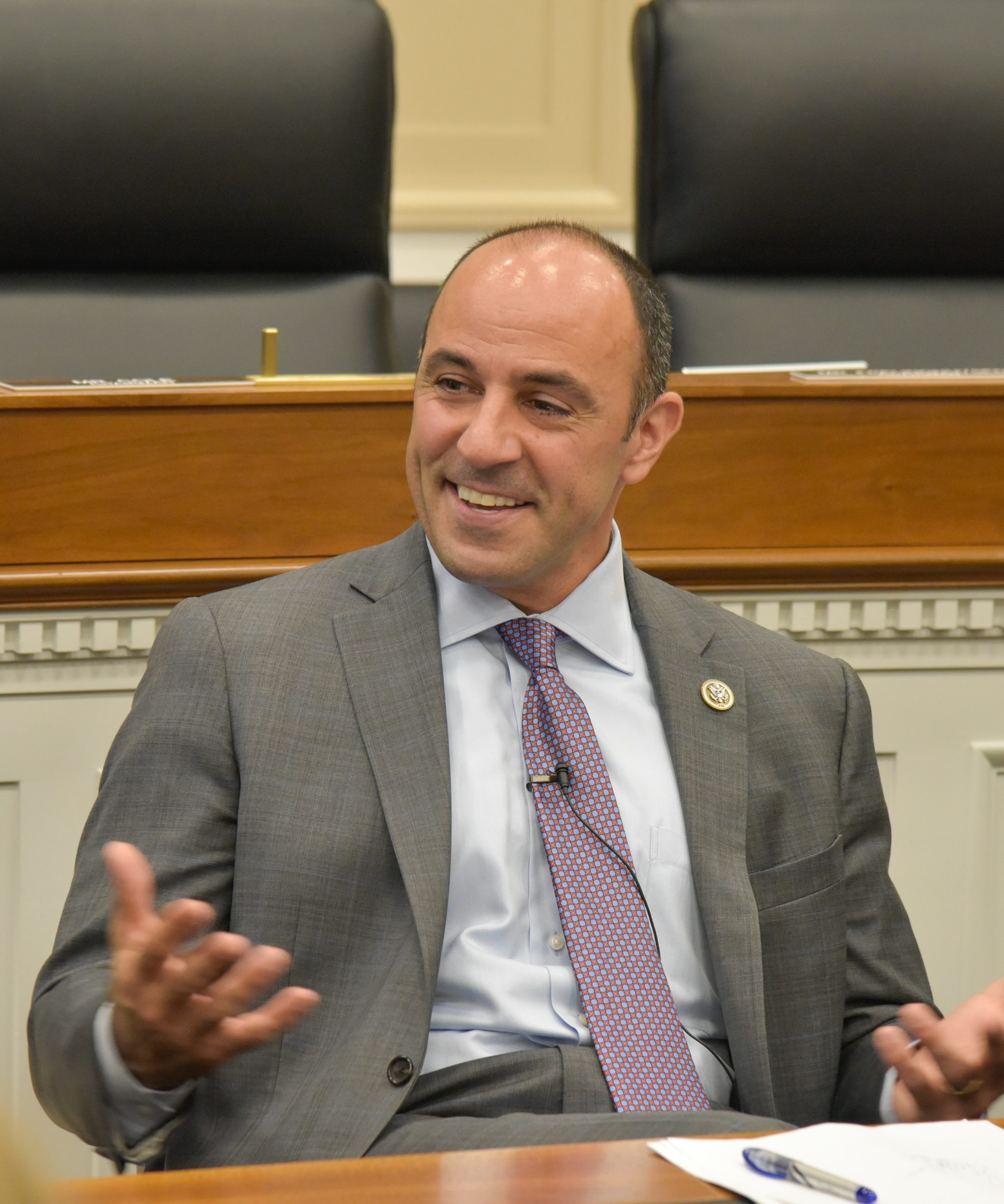
Congressman Jimmy Panetta met us on the stairs of the Capitol today so we could talk to him and ask him a few questions. He had just finished a press conference regarding the kidnapping of Ukrainian children by Russian forces. It was exciting to see him in real life because I have seen his face on signs and posters all over Santa Cruz. I could tell that he is an experienced politician by the confident way that he carries himself. Talking to him was very interesting, but I was disappointed that we didn’t get to interview him formally, because I have several questions I would love to hear him answer.
The first thing he spoke about was the importance of public service and why selfless work for the good of others is beneficial. I already knew that he had served in the military, so I asked him if that was his first job in public service. He impressed me with his response. He described the various public service jobs he held before and after the military, including working in restaurants as a waiter, doing maintenance work, doing cleaning work on a fishing ship off the coast of Alaska, and a number of other hard jobs.
Not only was I impressed and motivated by the things he had to say, but I learned a valuable lesson from him that applies to my life right now while I begin thinking about college and my future. He said it is all right not to know exactly what you want to do yet. There are many decisions and challenges that I will face in life, but they don’t all have to be faced at once, so there is no need to stress too much about the future. He emphasized the idea that the best way to decide what you truly want to do is to try everything and see what you like. He also emphasized the idea of becoming good at whatever you do as a way of building character: “Be the best at everything you do, no matter what.” Every job is important, and working hard is the best way to move up and succeed. I am determined to always remember what he said and put it into practice in my own life.
Today we interviewed Representative Jamie Raskin, who is currently involved in the trial committee that is examining the January 6th insurrection. Going into the interview, we were unsure what exactly it was going to be like. I was nervous regarding the questions, as I hadn’t been in the original group that wrote the questions for the congressman. Although I was unsure of what to expect regarding the interview, there were still many points that stood out to me.
In his interview, the passion that Raskin showed for his work really impacted me. The congressman has been through unspeakable tragedies, things that could truly break the spirit of the average individual. What was so inspiring to me was that throughout all of his tragedies he is able to keep the same optimism and excitement for his job. We asked him how he has been able to maintain these feelings of optimism, and he responded with a quotation from his father: “When it seems like there’s no hope, you are the hope.” When thinking about the darker subject matter that has shrouded politics as of late, it is really impactful to reflect on how our elected officials are able to upkeep their mental health throughout this trying process. I have spent a lot of time working in activism and when working with subject matter that directly affects me and my community, it can be mentally draining to continue to work. His perspective gave me some light that I can bring into my next pursuit in activism and politics.
Addy Catterall-Pendleton
Today we Interviewed Congressman Jamie Raskin, who is leading the investigation into the January 6 insurrection. It was a fascinating interview, and I think that Representative Raskin is one of the most well-spoken people I have ever met.
What struck me most from this interview was the topic of the two-party system and the way Raskin explained it. He said, “political parties are the oxygen of democracy, and they are examples of freedom of speech.” From my viewpoint, given everything I have seen in these past couple of years, political parties seem to be little more than groups of angry people who are unable to listen to one another, and who constantly feud. Raskin helped me to realize that what I was seeing was less of a political party and more of a “religious cult,” as Raskin called it, led by a former president.
Representative Raskin touched on climate change in our interview as well. He called climate change a “civil emergency.” I appreciated his use of this term to describe it, because even today there is not enough talk about climate change. He stated further that we cannot solve the problem of climate change without first “fixing our democracy.” We are at a point in time in our democracy in which people cannot agree with one another on many issues, leaving a rift between the two political parties that results in nothing getting done. Raskin believes that “people build trust by working in democracy.” Republicans and Democrats must work together to build trust in each other to solve problems like climate change. Until we can close the rift and make our democracy stronger, we will be unable to work together enough to solve the problems that threaten our very existence on this planet.
Ben Pearson
Today we had a short but very insightful interview with Rep. Jamie Raskin (Maryland). We discussed a variety of topics, such as the January 6th insurrection, climate change, and the current state of bipartisanship. Congressman Raskin is an incredibly well-spoken person, which is extremely inspirational for me. Every response to our questions was substantive, and I especially liked that he was clearly true to himself and his beliefs, often incorporating a quotation that summarized his core values. I was both awestruck and a little intimidated by the extent of his knowledge, although we barely scratched the surface of what he could have shared with us.
While discussing how we must go about repairing our democracy after the assault on the Capitol, Raskin argued that trust is regained through action. We are in a time in which words often deviate from reality and honesty—for example, so-called “alternative facts”—and Raskin’s initiative in working to fortify the fundamental principles of our democracy was inspirational. He is leading the investigation into the insurrection, and in doing so he is demonstrating some of the values he discussed with us during the interview. While talking about bipartisanship in response to a question about finding a “balance” between the two major parties, he talked about how as a member of a democratic society there are values or commitments that must be held to a higher priority than the commitments of one’s party. We live in a time when people must come together, not as Democrats or Republicans but as members of a democratic society, to work to repair our country so that we can get to work solving difficult problems such as climate change. This idea was my biggest takeaway from the interview: it is very easy to get sucked down the rabbit hole of worrying about the problems our nation faces, but without a functioning democracy, substantive policy and progress are difficult if not impossible.
Rep. Raskin shared with us something his father told him when he was younger: “If everything looks hopeless, you’re the hope.” This idea is going to stick with me for a while, as it is so motivational because it inspires a sense of responsibility in me. Today’s interviews set a very high bar for subsequent interviews, and I am very excited to learn more as we continue the interview process this week.
As
the world continues to be in turmoil, there is a hope that our
leaders will become less partisan, coming together to benefit the
country. However, that should always be the case. Partisan lines
should be arbitrary, not concrete. After speaking to both Senator
Manchin and Congressman Panetta, I saw a glimmer of hope that the art
of bi-partisanship is not dead, as Senator Manchin would say.
Congressman
Panetta, a man I have only seen in ads running on the local channels
and heard his voice heard in KAZU profiles during election season,
gave me insight into what is happening in my own backyard. I have
been in my home for over 40 days, only leaving for short walks,
social distancing dinners and a few errands, and though I am grateful
that I have a home, filled with food and internet access to continue
my education, it has also been isolating. Every time I step outside
my home I feel somewhat detached to the surrounding community.
Congressman Panetta helped to reattach me. He spoke about the
importance of paying attention to our farm workers and to
understanding how beautiful and unique this area truly is.
My district, my area, my community matters and so does being represented in Washington, D.C.; I do not think I ever made the connection before. I know the job description of our House Representatives, but I never really thought about a local official actually representing my home, in DC. He said that right now the United States is being governed by crisis, the opposite of that is being governed by leadership. He said that although the latter would always be ideal, being governed by crisis has further exposed inequalities and we can see what we need to do to be better prepared for the next event. The job of a congressperson, according to Congressman Panetta, is not just yelling the loudest but working the hardest. Simply put, it is about addition not subtraction. Adding voices, adding opinions and adding peoples, not subtracting those who oppose you just so you can get your way. The Central Coast is a community of opinions and voices, that deserve to be added to the conversation, and I am glad to hear that we are. It is reassuring to hear that even in this time of isolation, I am still being represented as a voice in this country.
Group Zoom call with Congressman Panetta
Braeden Will
During
our interview with Congressman Panetta, I was struck by how human our
elected leaders are. In today’s world, it is all too easy to turn
on the TV or look online and see our leaders spouting rhetoric and
putting on a show for the cameras. The constant force of these
personalities can be overwhelming and paint our representatives as a
single archetype. So, it was refreshing to speak with Representative
Panetta who seemed to genuinely care about the questions we asked and
showed us who our representatives really are.
The
conversation which emerged about the real work being done in Congress
was briefly pre-faced this morning in our interview with Senator
Manchin who spoke about bipartisanship. Congressman Panetta showed us
that while there are the showmen of leadership, there are many, many,
more who are there to do the work and serve the communities they
represent.
I think that it is important to remember that our representatives are regular people. That our perceived struggle of good and evil on the partisan battlefield doesn’t show a complete picture. These are people trying to make a difference and solve problems, they just don’t always agree on how to do it.
Paola Jacobs
We had a great interview with Congressman Jimmy Panetta! I was personally excited because I have often seen his campaign ads on television so I knew a little bit about his involvement in the Central Coast. Through my research on Congressman Panetta I was able to understand some of the issues he has focused on. One that stood out for me was his work with farm workers. Most farm workers in the central coast are immigrants, and they often aren’t protected. As Panetta said, “They aren’t just valuable, they are vulnerable.” This is completely true and I appreciated him bringing this up. For me, it’s important that all people are valued. To me, Congressman Panetta truly focuses on issues that help the greater good in my community.
Paola asks Panetta a question
One way Congressman Panetta is helping our community is through the Farm Modernization Act, a bipartisan bill that protects the rights of farm workers. I was interested in forming my question to him around this bill. I wanted to know if the current times could be helpful to point out the importance of our agricultural workforce and help get the bill passed? He appreciated my question and spent a great deal of time on it. It is a serious issue and hearing directly from Congressman Panetta about it made me see his dedication. Listening to him gave me hope for our system of government. Because this bill was a bipartisan effort it wasn’t easy to craft. As Senator Joe Manchin said, “It’s come down to one side is right and the other is wrong. It takes bipartisanship. If you start off not agreeing, you can’t build off that.” So, for both sides to work together on the bill was huge, positive step. Congressman Panetta didn’t say it was easy, it took a lot of work and time. Even though he wasn’t sure if the bill will pass, he explained that it was a marker that they set. I think it’s important to see the positives rather than the negatives so there’s room for hope.
Congressman Jimmy Panetta seemed as appreciative of this call as we were. He really took his time to answer and make sure our questions were explained well and were understandable. He was another interviewee who had a lot of energy. When someone’s giving information with such energy it helps me engage with what they’re saying. This was one of those interviews, and I’m thankful to Congressman Panetta for his time and energy.
AnMei Dasbach-Prisk
Today was a long day. We interviewed three people, starting bright and early at 7:15 AM this morning. I would describe it as an exhilarating and exhausting experience, and definitely worth it! We interviewed Senator Joe Manchin, and Alyse Nelson, Co-Founder and President of Vital Voices, this morning. Their interviews were back to back, so it was quite the information overload for me. I appreciated the knowledge, positive perspective, and advice they gave us on this current pandemic situation.
The third person we interviewed was our own 20th district congressional leader, Congressman Jimmy Panetta. During the interview, he talked about the importance of bipartisanship when creating and passing legislation. Speaking with him restored my faith in the common good, knowing that people are putting their differences aside to get work done and help bring relief to this crisis. I feel lucky to be represented by someone who listens to others while also doing what is best for his constituents because those are qualities that I want someone to have, who is representing me.
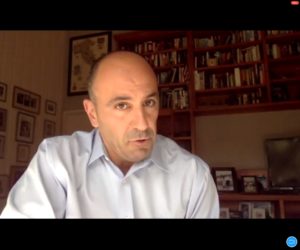
Speaking to Congressman Panetta over Zoom
I liked Congressman Panetta’s easy-going nature and how relatable he was. Right at the beginning he acknowledged how draining Zoom is, and said that he wished we could be having this interview in person. “Nothing beats face to face interaction.” He explained to us how he is a people person, and his favorite part of his job is interacting with his colleagues and constituents. So, it’s been difficult for him not to get that in-person human interaction. I definitely agree with him, as I too have found Zoom to be a bit draining, and I’m also a people person. I’d choose an in-person conversation with someone any day, rather than a Zoom or FaceTime call. On the bright side, he said that working from home is allowing him to spend more quality time with his family and catch up on many of the family dinners he has missed.
At
the end of the interview he emphasized the importance of taking care
of ourselves and one another during this time, as we have all been
impacted by the virus, whether it be physically or mentally or both.
He said that’s the way we will return to some sort of normalcy.
In-person human interaction will happen again one day, but for now we
must rely on our communities to get us through this. From what I
heard today, I think Congressman Panetta is a dedicated and
outstanding congressman who takes pride in his work, and works hard
for the betterment of his community.
A theme throughout the day was the importance of community. Senator Manchin and Congressman Panetta both talked about taking care of their constituents and making sure that they are provided for. Alyse Nelson talked about the strength and inspiration she gets from the community of women leaders at Vital Voices. Her advice to us during this time is to, “Surround yourself with a forest of positivity, don’t let the doom and gloom get to you.” I kind of like to think that the community at Mount Madonna School is my forest of positivity. Physically and metaphorically, now that I think about it.
Lastly the most inspirational piece of advice I heard today was, “This is a pivotal moment in all our lives but especially for your generation. It’s a reset, it’s a base for a world of endless opportunities.” This is paraphrased off of statements that both Alyse Nelson and Congressman Panetta shared with us today. This stuck out to me because with this pandemic going on, the first semester of my college experience will most likely be online, and I felt like I would be missing out on a lot of opportunities. But after talking with Alyse Nelson and Congressman Panetta, and hearing their optimistic outlooks and hopes for my generation, I’ve adopted a new perspective. I’ve got to “trust the process” like our teacher Ward always says!
I’m thankful that Congressman Panetta, as well as Alyse Nelson and Senator Manchin took time out of their busy day to talk with us!
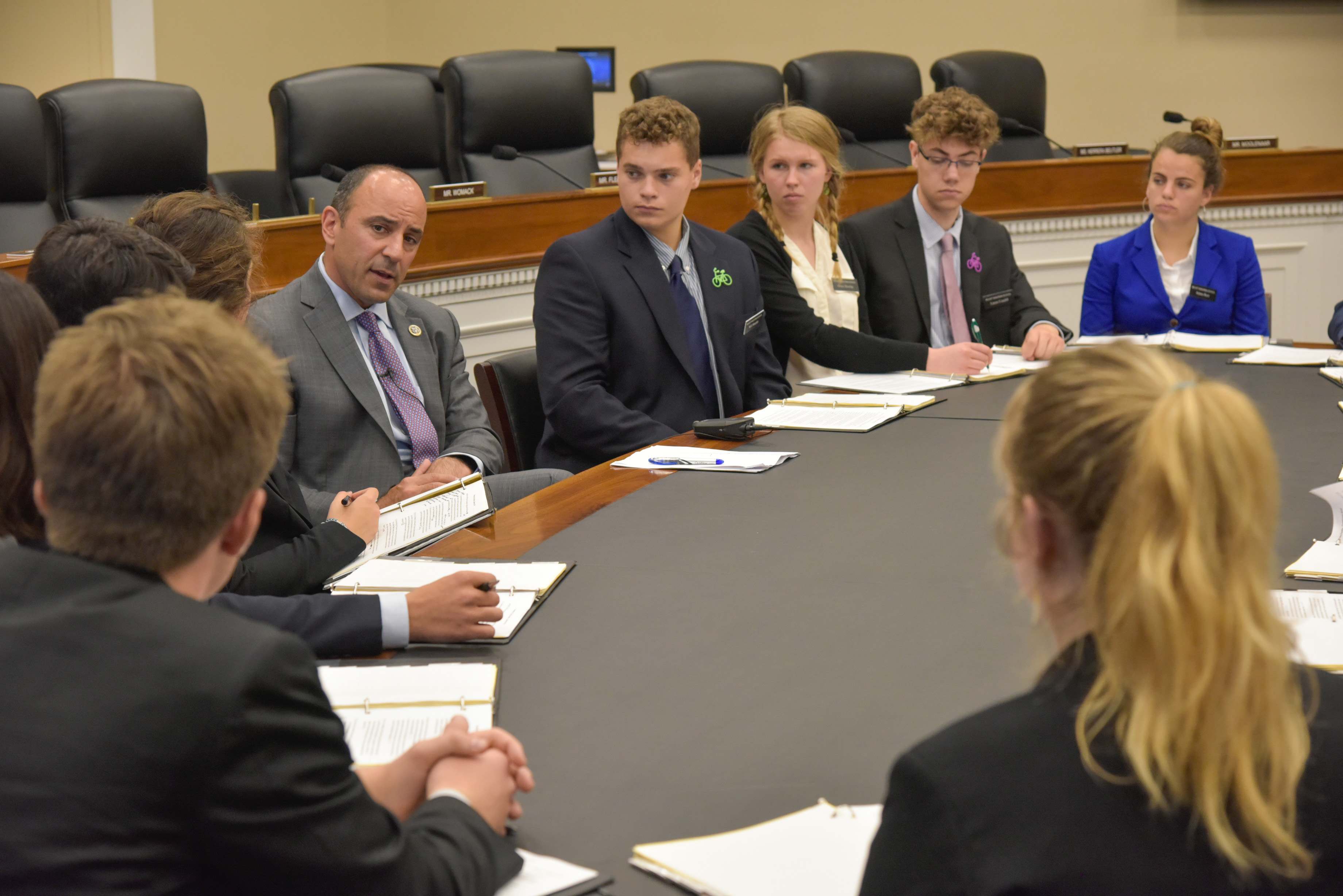
“Do not let the grass grow under your feet, always keep moving forward,” said Congressmen Jimmy Panetta as we all sat around the table listening intently. He was our first interview of the day, and I couldn’t wait to get the show on the road. Congressman Panetta represents our district in California, and it was fun to see him again in Washington DC. I was ready for something even more powerful than what he brought to our classroom last year and of course, he delivered. Panetta speaks with conviction and confidence, and he works hard at everything he does. He acts as a role model and serves his constituents’ needs.
I was inspired by Panetta’s life path that brought him to where he is today. He didn’t know where he was going or what to expect. Panetta took advantage of every opportunity that called out to him and decided to start saying YES. That impacted me because I have been told to do that my whole life and haven’t started taking advantage of that until just recently. I think it is very important to attack an opportunity because most likely it will lead to success. Panetta said, “To find a great mentor, look for the person who is willing to work their hardest.” Being the powerful man that he has become, we could all see that he followed a path of hard-working mentors and was inspired by their success and intelligence. I think that Jimmy Panetta showed us that it is okay to not know your path because eventually you will find the right path and passion. I don’t know where I will end up, just like Panetta, but I will keep moving forward and not let the grass grow.
John Dias
It was an extremely rewarding experience meeting with Congressman Jimmy Panetta today. He came to us so eager to emphasize that he wanted us to connect with our community and give back to the public. Congressman Panetta explained the path that got him to where he is now, and he explained some of the most important values he learned throughout his long journey. He put a lot of emphasis on the idea that we should always be taking opportunities that are presented to us and that we should “never let the grass grow under our feet.” This message meant a lot to me because I know that wherever my life may take me, I want to always strive to keep moving forward.
Jimmy Panetta is a powerful role model and a man who has dedicated himself to serving the public. The DC trip has greatly expanded my mind and inspired a lot of creative thought. Our interview today with Panetta was a key part of this journey. He had an infectious energy that he brought into the room, and he expressed very serious commitment to represent us on a personal level. He walked with a bounce in his step and spoke to us with a twinkle in his eye. He was so effective in getting his message across because he had clearly lived his life following a set of strong values. He explained the importance of doing the job that you’re doing fully, and he also highlighted the need for public service in order to be an engaged citizen. But most importantly, Panetta emphasized over and over again the power that your word holds. The most critical piece of being in politics and being in the workplace is maintaining a reputation for hard work and dedication.
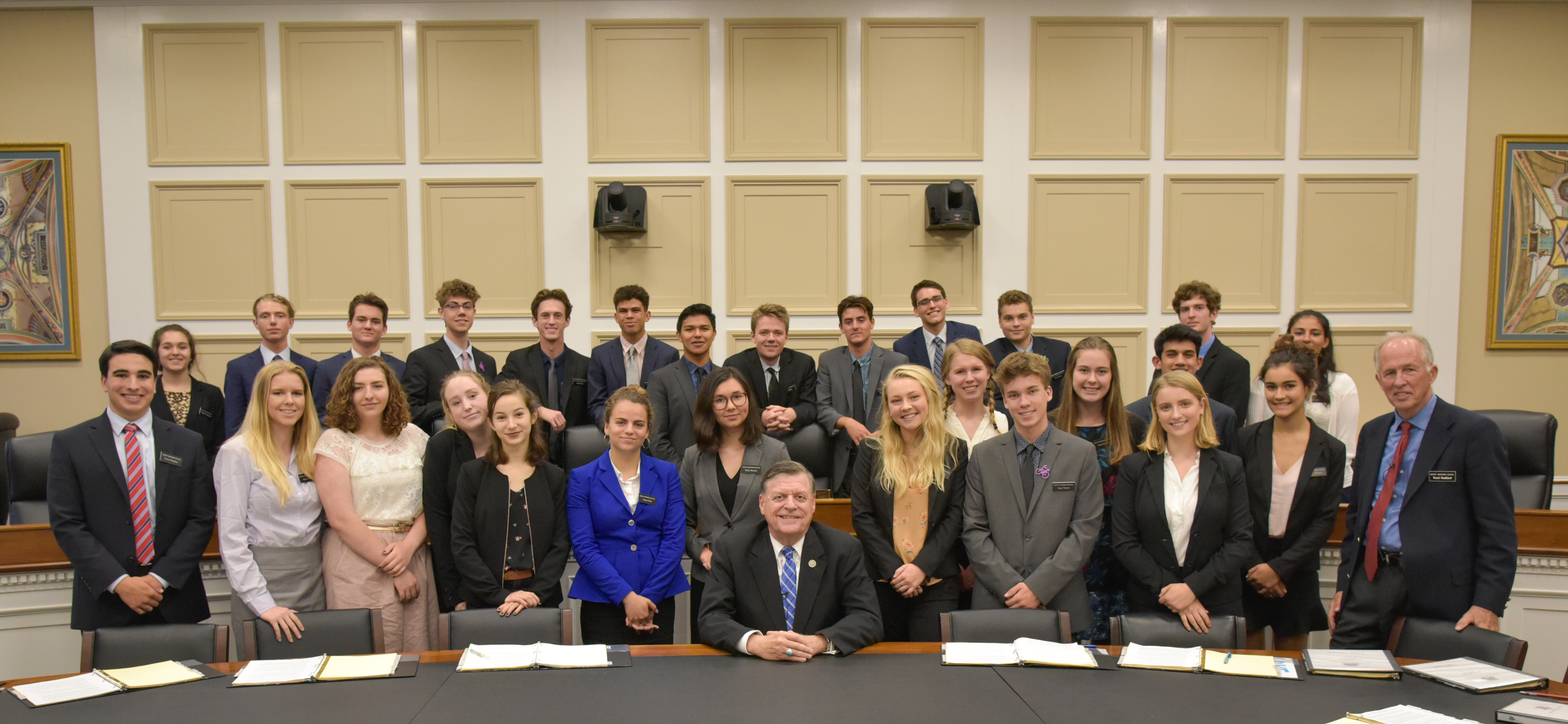
Mount Madonna students with Congressman Jimmy Panetta
Interview with Congressman Tom Cole
Zach Wagner
Congressman Cole
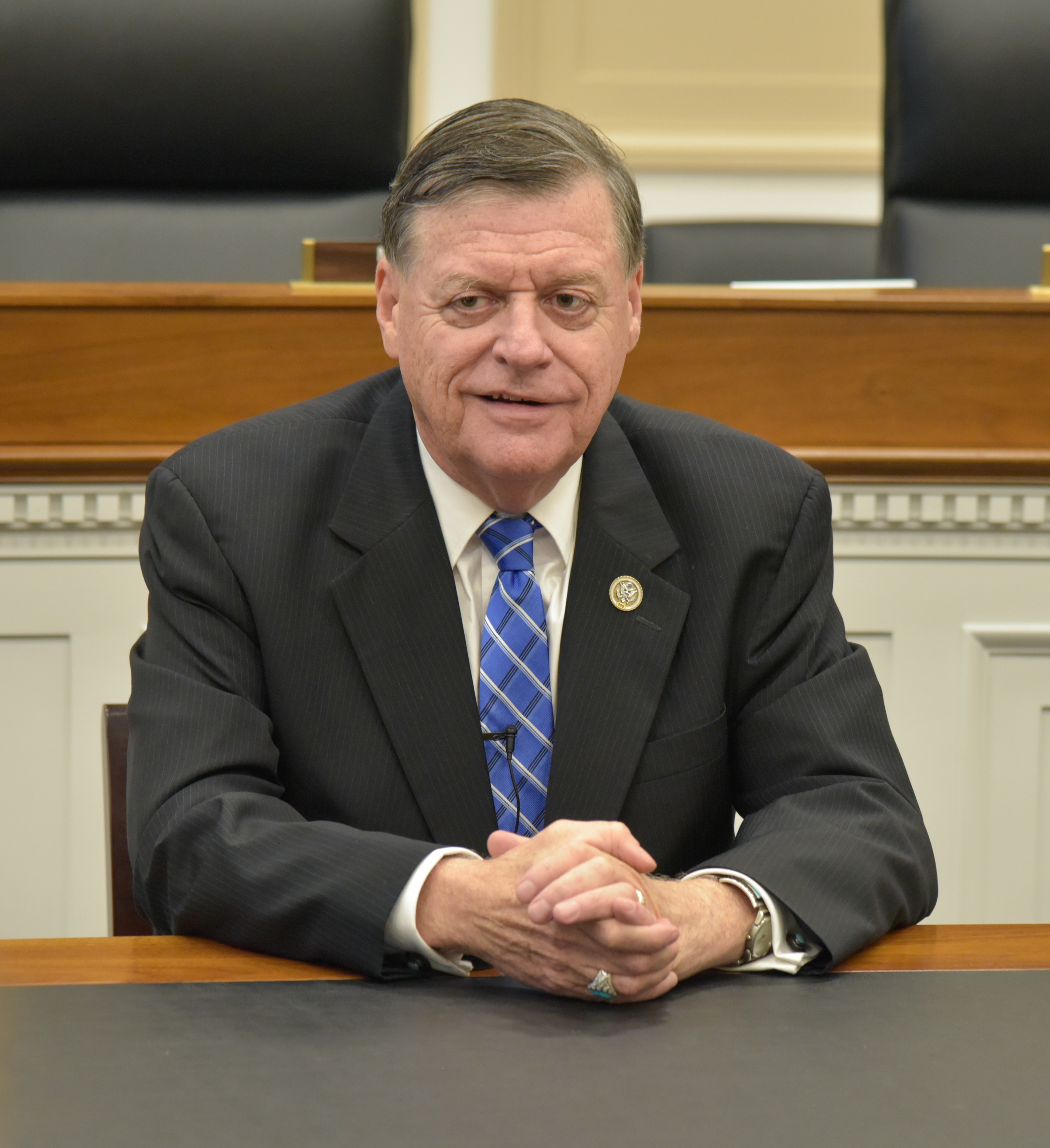
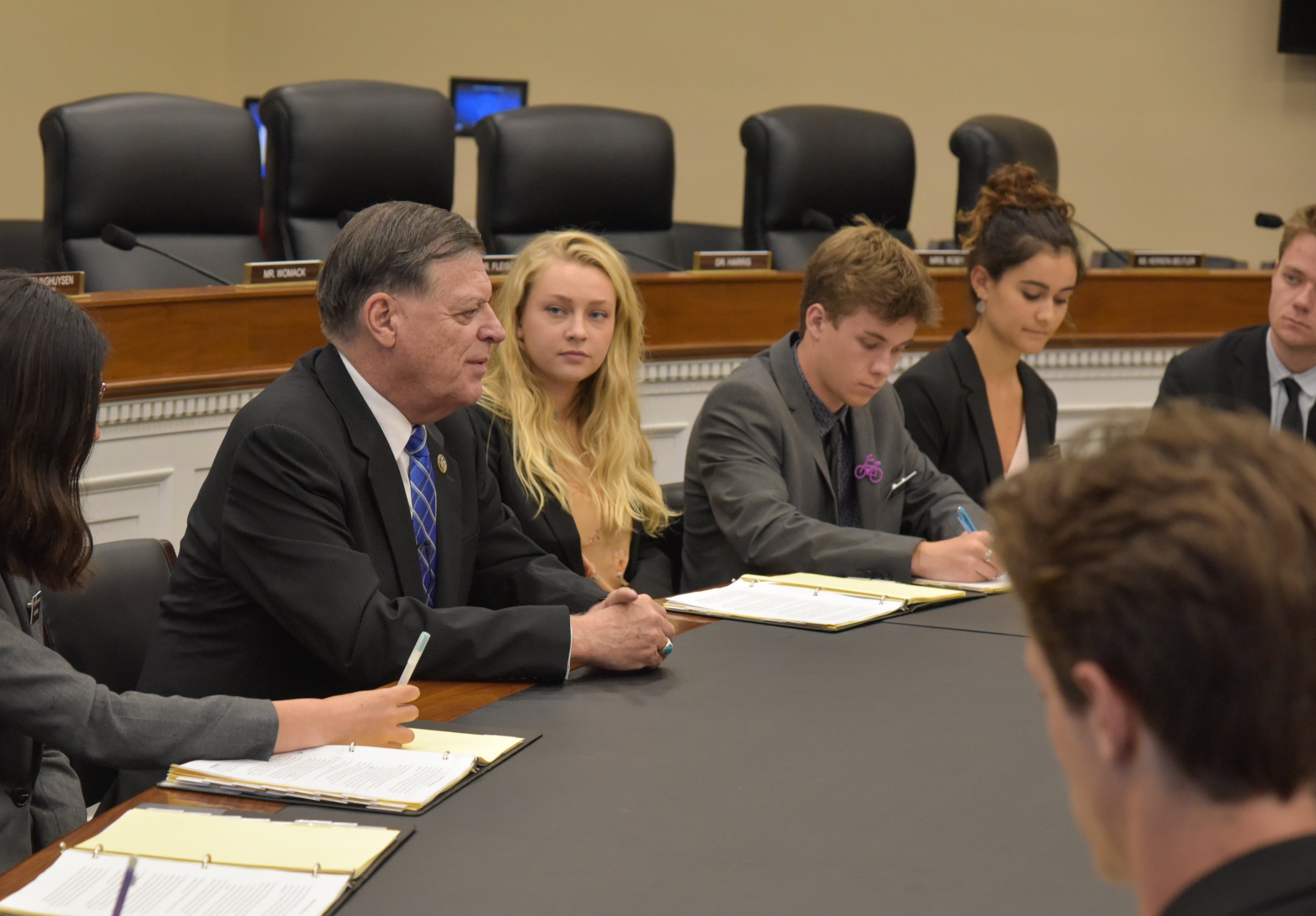
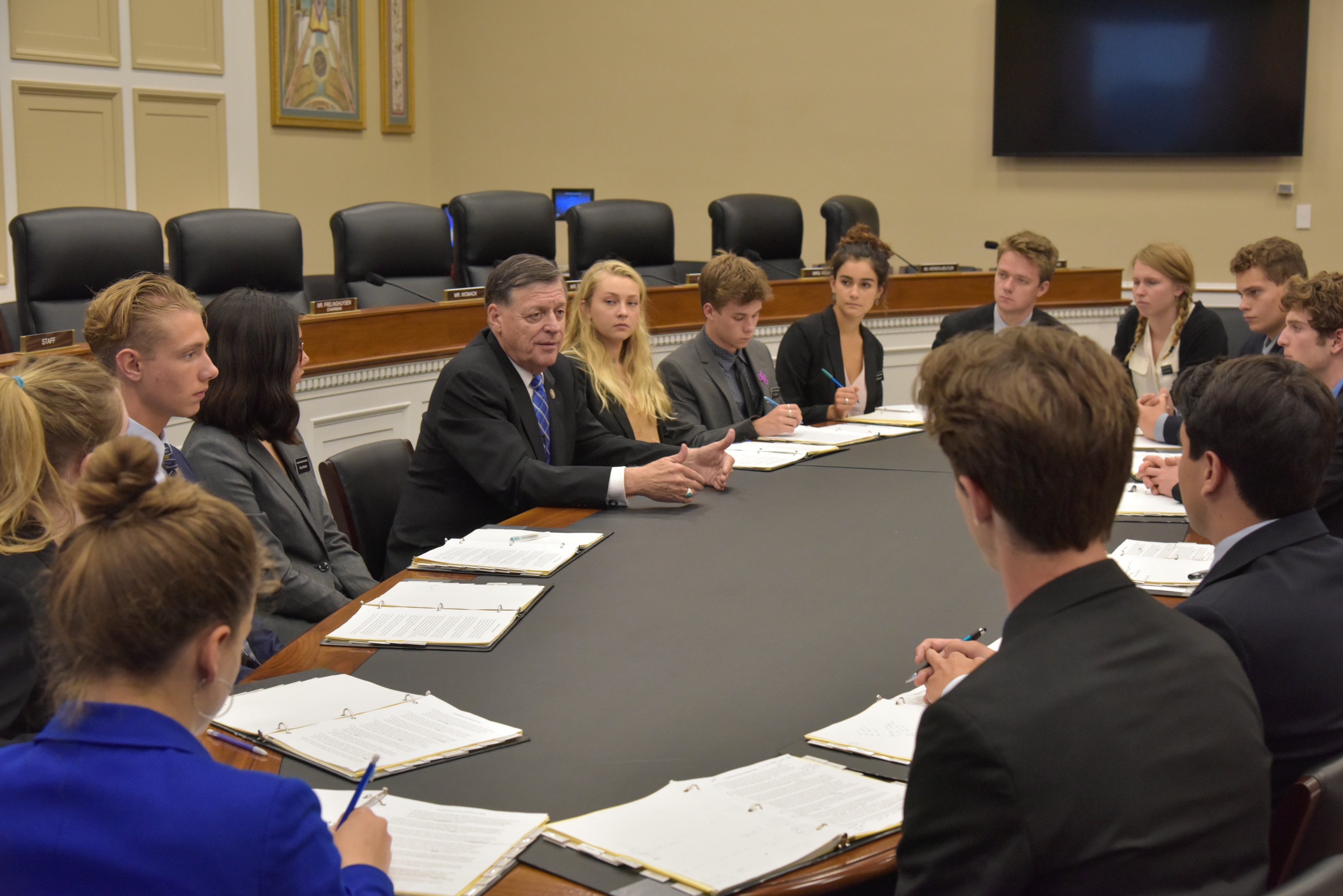
Our second interview today was with Congressman Tom Cole. Tom Cole is a Republican and represents a fairly large district in Oklahoma. I was especially excited for this interview due to the fact that he is the only Republican we have interviewed so far. While almost all of my social views lean very much to the left, I was interested to see the contrasting opinions of someone who is equally as intelligent but on the other end of the political spectrum. I was intrigued by how Cole’s fiscal policy aligns with my own conservative values regarding fiscal policy. When we began our interview I was initially shocked when Cole decided to go directly to answering our questions instead of giving us opening remarks like the other people we had interviewed.
The first thing that fascinated me was how much he believed in the power of collaboration with his colleagues, the democratic congressman. This theme of collaboration has been prevalent in all of our congressional interviews so far as bipartisan cooperation has been so lacking in Washington recently. I was reassured to hear how the Republicans are also working to mend the gap between Democrats and Republicans. The way Tom Cole described this was that in the past the most conservative Democrats would be more conservative than the most liberal Republicans and vice versa. This created a sort of political overlap that made collaboration far easier since both parties shared some of the same moderate views. Cole went on to say that nowadays, there is barely any overlap at all. This really struck me because ever since the current cooperation issues have been so dramatized by the media, I have been wondering just why this actually was. Another key part of the interview was when Cole told us that opportunity shows itself in ambiguous ways. The concept of unexpected opportunity has been a huge theme in all of our interviews so far, and I found it fitting that it was highlighted in our interview with Cole.
As the trip unfolds, it seems to me that every interview is weaving together one fabric of wisdom. Almost all of the key points made by each person connect to one another in a sort of autotrophic way that begins to grow exponentially as connections manifest. As our first week of interviews comes to an end, I am really seeing the value of so many diverse and wisdom-filled interviews, and I am extremely curious as to how next week’s interviews will finish weaving the fabric of wisdom.
Will Murphy
Congressman Cole is the first interview we have had thus far with a Republican politician. At this point in our interviewing process, we have been able to notice patterns and recurring themes. Because of this, we ask each person we are interviewing about their opinions on these themes. The most important one to me, and most of the rest of the senior class, is the need to stay open to options that come our way. Every person we have interviewed brought up, in some way or another, that they would never have had their current position if not for a butterfly effect of convenient situations and unexpected opportunities that came their way. In particular, Congressman Cole would never have been elected to his position if not for a promise he made to his mother to be her campaign manager for a local race.
Another common theme expressed by nearly every politician, which I thought I would never hear given how the media portrays the political process, is the need for bipartisanship. He expressed very strongly his opinion that making progress towards common goals is far more important than “winning the day,” meaning it is better to compromise than achieve nothing. Like I said earlier, this was quite shocking. When I arrived here, I fully expected the politicians to be self-serving. I am happy to discover that the vast majority of the time politicians want to work for what their constituencies believe in. They are hampered by those who would rather “win the day.” The media then blows their disagreements vastly out of proportion for what I can only assume to be the revenue because from what I have seen of these people I cannot, in good conscience, believe half of the things the media says about our political process. I will take this belief with me after this trip, and I have seriously began to consider a life of public service after seeing the caliber of human beings involved in the system.
The Capitol Building and Interview with Congressman John Lewis
Carl Ward
Walking through the Capitol
I was hit with the reality of this trip today. After two days of interviews around DC, we were thrown into the heart of the city. We found ourselves in the Capitol Building, carefully walking through marbled hallways, seeing pictures, paintings, and statues of various legendary political figures with every step we took. We kept walking by signs that said, “No Tours Beyond This Point,” and I kept wondering where we were going that was so exclusive and how we were getting such access.
After walking through a few metal detectors and having my mind blown too many times to keep track, a security guard outfitted with the classic earpiece/extra-dark sunglasses look stopped me and gestured toward a large door. I used all my strength to open this door, and on the other side I saw the chamber of the House of Representatives. The actual one! Just like in all the videos and pictures I had seen before, except I actually got to be there. We sat up in a balcony, watching this famous room full of famous people voting on and debating a bill that addressed agriculture, veterans, and food stamps. In a way it reminded me of going to a Warriors game, seeing something I had seen many times, but never in person. Being there makes you realize how real it all is, in a way that a screen just can’t communicate. It hit me right then that all these people are really spending all day making decisions that can end up affecting an entire country. Sure, I knew that before, but now I was watching it with my own eyes.
Not long after, I was sitting across from one of the most prominent figures from the Civil Rights movement, John Lewis. I had that exact same realization while he was describing his experience of the Selma March. I began to wonder how different the world would be if this man had never existed, if he had never been an integral piece of one of the most important movements in US history. I was so enthralled that I forgot to take notes. I wish I could remember more of what he said, because it was all just as amazing as the experience of meeting him. Either way, I spent a day in a place I will likely never return after this trip, and I met someone that I will always remember meeting. Today? Not bad.
Lillian Wayne
Congressman John Lewis
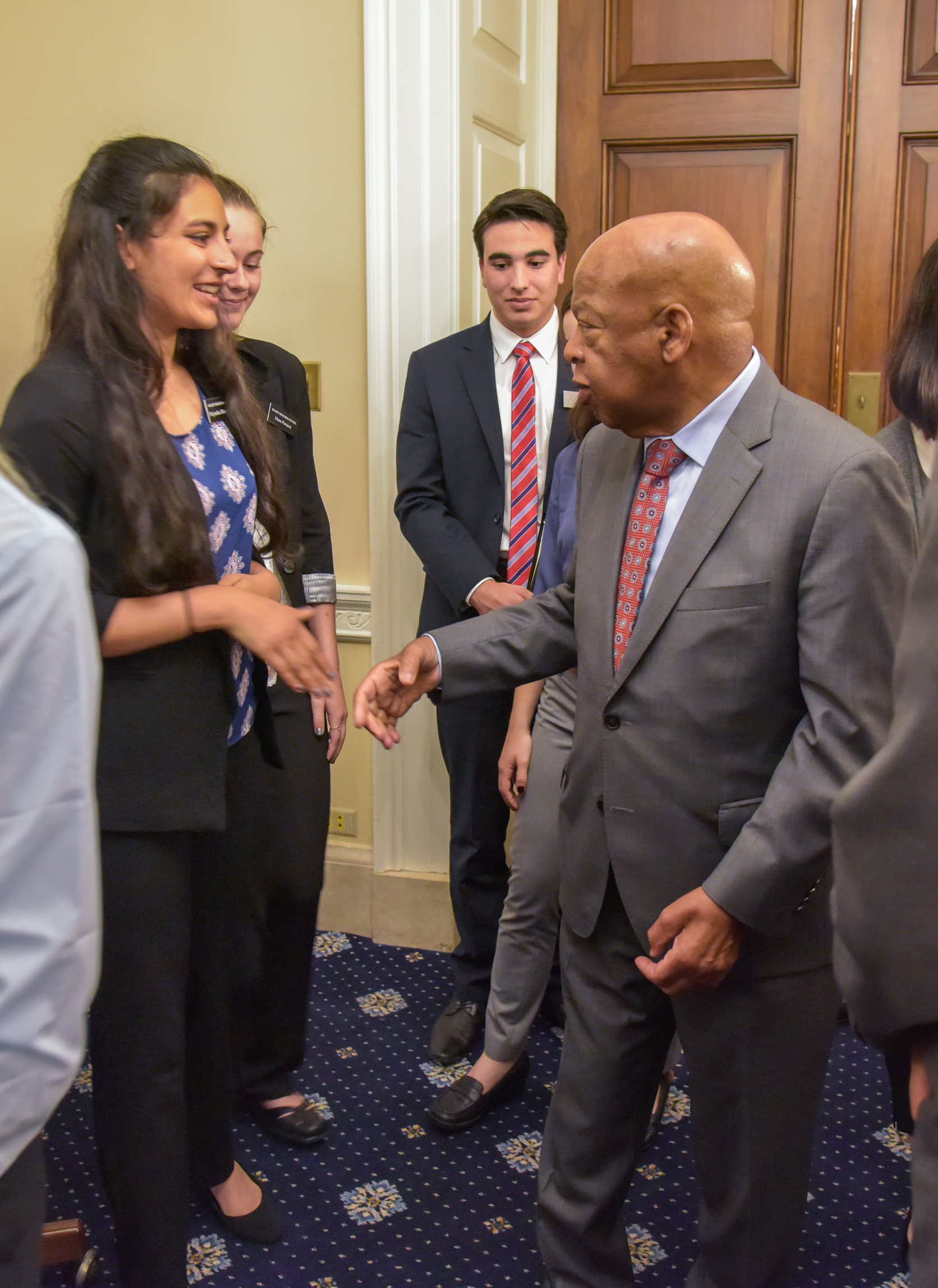
Before leaving for Washington DC there was one interview I had been looking forward to and anticipating the most: Congressman John Lewis. With my mother as the History and US Government teacher at my high school, I’ve learned so much about him and how important he was throughout the Civil Rights Movement. When he walked into the room, everyone’s eyes lit up. When he sat near me my heart was pounding, seeing him up close, and I couldn’t believe he was real. He was such a warm and beautiful person whose words and voice soothed and inspired everyone in the room. When he shook my hand, he looked me in the eyes, and all I could think about was how much history and extraordinary experiences his eyes have seen. I will never forget the incredible stories and words of wisdom he told. I could not take my eyes off of him the entire interview, not even to take notes. I wanted to savor his presence because I’ll probably never get the chance to witness him again.
Earlier in the day we went to the chamber of the House of Representatives and got to watch members of Congress debate and vote. Seeing this was another unforgettable and incredible experience. The room where this is held is a room I’ve only seen in textbooks. I couldn’t believe I was really in there. The room was exciting and full of so much energy. Everyone was passionate as they debated their side of the issues. When the votes were being counted we were on the edge of our seats, waiting in excitement and nervousness for the outcome. We had become completely immersed into the world of politics and debate. Although we have many more days on this incredible journey, I know that this day in particular will be one of the most eye-opening and unforgettable.
Cyrus Kamkar
Today was by far my favorite day in DC and definitely one of the best days of my life. The day was arranged semi last minute, leaving room for many surprises. We started the day off by going inside the Capital Building, where we watched the voting process on a controversial bill called the Farm Bill.
It took a while to enter the chamber of the House of Representatives to witness the vote, and I didn’t know what to expect. We walked through the door, which I thought led to another room we had to go through, or another staircase. However, it was the voting gallery full of members of the House of Representatives. I walked in, my jaw hit the ground, and I froze. I have never felt that way before. I sat in the front row of the balcony and looked down, trying to spot any members of Congress I might recognize. It was absolutely amazing, and still is amazing, that I was in the same room that I’ve seen on television and in photographs, a room where so many big decisions are made. The debate of the Farm Bill began, and it was incredible. After the debate, we got to see the voting process live in action. This made my day.
After sitting through the debate, we went to interview Congressman John Lewis. John Lewis was in the middle of a meeting in the Ways and Means Committee, and we had the opportunity to sit in and watch for a brief five minutes. At this point, I was speechless. I had just been inside the House of Representatives to watch a live vote, and now I was watching the Ways and Means Committee in session, and I still had the Interview with John Lewis to look forward to. We assumed, based off of Lewis’s tight schedule, that we’d get no more than four questions in. Fortunately, we got to ask ten questions. Similar to our pre-trip interview with Secretary George Shultz, I had a difficult time fully realizing whom I was sitting across from and listening to. Lewis’s life experience differs from other Congressmen. He is a man dedicated to persistent service, no matter the cost, in the name of justice. I was looking at the same man who helped change US history, and who marched beside Dr. Martin Luther King Jr.
Lewis said that change comes with an interesting combination of “history and fate.” What I got from this was, we know deep down when it’s time to fight for something, and to act on that knowing means that you are leaving this country a better place than it was before. He also told us, along with everyone else we have interviewed, how important it is to vote. He said, “Why do you think people try to stop others from voting? Because it’s power.” People underestimate the power of an educated and engaged country that partakes in a democracy. We have all the tools; we just need to use them.
I will always remember today as one of the best days of my life. Politics is my main interest, and is definitely the field of occupation I want to enter. Today enriched my desire and passion for politics.
Elias Moreno
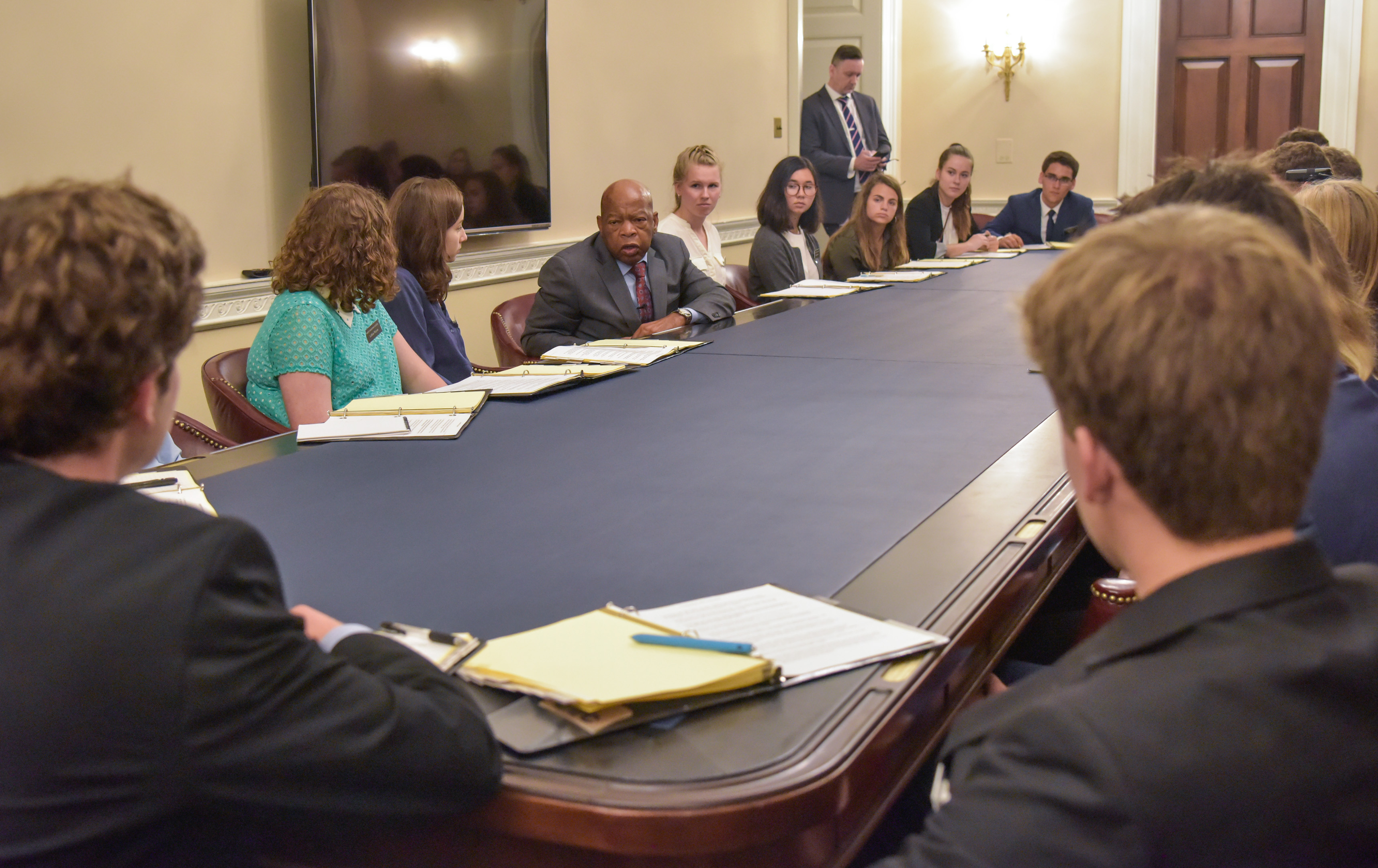
Walking through the Capitol Building today and seeing where the decisions are made that affect the whole nation was surreal. We walked into a room with a long table and waited for John Lewis to come in. We didn’t know what to expect or if he would even have time to answer our questions. Luckily, he was able to sit down with us and give us a glimpse of the knowledge that he has accumulated after 50+ years of activism. When I asked John Lewis my question about how we could keep our moral principles in times of crises, he looked me in the eyes the entire time he gave his answer, the same eyes that “saw the face of death” on Bloody Sunday in Selma, Alabama. He expressed how we as young people have the power to change the very fabric of our nation, but we must vote. If we truly believe in something we have to be unwavering in our dedication to the cause; we must always have the strength to keep fighting no matter how many obstacles we face. We have to elect people that represent us and the things we are fighting for; we must have diversity of views and perspectives. I could tell from his answer and eye contact that he thoroughly believed in every word he was saying. He wanted so desperately to pass on this message to the youth of the nation, the message of non-violence, love over hate, and importance of community. His answer struck a chord with me. As a young person newly able to vote, I cherish our democracy. We can truly impact our nation and its perception of our people and the world. We have the power to progress views and ideals to a place that comes from love, understanding, and open-mindedness.
Ruby Bracher
While we were guided through the gilded marble halls of the Capitol, I felt as though I might want to join the DC political scene for the architecture alone. High ceilings intricately adorned with stars, sky, and historical events; hand-painted tile floors; narrow, spiraling staircases. It would have been easy to get lost among the sculptures if there weren’t a long line of us, single-file, clinging to the white walls as we made our way towards the Ways and Means Committee where Congressman John Lewis was working.
Our guide led us to a conference room off to the side of a meeting. This was the first time we were allowed to situate ourselves without knowing where our interviewee would be seated, and I had the luck of sitting one chair away from Congressman Lewis.
One of the strangest feelings on the DC trip is recognizing someone’s face from research rather than having met them in person. It was especially strange seeing someone who had been the subject of so many books and documentaries, who had made such a large contribution to the progression of civil rights in our country. When Congressman Lewis first entered the room, my mind immediately went to a tweet I had seen, showing Lewis leading a sit-in during the 60’s next to a photo of him staging a sit-in at the White House two years ago.
Making prolonged eye-contact with him as he answered my question was also strange, along with trying to restrain my stomach from jumping into my throat as I eeped out a small “thank you” when he finished speaking.
One of the most powerful aspects of our time with Congressman Lewis was “with belief comes engagement.” He was only a little bit older than us when he was first arrested for his activism in the early 60’s, and has continued to fight since then, even as he is the last living of the “Big Six” of the Civil Rights Movement. He has managed to stay motivated by his optimism and hope in the good of people, particularly youth. As a young person given access to the right to vote in such a turbulent political climate (where at times it feels my voice doesn’t matter), hearing the emphasis on hope as a means of perseverance from someone who has changed so much in this country for the better against enormous odds is reinvigorating.
Mount Madonna students with Congressman John Lewis