
A Society at Peace with Itself, A Society that Can Live with Its Conscience

Erin Kavitsky

On our first full day in DC, we visited the National Museum of African American History and Culture. During our walk around the museum, a quotation on a glass case caught my eye, as did the pounds of sugar filling the case. Sitting on top of the sugar was a large and heavy-looking iron bowl. The first part of the quotation was poetic: “Sugar—sweeter, more powerful, and more deadly than gold. Unlike gold, sugar could be grown; it provided the possibility of unlimited wealth.” I was taken aback. I had never thought about the idea that if you have a certain amount of money you just have a fixed amount of money, but if you have sugar or another similar resource, you have a continuing source of money. Slave owners wanted human labor to maintain their sugarcane crops and their continual source of profit. The more sugar you could grow, the more slaves you needed to grow and harvest that sugar, and the more profit you could make. It was a continual cycle: more money, more sugar, more people needed to maintain that sugar, more money, more sugar, more people, etc. 

The second part of the quotation on the glass case was a statement of fact: “Life expectancy for an enslaved worker on early sugar plantations was seven years. Mortality rates were thirty percent. The amount of the world’s sugar produced by enslaved Americans in 1787 was ninety percent.” It’s hard to imagine these percentages in real, human terms: out of every ten enslaved Americans, three were murdered. This relatively small exhibit made me think deeply about things that I had not thought about before, and I greatly appreciated the experience. What you learn can stick with you and even change you. This experience has changed me, and I think it will always stick with me.

Logan Shaw

Today we visited the National Museum of African American History and Culture. All the exhibits were extremely interesting, and it is almost impossible to see everything the museum has to offer in one day. For example, I didn’t get to see the music exhibits, which I think I would have found most interesting. Cooper told me that he saw Chuck Berry’s red Cadillac and some of his musical instruments. Jimi Hendrix’s personal items, such as his jacket and one of his amps, were also on display. I’ll need to go back to the museum one day to see the rest of it, especially the musical exhibits.

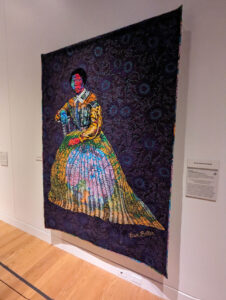
My favorite exhibit was in the visual arts area of the museum. I especially liked a quilt hanging on a wall like a tapestry. It had the image of Harriet Tubman in a flowing dress, sitting on a wooden chair. What was most interesting was the appearance of her clothes. The bottom of her dress appeared to be woven from a colorful, flowery landscape: there were many vibrant purple flowers, surrounded by many colors. Each section of the dress contained different types of flowers and other colorful items. There were playful birds on the sleeves, and at the bottom of the dress was a lion staring at the viewer. When I first looked at the quilt, I didn’t catch all the detail, but as I looked closer I noticed what seemed like miniature worlds embedded in the fabric. I liked how the artist used red and blue to represent light and shadow on her face and hands, which I thought was a creative way to give the piece depth and dimension. It was quilted together, and the colors were vibrant. To appreciate a work of art fully, one needs to experience it in person and not simply view it in a book or on the internet. The experience just isn’t the same. I was able to discern subtle textures and differences in color. I think that the piece had a deeper meaning that I couldn’t fully comprehend in one viewing. If I ever return to DC, I definitely want to view it again.

Ona Musoll-Buendia

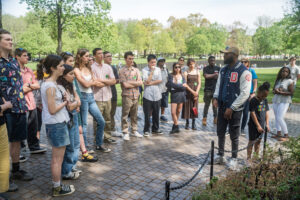
Today we took the African American History tour and visited many memorials and monuments related to African American history. I particularly liked the African American Civil War Memorial. The memorial includes a statue with a different depiction of African American history on each side of it. On one side is a depiction of three soldiers engaged in battle, and on the other side is a depiction of a family. Dre’, our tour guide, explained to us that the side with the soldiers represents the reality of the war, while the side with the family represents the humanity for which they were fighting. After reflecting on the memorial and discussing it with my peers, I came to realize what the memorial means to me. I see it as representing different kinds of fighting or struggling. The military arms that the soldiers carry represent overt physical fighting or struggle, while the family represents a more abstract and emotional kind of struggle, the struggle for human rights as an African American.

The memorial features a quotation from Frederick Douglass that expresses this idea of struggle: “Who would be free themselves must strike the blow. Better even die than to live slaves.” Tens of thousands of African Americans fought in the war for the chance to escape slavery. They fought for their own freedom and the freedom of others, and in doing so they risked and in many cases sacrificed their lives. I had already learned about slavery in US History class, but this quotation deepened my understanding of the reality of slavery. As a Hispanic woman living in the twenty-first century, I cannot know the reality of slavery firsthand, but today I came to understand better what the experience of slavery meant to those who endured it.

Isaiah Orozco

The National Museum Of African American History and Culture preserves and celebrates the rich heritage of African Americans. I was particularly interested to learn about the history of African Americans in the music industry. There were seemingly endless walls celebrating African American artists from genres such as psychedelic funk, R&B, soul, blues, and gospel. Not only did I learn more about artists with whom I was already familiar, but I was introduced to dozens of African American musical artists I had never heard of who had an impact on the music industry and American culture.

I especially liked learning about the impact that these artists had both on the genres in which they performed and on how we think about American society. An exhibit entitled “Revolutions of Sound” depicted how artists such as Prince tackled social issues such as racial segregation, unequal pay, and the discrimination to which black artists have been subjected. The museum did an amazing job of presenting difficult and traumatic aspects of history while displaying the beauty and power of the musical achievements of African American artists. I nearly came to tears while viewing a display of an African American artist singing about inequality, surrounded by black and white people holding each other and crying. I felt the emotion and connection the music brought to the people listening. I am most grateful for the opportunity to visit this magnificent museum, and I hope that next year’s students will experience the same thoughts and emotions I experienced today.

Emma Monclus

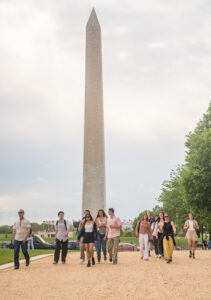
Today was our first day in DC, and we enjoyed sunny weather. The humidity came as a bit of a shock, but it was a good change anyway. The neighborhood we’re staying in this week is gorgeous and looks like something from a fairy tale, with colorful houses, beautiful flowers, and all sorts of green living things everywhere. The Metro is very convenient and a fun way to travel about the city and view it.

The most important part of the day for me was our trip to the National Museum of African American History and Culture. The more I read and saw, the more horrified I became at the history of slavery. Dehumanizing people in any way is disturbing, but learning about the ways in which slave owners did not comprehend the inhumanity of their actions was particularly disturbing. This part of American history should be discussed more, to acknowledge the inhumanity and cruelty of slavery and to honor the lives of those who were enslaved. The exhibit in the museum that most affected me was a drawing of slaves being transported in ships across the Atlantic. The drawing showed human beings herded together like animals and stacked on one another like lumber. Words only begin to express the horror depicted in the drawing. Standing before such a graphic representation of such an abominable part of US history deepened the understanding of it that I gained from US History class and deepened my empathy for those Americans whose lives were a part of this terrible part of US history.

Sophia Manzur

During our African American History tour today, our tour guide, Dre’, asked us, “What did the Emancipation Proclamation do?” When I thought about what my response would be, I acknowledged that the first answer that came to my mind was the one people typically believe:  “Got rid of slavery?” Dre’s eyes narrowed when someone yelled out that answer, indicating that it wasn’t the answer he wanted to hear. Someone gave a more specific answer: “It declared that all persons held as slaves within the rebellious states “henceforward shall be free.” Dre nodded his head a little, but he was still unsatisfied. I thought more about his question, and I began to realize that the answer was something that many in my country don’t know. Dre’ explained that the Emancipation Proclamation was limited in many ways. First, it only applied to states that had seceded from the Union, which meant that slavery remained accepted in the loyal border states. Secondly, the Proclamation exempted Confederate states that were under Union control. Therefore, slavery wasn’t abolished nationwide. So what exactly did the Emancipation Proclamation do? Absolutely nothing. 

We then visited the National Museum of African American History and Culture. Anya and I explored the museum together, and we began our visit on the bottom floor, in the “History Gallery.” As we waited in line, a staff member said to us, “If you guys get scared, don’t complain to me, because I am about to clock out and don’t want to deal with that right now.” I laughed, but it was daunting to learn that the gallery I was about to enter upset people that much. The gallery recounted events from the start of the Transatlantic Slave Trade to the late-1870’s and the failure of Reconstruction. The portion of the exhibit that affected me most was a long, dark room that showed what life was like for those who were transported across the Atlantic. I learned that when the Spaniards transported slaves, they wouldn’t stick their heads in the cargo holds of the ship because the smell was unbearable. I also learned that by the time a ship arrived at its destination, the majority of those being transported had died. I turned to face a pair of shackles. A couple standing next to me held their arms next to the shackles to see which ones would fit their wrists. At first I was disgusted. I then thought that perhaps they didn’t fully understand the reality of this historical event. Then I came to another idea: perhaps they were trying to experience some of that reality for themselves. When we learn about history it often doesn’t seem real, due to a lack of lived experience.

I’ve always thought that learning about slavery is horrifying, but my experience today in the museum was gut wrenching, knowing that people are capable of exploiting others without consequence or remorse.

Anya Gonzalez

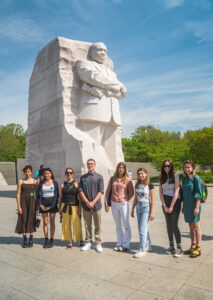
On the morning of our first full day in DC, we were fortunate to visit the Dr. Martin Luther King Jr. Memorial as part of the African-American history tour. I was particularly excited about visiting this memorial because during our Values class this semester I wrote about it as part of an assignment to research memorials and monuments in DC. The experience of viewing the memorial in person was surreal, as I came to the realization that I was actually standing in Washington, DC, gazing at the granite image of Dr. Martin Luther King, Jr. Around me, people were taking photos and surveying the memorial solemnly. I felt a sense of community with those around me who share my appreciation of the work and ideas of MLK. The memorial made this connection with others tangible, despite differences in age, gender, race, and geography.

Walking along the wall of engraved quotations from MLK, I came across one quotation that deeply affected me: “We must come to see that the end we seek is a society at peace with itself, a society that can live with its conscience.” I grasped its significance more fully when I viewed the historical section of the National Museum of African American History and Culture. I realized that the museum represents both our country’s successes and its failures at  “living with its conscience.” I think that our class began a process of learning about some of our country’s disappointments and cleansing ourselves of the delusion of American perfection that we are often expected to believe.
Gratitude, Growth, and New Responsibilities

Interviews with Layli Miller-Muro, Amy O’Neill Richard, and Laura Liswood


Layli Miller Muro is the Founder & Executive Director of the Tahirih Justice Center

Zach Wagner

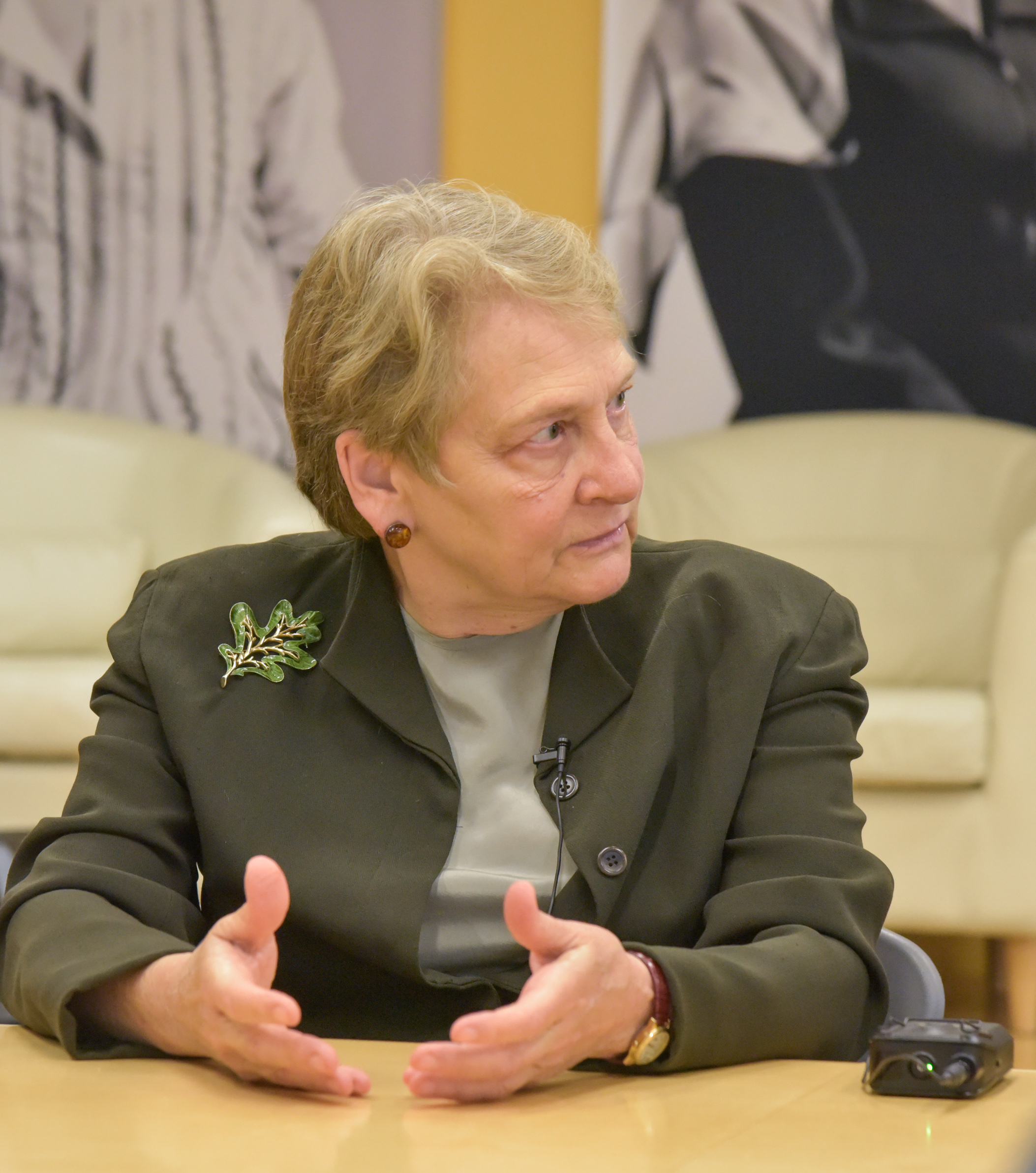
Layli Miller-Muro

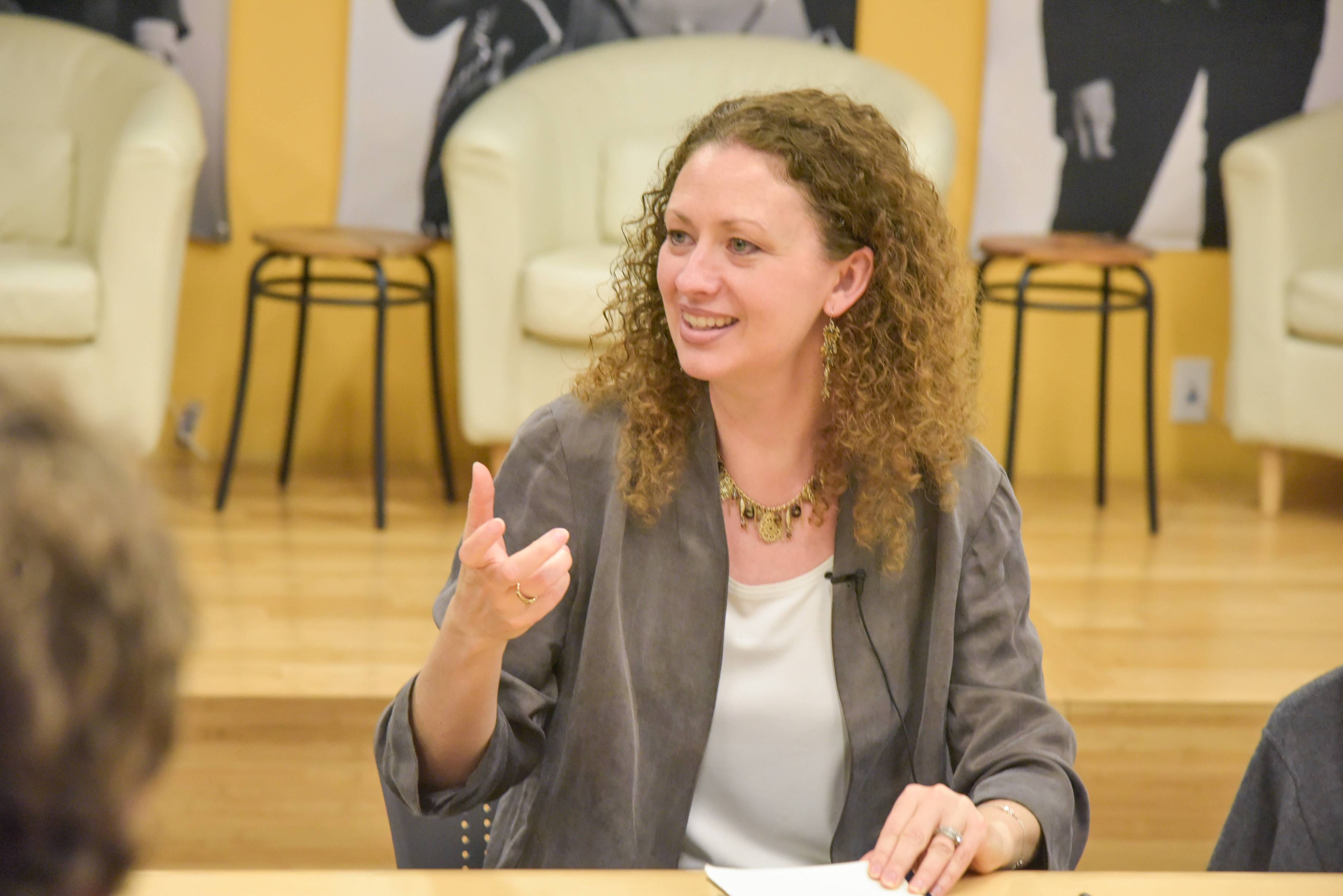
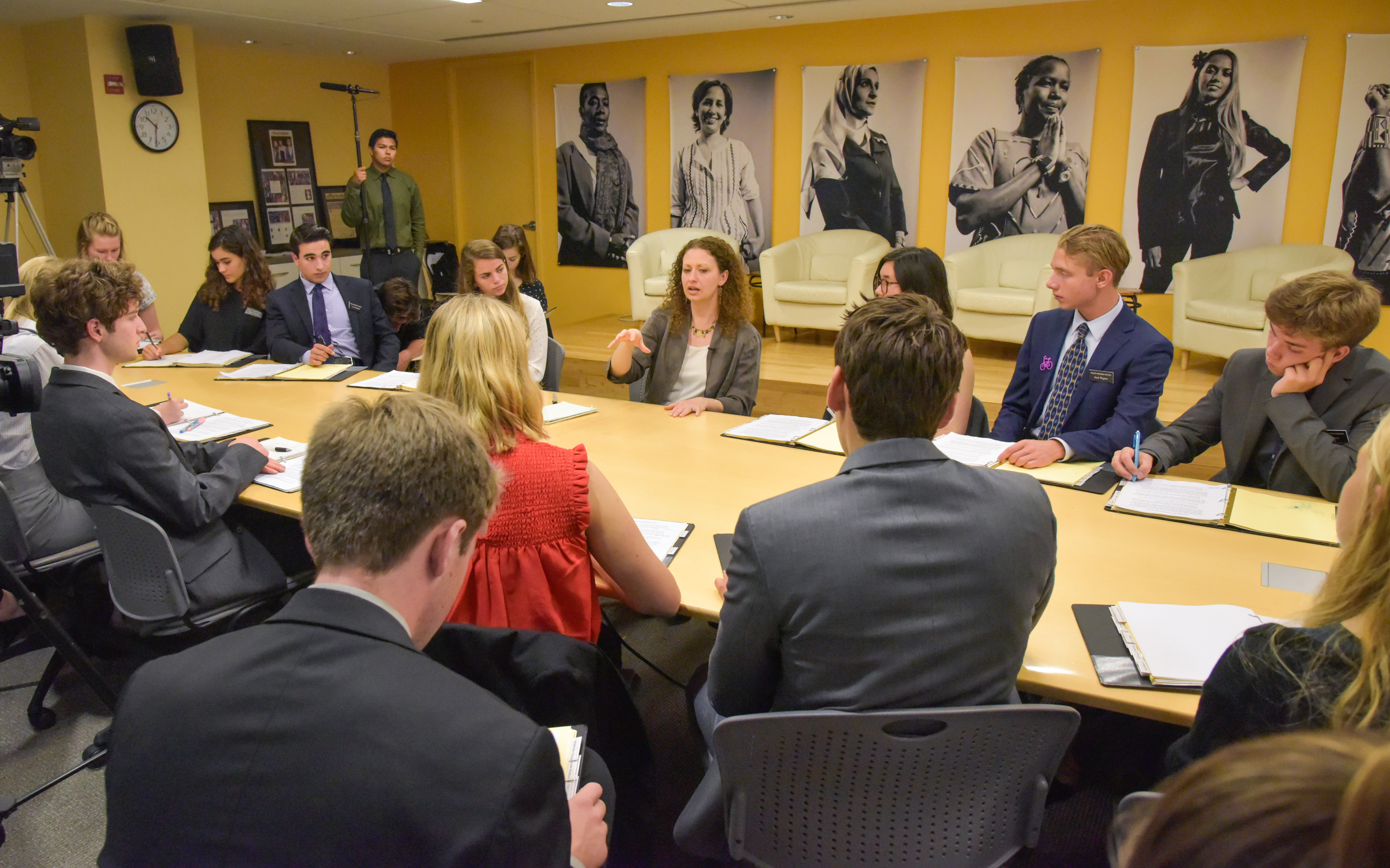
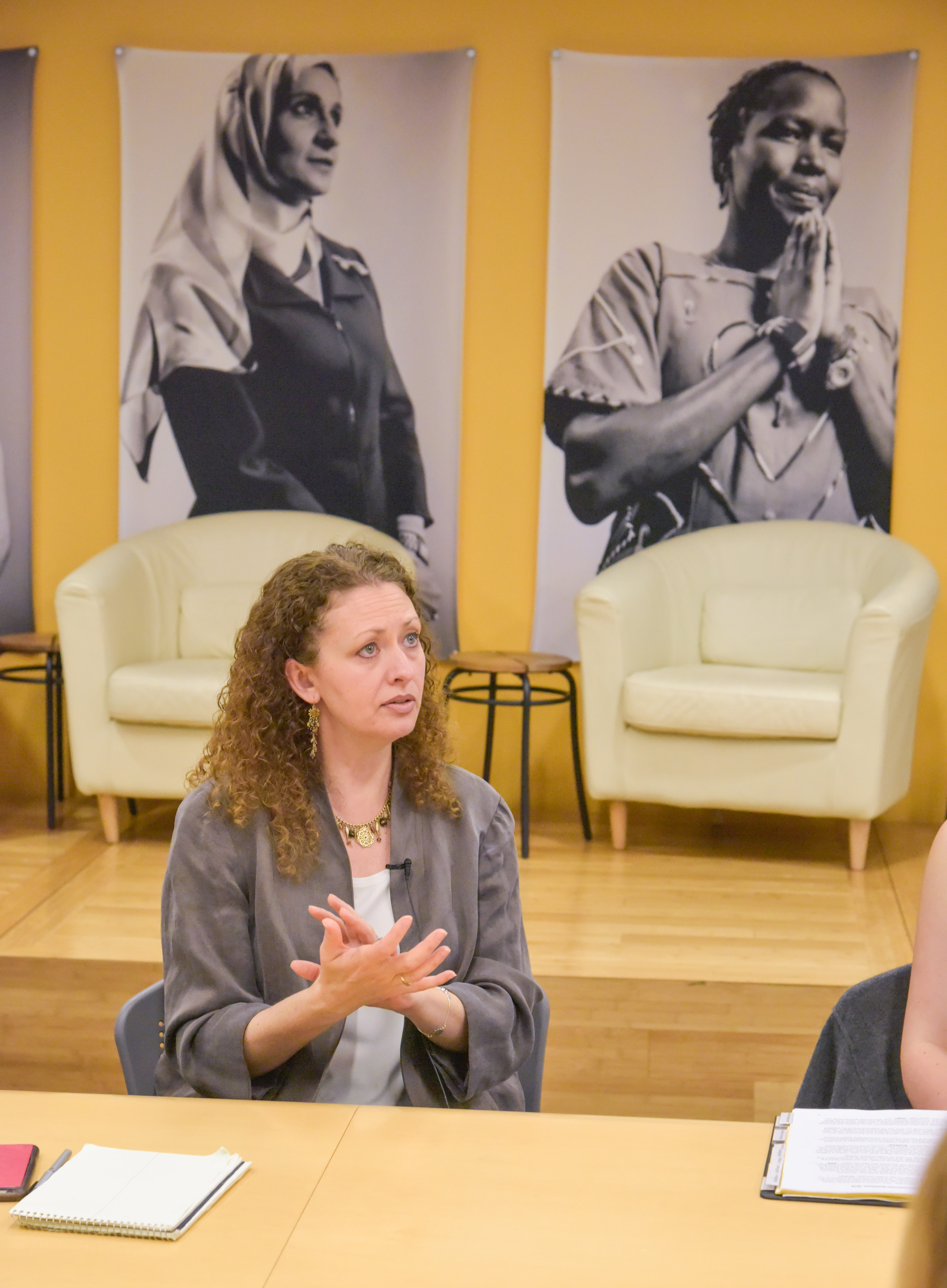
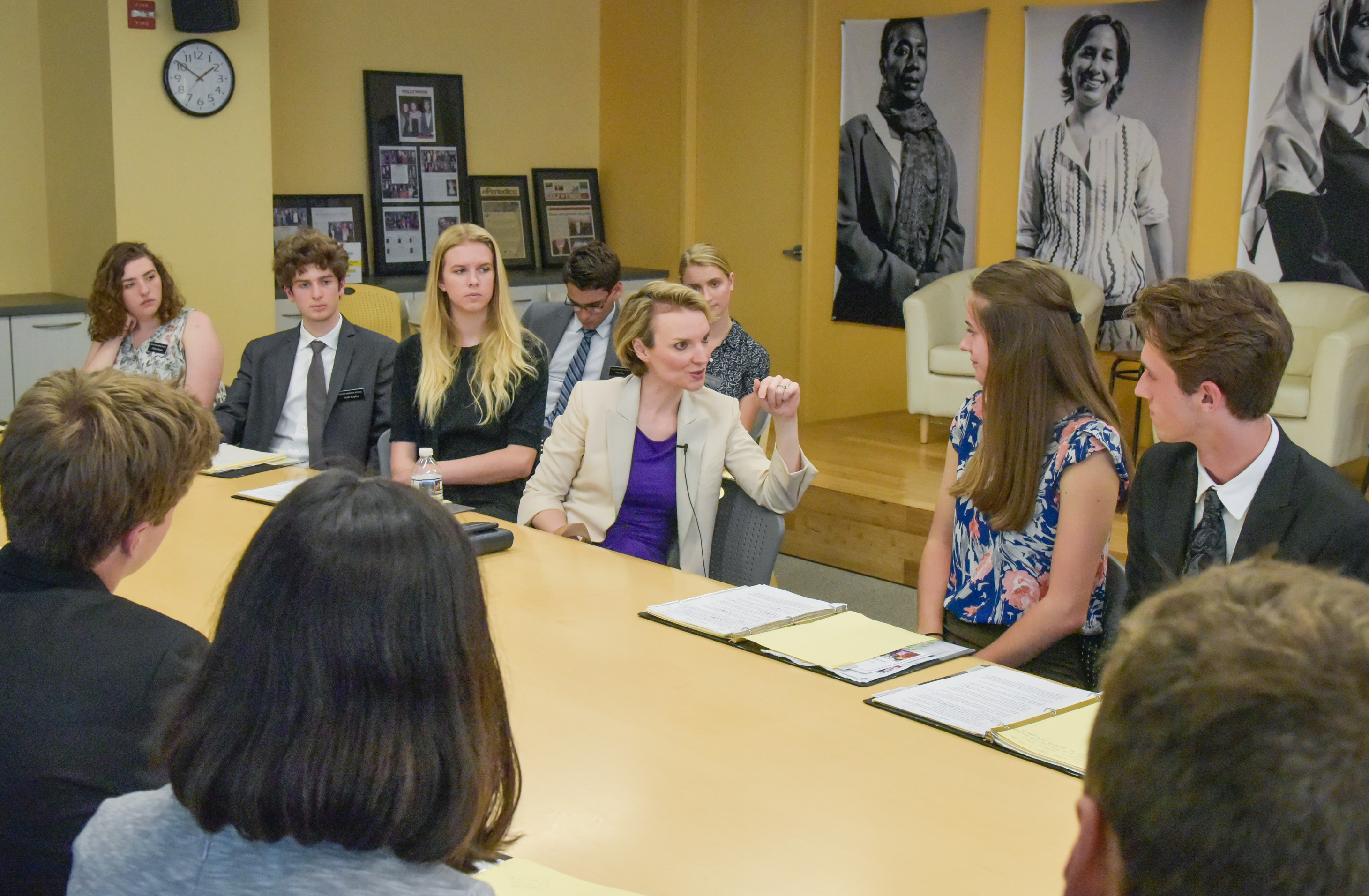
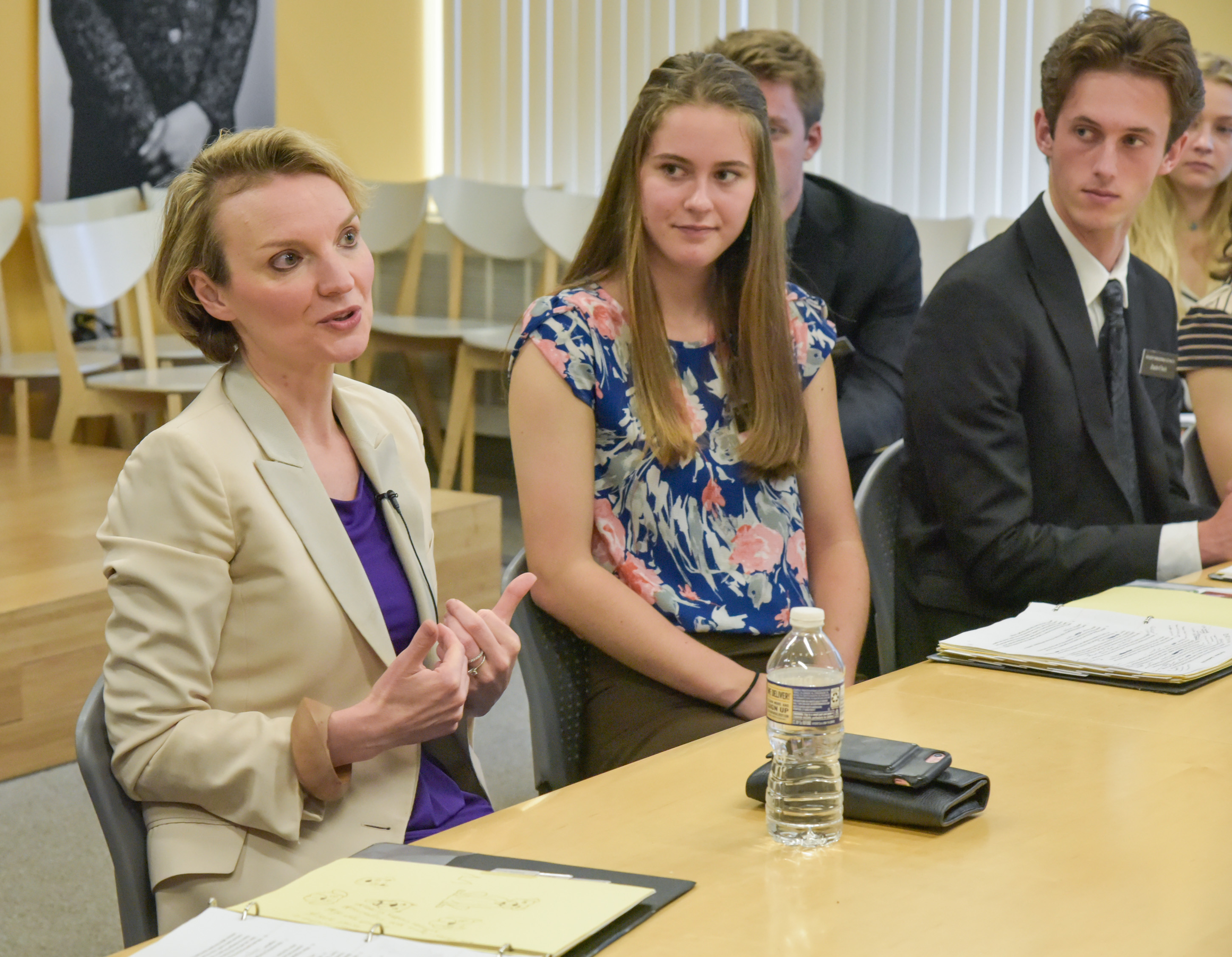
Our first interview today was at Vital Voices With Layli Miller-Muro. I was excited for this interview because Miller-Muro is a follower of the Baha’i faith, which was the topic of my final essay for World Religions. Once the interview started, it was overwhelmingly apparent how the Baha’i faith has influenced her political views. The most basic premise of the Baha’i faith is finding the oneness in all religions. Baha’i’s believe that every religion and its prophets were sent to us by the same God and for the same purpose. These prophets are sent every thousand years or so and carry the knowledge that humanity is ready to receive at the current time.

Miller-Muro’s organization, the Tahirih Justice Center is dedicated to supporting women who have experienced extreme trauma in their lives relating to gender crimes. She spoke to us about the value of allowing women to find their power for the sake of a stronger society. She mentioned a Baha’i metaphor that describes humanity as a bird. One of the bird’s wings represents men, and the other represents women. If the bird’s wings are not of equal strength then the bird cannot fly. In both this interview and the others regarding women’s issues, a large theme was that women and men have vast differences and yet equality can absolutely be achieved between two groups even if they are different. A point that was emphasized was how treating women and men as the same is ineffective, and it is in fact our differences that make us so valuable when we join together in power structures. The more diversity a body of leadership gains, the stronger it is.

Another aspect of the interview with Miller-Muro that struck me was her ocean analogy. The essential nature of the analogy is that all of us are in individual boats floating on an endless ocean that we have no control over. Not all of our boats are the same, as some are far more advantaged than others and just run differently. What we are able to choose is the directions our boats are going and improvements on our own boat, and we must acknowledge the ocean as a force beyond our control. We will always be subject to change, adversity, and anything else the storm manifests around us. Overall, the interview today with Layli Miller-Muro affirmed many of the themes we have been absorbing so far on the trip, as well as provided new and unique perspective on the human experience as a whole.


Sage Turner

In our last day of interviews on the DC trip, we radically ended with a bang! After our relaxing trip to the Blue Ridge Mountains, we all started to lose energy and drive, and the majority of the group was yearning to go home. However our last two days of interviews on Monday and today reassured us about why we are delighted to be here experiencing everything before heading home.

Layli Miller-Muro had a huge impact and shined her light on us. I was personally looking forward to her interview because of my preliminary research on her. I’m struck by these preliminary interviews because it’s fascinating when all you have is a photo and some information about an influencing person, and then you get to actually meet them up close and discover that they are a familiar face on the exact same level as you are. Layli practices the faith of Baha’i, which is a very unique and profound religion. She emphasized the “oneness” that Baha’i holds, oneness of all the gods and oneness of all the people under their eyes. Layli is exceptional because she is able to hold strong connections to her faith and weave it into her work in her organization Tahirih Justice Center. She holds a very striking view on growth. She said, “There’s a human tendency to not grow unless we’re uncomfortable.” Therefore she emphasized that we need to embrace the uncomfortable and look at it as a chance to grow and take on opportunity.
Another thing that stuck out to me was her ability to use metaphor and allegories to clearly show her points. She said that our civilization is like a bird, the right wing is the men and the left is the women, and the left wing is injured and unequal to the right wing; in order for the bird of “civilization” to fly well, the left wing needs to be just as strong as the right.

The other use of metaphor that stuck with me was when she said, “Hoist your sails and set a course, but be open to the wind and current.” This piece of advice I will bring with me into my young adulthood because it reminds me to be a dreamer and to maintain discipline—a wild card and a wise man.

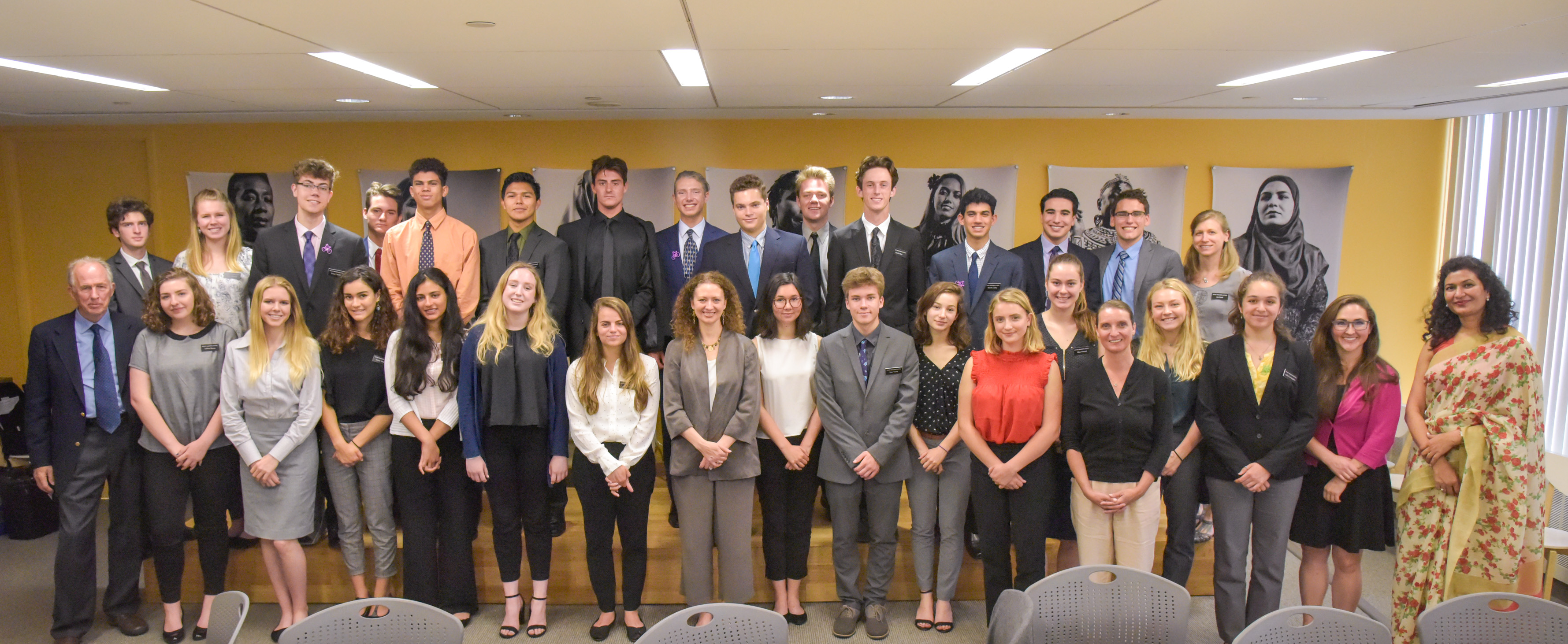
Mount Madonna students with Layli Miller-Muro


Amy O’Neill Richard is a Senior Advisor at the State Department Office to Monitor and Combat Trafficking in Persons

Emily Villareal

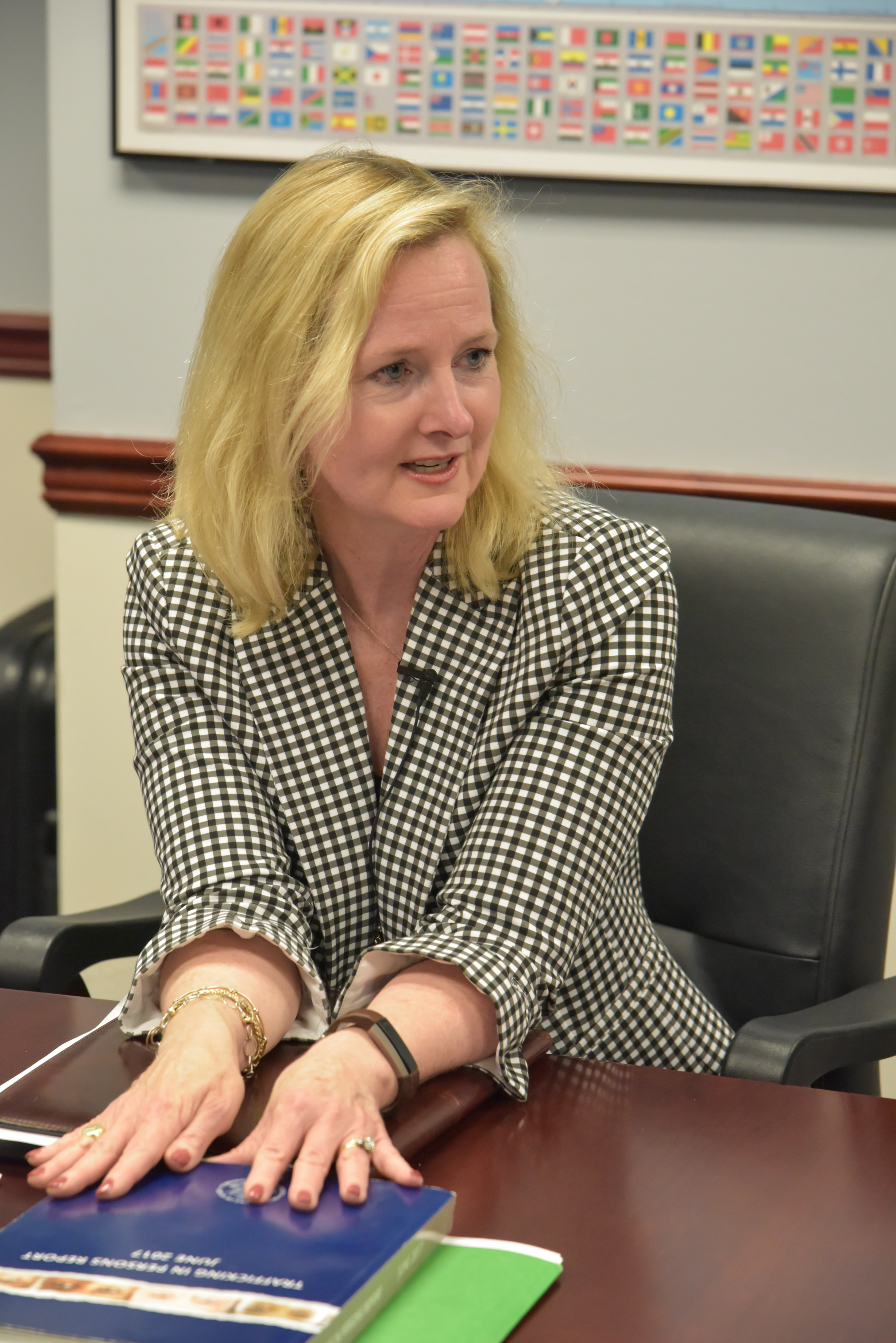
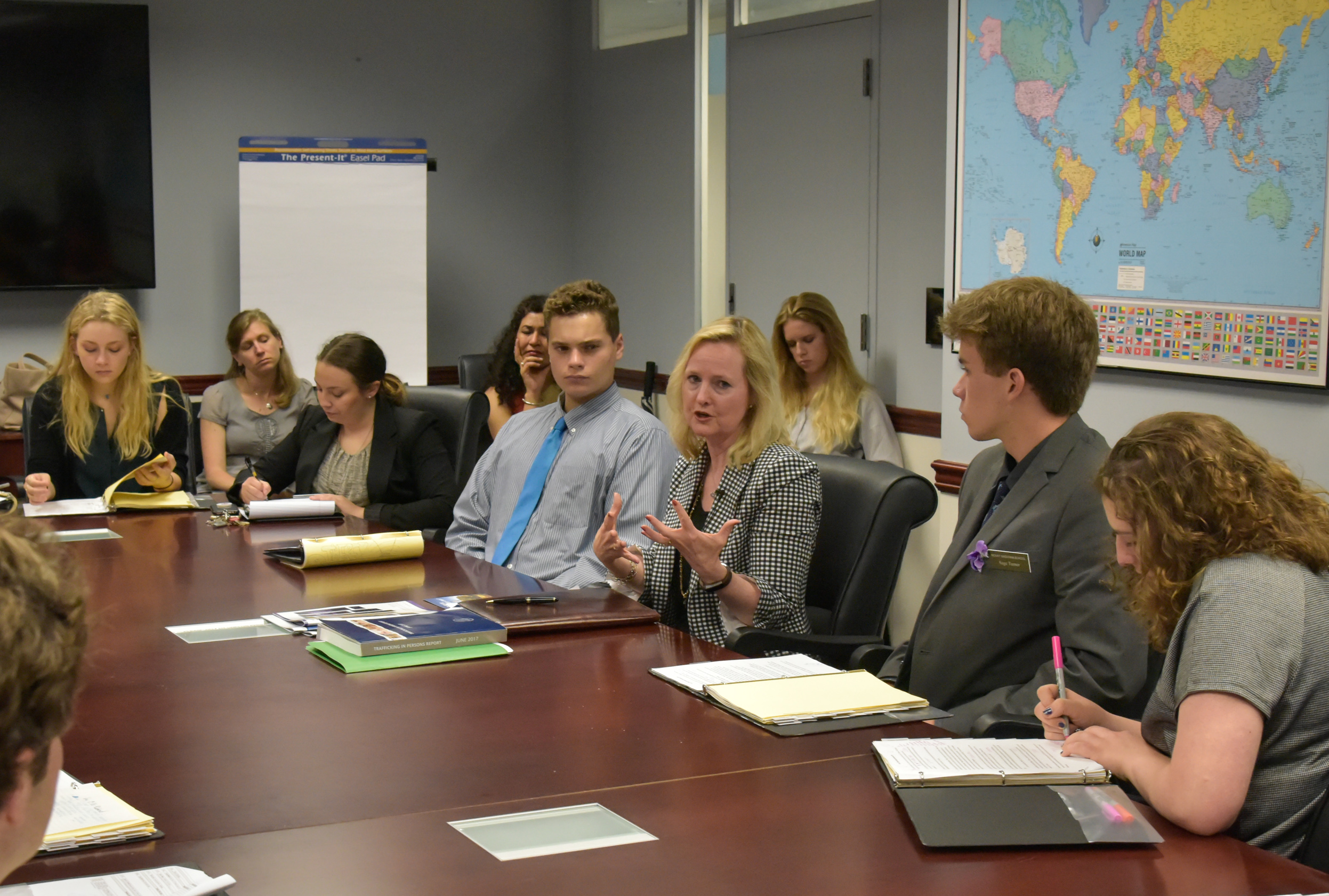
Amy O’Neill Richard

Amy O’Neill Richard knew from a young age that she wanted to work on an issue that benefited humanity on a global scale, and now she is the Senior Advisor to the Director in the State Department’s Office to Monitor and Combat Trafficking in Persons. Along the way she was not afraid to question the people who told her no. When interviewing for a position in her current department, she got pretty far before she was told she might be better suited in a different area. Instead of giving up her dream, she followed that lead in pursuit of her goal, and eventually, through an entirely different doorway, she got the job. This evolved to be the job that she is still so dedicated and passionate about many years later. She made me realize I could be better at speaking my mind and standing up for my own abilities, especially when others doubt me.

A common theme I have seen here in DC is how all these people we’ve been interviewing are so passionate about their work. The level of commitment and research is what led them to become such successful people. Amy O’Neill Richard said, “You’ll be good at what you love because you’ll seek to learn more about it and have more opportunities and risks related to it.” So now I can just hope that I find something that I really care about and am brave enough to pursue fully.


Lillian Wayne

Today was our last day of interviews in Washington DC, and we had the opportunity to interview many extraordinary women. My personal favorite was Amy O’Neill Richard. Before this interview I didn’t know much about her except that she is the Senior Advisor to the Director in the State Department’s Office to Monitor and Combat Trafficking in Persons. Upon meeting her, I could definitely feel her passion and care for this issue pouring out of every word. Amy O’Neill Richard is bright, answered our questions thoroughly, and is extremely well-spoken.

I got the opportunity to be the first one to ask her a question. It was nice asking my question first because I could enjoy the rest of the interview and not be nervous thinking about how I was going to ask my question. I asked her if she could talk more about how she became so interested and driven towards the issue of human trafficking. She gave a long answer about her background and history and how she got to where she is today, but then she said something that really struck me and that I will definitely take home with me. She said to do what you feel deeply passionate about in life, but don’t limit yourself and close off other opportunities. This is definitely an important thought I will keep with me as I enter senior year and get closer to college. Today was a great day of interviews with a great group of women, a strong ending to our trip.

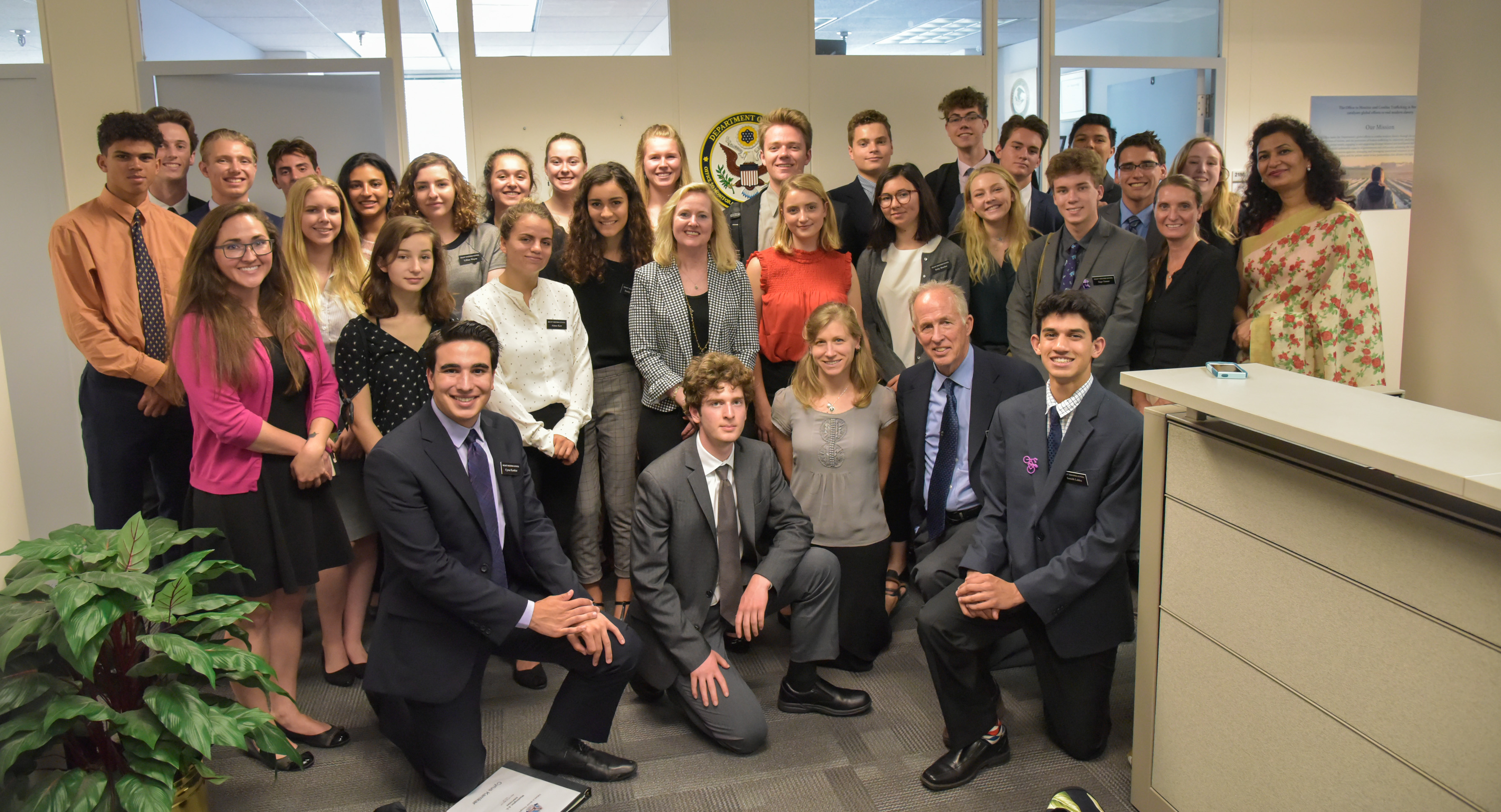
Mount Madonna students with Amy O’Neill Richard


Laura Liswood is the Secretary General of the Council of Women World Leaders

Mara Peruzzi

Laura Liswood

I am thrilled to have ended our time in DC with an energetic and insightful interview with Laura Liswood. I had the privilege to sit right next to her where I truly felt her cheerful and thoughtful nature, as well as the connection and investment she held in our conversation. She was very personable as she made sure everyone introduced themselves before speaking, and then repeated their name back in a playful manner. She used humor throughout the interview with analogies that made her messages meaningful. I found her to be very knowledgeable in the way in which she conveyed her answers.

One thing that struck me was her insight about the different ways in which women and men process feedback that holds both positive and negative aspects. She said, “Failure is the best way to learn.” Although I have heard this before, hearing this from someone so inspiring and intelligent really put it in perspective for me that I am not the only one who holds this standard that failure promotes growth. She explained that women generally focus on the bad feedback and brush off the positive comments, while men tend to brush off the negative feedback and immerse themselves in the positive feedback.

I asked her a question that illuminated how men have an easier time being accepted for their mistakes and often move up the ladder, while women are only allowed to fail a certain amount of times before being labeled as useless. While exploring these discrepancies, she pointed out that women are often put in a leadership position when the country is in the middle of a crisis. This is because the country finally opens up to new alternatives only when it has no other options. Because of this and the bias society holds toward women, it is harder for women to prove themselves as useful and gifted when they are pressured by these expectations.


Gracie Howley

Laura Liswood talked about all of the traits that I want to possess. She is the Secretary General of the Council of Women World Leaders, which is composed of women presidents, prime ministers, and heads of government. She is funny, powerful, aware, and strong. I am very interested in how to be a leader, more specifically a woman leader. My junior year of varsity volleyball we lost six seniors, so I was the oldest and most experienced girl on varsity. For some reason I stepped up. I created a summer workout plan and schedule. I took on the responsibilities of captain and ever since, I have a hunger for leadership. Our experiences in DC have provided a surprising amount of tips on being a good leader. Interestingly, the majority of leadership advice that I absorbed came from the women we interviewed, and so much of what I’ve learned about leadership on this trip came from Laura Liswood.

Leadership Skills: You should have curiosity, trust, strong ideas, and be able to express them; you need the ability to energize others, possess good humor, thick skin, direction, a “true north” and set of values, a willingness to challenge authority, the experience and willingness to travel to other people’s perspectives, the ability to take critical feedback and to take on the traits of the dominant and the non-dominant groups; you need to recognize where there is need and adapt skill sets to meet that need. She also spoke about the difference between an instinctual leader—one who is good until their familiar experience changes—and a conscious leader, one who has the natural ability to learn and adapt to govern regardless of circumstances. I am an instinctual leader. My only leadership experience has been in volleyball. I am a good sports captain, but I have noticed I struggle with wanting to step up when put in other situations.

I will be putting this advice into effect immediately and start experimenting how each trait can function best through my personality, so I can learn to be a more conscious leader.


John Dias

We’re nearing the end of our trip and the interview process that we’ve been engaged with has become familiar and special. We’ve been working so hard to learn as much as we possibly can from all of these people who have done a great deal of meaningful work. Today we had our last interview with a woman who tied almost every single theme we’ve heard on this trip together. Laura Liswood is a powerful woman leader whose presence cannot be described in words. This woman was one of the most amazing and inspiring people I’ve ever met because of her ability to effectively and efficiently communicate. She had the most amazing way of interacting with us through her humor and her engagement with each and every one of us.  She explained her ideas through a series of different terms and analogies that she had coined for different issues relating to diversity, leadership, gender roles, hyper-vigilance, and citizenship. She explained that she has developed her effective communication skills through her experience in law school and the thousands of opportunities that she has had to speak publically.

During this interview she explained that doing your job in the best way that you can, will lead you towards having experiences that can further develop your intuition. An important realization I took away from our time with Laura Liswood was the value that pursuing higher education and particularly graduate school could have in terms of acquiring communication skills. In almost every single interview there has been a realization that I’ve had that has expanded my mind in ways that I never thought to be imaginable. I know that these meaningful realizations will help me find my best self when I choose to reflect on them and choose to further my understanding of concepts and lessons that we’ve learned.

While walking back to the Pilgrimage in a wild rainstorm after our last interview, I felt a sense of responsibility and accomplishment. The torrential rain was getting all of us wet, and the few umbrellas we carried were not nearly enough to keep the water off of our suits and dresses. Yet all around me there was positive energy and a solid feeling that we had collectively achieved an experience of mind-expanding learning that would lead to a lifetime of purposeful living. This experience that I have been privileged to have wouldn’t be possible without the investment that our teacher Ward has put into his students and program over a course of 30+ years. Returning to the Pilgrimage a few days ago after a long day Ward explained the importance of reflection as we move forward. This trip has inspired me a lot more then I ever thought it could, and I am incredibly grateful to have been a part of this and to continue my journey with these memories and reflections.

Mount Madonna students with Laura Liswood

Indivisible Nation

Ezra Levin is the founder of Indivisible

Indigo Kelly

Ezra Levin, the founder of Indivisible National, came to talk to us about his organization and how we can participate in a democracy in order to make sure our voices are heard. He stressed the point of understanding that people hold the power, and they can incite change, no matter how small of a voice they think they have. Indivisible’s main focus is getting people heard and making it easier for them to participate in the political process. One thing he said that struck me was that it’s hard to ignore people if you’re face to face with them, which I found very interesting in regards to the fact that congress can ignore their constituents when they are not being vocal about what they want. He also talked about the importance of using media to your advantage. He talked about how it is easy to ignore people, but when they have a camera behind them, it is harder to ignore them.

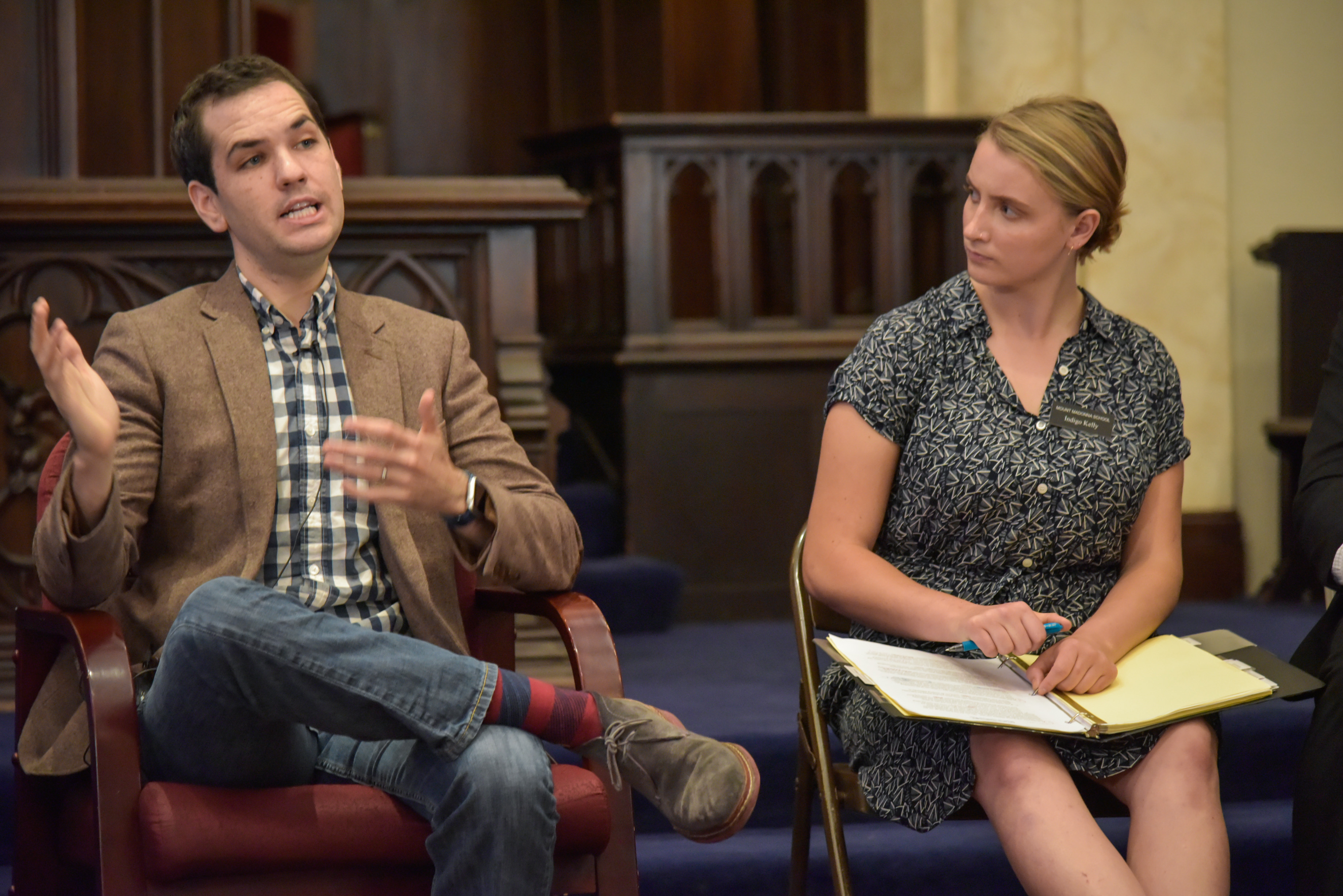

The vision of Indivisible is one that I am connected to very personally as well; my mother and father started the Indivisible chapter in Santa Cruz, and I have seen their passion for politics grow and both of them bloom into powerful and effective leaders in our community. I think the community that Indivisible has created is a very important one; it is giving voices to people who haven’t engaged in the political conversation before, people who didn’t think they were activists but now are rising up because they see that things they care about are being threatened. The last thing that Ezra said really struck me. He talked about how it is scary but also liberating to know we have the power. He said, “It isn’t going to be okay. It isn’t going to be okay unless we make it okay. There is no one who is going to make it okay besides us.”


Noah Kaplan

Going into our interview with Ezra Levin, founder of Indivisible, I was curious about the nature of his organization. Whereas many movements are structured around a specific cause or with direct leadership from the top, Indivisible employs a bottom-up, grassroots-style of government. He stressed the importance of staying away from policy agendas and focusing on the causes that can unite people. Indivisible’s agenda is to resist the excesses of the current administration. This is so broad that it encompasses a huge range of ideologies and political beliefs, and, because of this, it has exploded.

The ideas of an individual in a state are not necessarily congruous with those of others in the Indivisible movement, but overall they can agree on a few overarching principles that allow the organization to stick together without fragmentation. To achieve this it is necessary to grant local autonomy to individual groups and leaders on the ground level. Not only does this allow for a unity of belief, it allows for diversity of strategy and principle, i.e. adaptability. The snowflake structure of Indivisible has allowed for a more efficient method of harnessing the brainpower of a large mass of people. There are of course disadvantages to this method, but aspects of this structure may be useful in other organizations or institutions to create a more efficient method of collaboration.


Imogen Cockrum

Today we interviewed Ezra Levin, the founder of Indivisible National, a progressive movement that began in 2016 as a reaction to Donald Trump’s election. We interviewed him in the church upstairs from where we are staying. We started asking him questions, and not only was it clear to see, but he also voiced how impressed he was with our research and thoughtful questions. With every question asked, he seemed more impressed. He answered our questions very thoroughly, and even after answering, he’d ask us if what he said was a fulfilling response.

One of my favorite things he talked about was how important it is for representatives to remember they aren’t working to represent the administration, but rather their constituents. I thought it was good that he emphasized this important note. He also, in humor, talked about how he never expected the Indivisible guidelines document to become so viral so quickly (and on that note, that if he knew, he’d fix all the typos he made). I noticed I was very comfortable asking him my question because of how friendly and approachable he was. He is young, but also very smart in how he thinks about the political world and how well he articulates his thoughts. Interviewing him was a great way to end the day and he even inspired me to learn how to personally get involved with Indivisible.

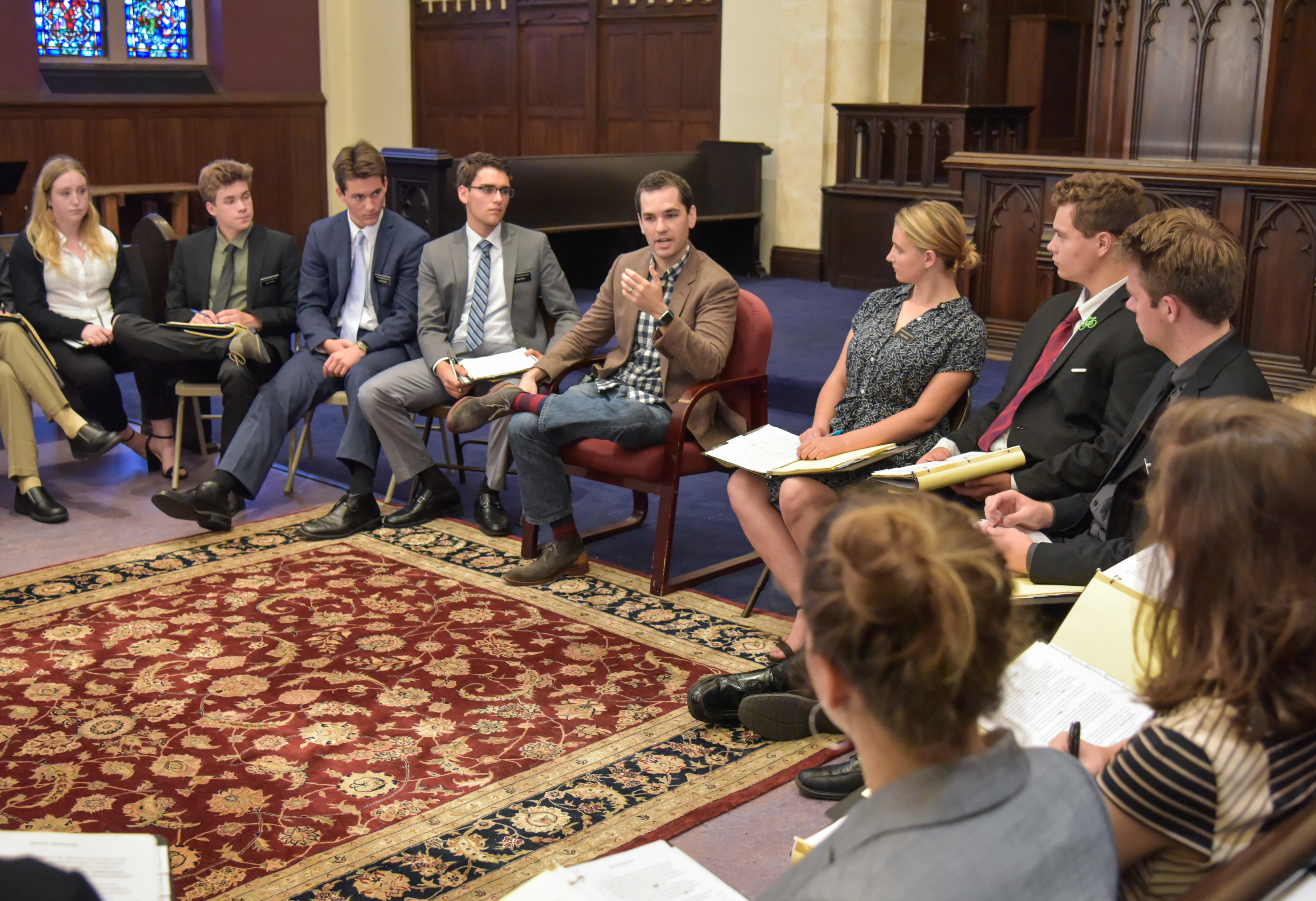
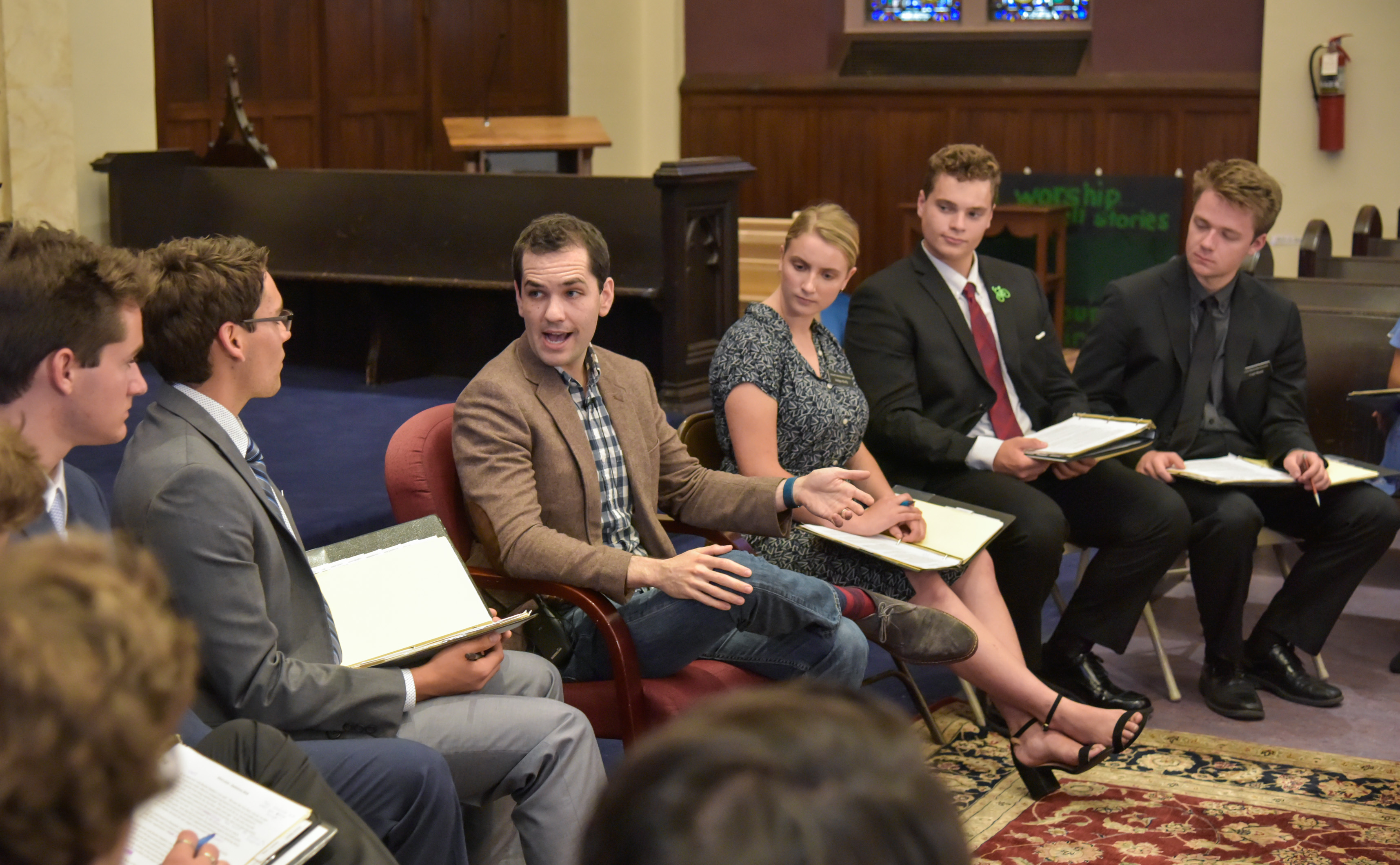
Mount Madonna students with Ezra Levin

Seek Power to Empower Others

Interview with Cokie Roberts: journalist, author, and commentator

Phoebe Grant

Cokie Roberts

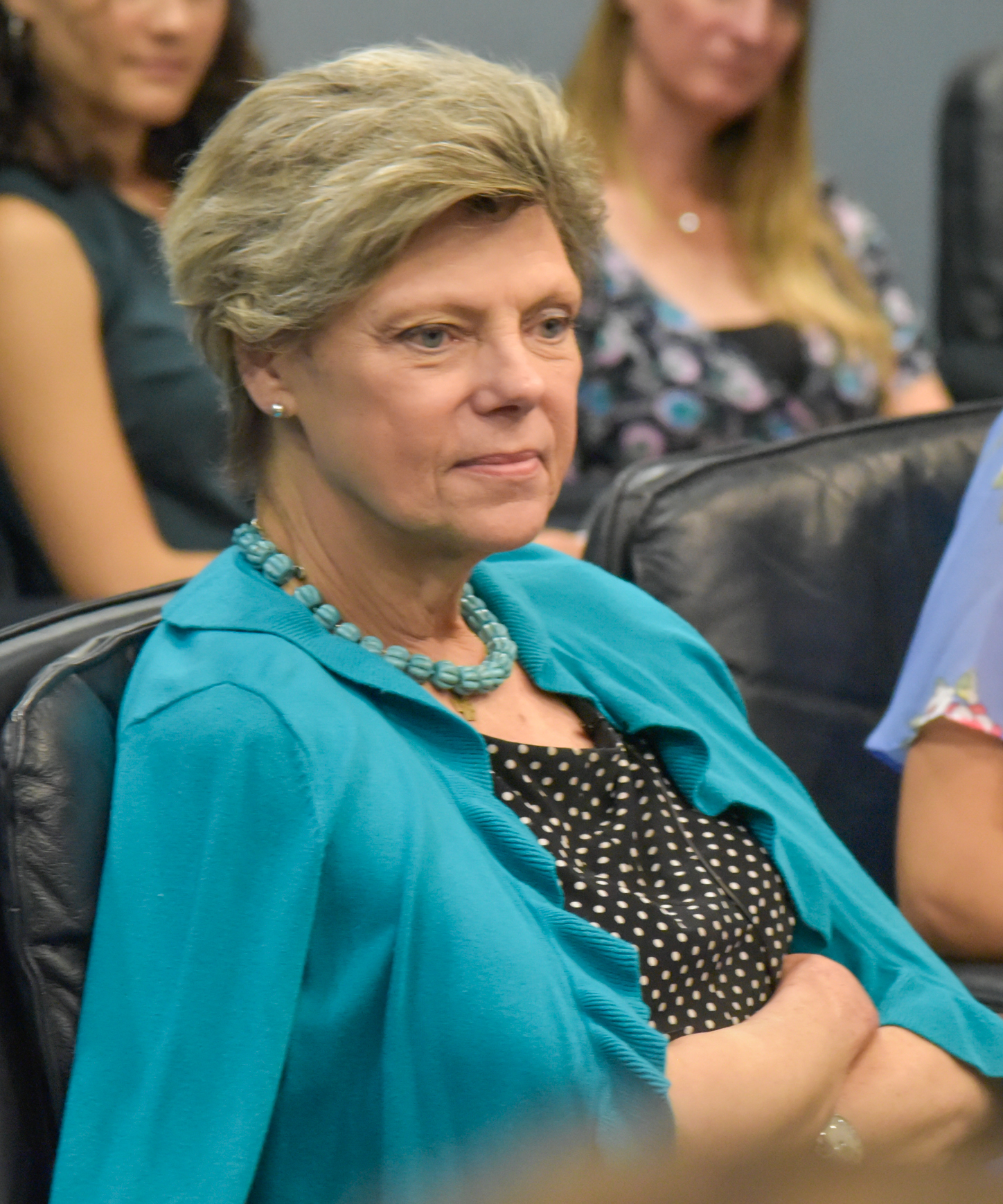
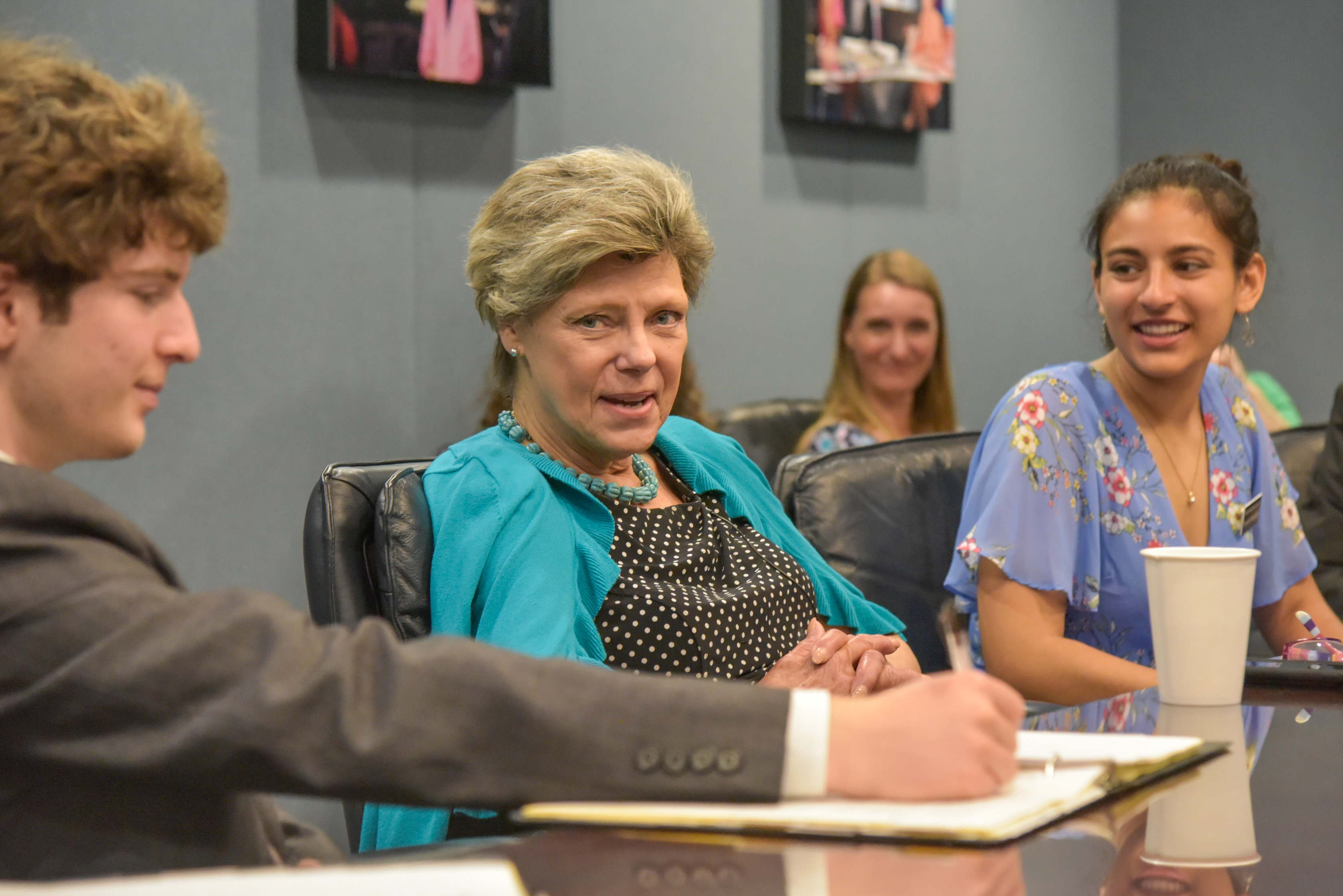
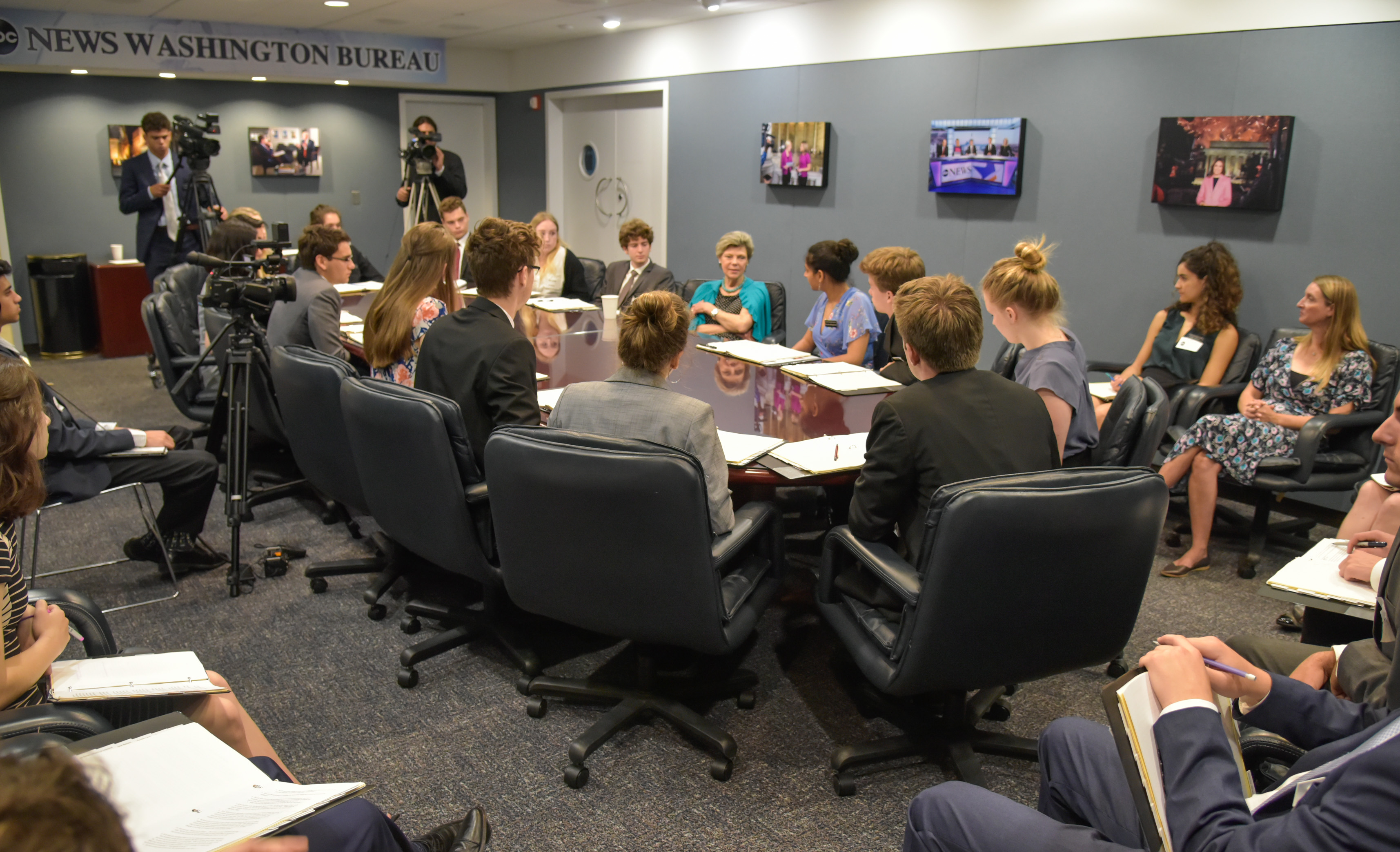
Today we had the amazing opportunity to speak with Cokie Roberts, a journalist, author, and news commentator, currently at ABC, as well as a grandmother, and extremely confident and intelligent woman. I was really excited to interview her from the second we started researching because of her extensive career. She is such a important public figure and she is in the public eye on a regular basis. This made me curious about the most difficult thing that comes with being in her position.

One of the biggest things I took away from our interview was her response to this question. She said a difficult part of being a public figure is the constant judgment of everything she does: her opinions, what she looks like, and even her age. When asking the question, I related it to my interest in acting as well as my plan to make it my career, and I loved her answer. She was positive and encouraging, and said that it was a great idea. Not only that, but she stated that I could use my art to help spread my views and make a difference. This stuck out to me because I never really thought of art to be a way to spread awareness of societal problems, and I found this extremely eye-opening.

The empowerment of women has been a strong theme throughout this whole trip, especially because of the current political climate. Cokie spoke about the strength of the “Founding Mothers,” which she discovered while doing research for her book. She addressed the issue that history often doesn’t account for half the population, which is really disheartening. Cokie told us about the importance of her female friendships and her relationship with her mother and how the women in her life, including the nuns of her early education, have been foundational in her success and well-being.


Priyanka Bharghavan

After our break from interviews in the mountains, I was ready to come back and excited to meet Cokie Roberts. Back in DC, I was nervous to conduct this interview in the ABC headquarters, but so excited to meet such an acclaimed public figure and hear what she had to say. After decades of work in journalism, Roberts is not short on experience. She has worked as a reporter and analyst for NPR and ABC, and now holds the title political commentator, meaning she can voice her thoughts about political events.

One of the reasons that I was so excited for this particular interview was because of her profession. Historically, the press and media has had a negative reputation which has rapidly worsened in the recent years. Roberts was able to convey the extent of this issue, and explain that the difficult relationship between the press and the people has to be continuously addressed, as the “fourth branch of government” the press plays such a vital role in politics and government. It is a check against the other branches and is protected by the Constitution. In her work Roberts remains nonpartisan and maintains her role as a non-biased informer of the people.

I also really like what Cokie Roberts said about the founding mothers which was the title of her book. She talked about how the women of that era were so politically involved, and told us stories about the humorous and sometimes ironic comments they made about what their husbands were doing. Their letters shed light on the other half of the population that history does not recognize. The wives did not see their husbands as the bronze statues that are in the halls of the capitol building, but as the real human being that suffer from the excess and frailties to which everyone is subject.

Roberts had such a great sense of humor and answered our questions happily, smiling, and often with a well placed anecdote or joke. She was a clear public speaker and so interesting to hear. What struck me most was the clarity of her principles. She said that she taught her grandchildren the golden rule, and when we asked her about what the most important family values are, she simply said respect. She said that it didn’t matter what position or motivation you have (religious, humanistic, etc), but you have to respect people and try to be kind to all people. While this seems so obvious, respect for everyone is clearly lacking in the public sphere, especially between the political parties. This theme of respect is something many of our interviews have stirred, and something very important, both in D.C. and back home.


Kaili Sullens

Today we interviewed journalist and author Cokie Roberts. Roberts is a very intelligent and motivated woman, who is highly articulate and kind. She is extremely sharp and has very insightful opinions and deep understanding of diverse topics. However, Roberts was particularly passionate about the new generations to come, and how young people can make a huge difference despite their age. She shared that she has five grandchildren, and watching them grow up and interact gives her hope due to the candid ways they talk and view the world. No one is born homophobic, racist, or sexist, and this truly is evident when speaking with kids. The topic of young people making change has been brought up and explored in depth by many people we’ve interviewed, which has been really inspiring.

“You can’t leave out half the population.” Cokie Roberts emphasized this point when speaking on the issue of women’s rights. As several people we interviewed have stated: women’s rights are human rights. I believe all humans should be concerned about human rights because the only thing everyone on this earth shares is our humanity. Hearing Cokie talk about women’s influence in politics and how underrepresented we are has truly opened my eyes to the unequal opportunities women face, particularly in high positions. It is a very positive thing for me to interact with so many strong women in places of power, and it gives me hope there will be more like them in the future. We need more women in leadership because the more diversity there is, the more new ideas are sure to present themselves, which will ultimately benefit everyone, and hopefully people’s biases will shift toward a smarter and more inclusive world.

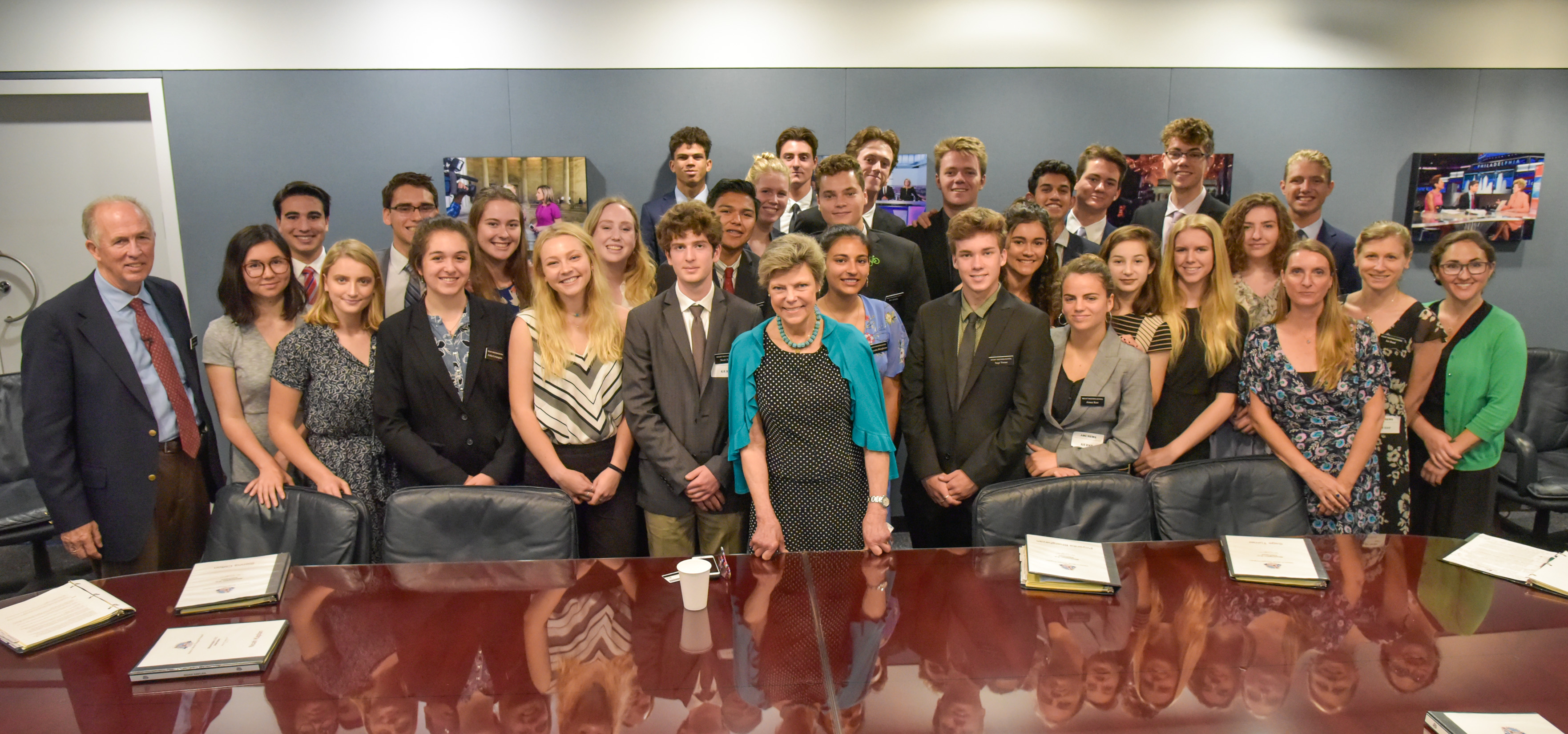
Mount Madonna students with Cokie Roberts


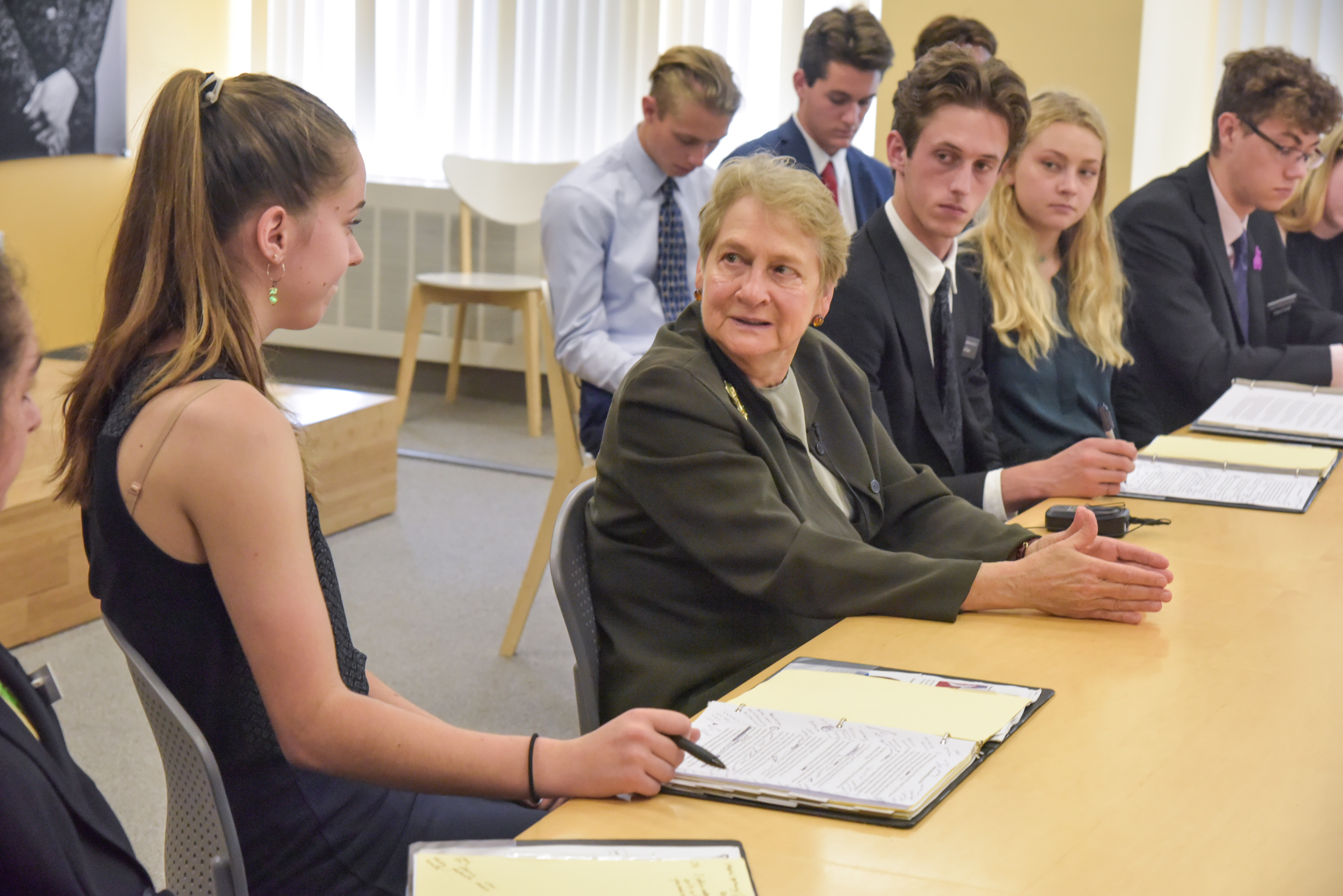
Interview with Alyse Nelson, President and CEO of Vital Voices Global Partnership

Carl Ward

Coming into the interview with Alyse Nelson, I was expecting a solid interview with some interesting insights into life and politics, and a fair amount of parallels with the other interviews we’ve done on this trip. What we ended up with was one of the most interesting and quotable interviews of them all, and a ton of fresh ideas that gave me a newfound energy for the last couple days of this trip.

I have a lot written down, so I’ll whittle it down to the things she said that impacted me the most. She’s the president and CEO (and cofounder) of Vital Voices, an organization that helps empower women worldwide and give them a platform to speak out about what they believe in. Of course, this is an extremely important and noble cause, but what I’ve found most interesting from the interviews we’ve done is the life advice we’ve gotten for the future and advice in running a business and/or managing people. One quote from her that really struck me was this: “You can’t be a leader unless you bring solutions.” It sounds obvious, but I started thinking back to all the times I’ve forced myself into some sort of position of leadership, and I realized how often I do it just so I can be a leader, not because I’m really trying to fix any specific thing. Too often I do it for myself, and not for the people I’m working with. That relates to another thing she said: “You have to support a team of people to create change.” Again, makes sense, but I don’t do that nearly enough. I’m hoping that from now on, when I find myself in a leadership position, I’ll remember this interview.

A lasting idea she gave us was that we all need to find our driving force, a.k.a. the goal that you keep in mind that pushes you to work hard. Once you find your driving force, you need to stick to it in all the work you do. I thought about my driving force for this trip. It hasn’t been easy, with all the work we’ve put in, and the sleepless nights that led to long days that we’ve spent trying to stay awake, but it’s all been so we can open our minds to not just the world of politics, but to the advice of people who have led (and continue to lead) successful, meaningful lives. Like our trip to South Africa, I came to DC not knowing what I would learn from the experience, and I’m leaving with more knowledge in so many different areas and aspects of life. That’s what pushed me through all the work, and it’s been worth it.


Mara Peruzzi

Today I was very excited because I would finally reach the interview that I was looking forward to most of all. Alyse Nelson’s energy, passion, and intelligence poured out into the room as she spoke to us. I found her to be truly inspiring because she is very passionate about her job, and she is both easy to talk to and extremely intelligent and driven. Her energy encompassed all the attributes of a powerful leader.

A couple months before this trip to DC, I, along with a few other girls in my class, read Alyse Nelson’s book, Vital Voices. What truly inspired me about her book was how she was able to tie in common themes of many diverse women around the world by connecting them to the core attributes of a powerful leader. One of the main commonalities between all the women represented in her book was the immense presence of a personal driving force. Nelson heavily emphasized that a driving force, which is the “fire in the belly” found in all of us, is crucial for everyone to discover. She said that this passion can be ignited by either good or bad experiences, and then by channeling the experience into a positive power, and a sense of centered purpose is formed.

She then explained how her own driving force was “to seek the power to empower others” by acting as a “voice for the voiceless,” especially for women in countries where their rights are limited, and they are struggling to break out and excel. The passion and energy Nelson held in her responses to our questions truly radiated with inspiration, and showed how motivated she is by her driving force.

Another impactful piece of advice that struck me was her statement, “You don’t make sacrifices; you make choices.” I found this to be interesting because it often seems as if people blame their situation or decision on a “sacrifice” they made, while in reality it was actually a choice they made. This is because, although making a decision or change often means giving up something, calling it a “sacrifice” seems to promote self-victimization, as it transforms into a setback rather than a progression. Nelson also talked about how that by giving power to the doubt you carry, you begin to doubt your power. This power of intention branches out with the attributes that should motivate us to get out of bed every day: curiosity, passion, and challenge.


Ruby Bracher

We heard Alyse Nelson’s name fairly frequently throughout the trip—not only because she was one of our interviewees, but because she was the reason we had landed many of our interviews in the first place. As we entered the elevator we knew this interview needed to be a good one because Alyse has made so much of this trip possible for us and classes that came before.

She met us with handshakes and animated exaltations. Her passion for her job, despite having run Vital Voices for so long, was evident and sparked hope in my heart. Often, kids like me are told by our well-meaning parents that our lives will work out “as long as you are happy.” As a generally jaded teen, I worry about finding a career that I love, or that I will follow the things I love, and end up poor and miserable regardless.

Alyse shared with us that she had found her passion for amplifying the voices of other women after hearing Hillary Clinton speak at a conference in Beijing when she was in her early twenties. For the past two decades, she has been working with women to challenge gender-based injustices across the world, and still manages be excited about it when talking to us.

At the end of our time with Alyse, she quoted French novelist Honore de Balzac, saying, “When you doubt your power, you give power to your doubt.” Seeing Alyse speak with such unabashed enthusiasm about her work was a much-needed reminder that you can pursue your passions, find fulfillment, and make a meaningful impact on the world around you through hard work and perseverance.

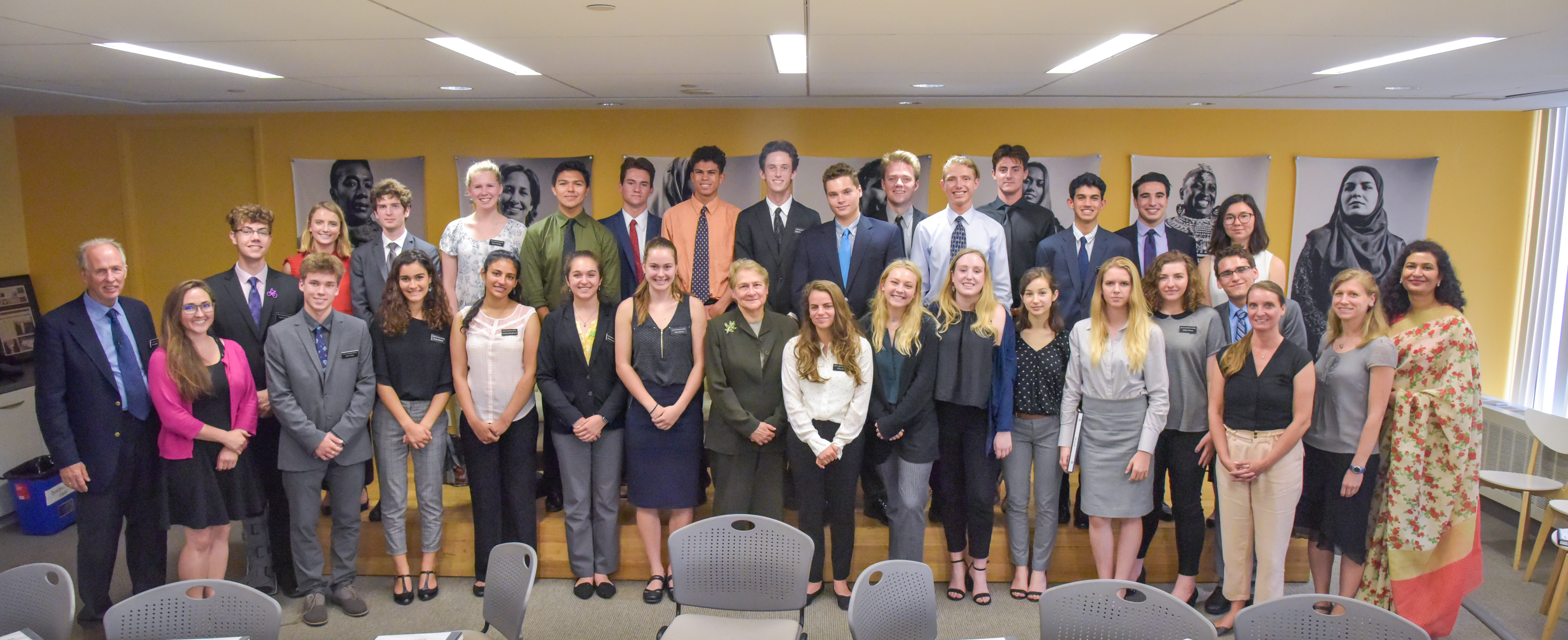
Mount Madonna students with Alyse Nelson