Lending Open Ears and Hearts

Jacob Sirk-Traugh

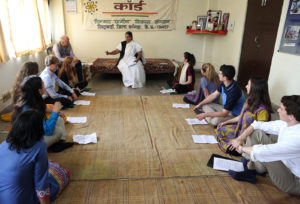
Today we interviewed Shri Narender Paul, Chief Operating Officer of the Chinmaya Organization for Rural Development (CORD). CORD is an organization focused on uplifting communities in rural India in a variety of ways. One of their main strategies is to bring autonomy to rural India by teaching those in poverty employable or entrepreneurial skills. By doing this, rural communities become self reliant and are lifted out of poverty. Additionally, CORD helps form large women’s groups within their villages which can help with education and literacy, domestic violence, supporting children, offering microloans, helping with disabilities, and much more. One thing that struck me during the interview was when he told us how pursuing a career based in helping others allowed him to find purpose and to stop being a “confused teenager.” Additionally, he was talking about how he has realized that because humans are so interdependent on each other, you can’t just take from society, you have to give something back. This led to my first major takeaway from this interview which was that helping others is always beneficial to oneself and that it is a spiritual necessity to give back. 
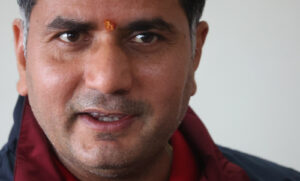
Because he joined CORD as an occupational therapist, Shri Narender Paul is passionate about disability issues. He believes that solving these issues is about more than just the solution, but about the people involved. The most important thing, in his opinion, is making sure that the disabled are not viewed as a burden or charity cases, but active members of their economy and society. This really struck me because disability issues are so often thought about from the perspective that these people are a burden to be dealt with at the cost of some resources. In reality, it is not only morally correct, but also economically prudent to support disabled people to participate wholly in society. This interview really made me think about the power of anti-disability stigmas. 

CORD utilizes many unique strategies in the development of rural India. Because India is such a diverse place, cultural pushback or misunderstandings can happen. When asked about this, Sri Narender Paul told us that they avoid this issue by educating and providing training to people native to the community they are trying to help. This helps overcome many language and cultural barriers. Additionally, because the people suffering from a specific issue are the most involved in solving that issue, there isn’t a lack of understanding of what the problem actually is and unwanted solutions are not imposed on communities. Understanding these strategies has helped me understand why CORD is such a widespread and successful organization, as well as proving to me that to attain long term solutions, you must directly include the community members as the agents of change.
Zoey Ocampo-Sobkoviak

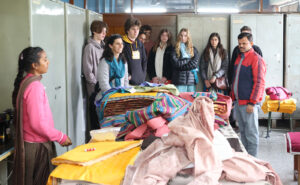
Before our interview with Shri Narender Paul, the COO of the Chinmaya Organization for Rural Development (CORD), we took a tour of the facilities that are used for education, different forms of therapy for local people with disabilities, and the facilitation of artisanship. We also watched a video that detailed the mission of CORD: to help rural communities in India and Southeast Asia empower themselves through education, political action, emotional support, and entrepreneurship. The organization’s main site is located amidst the snaking roads of the Himalayan Foothills in Himachal Pradesh. CORD was founded by Dr. Kshama Metre in 2003, inspired by an earlier program developed by Swami Chinmayananda in 1985.

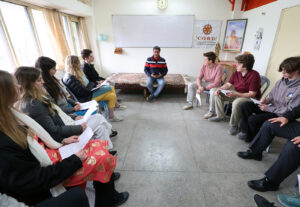
Though it was a bit difficult to find information on Dr. Paul in the research and question formulation process before coming into the interview, many of our questions landed well and led to thorough and insightful answers. During this research and brainstorming stage, I found information on his involvement in fighting against ableism in India through therapeutic services and other forms of advocacy. Ableism is a large issue in both India and the United States and doesn’t seem to get the media attention as other systems of oppression. There are religious and cultural differences in the way this system is propagated between our two countries, however, the lack of visibility for people with disabilities, violence and hatred toward them, and a general attitude of burden or pity are common to both places.
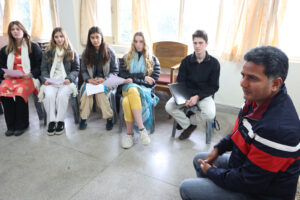
I asked Dr. Paul what he finds to be the most significant challenges to changing people’s perceptions about disability rights in India. In that moment, I saw his body language shift, as this was an issue he was clearly passionate about. He shared with us that there are significant challenges of religious and social stigma in rural communities, but the real problem lies within the educated, urban population of India that generally still holds unconscious biases against people with disabilities. This is because those biases are much harder to combat. CORD works to provide resources for physically and intellectually disabled people and their families (especially from poor, rural backgrounds) in a way that involves them in the decision making processes. At one point in his explanation, Dr. Paul asked, “why should people with disabilities be seen as the objects of pity and charity, instead of being seen as valuable contributors to society?” In alignment with this inquiry, he shared that CORD offers spaces for people with different disabilities to create their own enterprises through the arts and seek support from others with similar experiences. After he asked that question, I leaned forward more in my chair, because I could see that this problem really mattered to him, and not because he operated from a place of pity or ego, but because he had a great deal of empathy and believed that everyone has value and deserves to live their lives with purpose and dignity.
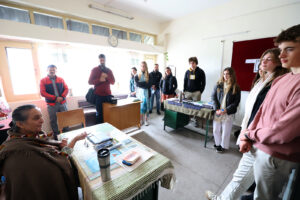
He also mentioned that for a long time the option to count yourself as a person with disabilities in the census was non-existent in India. However, CORD and other organizations have fought to represent a variety of disabled people in the Indian census, so that there is a wider availability of data about disabilities which creates a ripple effect of representation and the dismantling of outdated narratives.

Even in our society in the United States, where social justice and disability rights are garnering more attention, many of us that don’t have a disability still struggle to understand that our good-intentions and misplaced pity are not enough to change our ableist actions and thoughts. Language and information is powerful, therefore, we should not erase the struggle that disabled people face in spaces that are created with able-bodied people in mind by saying that they are “differently abled” or ignore the importance of collecting data about the diversity of disabilities and the amount of people that have them. 

To return to the reflections from our interview with MMS and Sri Ram Ashram alumna Soma Sharan, developing a more equitable future for everyone is not achieved through ego-driven, patronizing forms of philanthropy (economic or otherwise), it is achieved by lending our open ears and hearts to those who are impacted by the trauma of systemic oppression in order to find solutions that actually benefit us all. 
Happiness

By Mount Madonna School alumni Emma Petersen and Courtney Bess

Emma Petersen

Emma in 2011

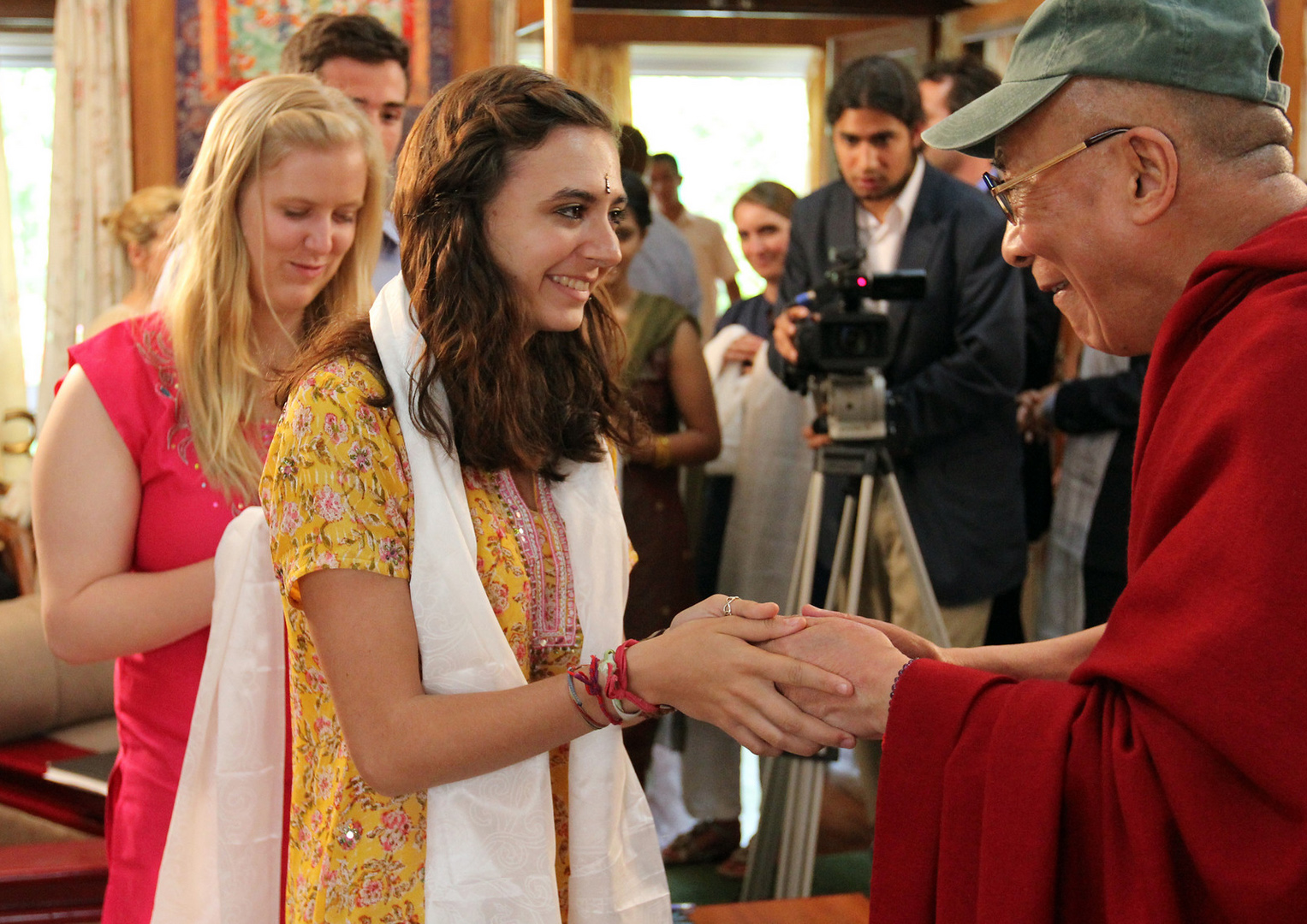
Flashback to April 2011, I had never been out of the United States and I was preparing for a trip I knew could change my life but still was not sure how I was going to absorb the experience. I didn’t dive right in. I stayed to myself and my friends for the first few days of the trip. I stuck to what I knew. But then, when we started going to schools, hearing about how students in this country learned, and were given the chance to speak with them about it, I started making friends and connections I never thought I could. I was making friendships with people that grew up completely differently than I had, in school and home life, yet we still had a lot in common.

It took me until my second year of college to fully understand the opportunity I was given by Sadanand and Mount Madonna School. I started taking classes that I was able to relate my trip to, things I had heard and the things that had changed me. I remember specifically talking to His Holiness, the Dalai Lama, I asked him, “What to you is happiness?” I remember, I was a sophomore in college at the time, I was dealing with some personal anguish about what major I wanted, and if I wanted to change from a psychology to a teaching major. I was struggling because I was afraid to disappoint my parents. When I called them to tell them what I was thinking they were overjoyed, and my mother told me she knew that was the path I was always meant to go down, and that she just wanted me to do what made me happy. I thought back to the Dalai Lama interview and what he said, “You know when you pet a dog and he wags his tail, that is happiness.” How can someone so wise give us such a simple, modest answer, I had thought at the time when he answered it, but hearing my mom say those words to me, it was that simple. Why trouble myself doing something I did not like? I should be wagging my tail because I am being fed with the knowledge of how to grow young minds.

Fast forward to April 2017, I am now preparing for the journey home. I traveled back to India with the Senior Class of 2017 and a fellow alumni, Courtney Bess. I had always dreamed of coming back, older and able to understand the experience more. I told myself the day I got on that bus leaving the Sri Ram Ashram in 2011, while Kiran held my hand all the way to the gate, I would be coming back again. I never could have imagined it would be like this, a chaperone to a class I greatly respected.

This trip has deepened my senses for my emotion, everything from the interviews to the connections I have made with the children we have met along the way. I found myself in the interviews truly absorbing what the people were saying, not just thinking I need to take notes in case I am asked to write a blog post, but truly understanding and getting goosebumps because I was able to relate to them. Rinchen Khando spoke about compassion and how it overflows with students that are excited to learn. I feel that every day with my students. They are so eager to learn new things and are appreciative when I teach them something new. It is refreshing. Dr. Metre spoke about allowing differences in the villages and how their goal is not to make all the villages the same, but to keep their traditions and help support the women be able to stand on their own financially. I was able to relate to that because I teach a class that is predominantly Hispanic, and even though I am teaching them English, I strongly encourage their families to continue speaking Spanish to them. It is important for the children to keep their traditions at home and be able to speak freely about them at school and know they are supported. Both Rinchen Khando and Dr. Metre spoke to me and made me feel more proud than I normally do about the work I am doing.

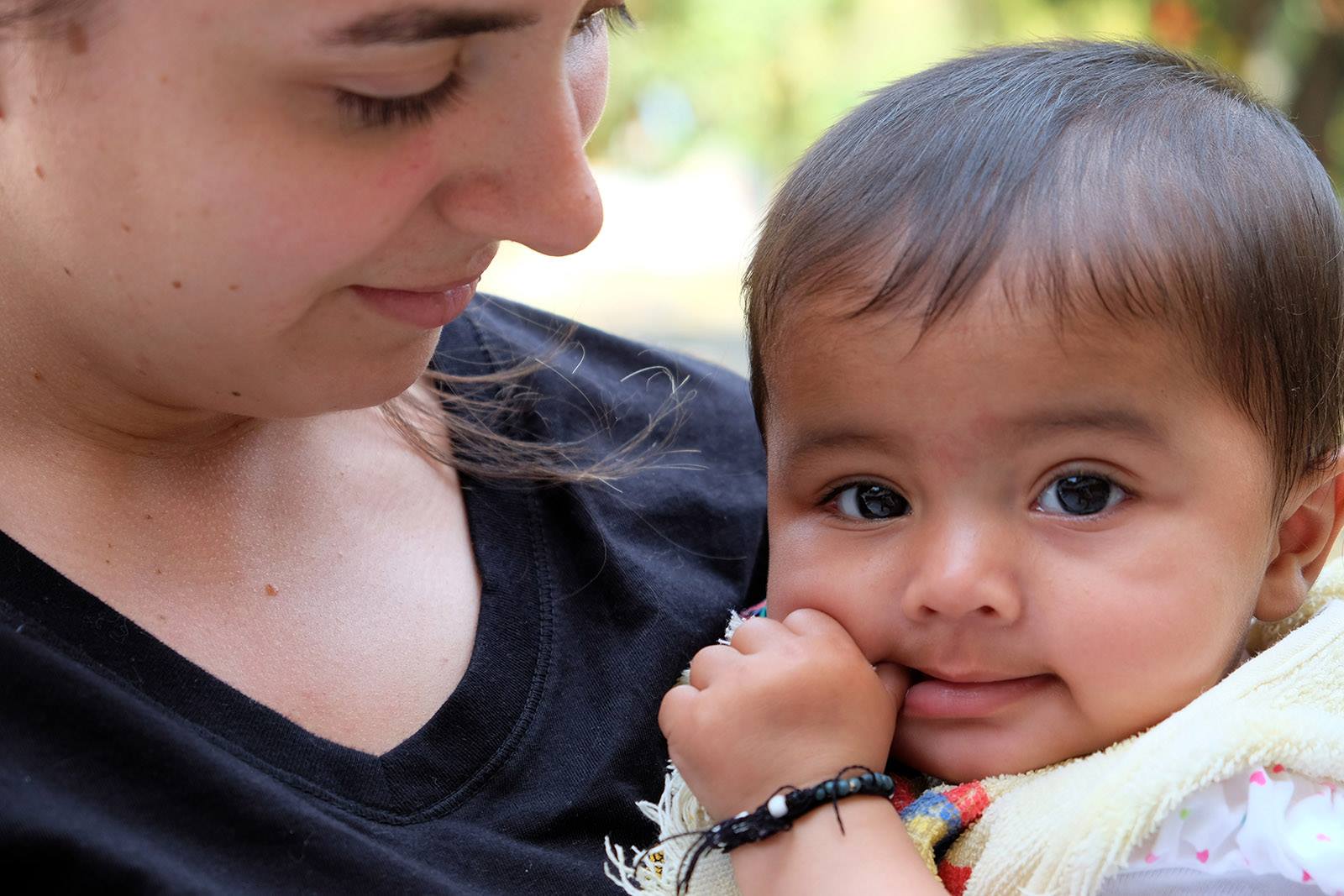
Lastly, driving into the gates of the ashram once again, I immediately began crying, it felt as though I was home. It had been six years since I had last been there. I didn’t imagine that the children I had bonded with before would remember me, specifically Kiran, 9 at the time and now 15, and Jhanvi, 6 months at the time and now 5. As we unloaded the buses, Kiran greeted me, she shook my hand and introduced herself to me, I told her we had met before 6 years ago. She scurried off to her room and when she reappeared she had the picture Devin captured of us saying goodbye on that day in 2011. She remembered me! Jhanvi on the other hand, I knew wouldn’t remember me, but it was like she was drawn to me. We continued our relationship and it was as if I never left. As we said our goodbyes and I loaded back into the bus, I reflected back on how this trip is not only a continuation from my last trip, but has increased my appreciation for this bright, colorful, energetic, inviting country. India has given me a second home, I knew I was meant to come back and visit, and I know now that it is forever a place I will return. It has given me memories that I will never forget and ones I wish to expand upon in the near future. Namaste.


Courtney Bess

Khushi…the Hindi word for happiness. While I expected this learning journey to be influential and expose me to unique opportunities, I did not anticipate that it would result in a personal redefinition of the word happiness.

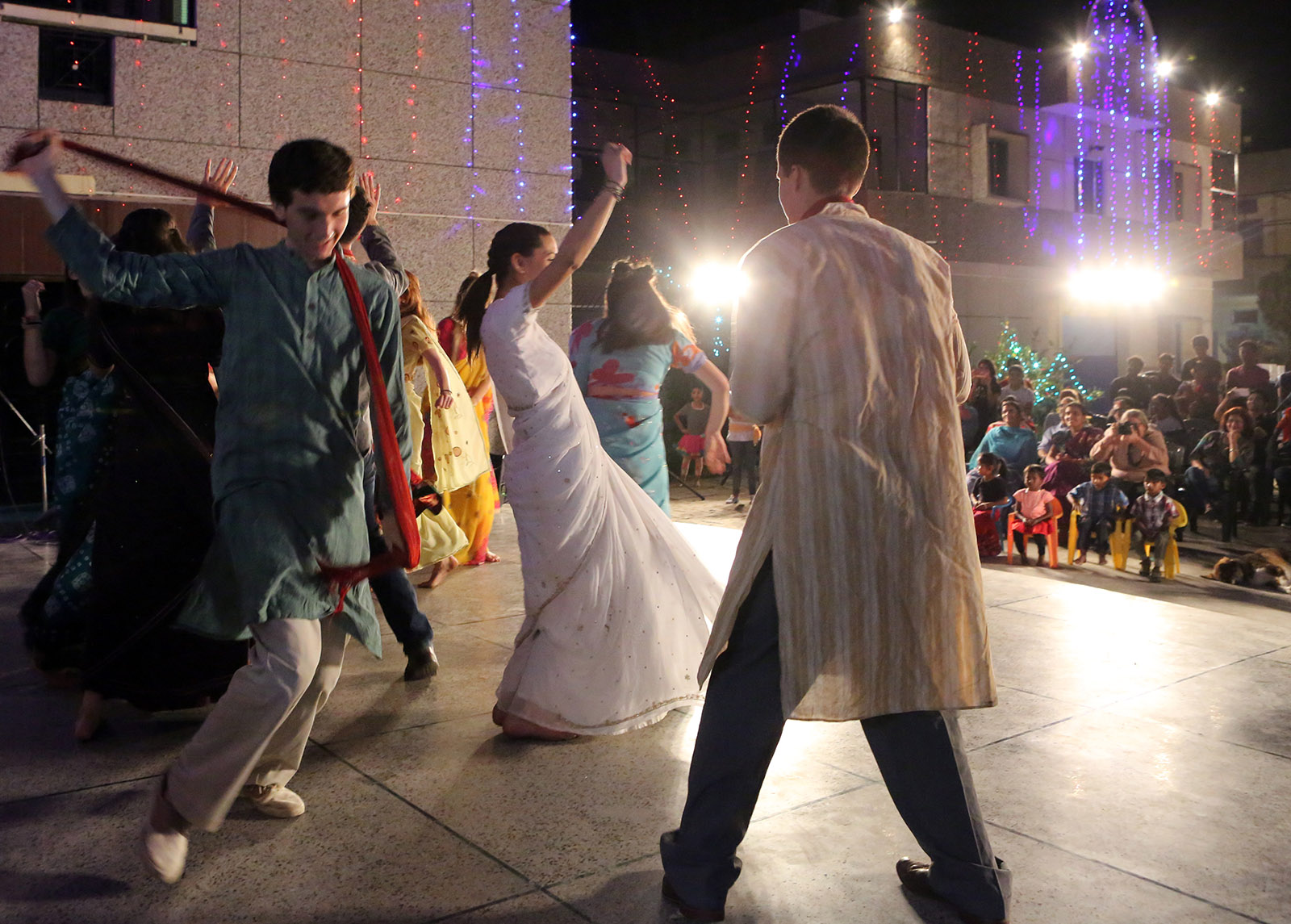
Sri Ram Dance Party

The night I watched the series of performances put on by the kids at the Sri Ram Ashram, I felt tears welling in my eyes. It wasn’t the typical reaction one might expect from someone watching an upbeat dance carried out by adorable, smiling faces. My emotions were stirred by what was physically happening on stage, but they were intensified even more by the ease with which the kids seemed to exude authentic happiness. In this pivotal moment, I felt a mixture of envy, admiration, and wonderment.

This expression of genuine happiness proved to be a common thread amongst the many individuals and groups of people with whom I interacted during my time in India. Since finding myself consistently surrounded by such sincere contentment, I have been making a conscious effort to examine the similarities across these groups in an attempt to discern a formula for happiness that I can carry with me for the rest of my life.

At Pardada Pardadi Educational Society, the students demonstrated a passion and appreciation for education that was absolutely inspiring. These students all come from homes with an income that places them below the poverty line. They have reasonable hope that a quality education will lead to a better life for them and their families. I could see that this opportunity to receive an education brought them all such joy, as they eagerly told us about their studies and showed us around their school with energetic grins and radiant pride.

The Sri Ram Ashram is a place where children who are not fortunate enough to have come from loving homes are given the chance to be a part of a safe and loving family. At the ashram, children may not have a profusion of material items, but they are allowed an opportunity for a better life. They are showered with more love and support than can be put into words. In spite of the adverse circumstances in which these children were born, they are now thriving as part of one big devoted family.

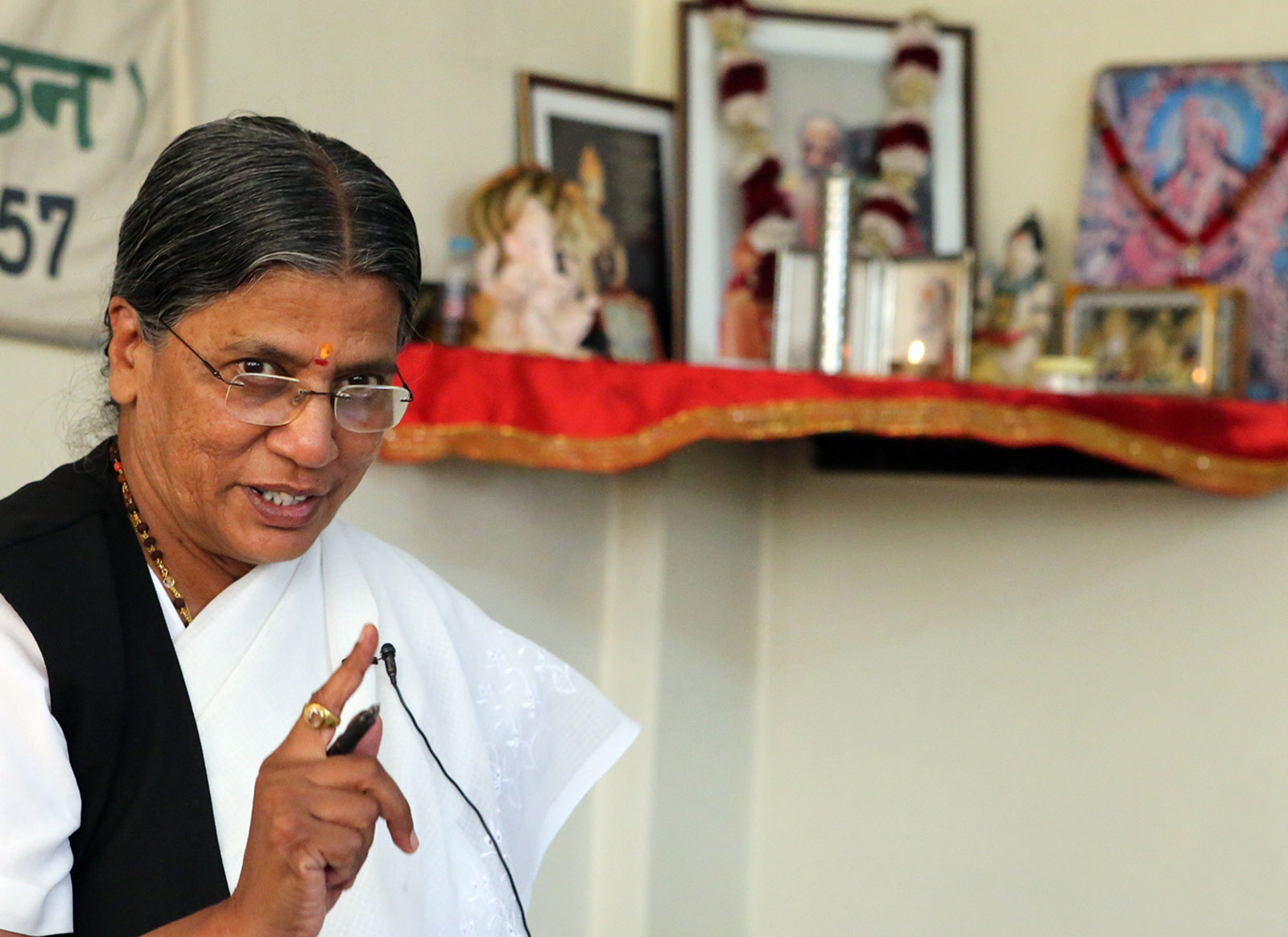
Dr. Kshama Metre

When we spoke to Dr. Metre at CORD (Chinmaya Organisation for Rural Development) another source of happiness was brought to my attention. At CORD, women are given the tools and education necessary to allow them to minimize their over-dependency on their husbands. This functions to build the self-esteem and confidence in women in hundreds of surrounding villages. Those who have been helped in this way by CORD programs are now living freer and happier lives than they had been previously.
Genuine happiness is something that has always been tough for me to find, despite my relatively privileged upbringing. It was something that was palpable amongst the inspiring people I have engaged with over the past two weeks here in India—people who are not nearly as fortunate in regards to their life circumstances. In what I witnessed at Pardada Pardadi, Sri Ram Ashram, and CORD, I recognized that material wealth is not the sole measurement of one’s happiness. I realized that some of the key ingredients to a life of happiness are education, love, support, and opportunity.

Before I make it sound like my life lacks education, love, support, and opportunity, I want to clearly state that I have all of those things. The difference is that I have yet to understand how to use these tools to build myself a life of happiness. Dr. Metre shared with us a story that referenced a “mind bath.” Essentially, a mind bath is the creation of mental silence to ignite mindfulness and obtain clarity in one’s thinking. Using this idea, I have decided that I am in need of a mind bath. I need to combine the resources with which I’ve been blessed with my redefinition of happiness. If I do this, I can construct a life filled with the kind of joy I saw in the eyes, smiles, and souls of the kids at Sri Ram Ashram as they performed for us that night.

Gallery: Chinmaya Organisation for Rural Development

Photos by Shmuel Thaler

Know Yourself

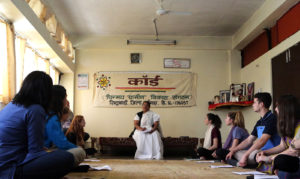
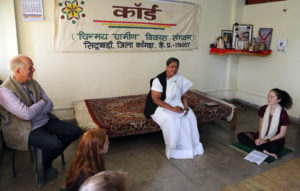
Interview with Dr. Kshama Metre of the Chinmaya Organisation for Rural Development (CORD)

View the video of the interview here.

Aki’o Nanamura

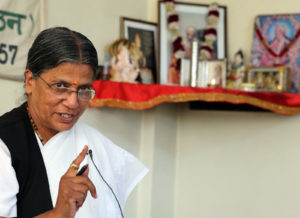
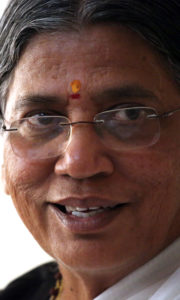
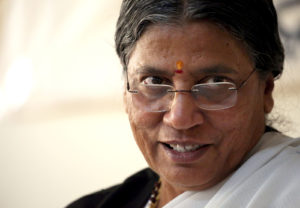
Sometimes simplicity can be the most enlightening thing a person can offer. One might expect pieces of advice that are the most detailed, lengthy, and well-explained to be the greatest in terms of their impact and effectiveness, but this is not always the case. Dr. Kshama Metre made this perfectly clear. She has the mind of an intellectual and one might assume that it is constantly whirling with strategies for achieving equality, and ethical solutions for problems facing Indian women. While this may be the case, the way she externally conveys her thoughts is almost the exact opposite. Dr. Metre communicates many philosophical ideas in a stunningly simple and understandable manner. For example, when asked about the “journey within” and its importance she relayed a story about a little girl at an ashram who told her about “mind baths,” little five-minute periods in one’s day that you use to check in with yourself and see how you’re doing. She didn’t call them “introspective expeditions,” or “existential explorations,” just “mind baths.” Nothing more, nothing less. Normally when we ask for advice from the inspiring people we interview, we often get a wholesomely stirring response that’s about a minute long. When we asked Dr. Kshama Metre for advice she shared only two words but they spoke volumes about her profound understanding of the human spirit and its needs. Those two words were, “Know yourself.” Simple.


Izzy Thomas

The first question was asked, and Dr. Kshama Metre took a long time to think. Her mind swirled with ideas, and what came out was a concise, well-worded answer. Each question was answered with a humble and short reply after only a second of gathering her thoughts. I was a little surprised at how simple and confident she was in her responses, considering the complex ideas she was explaining. When asked what true equality meant to her, she answered simply, “Equality is not being greedy.” She acknowledged the dimensions of the term, but emphasized the three-word response. Another three-word response was about love; “love is expansive.” Her ability to describe these words, which have countless complexities, with such simplicity made her answers genuine and sincere. I haven’t met many people with the ability to answer our questions so thoughtfully yet concisely. Because of this, I felt drawn into everything she was saying. Dr. Metre has achieved extraordinary things in her life, and her humble demeanor was inspiring. To finish the interview, she gave us some advice for our lives going forward, another short answer that I know I will carry with me; “Know yourself. Once you know yourself, you will know everyone else.” In most interviews, the answer to the advice questions draws a long answer, but this was her entire response. It was simple, confident, and humble, perfectly reflecting her personality.


Caroline Smith

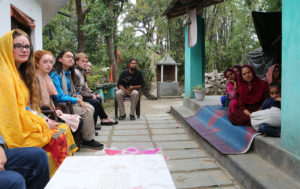
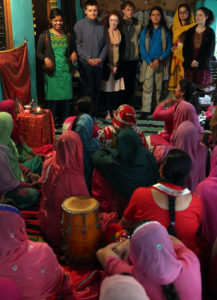
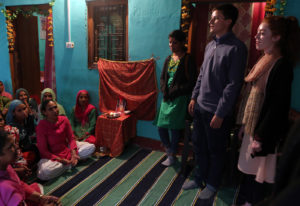
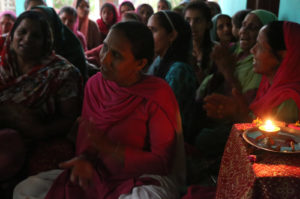
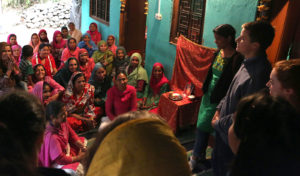
After our inspiring interview with Dr. Metre, we split into two groups and went into the villages to see some of the self-help groups we learned about at CORD (Chinmaya Organisation for Rural Development). Once we arrived in the village, we walked toward a group of about twenty women. They arranged a line of chairs for us and asked each of us to introduce ourselves, which we gladly did. We learned a lot about how the group functions, and how they help the women involved. Each woman pays a set amount of rupees to the group monthly. If someone gets sick or needs money for another reason, they can take a loan out from the group. This is helpful as it allows the women to have some level of economic independence from their husbands.

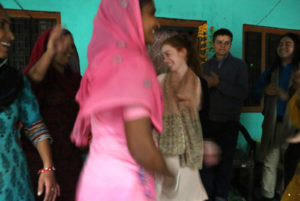
We were all surprised when they wanted us to sing them something. With half of our class, including our ukulele player, in another village, we weren’t sure how it was going to go. We ended up surprising ourselves by sounding pretty good. In response to our song, the group sang their own. Some of the women stood up and started dancing to the song as we clapped along. They took Izzy, Savannah and me, by the hand, put us in a circle and asked us to dance. We tried our best to do the dance moves they had been doing moments earlier, but their laughs and chuckles told us we weren’t quite doing them right.

Although I won’t remember that trip to the village for our stellar dance moves, I’m never going to forget how much fun we had and how connected I felt to the women.

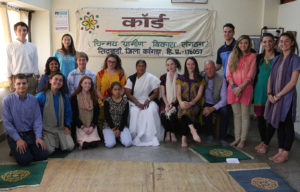
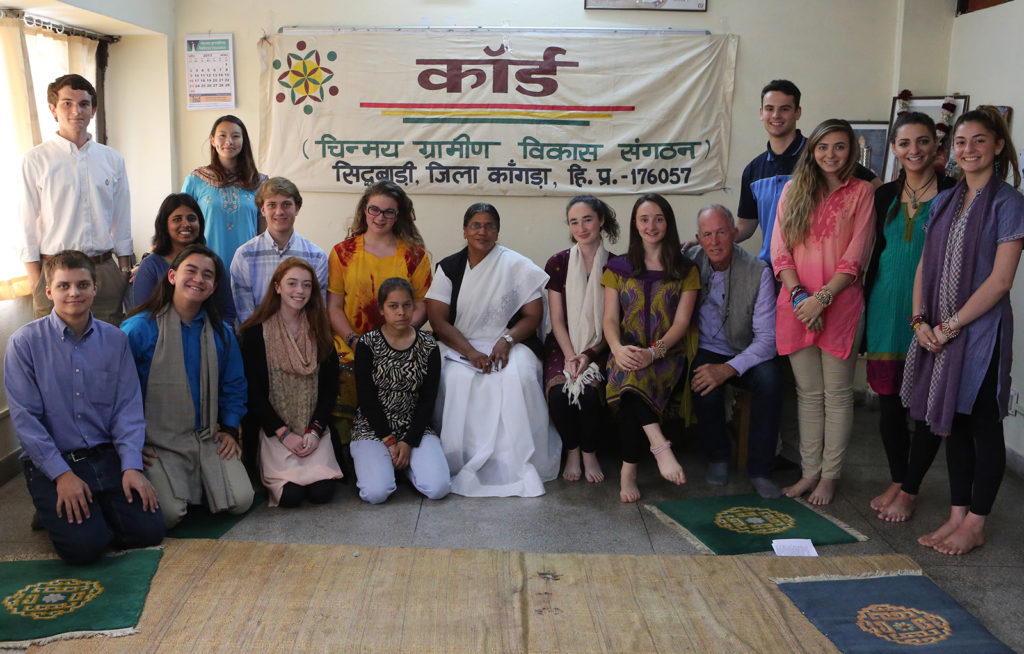
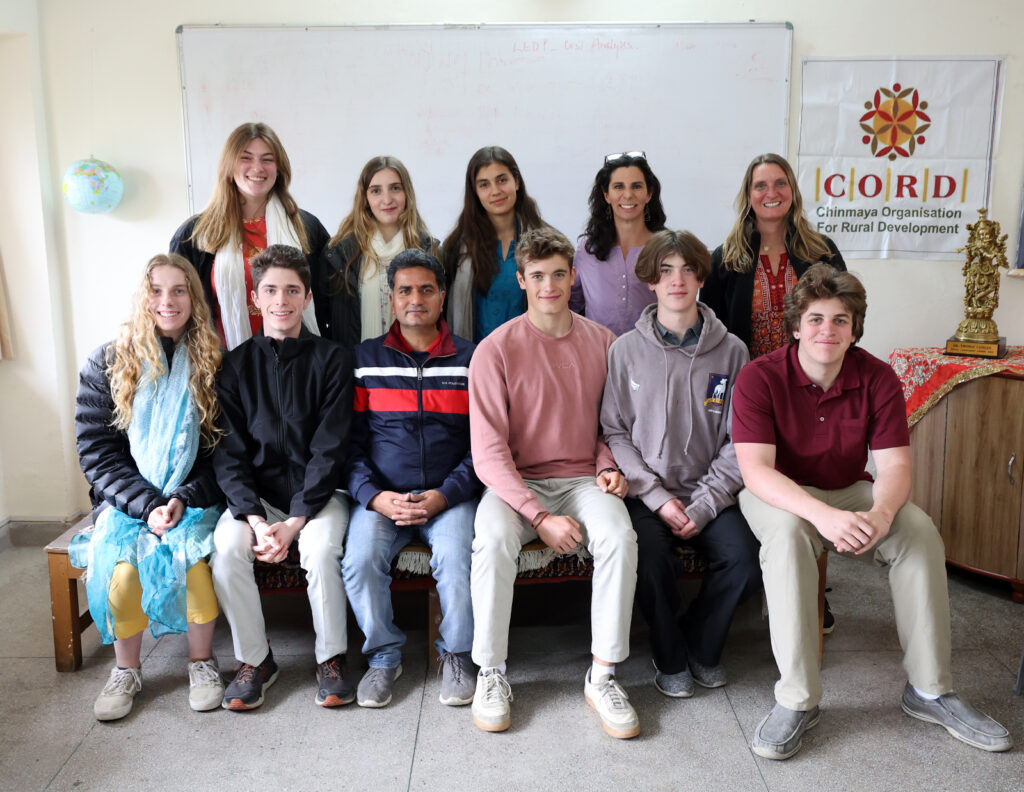
Mount Madonna School students with Dr. Kshama Metre