Keeping Inner Peace Alive

Interview with Rinchen Khando and Tibetan Nuns Project


Sky Weir

In the 1960s, Rinchen Khando became involved in the Tibetan Women’s Association (TWA), which her sister founded. The TWA was established to promote women’s rights and raise awareness about the Chinese occupation of Tibet. Rinchen Khando became the president of the TWA in 1987 and held the position for over two decades. Under Rinchen Khando’s leadership, the TWA has significantly promoted women’s education and empowerment in Tibet. The organization has established schools for girls in remote areas of Tibet, provided scholarships for women to pursue higher education, and advocated for women’s rights internationally. In 2006, Rinchen Khando was awarded the Padma Shri, one of India’s highest civilian honors, in recognition of her contributions to women’s education and empowerment in Tibet. She has also received numerous other awards and accolades for her work, including the International Women of Courage Award from the US State Department in 2008.

As we interviewed Rinchen Khando, we asked questions that enabled us to get answers that we were genuinely interested in. One of my personal favorites was a question I helped create which asked, “In an interview with Venerable Thubten Chodron in 1992, you said ‘Trying to preserve our own happiness in a self-centered way actually makes us more fearful and unhappy’, what is the best way to teach young people to act for the common good when it doesn’t immediately benefit them?” This is an important question because it relates to the development of empathy, altruism, and a sense of social responsibility, which are crucial for creating a healthy and thriving society. She responded to this by bringing up “pure intention” which she believes we need to instill a sense of within our young. She said we shall do this without any benefit, or expecting something in return, then even if it doesn’t work out, we won’t be disappointed. Ultimately, teaching young people to act for the common good requires a multifaceted approach that focuses on empathy, social responsibility, and community building. She also brought up inner peace in her response which was a common theme in all of our conversations. This led into one of the questions I asked her, “How have your beliefs and values helped you navigate difficult circumstances, both politically and personally?” Her response was similar, with her main message being not to lose hope. Inner peace is also important, and something people are lacking nowadays is patience as well as perseverance, which are essential to navigating life, both the highs and the lows. Her words about inner peace really struck me as I believe it is an essential component of a healthy and fulfilling life. As a whole, inner peace refers to a state of calm, tranquility, and contentment that arises from within. When we are at peace with ourselves, we experience less stress, anxiety, and other negative emotions. We are better able to cope with life’s challenges, and we are less likely to get overwhelmed by them. This, in turn, improves our mental and physical health. Inner peace also helps us to develop better relationships with others. When we are calm and centered, we are more patient, understanding, and compassionate towards others. We are less likely to be reactive and more likely to respond in a thoughtful and empathetic way. This helps to build stronger connections with others and promotes a sense of unity and understanding. Ultimately, by cultivating inner peace, we can live more fulfilling and meaningful lives, and make a positive impact on the world around us. Overall, Rinchen Khando’s life and work are a testament to the power of education and the importance of fighting for human rights and equality. She is an inspiration to people all over the world, and her legacy will continue to inspire generations to come.
Cecily Kelly

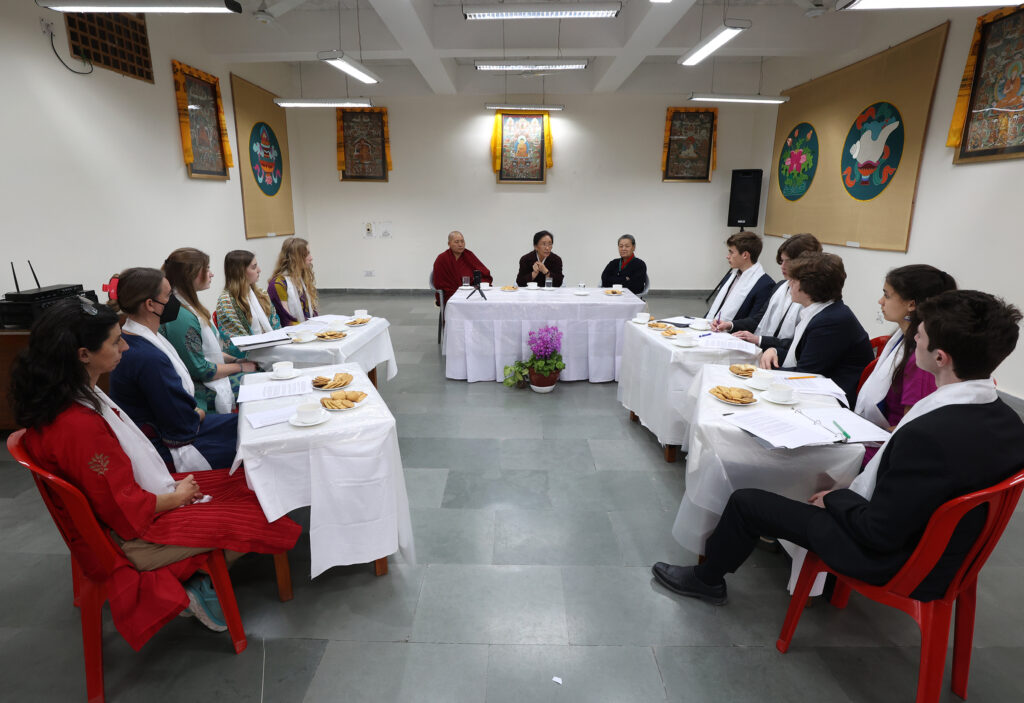
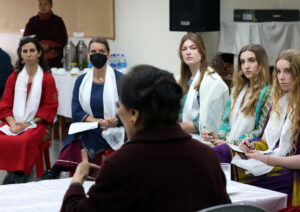
Today we drove to the Dolma Ling Nunnery to interview Rinchen Khando, the sister-in-law of His Holiness the Dalai Lama and the founding director and special advisor at the Tibetan Nuns Project. The Tibetan Nuns Project is a nonprofit organization that helps support Buddhist nuns study and advance their education while exiled in India. When we arrived, we were given a tour of the nunnery which included the kitchen, dining hall, sewing and work rooms, the temple, and then we were taken upstairs to the room where the interview would take place. The room was very simple, yet elegant; tables with tea and cookies had been set up, the walls were covered in art, and the windows looked out into the serene courtyard in the middle of the compound. The interview did not go exactly as expected, but Ms. Khando had a plethora of interesting and insightful things to say, and was a lovely host. One thing that I really enjoyed hearing her talk about was the way that Tibetan youth interact with their heritage and culture. I was expecting her to talk about the difficulties of getting younger generations to care about a place they had never lived before, but she surprised me when she said that young people are very interested in Tibetan culture and religion. She also said that because children are so interested in the culture and religion, the elders are being forced to be interested accordingly, and this is helping keep the language and culture alive.
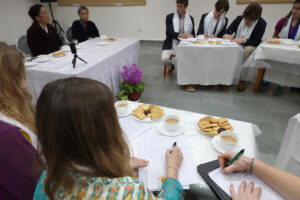
In the interview, Ms. Khando also spoke on the importance of women empowering each other, but she said something that I had not thought about before. She emphasized that empowerment has to be given genuinely, and has to be given willingly rather than forced. A lot of times we see empowerment being given to women forcefully, or when it is not necessarily wanted; instead it must only be given when its reception is enjoyed. Although I have heard this many times, my most important takeaway from this interview was that in order to be happy, we must be content. If we are always wanting more, such as money or cars, or a more “exciting” life, then we do not have the time to be happy. I think this takeaway is especially important living in the United States because there is such an emphasis on always needing more. The ideas of the “American Dream”, and the need to be “successful” are so prevalent in the United States, and they prevent so many people from ever being content. So many people waste away their lives wanting more than they have, rather than enjoying their life and what they do have. When we stop looking for things that we think will make us happier, we are able to truly be content, and find our true happiness.

Bella Cambell

Today we interviewed Rinchen Khando, the former director of the Tibetan Women’s Association. She was so well spoken and wise, and it was one of my favorite interviews out of all the Values trips. She had so much to say, and one thing that struck me was about empowerment. She talked about how empowerment has to be given genuinely and received happily. That also went along with something else she said about how if people are doing things for others, they have to do it out of pure intention, not for themselves. Throughout the interview she emphasized having inner peace, and the ways to keep it alive. One way was not only to earn for yourself, but to earn for others. To keep that inner peace alive, you have to give back to your community. 
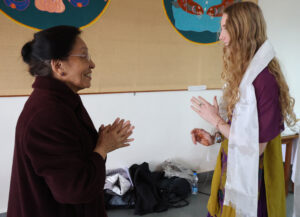
In a world full of distractions and competitions, we are always trying to have the best and be the best, but we don’t take the time to really look and appreciate what we have in the moment. Khando gave an example that we are always looking at our neighbors who have a fancy car and huge house, and we can never be content because we don’t have what they have. We tend to focus on what we don’t have rather than what we do, and when we do that, we then start to lose our inner peace because we aren’t content with what we have. We don’t do a lot for our hearts, we do it for our image. She joked about how people are discovering too much and inventing too much, but is it to help the greater population or is it to get fame and have their name on it?

I asked her if she had any advice for us on how to have a balance between having a successful career and achieving permanent happiness. She talked about letting your heart choose your career because nowadays people choose a career for the salary or the fame, not because it’s what they truly love doing. If you choose a career that will give you more money but it isn’t what you are passionate about, you will lose your inner peace because you won’t be happy. That spoke to me because I am choosing a career that doesn’t make a lot of money, but it’s my passion and I’ve been nervous that I am making the wrong decision because I won’t have a lot of money. She reassured me and reminded me that money isn’t happiness and if you are doing what you love it will reward you in a deeper way then money ever could. In the end she taught me to be content with what I have by living simply and to follow my heart and passion to keep my inner peace alive.
The Interconnection of Tibetan Culture and Buddhism

Rinchen Khando
Priyanka Bharghavan

Today we went to the Dolma Ling Nunnery to interview Rinchen Khando, the founding director of the Tibetan Nuns Project. The Tibetan Nuns Project was created to promote the education of the Buddhist nuns, as well as provide them with a home and community in which to study. Rinchen Khando’s work has been the driving force in creating the nunnery and I was excited to be able to interview her.

Upon entering the nunnery, we truly stepped into a different world. I was taken aback by the immense beauty of the gardens and the buildings, decorated with prayer flags, set against the magnificence of the snow-capped Himalayas. While touring the facility, we saw a whole new way of living. There are 240 nuns who live communally in the nunnery. The nuns all have different jobs, from cooking, to cleaning, to sewing, and work very hard to be completely self-sufficient. I loved walking through the retreat garden, where the nuns live in solitude for months at a time to better understand their consciousness. After the tour, we walked through hallways covered in flower pots to our room set up for the interview.

When Rinchen Khando entered the room, I was immediately calmed. She had the friendliest smile and spoke meticulously and thoughtfully. I was struck by her newest initiative, the creation of a center for laywomen to study Buddhist principles. She said that while the focus of the Tibetan Nuns Project has been to give the nuns opportunities to study Buddhism, it is imperative that all women learn the values that can positively shape future generations. I think it especially important in today’s climate that the principles Rinchen Khando seeks to promote—compassion, sincerity, and altruism—are integrated into everyday life. Through this process, we will be able to create real positive change.


Kaili Sullens

Today we interviewed Rinchen Khando. She walked into the room and I swear she brought with her such a lightness and positivity. We all knew she was special. Kindness and joy radiated off her as she answered our questions, along with intelligence she possessed. I was inspired by the work she has done, and is still doing, to help the nuns from Tibet.

The facility that we saw was inspiring and intricate; you could easily tell how much time and hard work went into it. Stone pathways weaved in between buildings, beautiful trees, and meadows. Each building contained different classrooms and work rooms. Nuns were hard at work in these rooms, sewing, cooking, and studying. Yet in this hard work they were still filled with joy and gratitude. It appeared as though they had truly found inner peace.

Our interview with Rinchen Khando has been my favorite interview to date because of the nature of her character and the advice she gave us. She shared many new concepts that really made me step back and think. For example, she said that we alone can remove our personal obstacles. That really resonated with me because I feel like I have internal struggles and I tend to look outward for help to fix them. Although I know I can always, and should always, reach out for support, I cannot rely on others to fix my problems, or in her words, remove my obstacles. This really opened my eyes and I hope to carry this with me.

Everything about India has been inspiring. Inspiring due to the beauty in the people I have met, and inspiring due to the destruction and poverty I have seen. One moment we meet wonderful people like Rinchen Khando and the next moment I see a woman begging for milk for her baby. Next, I am at a beautiful mosque, then I see starving and filthy dogs laying on the streets. Overall, this has been an amazing experience and I feel lucky to have this opportunity. However, the learning experience is also impacted by the hardships we have seen.


John Dias

Today, while walking through the magnificent courtyard of the Dolma Ling Nunnery, I was beginning to understand a bit about the stunning work that Rinchen Khando was doing. Our excitement for this interview had been building up quite a bit at this point. We had just finished preparing and practicing how we would recite our questions. We had no idea what to expect but we knew that she was one of the smartest, most inspiring, organized people we would ever meet (according to what our teacher Ward had told us).

I was starting to put the pieces together once we arrived at the nunnery. The view of the snow capped mountains was remarkable and the place had a special peaceful ambience to it. Walking through the hallway, I was immediately surprised by a group of 4 ten year old nuns who burst past Anika and me. They were laughing and smiling, and radiating a joyful aura that made both of us smile. This place was special. I knew that providing a place for the nuns to study, play, create art, and live a self sufficient life was near and dear to Rinchen Khando well before she even explained this to us. This incredible opportunity the nuns have to lead a simple, hardworking life, was strictly the product of Rinchen Khando’s great effort and powerful vision.  Before the interview even started, we knew we were in for something special. I knew I would interact with a woman who had put her feet to the floor and built something amazing.

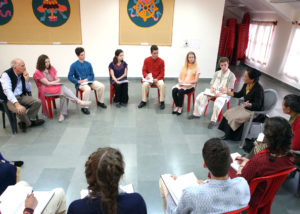
Once we were in the room with her all of us were immediately connected to the knowledge she was sharing with us, and her sweet charismatic charm allowed for a seriously intimate and deeply conversation. She shared with us lessons related to sincerity and awareness, within the context of building a strong foundation for how we can most efficiently dedicate ourselves to providing our service to the greater community.

Rinchen Khando shared with us how Buddhist values and principles can help us better understand ourselves and the role we play within our global community. She stressed the importance of deep critical thinking and analysis of our own individual lives and choices. We talked about how reflection plays a very important role in understanding how we must grow as human beings to be the absolute best we can be. I loved these ideas because during this time in my life, I am feeling as if there are so many things that are rapidly changing. Understanding how slowing my mind and thoughts down can benefit me as I make major choices in my life, gives me the strength and confidence I need to make careful decisions about how I choose to live my life.

Her ideas opened my mind and heart to accept the idea that riches might not always come in the form of material wealth or fame. Instead, she provided an example of how selfless action and dedication can lead to a sincere happiness residing deep within the heart. Sitting in the circle she was able to share this invaluable information with us. She was able to honestly and openly pass forward awe inspiring knowledge, that transcended the barriers of culture and wealth. The fact that she was able to gift us such kind words and advice in such a beautiful institution, that she had helped to create, made the experience truly magical. Today she opened up her heart to us and helped us reflect deeply on what our individual responsibilities are, and how we can make the best use of the resources we have in order to make the world a better place.


Mara Peruzzi

Today, after our interview with Rinchen Khando, we had the privilege of taking a tour of Norbulingka. Norbulingka is an institution founded after the Tibetans were exiled to preserve their culture. When we walked through the opening gate, it was like we were transported into a different world; there was an abundance of greenery and a feast of vibrant colors, contrasting with the littered, crowded streets we are becoming accustomed to. Each aspect of the area clearly showed the careful attention dedicated to it. Even what is considered ugly was turned into something beautiful; a nasty gutter was transformed into a series of majestic dragon heads in colorful designs.

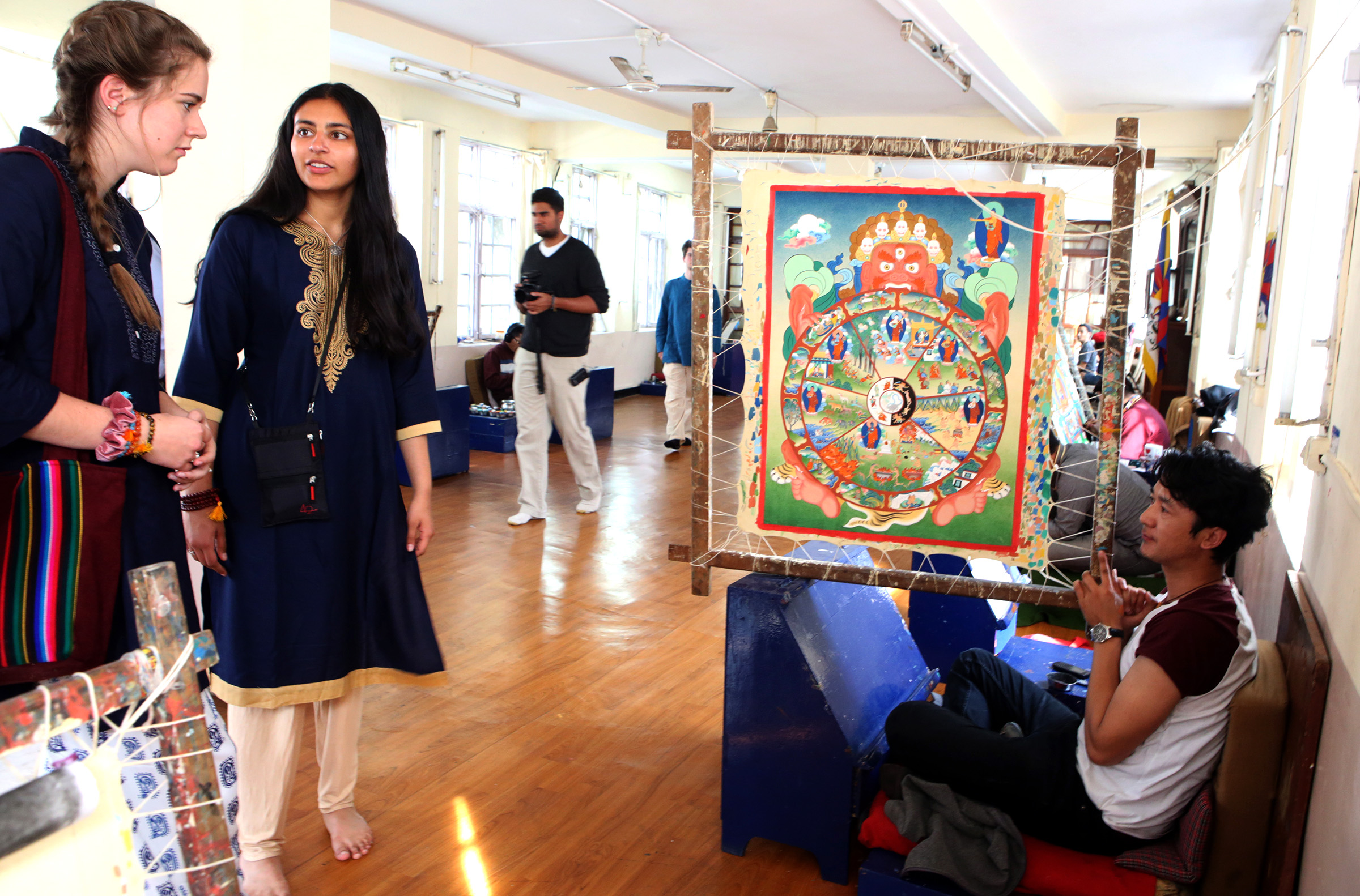
There were specific rooms dedicated to the unique art forms of Tibetan culture, including: paintings, sculptures made of various metals, and detailed fabric stitched tapestries, to name a few. My favorite part was being able to watch the artists in each room create their masterpieces in their natural areas. I was completely fascinated by a particular painting style called thangka, which depicts a Buddhist deity, scene, or mandala painted on cotton or silk. I was struck by the tiny details and use of color and negative space, and especially the use of gold to highlight certain aspects of the painting. The moment I saw the artists’ delicate paint brushes, natural paints being made with a mortar and pestle, tightly wound isles holding the fabric in place, all organized into a little personal station, I knew I wanted to try it myself. I could have spent hours examining one art piece, while appreciating all the time invested in making it the brilliant piece it is. It is amazing how much patience and talent goes into each individual stroke of the brush. I fell in love with the details and beauty these artists created, and it is amazing how the Tibetans have preserved their culture in such a beautiful way.

Tibetan Luminaries

Tara Ching

Today was my first day feeling fully recovered after a brief spell of dehydration. I am so happy that I was back for today because it was probably one of the best days of my life. I cannot imagine a life where I do not return to McLeod Ganj. I love waking up to look out at the incredibly beautiful Himalayan Mountains dotted with colorful rooftops. It’s also nice to be surrounded by the Tibetan culture which more familiar to me. It’s comforting to be surrounded by ringing bells, chanting, and flowing vibrant red and yellow robes.

We started off our day with our first interview of the trip, Rinchen Khando. Rinchen Khando is the leader and founder of the Tibetan Nuns Project. As soon as she began talking she became my role model. She spoke beautifully about the value of educating women just like men. She said that in the beginning there was talk of offering the nuns an easier scholarly path, littered with concessions like a lower passing grade or an easier textbook, but that we should take no concessions, because it is important for the welfare of society that women and men are educated equally. She said that when women and men are taught the same it will be easier to stop seeing the distinction between the two, and simply view everyone as human. I thought this was powerful, especially coming from a culture where traditionally nuns could not receive a Ngagrampa degree, only monks could.

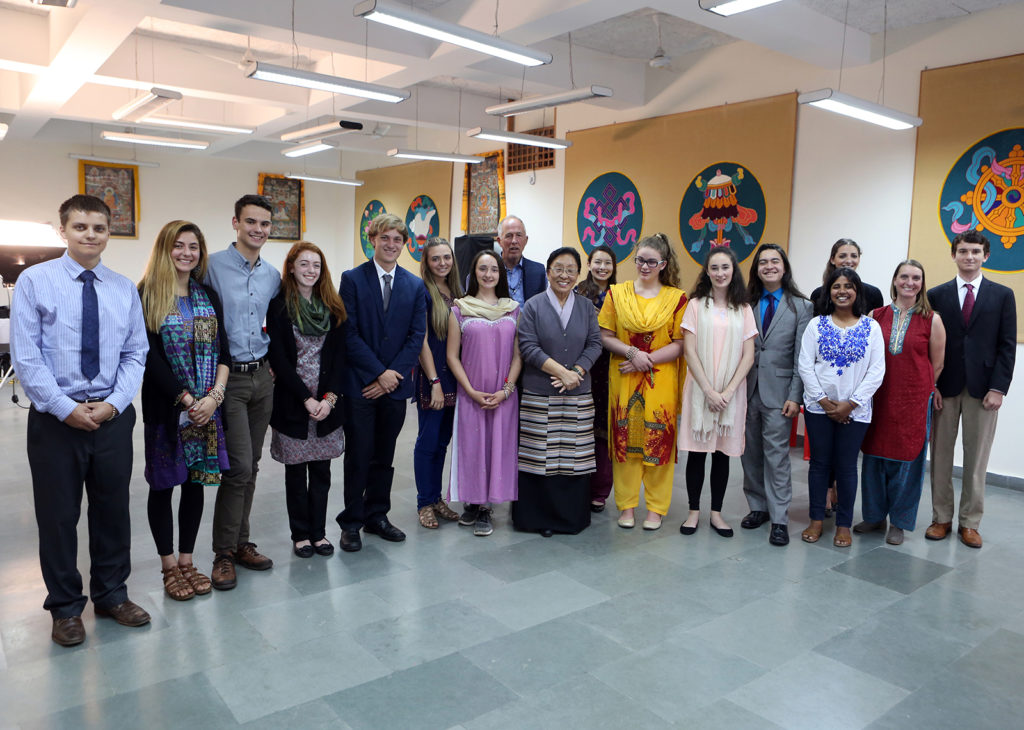
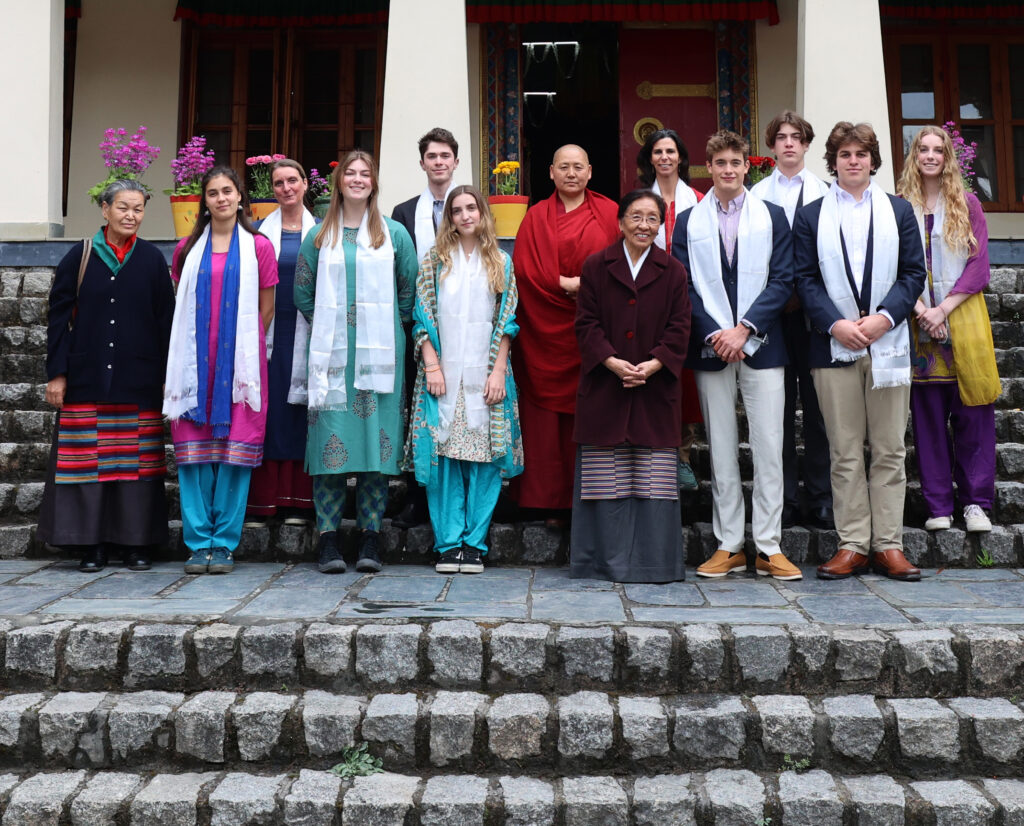
What struck me personally was when she answered the question that I asked, she answered and looked at me with raw attention and care, as though I was one of her family members. I asked her about the importance of art in her work, which is relevant to me because I intend to pursue art and animation in the future. She said that art is so influential, and that with animation, I could really distribute my message and make an impact. She talked about its relationship to journalism, and how there are artists and journalists who can be told to create information for the sake of money, bribery, or other reasons. But she said that if I do not do that, if I stick to my own wisdom and my own truth, then what I create will be powerful. She made me realize that by going into art, I am not just going into an uncertain future, I am going into a life where I create art that is a force to be reckoned with. At the end of the interview, after we took a group picture, she turned to all of us and said that when she looks at us, it is as though she is looking at a group of Tibetan children. In that moment I honestly wanted to walk out with her, ask her to mentor me, and follow her for a few years. Meeting her was truly inspirational and I am eternally grateful for the experience.

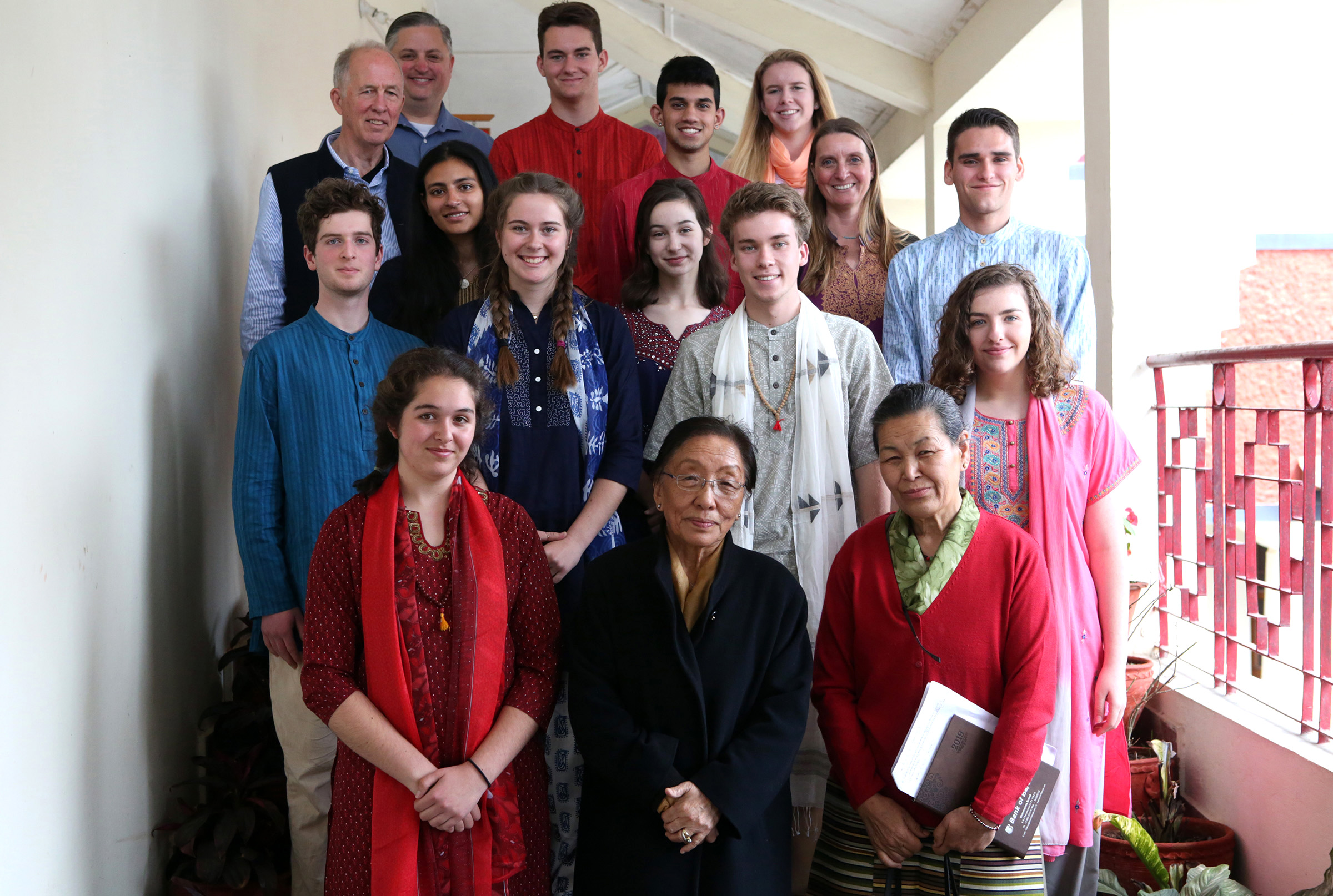
Mount Madonna School students with Rinchen Khando


Caroline Smith

After waking up to a big storm and no power in the hotel, we struggled to get ready for the two interviews we had lined up today. With no internet and no printer, our interview questions for Samdhong Rinpoche were polished and printed while we ate lunch at a nearby restaurant. We rushed through our meal and in no time, he was walking around the room shaking everyone’s hand.

Samdhong Rinpoche thought long about our questions before giving us his detailed, eloquent answers, pausing every once in a while, to ponder or gather his thoughts. Although almost everything he said had extreme depth and struck me in some way, I was especially interested when he spoke to us about the concept of non-violence. He told us that non-violence as a strategy is not true non-violence. This is very similar to John Lewis’ belief that you can’t turn non-violence on and off, it is a way of life. I began to think more deeply about this and was reminded of the Dalai Lama’s book, Ethics for the New Millennium. In his book, the Dalai Lama speaks of suffering, and specifically how sharing in another’s suffering can in turn, alleviate your own. However, sharing in another’s suffering for the sole purpose of alleviating your own is not truly sharing in another’s suffering, therefore, your suffering is not alleviated. This is similar to what Samdhong Rinpoche was telling us because by using non-violence as a strategy, you are using it for the sole purpose of getting something you want, rather than for the purpose of living by the non-violent belief.

I had never thought about the difference between using non-violence as a strategy and living by non-violence but now the difference seems extremely clear. I thoroughly enjoyed our interview with Samdhong Rinpoche because it caused me to think deeply about Buddhist beliefs such as non-violence which I had only thought about on a surface level before.

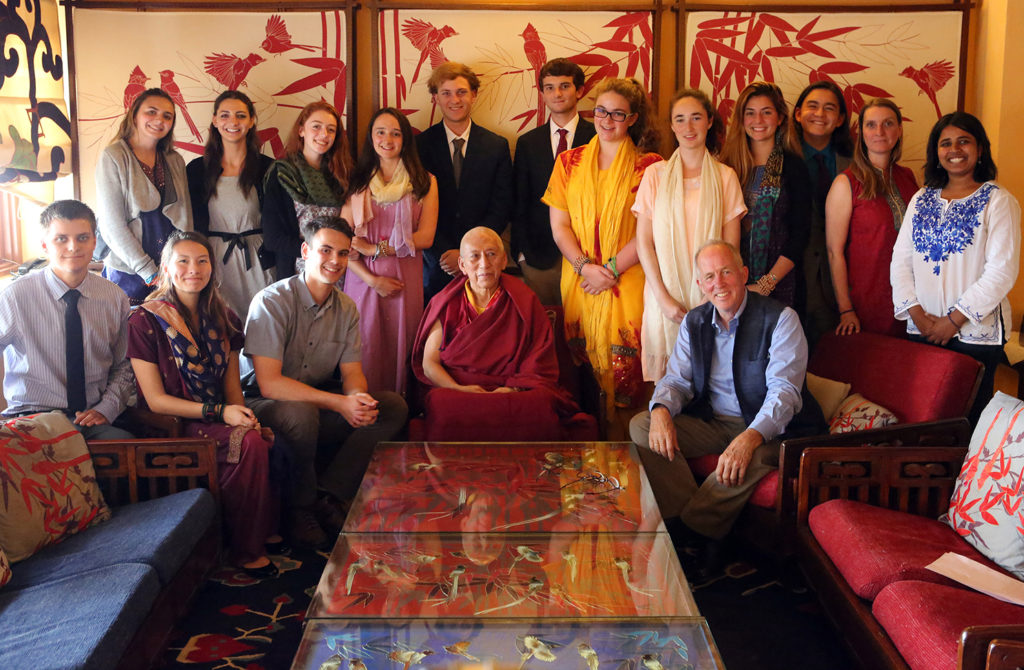
Mount Madonna School students with Samdhong Rinpoche